Kablar Skywalk Closed for the Winter
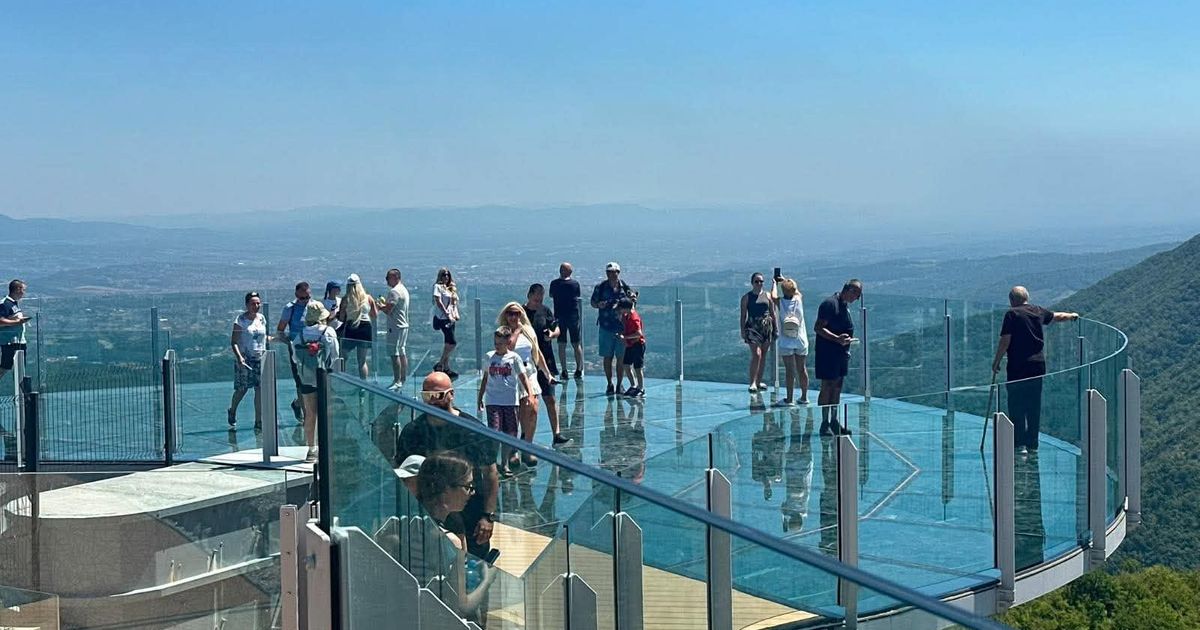
Kablar Skywalk Closed for the Winter
The Kablar Skywalk (glass viewpoint) above Čačak, on Mount Kablar at about 879 meters above sea level, has been closed to visitors for the winter, with access ending on October 31. Both opposition and pro-government outlets agree that the site opened in late July, that regular tourist visits ran from August 1 through the end of October, that tens of thousands of people visited in just a few months (including about 20,000 in the first 20 days), and that the attraction is now in a temporary seasonal shutdown, with reopening expected in the spring depending on weather conditions and to be announced in advance by the Tourist Organization of Čačak.
Across the spectrum, media describe Kablar Skywalk as Čačak’s biggest new tourist attraction and a prominent symbol of western Serbia’s tourism push, emphasizing its glass platform and panoramic views. Outlets agree that the first season was commercially successful, citing revenue of around seven million dinars by the end of August and portraying the closure as part of a planned seasonal cycle rather than a permanent shutdown, with local tourism institutions preparing infrastructure, accommodation, and broader offers for the next season.
Areas of disagreement
Framing of the closure. Pro-government media present the winter closure as a routine, pre-planned end to the inaugural season, justified primarily by safety concerns and adverse winter weather at high altitude. Opposition-aligned sources are more likely to question whether the closure reflects rushed construction, inadequate year-round planning, or poor maintenance capacity, casting doubt on how “routine” and well-prepared this seasonal pause actually is. While pro-government reports stress that everyone knew the attraction would be seasonal, opposition narratives suggest the public was not fully informed about limitations or the exact timing and conditions for closures.
Assessment of success and impact. Pro-government outlets highlight visitor counts, revenue figures, and branding of Kablar Skywalk as a new symbol of western Serbia, portraying the project as an economic and image-building triumph that validates government-led investments. Opposition sources tend to acknowledge high interest and solid numbers but frame them as overshadowed by concerns about cost-effectiveness, long-term sustainability, and whether benefits reach the broader local community. In pro-government coverage, the focus is on celebrating a success story, while opposition coverage more often places the same data in a narrative of uneven development and short-term showpiece projects.
Role and performance of institutions. Pro-government media stress the professionalism of the Tourist Organization of Čačak, emphasizing orderly management, transparent announcements, and future plans to expand accommodation capacities around Kablar. Opposition-aligned outlets, where they engage the topic, are more likely to raise questions about the decision-making process, procurement, environmental permits, and whether institutions prioritized promotion over safety audits and long-term environmental management. Thus, one side uses the Skywalk to showcase effective local and national governance, while the other uses it to probe potential mismanagement or politicization of tourism projects.
Broader political narrative. In pro-government reporting, Kablar Skywalk is folded into a larger story of Serbia’s modernization, regional development, and successful tourism strategy that demonstrates the tangible results of current policies. Opposition coverage, when it touches on the Skywalk, tends to situate it within critiques of government spending priorities, arguing that lavish flagship attractions coexist with underfunded local services and infrastructure. As a result, what pro-government media promote as proof of progress becomes, in opposition narratives, another example of image-building that may not address deeper structural problems.
In summary, opposition coverage tends to treat the Kablar Skywalk closure as an opportunity to question planning, institutional performance, and the real distributive benefits of flagship tourism projects, while pro-government coverage tends to present the closure as a routine seasonal pause after a highly successful first season and as evidence of effective governance and strategic tourism development.
Write a comment