Plenković questions the European direction of Serbia's new authorities
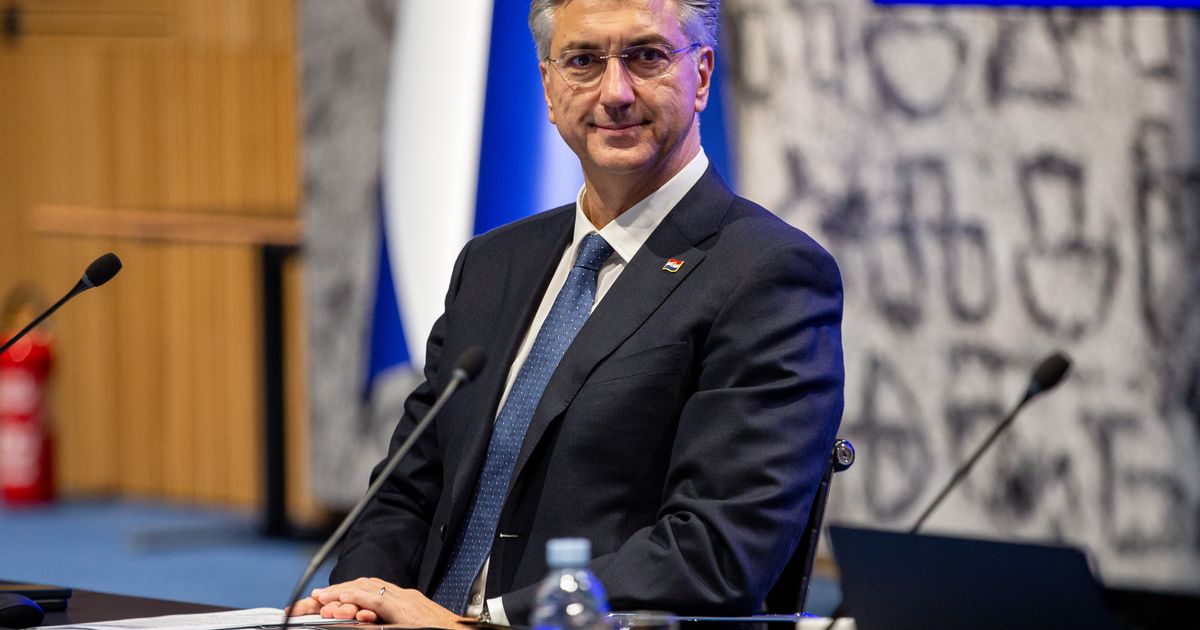
Plenković questions the European direction of Serbia’s new authorities
Croatian Prime Minister Andrej Plenković, speaking in Brussels at an EU enlargement-focused gathering (reported as the Euronews EU Enlargement Summit 2026), commented on the outcome of Serbia’s October 25 parliamentary elections and the stance of the new authorities that emerged from them. Across both opposition and pro-government coverage, it is agreed that he publicly questioned the European orientation of this new ruling formation, using as a key example the absence of EU flags and symbols at their election night victory event and during the campaign, and that he framed this as a signal of ambiguity about Serbia’s commitment to the EU path.
Both sides also concur that Plenković linked his remarks on Serbia to a broader discussion about EU enlargement in the Western Balkans, in which he contrasted Serbia’s situation with Montenegro’s comparatively clearer path to accession by around 2028, provided bilateral issues with Croatia are resolved. Coverage from both camps highlights that Plenković called on the new Serbian leadership to clearly state their positions, explain their goals once they assume responsibility, and articulate their approach to European integration as part of a wider EU expectation for transparency, reforms, and alignment with European standards in the region.
Areas of disagreement
Interpretation of Plenković’s message. Opposition-aligned outlets frame Plenković’s comments primarily as a warning about Serbia’s possible backsliding from its EU trajectory and a diagnostic of political signals sent by the new authorities. They emphasize the missing EU flag as a concrete indication that the new leadership may be distancing itself from Europe, treating his remarks as a serious political red flag. Pro-government media, by contrast, stress his call to “give time” to assess the new government’s policy, describing his words as critical but measured and focused on clarifying positions rather than pre-judging Serbia’s course.
Tone toward the new authorities. Opposition sources portray Plenković’s intervention in a more alarmed and skeptical tone, suggesting that his doubts about Serbia’s European path are justified and echo concerns about democratic standards and geopolitical orientation. They tend to read his comments as reinforcing a narrative that the new authorities are not genuinely reformist or committed to EU norms. Pro-government outlets soften the tone, highlighting his acknowledgement that pre-election “tactical silence” is understandable and that objections are mainly procedural, thereby framing the criticism as constructive scrutiny instead of a fundamental challenge to the government’s legitimacy.
Significance of EU symbols. In opposition coverage, the absence of the EU flag during the victory celebration is treated as a powerful political symbol that encapsulates the authorities’ true priorities and serves as visible proof of their weak European commitment. They argue that optics like flags and campaign messaging are essential indicators of strategic orientation, so Plenković’s focus on symbols is considered highly revealing. Pro-government media, however, downplay the symbolism, presenting it as one factor among many and suggesting that concrete policies, future declarations, and negotiations with Brussels will be a more accurate test of European alignment than visual cues on election night.
Implications for Serbia’s EU prospects. Opposition-aligned reporting tends to interpret Plenković’s doubts as a sign that key EU players are increasingly wary of Serbia’s direction, implying potential slowing or complicating of accession talks if the new authorities do not demonstrate clearer pro-European commitments. They stress that such external skepticism could translate into tougher conditions and greater isolation. Pro-government outlets instead highlight his parallel positive remarks about regional enlargement, especially on Montenegro, to argue that the EU door remains open for Serbia and that clarifying positions is a manageable diplomatic task rather than a looming existential threat to accession.
In summary, opposition coverage tends to amplify Plenković’s remarks as evidence that Serbia’s new authorities are sending anti-European signals and risking the country’s EU trajectory, while pro-government coverage tends to present his criticism as a call for clarification within an overall framework where Serbia still has ample opportunity to prove its European commitment.
Write a comment