European Commission Says Serbia Made No Progress Toward EU Membership
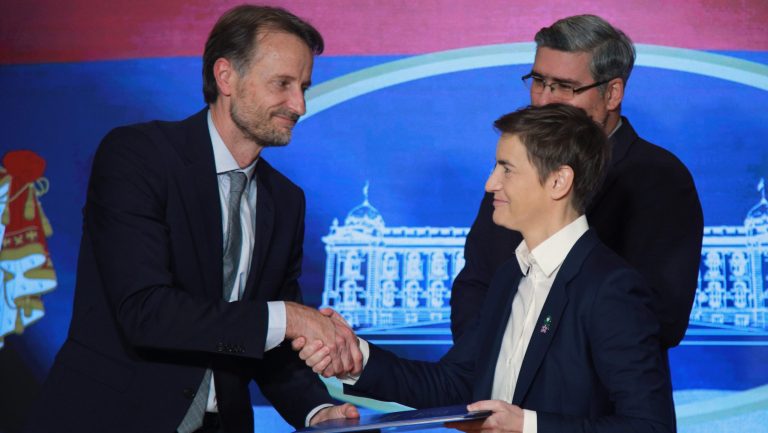
European Commission Says Serbia Made No Progress Toward EU Membership
The latest European Commission enlargement report concludes that Serbia made no progress toward EU membership over the last reporting year, noting in particular regression or backsliding in several key areas. Both opposition and pro-government coverage agree that the report highlights setbacks in fundamental rights and democratic standards, mentions societal polarization, and stresses that Serbia lags behind regional peers such as Montenegro, Albania, Moldova, and Ukraine, which are described as having made substantial or more consistent progress. They also concur that the Commission explicitly ties any further movement in accession talks to Serbia’s alignment with the EU’s common foreign and security policy, especially regarding sanctions on Russia, and to strengthening institutions, rule of law, and adherence to European values.
Both sides present the report as part of the EU’s regular enlargement package assessing all candidate and potential candidate countries, and they acknowledge that Serbia remains formally on the accession track despite critical findings. There is agreement that the document evaluates individual negotiation chapters, recording limited improvement in some technical areas such as statistics while noting stagnation or decline in sectors like education, foreign relations, and fundamental rights. Coverage also converges on the point that the European Commission proposes a model of gradual integration into selected EU sectors—such as energy, defense, and the single market—prior to full membership, and that the new Serbian government is framed by Brussels as an opportunity, at least in principle, to reset relations and reforms if it chooses to comply with EU standards and policies.
Areas of disagreement
Severity and meaning of the setback. Opposition-aligned outlets frame the “no progress” verdict and multiple regressions as a historic low point, stressing that it is the worst balance of backward steps since Serbia became a candidate and a clear sign of systemic democratic decay. Pro-government outlets acknowledge the negative rating but embed it in a broader regional overview, emphasizing that the enlargement process remains open and portraying the assessment as a temporary stagnation that can be corrected by targeted reforms. Opposition coverage treats the report as a confirmation that the country is drifting away from Europe, whereas pro-government coverage presents it more as a warning signal within an otherwise stable accession trajectory.
Responsibility and blame. Opposition media place primary responsibility on the ruling leadership, arguing that democratic backsliding, pressure on media and academia, and failure to align with EU foreign policy are deliberate political choices that have directly produced the “no progress” outcome. Pro-government sources tend to diffuse responsibility, foregrounding external factors such as the war in Ukraine, broader regional instability, and stricter EU conditionality, and they portray the government as pragmatically balancing national interests with European expectations. While opposition outlets use the report to criticize entrenched power structures and demand a political shift, pro-government outlets frame it as a technical evaluation that does not fundamentally challenge the legitimacy of current policies.
Portrayal of the EU’s role and intentions. Opposition-aligned coverage depicts the Commission as a credible arbiter whose criticism validates long-standing concerns over rule of law, freedom of speech, and captured institutions, and it highlights statements that Serbia must “strengthen institutions and fundamental rights” as central. Pro-government coverage more strongly emphasizes the Commission’s language about enlargement as an investment in peace and security, using this to argue that the EU needs Serbia and that integration remains mutually beneficial. Opposition narratives stress the conditional and punitive aspects of the report, whereas pro-government narratives underline cooperative opportunities, such as gradual sectoral integration and economic benefits, to soften the tone of censure.
Foreign policy alignment and sanctions on Russia. Opposition outlets present the Commission’s demand that Serbia align with EU sanctions on Russia as a crucial litmus test of European commitment, often criticizing the government for hedging between Brussels and Moscow and suggesting that continued equivocation will further stall accession. Pro-government outlets report the same demand but frame it as one among several conditions, underscoring the complexity of Serbia’s traditional ties with Russia and implying that any move toward sanctions must be carefully calibrated to protect national interests. For the opposition, non-alignment is portrayed as a self-inflicted obstacle to EU integration, while pro-government media more frequently describe it as a difficult strategic choice constrained by energy dependence and public opinion.
In summary, opposition coverage tends to treat the Commission’s report as a damning indictment of the ruling leadership and a confirmation of deep democratic and foreign-policy misdirection, while pro-government coverage tends to contextualize the criticism, stress ongoing opportunities within the EU framework, and present the findings as a manageable setback rather than an existential blow to Serbia’s accession prospects.
Write a comment