Albanian Opposition and Students March Against Edi Rama
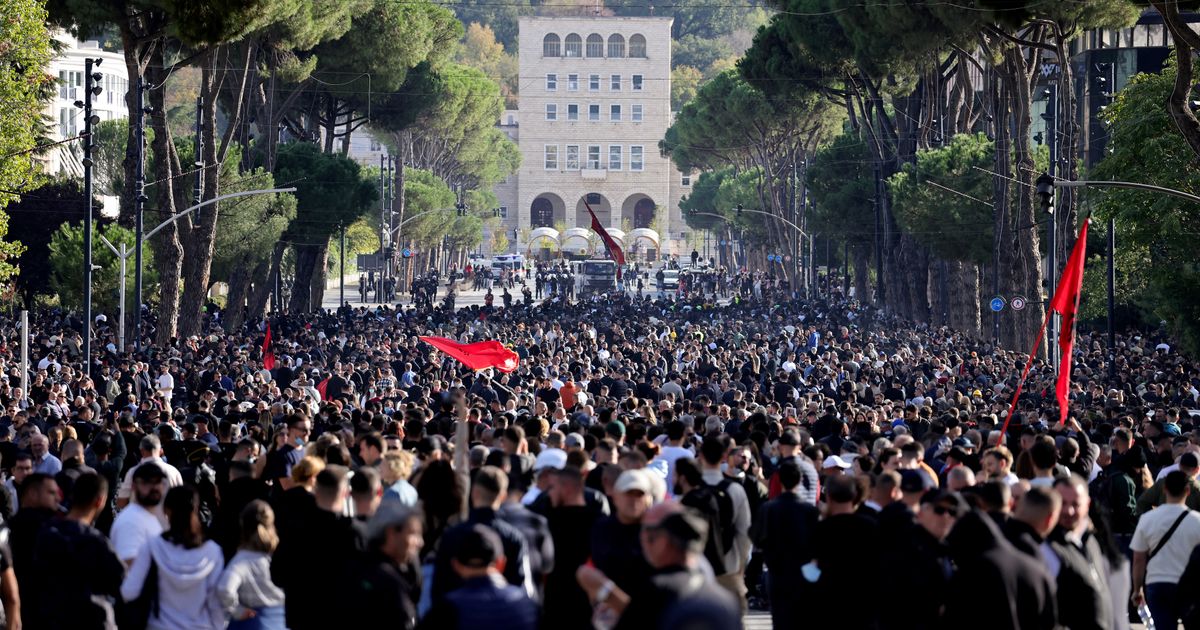
Albanian Opposition and Students March Against Edi Rama
Supporters of Albania’s Democratic Party, together with groups of students, have been marching toward and gathering in front of Prime Minister Edi Rama’s office in Tirana in an escalation of anti-government demonstrations. Coverage agrees that the protests feature a visible blend of opposition MPs, party activists, and university students, and that demonstrators are calling for Rama’s resignation while openly rejecting his offers for dialogue made during the crisis. Both sides report that the prime minister has promoted a new online platform, accessible via the e-Albania identification system, as his primary channel for engaging with citizens and students on their concerns. It is commonly noted that the demonstrations have continued over multiple days and that the growing presence of organized opposition structures has intensified political pressure on the government.
Across outlets, there is acknowledgment that Albania’s political tensions are unfolding against a backdrop of long-running disputes over governance, corruption, and the quality and affordability of higher education. All sides describe the academic community as a key stakeholder, with university reforms and student welfare at the center of many grievances, even as party politics increasingly shape the protests. There is shared recognition that digital governance tools like the e-Albania portal and Rama’s new communication platform are part of a broader modernization push in state–citizen interaction. Both opposition and pro-government sources also agree that the protests are testing state institutions, including parliament, universities, and the prime minister’s office, at a time when Albania is navigating ongoing economic challenges and its path toward deeper European integration.
Areas of disagreement
Nature of the protests. Opposition-aligned sources portray the marches as a broad-based, grassroots uprising in which students lead and parties merely follow, arguing that the movement reflects deep social frustration beyond partisan lines. Pro-government sources present the demonstrations as opposition-driven and increasingly partisan, emphasizing the organized presence of Democratic Party MPs and activists as evidence of political orchestration. Opposition coverage tends to highlight diversity in participants and spontaneous student organizing, while pro-government outlets stress party branding, leadership cues, and coordinated messaging.
Legitimacy of demands. Opposition narratives frame the call for Edi Rama’s resignation as a natural and justified response to alleged corruption, mismanagement, and failure to deliver meaningful education reforms. Pro-government media acknowledge student discontent but depict the resignation demand as disproportionate, arguing that it is fueled more by the opposition’s desire to regain power than by specific policy shortcomings. While opposition outlets underline systemic grievances and broken promises, pro-government reports cast the core demand as a political gambit rather than a constructive reform agenda.
Role of dialogue and the online platform. Opposition-aligned sources typically dismiss Rama’s new e-Albania-based communication platform as a cosmetic, top-down tool designed to deflect pressure without changing policy, stressing that students and academics have largely rejected it. Pro-government outlets, by contrast, highlight the platform as a serious attempt at transparent, direct communication, emphasizing its promise to publicly address concerns and route cases to institutions. Opposition coverage characterizes the refusal to use the platform as a principled stand against performative consultation, while pro-government coverage suggests that rejecting dialogue undermines problem-solving and reveals the opposition’s confrontational strategy.
Impact on institutions and stability. Opposition media often argue that the protests expose a captured or unresponsive state, contending that only sustained street pressure can rebalance institutions and protect democratic norms. Pro-government outlets warn that the escalating demonstrations, especially with party involvement, risk destabilizing governance, hindering reforms, and damaging Albania’s international image. Where opposition sources describe institutional strain as the product of long-term government abuses, pro-government sources frame it as a consequence of a deliberate opposition campaign that politicizes student grievances and confronts institutions instead of engaging them.
In summary, opposition coverage tends to present the marches as a legitimate, student-centered revolt against an unresponsive and compromised government, while pro-government coverage tends to depict them as politically driven protests in which the opposition instrumentalizes student discontent and refuses good-faith dialogue.
Write a comment