Nvidia CEO Jensen Huang Resigns; Colette Kress Named Interim Chief
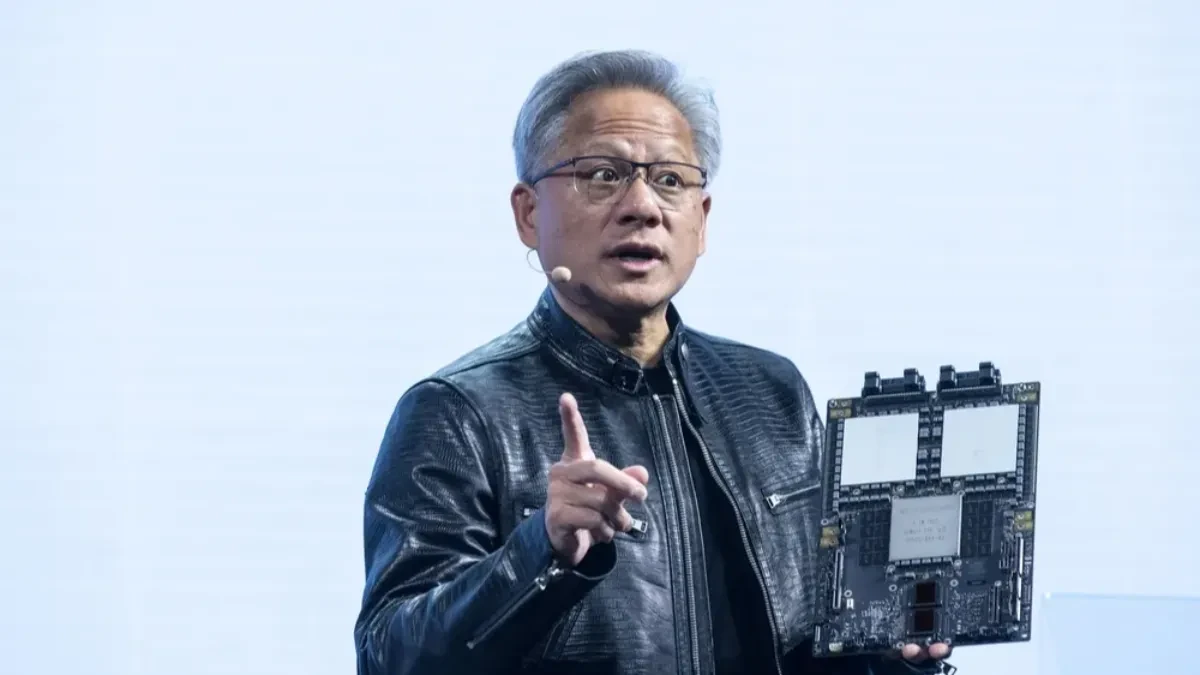
Nvidia CEO Jensen Huang Resigns; Colette Kress Named Interim Chief
Nvidia announced that Jensen Huang has resigned as chief executive after more than three decades at the company, amid reports of an affair with a woman described in US media and official leaks as a suspected Chinese intelligence asset. Across both opposition-aligned and pro-government outlets, coverage agrees that Colette Kress, Nvidia’s long-time chief financial officer and executive vice president, has been appointed interim CEO while the board conducts a search for a permanent successor. Reports converge on the timing of the move alongside the release of Nvidia’s latest quarterly results and investor communications, and note that Nvidia has initiated internal reviews around the circumstances of Huang’s conduct. Both sides also agree that Kress has already addressed employees and scheduled an all-hands meeting on November 18 to lay out near-term plans.
There is shared acknowledgment that Nvidia is a central player in global AI and high-performance computing supply chains, making leadership turbulence at the firm geopolitically sensitive. Outlets on both sides describe the woman linked to Huang as a Chinese business figure accused of espionage ties, and agree that the scandal has triggered scrutiny from US officials concerned with technology transfer and export controls. Both perspectives highlight that Huang’s departure comes amid an already tense US‑China tech confrontation and ongoing regulatory pressure on advanced chip exports, which together raise questions about how Nvidia will manage compliance and maintain market dominance. Coverage on both sides also frames Kress as a seasoned financial executive with experience at major US technology firms, emphasizing continuity in Nvidia’s operational strategy while leadership transitions unfold.
Areas of disagreement
Nature of the scandal. Opposition-aligned sources frame Huang’s resignation primarily as the result of a personal moral failing and a straightforward sex-and-espionage scandal, presenting his affair with a suspected Chinese spy as a national security breach that rightly forced him out. Pro-government coverage, while acknowledging the alleged affair and Huang’s apology to his family, more often places the scandal in a broader narrative of politicized accusations and media pressure, suggesting the “spy” label may be instrumentalized. Opposition outlets focus on the sensational and compromising aspects of Huang’s conduct, whereas pro-government outlets question how much is proven versus alleged and highlight how such scandals can be leveraged in power struggles.
Role of political pressure. Opposition coverage tends to underplay systemic political pressure, casting Huang’s exit as the direct and almost inevitable consequence of corporate governance standards, shareholder anger, and reputational damage. Pro-government outlets explicitly emphasize mounting political and security pressure from US authorities and media, arguing that accusations about “Chinese spies” have become tools in a wider campaign to discipline major tech companies. While the opposition view treats regulators and officials as responding to an individual’s misconduct, the pro-government narrative portrays them as key drivers, shaping corporate outcomes for geopolitical ends.
Impact on Nvidia and markets. Opposition-aligned reporting stresses heightened uncertainty for Nvidia and the AI chip market, warning that leadership turmoil could shake investor confidence, complicate compliance with export rules, and destabilize an already volatile sector. Pro-government sources are more inclined to argue that Nvidia’s fundamentals and product roadmap remain intact under Kress, downplaying market risk and instead highlighting continuity and institutional resilience. Where opposition pieces speculate about a possible strategic vacuum and greater vulnerability to regulatory shifts, pro-government outlets focus on the company’s ability to manage transitions and maintain its global position despite political headwinds.
US–China tech rivalry framing. Opposition outlets mostly frame the episode as evidence that US vigilance on potential Chinese espionage in the tech industry is justified, treating Huang’s alleged ties as a cautionary tale that supports tougher export controls and security screening. Pro-government coverage, particularly from Chinese or China-friendly sources, uses the case to argue that Washington is over-politicizing business and weaponizing security narratives, claiming this will ultimately spur Chinese domestic innovation rather than contain it. Thus, while the opposition lens reinforces the logic of containment and stricter oversight, the pro-government lens casts the same event as proof of US overreach that could backfire strategically.
In summary, opposition coverage tends to portray Huang’s resignation as a necessary and largely self-inflicted consequence of scandal that validates tougher scrutiny of tech leaders, while pro-government coverage tends to emphasize political overreach, argue that accusations are entangled with US–China rivalry, and stress Nvidia’s institutional continuity under Colette Kress.
Write a comment