Vanja Dragojević Moved to Serbia’s U21 Team
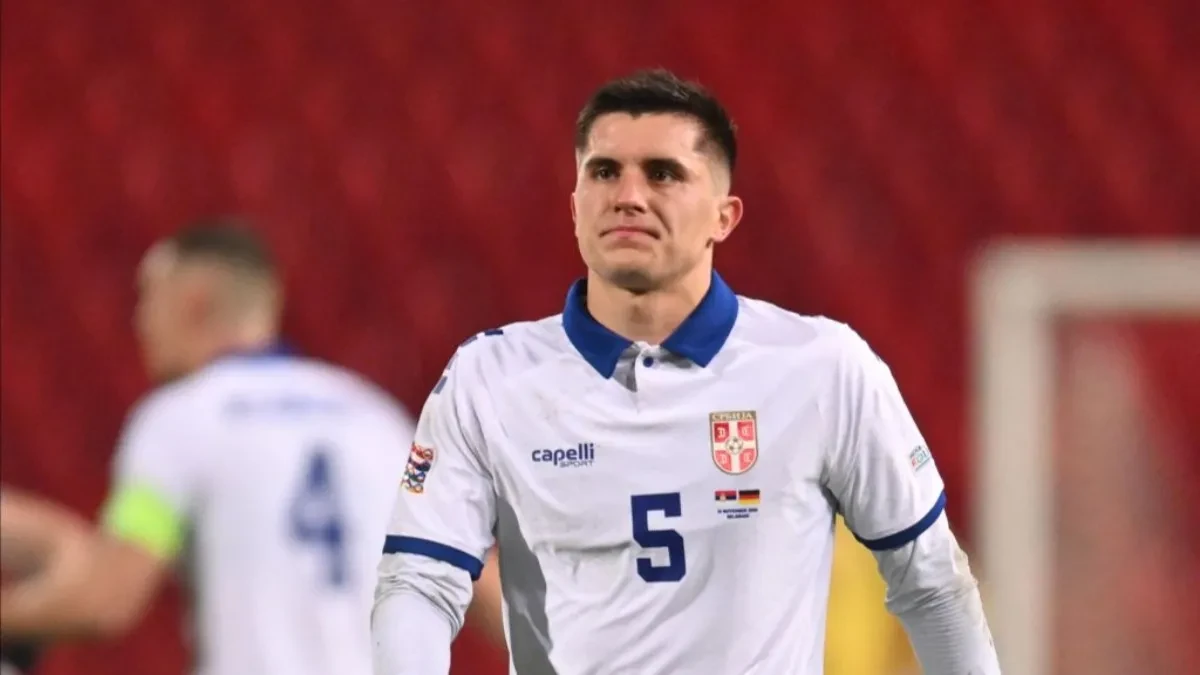
Vanja Dragojević Moved to Serbia’s U21 Team
Vanja Dragojević, a Serbian footballer who had been part of the senior national team setup, has been reassigned to Serbia’s U21 side ahead of their preparations for next year’s European Championship. Both pro-government and opposition-leaning outlets agree that he will not be available for the next senior Nations League match against Greece due to a red-card suspension, and that this change is formally framed as a move to the U21 squad rather than a full exclusion from national-team plans. They also concur that the Football Association of Serbia confirmed the decision and that it coincides with the final training sessions before the Greece match and ongoing U21 preparations.
Across the spectrum, coverage presents the move as part of a broader national-team structure in which the senior and U21 squads are closely coordinated, with coaches sharing a pool of players who are age-eligible for the youth side. There is shared acknowledgment that the U21 team is in an important competitive cycle, working toward the European Championship, and that gaining experience in high-stakes youth qualifiers is seen as significant for player development. Media on both sides describe the institutional framework as one where the senior coach’s philosophy explicitly supports sending eligible players to the U21s, and where this is not unusual in principle for a player at Dragojević’s stage of career.
Areas of disagreement
Framing of the move. Opposition outlets tend to cast Dragojević’s shift as a de facto demotion from the senior side, stressing the timing after his red card and raising questions about whether the decision is disciplinary or politically influenced within the association. Pro-government media, by contrast, emphasize that the reassignment is a planned, technical decision in line with a long-stated developmental philosophy. They focus on continuity between the teams and avoid language that might imply punishment or loss of status.
Motives and decision-makers. Opposition coverage typically highlights the role of senior federation officials, hinting that power dynamics or internal favoritism could be driving the move rather than purely sporting criteria. These outlets are more likely to question whether the coach’s “philosophy” is being selectively applied and to suggest that Dragojević’s case reflects broader governance issues in Serbian football. Pro-government sources foreground the authority and autonomy of the coaching staff, presenting the decision as a professional judgment rooted in tactical needs and youth-team strengthening.
Impact on the player and team narratives. Opposition-aligned media often imply that the reassignment could harm Dragojević’s confidence and signals a lack of clear planning for his role in the senior setup, using his case to illustrate instability in squad management. Pro-government coverage portrays the move as beneficial for his development, stressing the opportunity for more minutes and responsibility at U21 level and a smoother long-term integration into the senior team. They generally depict both squads as functioning cohesively, with the player’s trajectory portrayed as carefully managed.
Broader symbolism for Serbian football. For opposition outlets, Dragojević’s move becomes a symbol of what they see as ad hoc, opaque decision-making within the football association, mirroring their criticisms of wider state and institutional governance. They may link this episode to recurring themes of lack of transparency, politicization of sport, and uneven treatment of players. Pro-government media instead use the case to showcase systemic planning and cooperation between age categories, presenting it as evidence that the federation is modernizing structures and prioritizing long-term success over short-term optics.
In summary, opposition coverage tends to frame Dragojević’s reassignment as a quasi-demotion colored by internal politics and governance concerns, while pro-government coverage tends to depict it as a routine, development-focused adjustment consistent with a coherent national-team philosophy.
Write a comment