New Danube Corridor section opens between Požarevac and Golubac
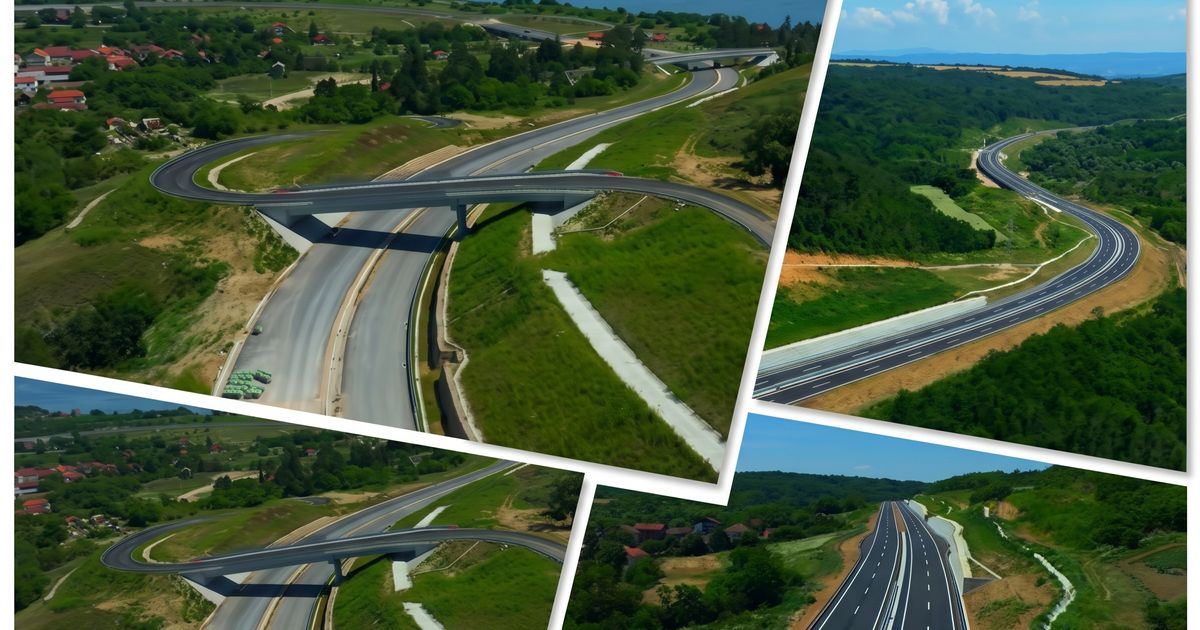
New Danube Corridor section opens between Požarevac and Golubac
A new 2.56-kilometer section of the Danube Corridor fast road, between Požarevac and Bratinac, has opened to traffic, creating a nearly continuous 64-kilometer expressway link from Požarevac to Golubac in eastern Serbia. Both opposition and pro-government outlets agree that only about four kilometers remain to be completed next year to fully close the gap, that the route significantly shortens travel times on the Belgrade–Golubac axis, and that the new section is formally part of a broader corridor project designed as a fast road rather than a full motorway.
Across the spectrum, coverage situates the opening within Serbia’s wider transport and regional development strategy, emphasizing the state’s long-term goal of better connecting eastern Serbia to Belgrade and major European routes. Both sides reference the Danube Corridor as a multi-phase infrastructure investment expected to support tourism around the Danube, facilitate freight movement, and integrate local municipalities more closely into national economic flows, while noting that the project is still incomplete and subject to future works and adjustments.
Areas of disagreement
Project significance and framing. Pro-government media frame the opening as a major milestone that effectively delivers a continuous high-quality link from Belgrade to Golubac, stressing claims that travel time can now be cut to around 80 minutes and presenting the corridor as transformative for the region. Opposition outlets, while acknowledging the new stretch, tend to portray it as just a modest segment of a long-delayed project, questioning whether the improvement justifies the triumphant tone and suggesting that the benefits are being oversold compared with the still-missing sections and remaining bottlenecks.
Political credit and timing. Pro-government sources highlight the role of the current government and president, underscoring their strategic vision and continuity in large infrastructure projects and often tying the opening to broader narratives of successful national development. Opposition coverage, by contrast, frequently insinuates that the timing of the opening is politically calibrated, linking it to election cycles or media campaigns, and argues that state officials are using partial completions for public relations rather than waiting for fully operational infrastructure.
Economic and local impact. Pro-government outlets stress anticipated economic gains, such as new investments, stronger tourism around the Danube, and easier daily commuting, often using optimistic official projections and testimonials from selected local representatives. Opposition media typically adopt a more cautious tone, pointing to persistent underdevelopment and outmigration in eastern Serbia, questioning whether improved road access alone will bring substantial jobs or industry, and sometimes raising concerns about whether cost–benefit analyses and local consultation were adequately conducted.
Quality, transparency, and cost. Pro-government reporting focuses on the technical features of the road and its perceived modern standards, rarely dwelling on procurement details or financial breakdowns, and tends to assure audiences that works are proceeding according to plan. Opposition coverage, where available, is more likely to raise questions about total project cost, contractor selection, and potential irregularities, highlighting a lack of detailed public documentation and warning that future maintenance and loan obligations could outweigh the short-term political gains now being celebrated.
In summary, opposition coverage tends to treat the new Danube Corridor section as a minor, politically timed step in a still-unfinished and potentially opaque project, while pro-government coverage tends to present it as a flagship achievement that dramatically improves connectivity and confirms the success of the government’s infrastructure agenda.
Write a comment