UEFA investigates violence at Marseille-Levski match
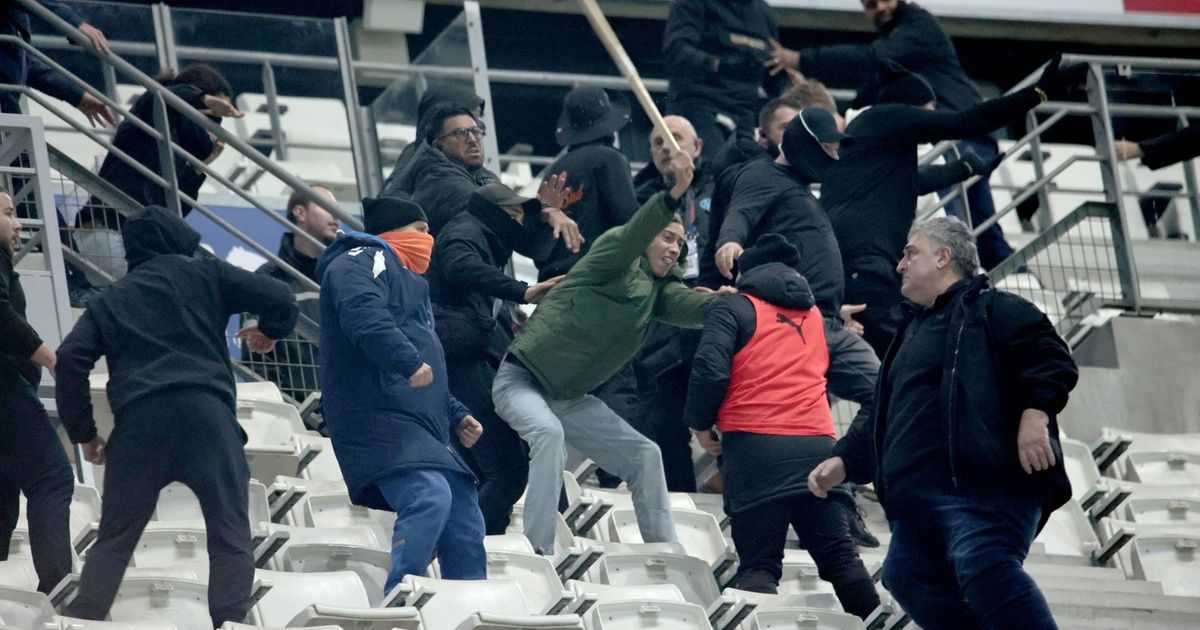
UEFA investigates violence at Marseille-Levski match
UEFA’s disciplinary bodies have opened a formal investigation into serious episodes of fan violence and disorder surrounding the Europa League qualifying match between Olympique Marseille and Levski in Marseille. Across outlets, reports agree that more than 200 Marseille hooligans attacked Bulgarian supporters before the game, using clubs and metal rods and leaving several Bulgarian fans with serious head injuries, and that there were additional clashes between fans inside the stadium during or around the match. Coverage from both sides notes that these incidents took place in and around Marseille’s home ground, that the probe is being handled through UEFA’s standard disciplinary mechanisms, and that both French and Bulgarian media expect substantial sanctions against Olympique Marseille because the club has a prior record of fan trouble in European competition.
There is broad agreement that the investigation focuses on crowd management failures, violent conduct by organized groups of hooligans, and the wider issue of repeated security lapses at major European fixtures. Outlets describe UEFA as under pressure to demonstrate its ability to curb recurring fan violence through stricter enforcement and possible reforms to stadium security protocols and club responsibility rules. Both opposition and pro-government sources situate the case within a pattern of previous disciplinary actions against clubs with problematic ultras, and they concur that any eventual punishment—such as fines, partial stadium closures, or matches behind closed doors—will be justified primarily with reference to existing UEFA regulations rather than new ad hoc measures.
Areas of disagreement
Framing of severity and responsibility. Opposition-aligned outlets tend to frame the Marseille-Levski clashes as part of a broader European hooliganism problem and share responsibility between local authorities, club management, and UEFA’s oversight, sometimes hinting that foreign security services underestimated the risk to Bulgarian fans. Pro-government outlets emphasize the brutality of the attack on Bulgarian supporters and portray Marseille’s hooligans as the primary culprits, stressing that the French club’s repeated failures warrant exemplary punishment. While opposition sources may describe systemic shortcomings in preventative policing and crowd control, pro-government coverage centers responsibility more narrowly on Olympique Marseille and its fan base, casting Bulgarian supporters largely as passive victims.
Portrayal of Bulgarian authorities and institutions. Opposition media are more inclined to question whether Bulgarian institutions, including the football federation and security services, did enough in advance to safeguard traveling fans or to coordinate effectively with French counterparts. Pro-government coverage, by contrast, presents Bulgarian authorities as having acted properly and stresses their cooperation with UEFA and French police, highlighting diplomatic contacts and official complaints as firm, adequate reactions. As a result, opposition reports can read as implicitly critical of domestic preparedness, while pro-government narratives tend to shield local institutions from blame and focus scrutiny abroad.
Use of the incident in domestic political narratives. Opposition-friendly outlets may link the violence and ensuing UEFA investigation to a wider pattern of state weakness and mismanagement, using it as an example of how Bulgarian citizens are insufficiently protected when traveling to international events. Pro-government sources instead treat the episode primarily as a football and public-order issue on foreign soil, avoiding extensions into critiques of domestic governance and sometimes stressing national unity behind the injured fans. Whereas opposition coverage can integrate the story into arguments about the need for deeper institutional reforms at home, pro-government reporting mostly avoids politicizing it beyond calls for harsh sanctions against Marseille.
Expectations from UEFA and future reforms. Opposition outlets often express skepticism that UEFA will go beyond standard disciplinary penalties to address root causes, and they push for stronger structural reforms such as stricter hosting standards or better cross-border intelligence sharing on hooligan groups, sometimes implying that Bulgarian authorities should lobby more assertively. Pro-government coverage largely confines expectations to heavy penalties for Marseille—such as significant fines or stadium restrictions—and presents these as sufficient proof that UEFA takes the matter seriously. Thus, opposition narratives stress long-term systemic change and a more active Bulgarian role, while pro-government narratives prioritize immediate punitive outcomes directed at the French club.
In summary, opposition coverage tends to diffuse responsibility across foreign and domestic institutions and fold the incident into broader critiques of systemic and governance failures, while pro-government coverage tends to focus blame on Marseille’s hooligans and club, defend Bulgarian authorities’ conduct, and emphasize the expectation of strong UEFA sanctions as an adequate response.
Write a comment