Eighteen-year-old stabbed in Zemun Polje
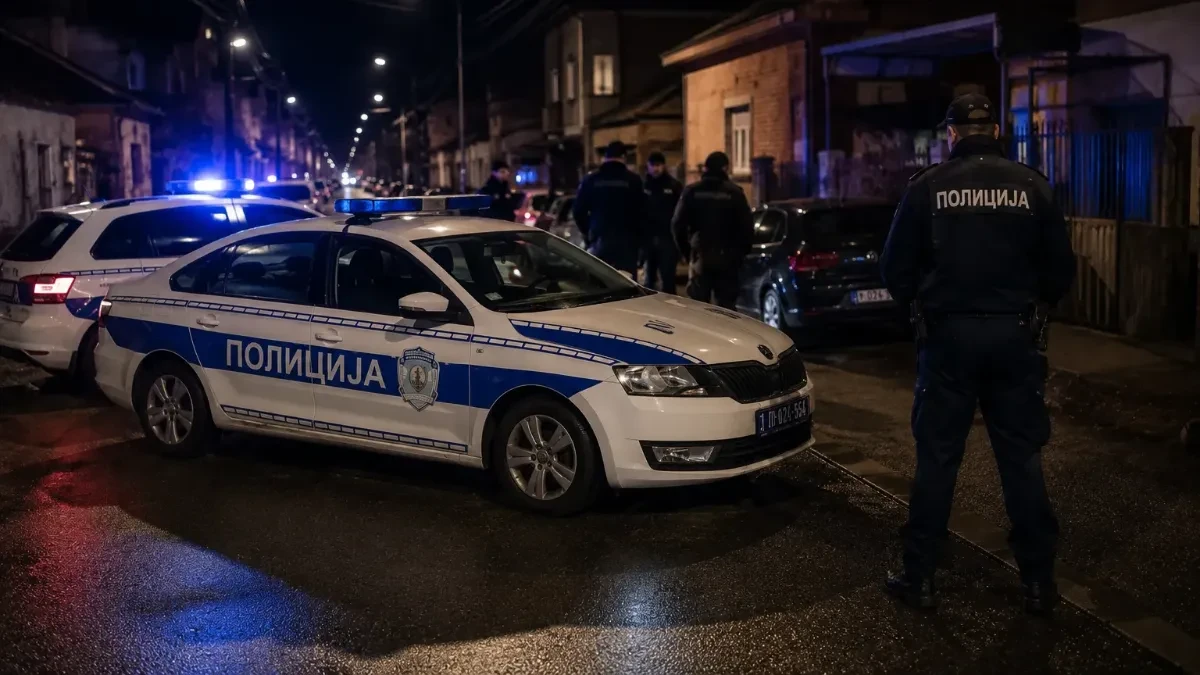
Eighteen-year-old stabbed in Zemun Polje
An eighteen-year-old male was stabbed in the lower back in the Zemun Polje settlement of Belgrade around an hour after midnight, sustaining serious injuries. Across both opposition and pro-government outlets, reports agree that emergency services quickly arrived at the scene, provided urgent care, and transported the victim to hospital, with several pro-government sources specifying the Bežanijska kosa Clinical-Hospital Center as the destination. Police were called immediately and opened an investigation, and all sides report that the assailant fled the scene and remains at large while officers work to identify and locate the perpetrator.
Media on both sides describe the case as a serious act of violence involving a young adult in a residential neighborhood, and they agree that the circumstances of the attack are still unclear and under investigation. Coverage from both camps frames the incident within a broader concern about public safety and youth violence, mentioning the role of the police and emergency medical services as central state institutions responding to the event. There is common acknowledgment that more detailed information about motives, possible prior conflicts, or connections to broader crime patterns is not yet confirmed, so outlets largely rely on official statements and preliminary information while awaiting further updates.
Areas of disagreement
Interpretation of public safety. Opposition-aligned outlets typically use such stabbings to argue that urban neighborhoods like Zemun Polje are becoming less safe, linking the incident to a perceived broader rise in street crime and youth violence. Pro-government outlets, while acknowledging the brutality of the attack, tend to present it as an isolated case and emphasize the swift response of emergency services and police, downplaying any claim that it reflects systemic deterioration in public safety.
Framing of institutional performance. Opposition coverage generally highlights unanswered questions about how an armed attacker could act in a populated area after midnight, suggesting gaps in preventive policing and community protection. Pro-government coverage emphasizes that police immediately launched an intensive investigation and that the medical teams acted professionally and quickly, using the incident to underscore institutional efficiency rather than shortcomings.
Political implications. Opposition media often connect such violent incidents to government policies, arguing that lenient attitudes toward crime, corruption, or underfunded social services contribute to a climate where stabbings among youth occur more frequently. Pro-government outlets usually keep the story at a strictly criminal and human-interest level, avoiding explicit political blame and resisting attempts to tie the stabbing to broader governance failures.
Narrative emphasis. Opposition-aligned reporting tends to dwell more on the climate of fear, residents’ concerns, and previous violent cases to create a narrative of accumulating insecurity. Pro-government reports focus on concrete, verified details such as the victim’s age, injury location, hospital destination, and the procedural steps taken by investigators, often avoiding speculative context and portraying the state as actively controlling the situation.
In summary, opposition coverage tends to treat the stabbing as evidence of a wider systemic public security and governance problem, while pro-government coverage tends to frame it as a grave but isolated crime efficiently handled by state institutions.
Write a comment