BATE Borisov relegated to Belarusian second tier
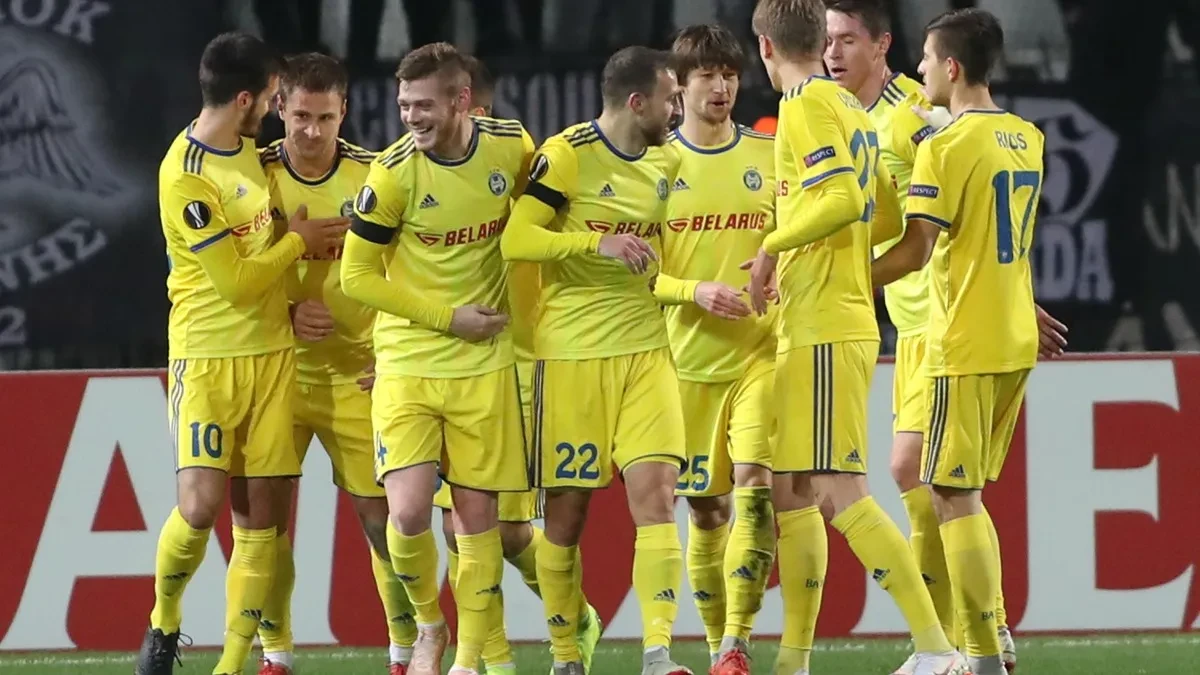
BATE Borisov relegated to Belarusian second tier
BATE Borisov, the most decorated football club in Belarus, has been officially relegated from the Belarusian top tier to the second division after a disastrous league campaign that saw them finish second from bottom. Both opposition and pro-government sources agree that the decisive moment came in the final round, when BATE only managed a 1:1 draw, ending the season on 25 points from 30 matches and confirming their drop to the lower league after failing to escape the relegation zone.
Coverage from both camps also converges on the broader arc of BATE’s decline: the club that once dominated domestically and regularly appeared in European competitions, facing clubs like Partizan and Crvena zvezda and famously eliminating Partizan in 2015, has been sliding since its last league title in 2018. Both sides reference internal mismanagement following the death of the club’s owner and the loss of sporting and financial stability as key background factors, and they treat the relegation as a symbolic end of an era for a flagship institution of Belarusian football.
Areas of disagreement
Framing of decline and responsibility. Opposition-aligned sources tend to link BATE’s mismanagement and post-2018 collapse to wider systemic problems in Belarusian sports governance and the broader political climate, presenting the club’s fall as an illustration of institutional degradation under the current regime. Pro-government outlets instead keep the blame narrowly on club-level leadership failures after the owner’s death, describing poor sporting decisions and financial missteps without tying them to national governance. Opposition reports are more likely to imply that political favoritism and opaque oversight hurt BATE’s competitiveness, while pro-government coverage portrays the relegation as an unfortunate but essentially apolitical sporting downturn.
Political symbolism of relegation. Opposition media commonly treat BATE’s drop as a metaphor for the state of the country, highlighting how a once proud, European-competent team mirrors what they describe as Belarus’s international isolation and decline. Pro-government sources, by contrast, emphasize nostalgia for past European nights against Partizan and Crvena zvezda but frame relegation as part of the normal cycle in football, avoiding any analogy to national politics. Where opposition pieces may use emotionally charged language to underscore the symbolic loss of a national champion, pro-government pieces lean on pathos about sporting disappointment while insisting the event is strictly within the realm of sport.
Role of institutions and the league. Opposition outlets are inclined to scrutinize the Belarusian football federation and league structures, suggesting that opaque federation decisions, economic distortions, and uneven support to clubs contributed to BATE’s vulnerability and inability to rebuild. Pro-government coverage largely presents the league and federation as neutral backdrops, stressing that other clubs have adapted and that BATE’s problems stem from its own strategic errors. Opposition commentary may question transparency in resource allocation or refereeing standards, while state-aligned reports highlight the competitiveness of the league and the meritocratic nature of BATE’s relegation.
Prospects and narrative of the future. Opposition reporting often casts doubt on BATE’s ability to recover under current political and economic conditions, warning that structural issues could keep the club trapped in the second tier or erode it further. Pro-government outlets, however, tend to stress resilience and the possibility of a quick return, presenting relegation as a wake-up call that could spur reforms in management and youth development. While opposition sources see the fall as part of a long-term downward trajectory tied to national circumstances, pro-government narratives are more optimistic and treat the setback as temporary and correctable.
In summary, opposition coverage tends to fold BATE Borisov’s relegation into a broader critique of Belarusian governance and institutional decay, while pro-government coverage tends to isolate the event as a club-level sporting failure and emphasize the possibility of renewal within an essentially sound national framework.
Write a comment