RTS unions demand Borivoje Uskoković’s resignation
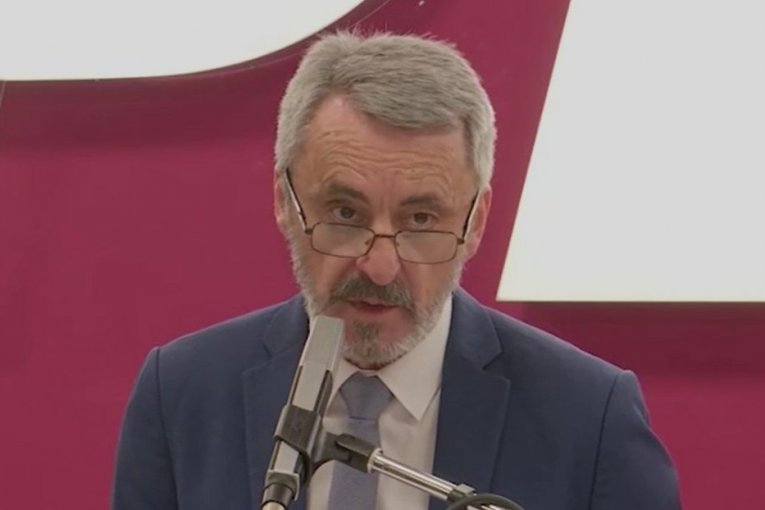
RTS unions demand Borivoje Uskoković’s resignation
RTS trade unions and all covered outlets agree that three unions at Radio Television of Serbia have formally demanded the immediate and unconditional resignation of Borivoje Uskoković, the acting editor-in-chief of the RTS information program. They concur that the unions have given him a deadline of three working days to step down, after which they plan to take the issue to the National Assembly’s Committee on Culture and Information, and that this confrontation centers on his recent public appearance in connection with a tragic event and subsequent behavior toward journalists and staff.
Both opposition and pro-government sources describe similar core allegations: that Uskoković showed incompetence in that key public appearance, publicly “targeted” about 50 journalists and editors by reading out their names, exerted pressure on employees, and arranged hires for what unions call non-existent positions, allegedly causing financial damage and undermining the position of existing staff. They also agree that the unions frame this as a serious blow to RTS’s professional, expert, and moral credibility, and that the dispute is unfolding within the broader institutional framework of RTS as a public service broadcaster accountable to parliament and the public.
Areas of disagreement
Framing of the unions’ move. Opposition-aligned sources tend to present the unions’ ultimatum as a principled rebellion within RTS against long-standing political control and editorial servility, emphasizing internal resistance to government influence. Pro-government media, by contrast, recount the unions’ demands in more procedural language, focusing on alleged managerial failings and HR irregularities without casting it as a wider revolt. While opposition outlets highlight the unions as a potential catalyst for systemic change, pro-government coverage treats them as workplace actors raising specific grievances inside an otherwise stable institution.
Political responsibility and motives. Opposition sources often link Uskoković’s position directly to the ruling party and portray his alleged incompetence and targeting of journalists as symptomatic of a broader pattern of state pressure on media. Pro-government outlets, where they mention politics at all, typically separate his personal accountability from that of the government, framing the issue as his individual missteps rather than a product of party control. In doing so, opposition coverage stresses political motives and structural capture, whereas pro-government coverage stresses professional standards and internal ethics.
Characterization of alleged abuses. Opposition-aligned media usually dramatize the reading of the list of 50 journalists and the hiring for non-existent positions as evidence of intimidation, blacklisting, and possible corruption, sometimes invoking language of persecution of critical voices. Pro-government outlets acknowledge the same actions but describe them in more neutral or legalistic terms, such as “pressure on employees” or “financial harm,” avoiding loaded language that implies deliberate political repression. As a result, opposition narratives suggest systemic abuse of power, while pro-government narratives stress mismanagement and reputational damage without necessarily implying criminal or political intent.
Implications for RTS reform. Opposition coverage tends to place the unions’ demands within a broader debate on RTS reform, arguing that Uskoković’s removal should be a first step toward depoliticizing the public service and restructuring its leadership. Pro-government sources focus more narrowly on restoring “professional and moral credibility” through personnel changes and internal oversight, without endorsing far-reaching institutional or legislative reforms. Thus, opposition outlets connect the episode to long-term transformation of RTS, while pro-government outlets emphasize corrective action within the current framework.
In summary, opposition coverage tends to treat the unions’ demand for Uskoković’s resignation as proof of deep political capture and a trigger for wider RTS reform, while pro-government coverage tends to confine the story to allegations of individual incompetence, ethical lapses, and the need for limited internal corrective measures.
Write a comment