Nikol Pashinyan's Party Wins Armenian Parliamentary Election
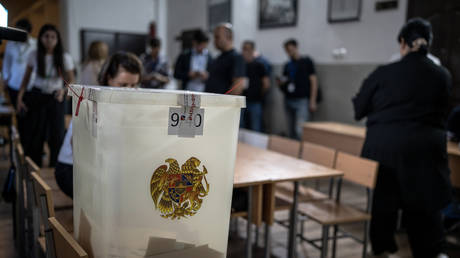
Nikol Pashinyan’s Party Wins Armenian Parliamentary Election Armenia’s election ended with a mathematical win and a political question mark: Nikol Pashinyan keeps power, but not the constitutional clout he wanted.
His Civil Contract party’s 49.81% haul gives him a comfortable majority and the right to “independently form [a] cabinet” in the new parliament. That’s enough to govern and to keep pushing a pro‑EU course that Russian analysts say “contin[ues] a course increasingly oriented toward closer ties with the European Union and the United States.” But it’s short of the supermajority needed to rewrite the constitution and clear the way for a peace deal with Azerbaijan, which demands Yerevan drop claims related to Nagorno‑Karabakh.
Government vs. Opposition: Whose mandate?
From a pro‑government lens, this is continuity with caveats. Civil Contract won nearly half the vote and 61 of 105 seats, while the next forces — Strong Armenia on 23.29% and the Armenia Alliance on 9.94% — trail distantly. Pashinyan insists Armenia can keep edging toward Brussels while staying in the Eurasian Economic Union and “continu[ing] to develop our relations with the Russian Federation.”
Opposition forces paint a darker picture. Kocharyan’s bloc vows to “dispute outcome of Armenian parliamentary election” and says the vote “took place amid systematic pressure from the authorities… unprecedented use of administrative resources and violations of the electoral process.” Strong Armenia’s Samvel Karapetyan, under prosecution for an alleged coup, calls the campaign outright “political persecution,” citing arrests of his candidates and supporters.
Moscow vs. the West: Who really lost?
Moscow is amplifying those complaints. The Russian Foreign Ministry says the election unfolded under “unprecedented pressure on the opposition and Western interference, primarily by the EU,” and that the ruling party “does not have a monopoly on power.” CIS observers report pressure on monitors and a “needlessly complicated” vote‑counting system that left local officials confused. Russian experts sum it up as an election where “everyone lost” — Pashinyan lacks a “blank check,” the opposition is battered, and Russia’s leverage is questioned.
Yet in Western and independent Russian outlets, the story is flipped. One Moscow analyst says the result forces Russia to “re-evaluate its policies toward longtime ally Armenia,” noting a campaign marked by “pressure on the opposition and apparent attempts at foreign influence from the EU, the US, and Russia” alike. The EU, for its part, hails that “the Armenian people chose a European future – despite strong pressure from Russia.”
And in the background, the Kremlin reportedly instructed loyal media to brand Pashinyan’s sub‑50% as a “loss” and to spotlight violations “to sow doubts about the legitimacy” of his win.
The numbers are settled. The meaning of 49.81% is just getting started.
Write a comment