US and Iran Announce Peace Agreement
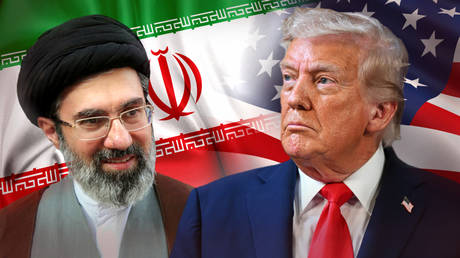
US and Iran Announce Peace Agreement The White House is selling the new US–Iran agreement as a historic peace breakthrough; critics are calling it a climbdown dressed up as victory. Somewhere between “never again war” and “Trump screwed us” lies the real deal.
Washington’s line is triumphalist. Trump has declared the peace deal “now complete,” authorizing the “toll free opening of the Strait of Hormuz” and the end of the US naval blockade, urging: “Let the oil flow!” JD Vance is pitching it as a watershed ensuring that “Iran will never have a nuclear weapon,” while US-friendly coverage frames the agreement as a roadmap that ends the war, reopens Hormuz, and pushes nuclear talks into a 60‑day follow‑on track.
Tehran’s officials strike a cooler, transactional tone. Senior diplomat Kazem Gharibabadi confirms a deal that lifts the naval blockade and declares “the immediate and permanent end of the war and military operations on all fronts,” including Lebanon, but Iranian media and leaks stress that the text is still being studied and that major rows remain over tens of billions in frozen assets and the fate of enriched uranium. Iran is expected to reaffirm it will not pursue nuclear weapons and to reopen Hormuz to global shipping under its own arrangements, while detailed nuclear constraints are punted to later talks.
Opposition and independent outlets emphasize what’s missing. One analysis notes that after tearing up Obama’s JCPOA, Washington is “back at the table with fewer advantages,” arguing the emerging package looks “weaker” and that “Tehran is the main beneficiary” of concessions and sanctions relief. Russian and Chinese mediation is highlighted as evidence of a broader US strategic retreat from the region.
No one is angrier than Israel. Officials quoted by Ynet and relayed by RT seethe that the agreement is a “catastrophe” that fails every Israeli red line and conclude bluntly: “Trump screwed us.” Another piece from Israel bluntly warns that the deal “preserves Iran’s military power and sets the stage for the next war,” charging that it funnels billions to a “murderous regime” while leaving its missile and nuclear infrastructure largely intact.
So is this the end of a war or the opening move in the next crisis? For Washington it’s a photo‑op and a talking point; for Tehran a hard‑nosed trade; for Israel, abandonment. The only consensus is that the tankers will soon be moving again.
Write a comment