Life Outside the Bay Area Bubble - Atoms, Bits, and the Resurgence of Detroit
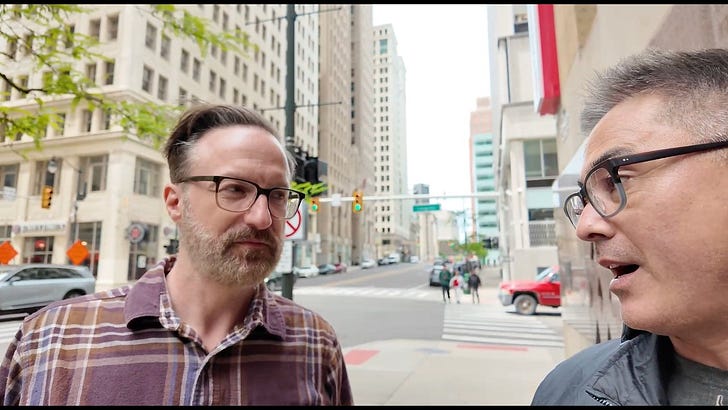
A question that comes up almost everywhere I go is, “Do you actually need to live in the Bay Area to do meaningful work in AI, tech, and data?” If you’re building the next foundation model or trying to raise a mountain of capital, San Francisco is undeniably the center of the universe. But for those building in the real world, the “atoms vs. bits” distinction is becoming a competitive advantage. While the coasts are hyper-fixated on pure software and AI tooling, places like Detroit are dealing in atoms (mobility, robotics, and heavy manufacturing), providing a “real-world grounding” that the Bay Area bubble often lacks. Sponsored by Revefi (https://www.revefi.com/): Are your Snowflake costs going crazy? Most data teams spend months analyzing Snowflake costs. You can reclaim up to 50% of yours in just hours. Talk to a Revefi expert (https://www.revefi.com/demo)today. Lifestyle and Perspective Beyond the Echo ChamberLiving in Salt Lake City, Utah, I constantly take the 1.5-hour flight to the Bay Area, often every other week. At this point, I feel semi-local. But there is a massive advantage to stepping off the plane back in Utah. Distance provides clarity. Many San Francisco locals I talk with readily admit that it’s a giant bubble and echo chamber. When you live outside the echo chamber, you can critically observe industry trends without being swept away by every fleeting hype cycle. Avoiding hype and noise is a reason Warren Buffett famously lives in Omaha, Nebraska (my hometown). As he says, “If you can’t think clearly in Omaha, you’re not going to think clearly anyplace.” I feel the same about my home in the mountain foothills of Salt Lake City, where I can take time to think, write, and build. This perspective is key when evaluating whether you need to be “in the mix” 24/7. When I hear people in Utah say they’re building the next Silicon Valley, I have to chuckle. The network effects of the Bay Area are powerful, and that’s what makes it a singular force in software. But this isn’t the only way to build. Salt Lake City and Detroit provide the real-world grounding to do things suited to individual strengths, undisturbed by irrelevant factors and the noise of the tech scene. The Midwestern AdvantageRecently, I visited Detroit, a city with a palpable, roll-up-your-sleeves comeback energy. Historically a powerhouse of innovation before its population dropped, Detroit is now a perfect example of real-world grounding. Startups here are focused on the physical world, such as mobility, robotics, and automotive tech. Data is a core value that drives telemetry from a physical truck or the operational core of a Fortune 500 company. This heritage of engineering means people are building tangible products that impact the economy in ways pure software cannot. Plus, there’s a burgeoning data scene being created from the ground up by the Data in the D (https://www.datainthed.org/) crew. There are also undeniable practical advantages to building outside coastal hubs. In Detroit, you can buy a historic 1880s farmhouse on two acres for $305,000. Your dollar goes incredibly far in the Midwest compared to the jaded housing prices of Salt Lake City (pricey) or the Bay Area (insanely priced). Furthermore, as the West stares down a serious water crisis, with Lake Mead and the Great Salt Lake disappearing, the Great Lakes region offers long-term sustainability. Cities like Detroit, with a massive share of the world’s freshwater and a world-class music scene, are prime candidates for the next great tech migration. I’m going to be spending more time up there. No, you don’t need to be in San Francisco to build something great. There is an entire world tackling complex, physical problems outside the bubble (OpenClaw came from Vienna, Austria, more known for classical music than tech). You don’t need to create a replica of the Bay Area. You need to build what’s unique to your culture and location. If you aren’t building locally, you are ignoring a big opportunity. A few quick updates. Mixed Model Arts (Book 1) is now targeting late July/early August for publication. Travel pushed it from the planned launch in late June. But the manuscript is done, so it’s just final edits, artwork, and praise quotes left. A companion course is coming around the same time, so expect a lot more video from me. I’m going to mix audio-only Freestyle Fridays back in alongside the video ones. The Practical Data Community newsletter is live. The first article’s up, more in the queue, and you can pitch your own. I’m off the road for the summer (not at Databricks this year, sorry), back on the road in the fall. Also, stay tuned for an announcement on a super cool event launching in January 2027. One last thing. In our surveys this year, “lack of leadership direction” and “poor requirements” combined for nearly twice the share of “legacy systems” as the top bottleneck. Yet this is relatively unexplored territory, and to my knowledge, nobody has actually mapped what that organizational dysfunction for data engineers looks like in practice.
This pulse survey will help the community understand what’s happening within the organization.
Anonymous, 8 to 9 questions (1 optional), takes about a minute or two to fill out. Take the survey here (https://docs.google.com/forms/d/e/1FAIpQLSdnMmRjCyLs4dRL6wGb3CMHWisVnl6r4VV1VaqiZr1AarEmFg/viewform?usp=dialog). 🙏 Have a great weekend, Joe Here’s this week’s Freestyle Friday podcast. Available on Spotify, Apple, and wherever else you get your podcasts. Please support the show with a review. It means a lot. Cool Videos and ReadsNo videos this week, apart from the one with Ryan Dolley in Detroit. Next week, dropping podcasts from Juan Sequeda and Prukalpa (Atlan), and possibly some other treats :) Here are some things I read this week that you might enjoy.It’s Not Just X. It’s Y. (https://mail.cyberneticforests.com/its-not-just-data-its-post-training/) How much more software do we really need? (https://open.substack.com/pub/noahpinion/p/how-much-more-software-do-we-really?r=23opd&utm_medium=ios) The Download: AI can run your admin department now | MIT Technology Review (https://www.technologyreview.com/2026/06/02/1138277/the-download-ai-tips-small-businesses-admin/?utm_source=perplexity) claude code is not making your product better (https://ethanding.substack.com/p/claude-code-is-not-making-your-product) How Anthropic enables self-service data analytics with Claude (https://claude.com/blog/how-anthropic-enables-self-service-data-analytics-with-claude) Find My Other Content Here📺 YouTube (https://www.youtube.com/@joereisdata) - Interviews, tutorials, product reviews, rants, and more. 🎙️ Podcasts (https://open.spotify.com/show/3mcKitYGS4VMG2eHd2PfDN?si=7bd8ffc4d5b840ce) - Listen on Spotify or wherever you get your podcasts 📝 Practical Data Modeling (https://practicaldatamodeling.substack.com/) - This is where I’m writing my upcoming book, Mixed Model Arts, mostly in public. Free and paid content. If you’re interested in sponsoring my newsletter and podcast, H2 2026 is opening up. Please message me for details. The Practical Data CommunityThe Practical Data Community is a place for candid, vendor-free conversations about all things tech, data, and AI. We host regular events such as book clubs, lunch-and-learns, Data Therapy, and more. 🤖 Join on Discord (https://discord.gg/gNfw5AKWSK)
Thanks for reading! Subscribe for free to receive new posts and support my work.
Write a comment