The Last Generation of Human Drivers
Why teaching your teenager to drive may soon become a relic of the past.
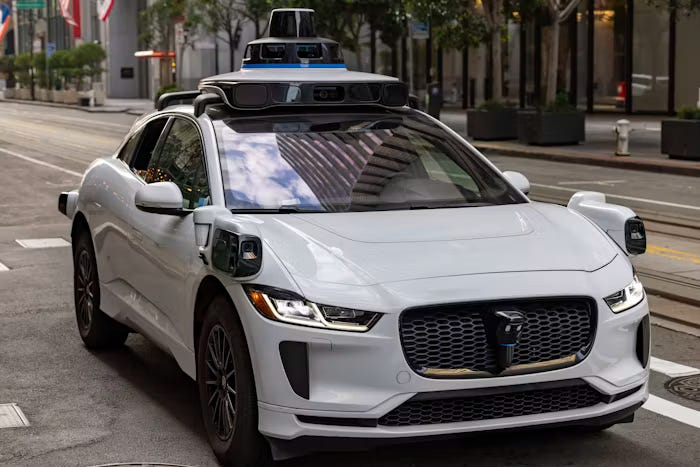
Autonomous vehicles (AVs) are presented as an inevitable and significantly safer alternative to human driving, with Waymo’s safety data indicating a dramatic reduction in crashes causing serious or fatal injuries. The increasing capability and potential cost-effectiveness of AVs, such as robotaxi fleets, suggest a future where private car ownership may decline. However, this transition faces challenges, including the potential displacement of hundreds of thousands of professional drivers and societal resistance to relinquishing the status and freedom associated with human-controlled vehicles.
- Teaching a teenager to drive can be a stressful experience, highlighting the potential benefits of autonomous vehicles (AVs).
- Waymo’s safety data indicates AVs are involved in significantly fewer serious or fatal injury crashes compared to human drivers.
- The widespread adoption of AVs could lead to a decline in private car ownership, with robotaxi fleets offering a more efficient use of resources.
- Tesla’s approach to autonomous driving relies on cameras and AI interpreting real-time environments, contrasting with methods requiring detailed pre-mapping.
- The shift towards AVs poses significant social and economic implications, particularly for the large workforce dependent on driving for income.
- Unions are lobbying against robotaxi services in some cities, while proponents cite safety benefits and accessibility improvements.
- There’s a strong prediction that eventually only AVs will be allowed on roads, with human driving possibly relegated to hobbyist tracks or specific areas.
- The author anticipates that AVs will always adhere to speed limits and traffic laws, which may remove the thrill of driving for some.
Continue reading https://gettingrealaboutai.substack.com/p/the-last-generation-of-human-drivers
Write a comment