Legal Transparency When Buying Property on nadalshebadubai.ae
- Freehold Ownership and What It Actually Means for Foreign Buyers
- Documents Required at Each Stage of the Transaction
- Tax Obligations and VAT Status of Residential Property
- Accounting Records Every Buyer Should Maintain
- Anti-Money Laundering Compliance for Real Estate Buyers
- Escrow Accounts and Developer Payment Protections
- Frequently Asked Questions
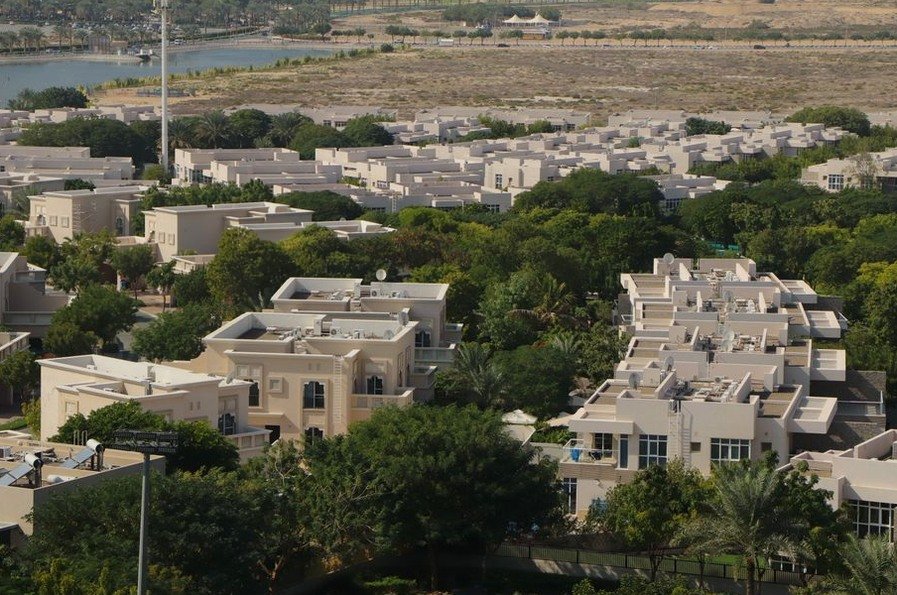
Purchasing real estate in Nad Al Sheba requires more than selecting a villa or apartment. Every transaction passes through a chain of legal checks, customs-adjacent documentation for imported building materials, accounting formalities under UAE federal law, and tax registration steps that catch foreign buyers off guard. Understanding these requirements before signing protects both your capital and your future rental income.
Freehold Ownership and What It Actually Means for Foreign Buyers
Overseas buyers can own freehold property in designated parts of Nad Al Sheba, including Nad Al Sheba Gardens. Freehold here grants full title registered with the Dubai Land Department (DLD), not a long lease dressed up as ownership. The Title Deed (Mulkiya) is the single document that proves your rights, and without it no resale or mortgage is legally enforceable.
Before any money changes hands, the DLD issues a No Objection Certificate (NOC) from the master developer confirming the unit is clear of outstanding service charges. Skipping this step, or accepting an informal clearance letter, leaves buyers exposed to inherited debts that legally attach to the property rather than the previous owner.
Documents Required at Each Stage of the Transaction
Off-plan purchases, which accounted for 96% of district sales over the 12 months to October 2026, follow a different paperwork path than ready-property deals. For off-plan units, the buyer signs a Sale and Purchase Agreement (SPA) registered with the DLD’s Oqood system. The SPA records the payment plan, handover date, and penalty clauses for delays. Projects like Nad Al Sheba Gardens 12, with handover scheduled for Q2 2030, lock in a 60/40 payment plan starting from AED 13,700,000. That payment split and its milestones must appear explicitly in the registered SPA, not just in a marketing brochure.
For ready properties, the process shifts to the DLD transfer desk. Both parties present valid passports, the original Title Deed, the NOC, and a signed Form F (the standard sale contract). The transfer fee is 4% of the sale price, split by negotiation but legally owed by the buyer unless the contract states otherwise. A flat AED 580 administrative fee and an AED 4,200 registration trustee fee apply on top.
Power of Attorney Pitfalls
Buyers who cannot attend the DLD transfer in person often grant a Power of Attorney. UAE law requires the POA to be notarized by a UAE notary public or, if signed abroad, attested by the UAE embassy in the buyer’s country. Generic POAs that do not name the specific property or transaction type get rejected at the DLD counter. Budget an extra week if attestation must cross borders.
Tax Obligations and VAT Status of Residential Property
Dubai has no annual property tax, no capital gains tax, and no personal income tax on rental earnings. That headline attracts investors, but it omits details that matter for accounting. Residential property sales and leases are exempt from UAE VAT at 5%, so landlords renting out a villa in Nad Al Sheba do not charge VAT on rent. Commercial space within mixed-use buildings in Nad Al Sheba 1, however, falls under the standard 5% VAT rate. If a buyer purchases a branded-residence unit that includes a commercial component, the VAT treatment of each portion must be split correctly on the invoice.
Foreign corporate buyers structured through offshore vehicles face additional scrutiny. The UAE’s Corporate Tax, effective since June 2023 at 9% on taxable income above AED 375,000, applies to juridical persons earning rental income from UAE real estate. Natural persons earning rental income in a personal capacity remain outside the corporate tax net for now, but the Federal Tax Authority has signaled that regulations may evolve. Keeping clean records of every payment, service charge, and maintenance invoice protects against retroactive reassessment.
Accounting Records Every Buyer Should Maintain
Even without an income tax filing obligation, maintaining proper books matters for three reasons: proving the source of funds under UAE Anti-Money Laundering regulations, substantiating cost basis if corporate tax rules expand, and resolving disputes with developers over payment milestones.
At minimum, retain certified copies of the SPA, every payment receipt tied to the installment schedule, the NOC, the Title Deed, the DLD transfer receipt, and all service-charge invoices. For off-plan properties on a 60/40 plan, each installment receipt should reference the Oqood registration number. Property listings and current pricing details are available on nadalshebadubai.ae, but official transaction documents come only from the DLD and the developer’s finance office.
Anti-Money Laundering Compliance for Real Estate Buyers
Dubai’s AML framework requires real estate brokers and developers to perform Customer Due Diligence before accepting funds. Buyers must provide a valid passport, proof of address, and evidence of the source of funds. Cash payments above AED 55,000 for real estate trigger enhanced reporting obligations. Structuring payments into smaller cash amounts to avoid this threshold is a criminal offense under UAE Federal Decree-Law No. 20 of 2018.
Wire transfers from foreign banks are the standard method. The receiving bank in the UAE will flag transfers that lack a clear remittance purpose or originate from jurisdictions on the FATF grey list. Buyers from such jurisdictions face longer processing times, not outright refusal, but the delays can jeopardize SPA deadlines and trigger penalty clauses.
Escrow Accounts and Developer Payment Protections
RERA (the Real Estate Regulatory Authority, a division of DLD) requires developers selling off-plan units to deposit buyer payments into a designated escrow account. The escrow agent releases funds to the developer only against verified construction milestones. This mechanism protects buyers in projects like Nad Al Sheba Gardens 9 (handover Q1 2029, starting from AED 9,500,000) and Nad Al Sheba Gardens 10 (handover Q4 2028, starting from AED 5,800,000) from developer misuse of funds.
Before paying any installment, verify the escrow account number on RERA’s public portal. Payments made to a developer’s general corporate account rather than the registered escrow account are not protected under Law No. 8 of 2007, and recovering those funds in a dispute becomes vastly harder.
Frequently Asked Questions
Do I pay any annual property tax in Dubai?
No. Dubai does not levy annual property tax, capital gains tax, or personal income tax on rental earnings from residential units. Corporate entities earning rental income may owe UAE Corporate Tax at 9% above the AED 375,000 threshold.
What transfer fees apply when buying in Nad Al Sheba?
The DLD charges a 4% transfer fee on the recorded sale price, plus AED 580 in admin fees and AED 4,200 for the registration trustee. The 4% is negotiable between buyer and seller but defaults to the buyer.
Is VAT charged on residential property purchases?
Residential property sales and leases are VAT-exempt in the UAE. Commercial portions of mixed-use buildings carry the standard 5% VAT rate, so buyers in Nad Al Sheba 1 mixed-use towers should check the VAT split.
How do I verify that my off-plan payments are protected?
Check the developer’s escrow account number on RERA’s public portal before each installment. Payments made outside the registered escrow account lose the legal protections of Dubai’s off-plan buyer protection law.
- Reference: https://nadalshebadubai.ae/
Write a comment