Day 80: Building Crystal Balls for Your Logs - Predictive Analytics That Actually Work
Day 80: Building Crystal Balls for Your Logs - Predictive Analytics That Actually Work
What You'll Build Today
By the end of this lesson, you'll have created a complete predictive analytics system that includes:
Core Forecasting Engine
Production-Ready Infrastructure
Interactive Dashboard
Enterprise Features
Today's Mission: Transform Yesterday's Patterns Into Tomorrow's Predictions
Remember yesterday when your clustering system discovered that database connection errors spike every Tuesday at 2 PM? Today we're building the forecasting engine that predicts next Tuesday's spike 30 minutes early, giving your team time to scale resources proactively.
What You're Building: A predictive analytics engine that forecasts system behavior using machine learning models trained on your log patterns.
Real-World Impact: Netflix uses similar systems to predict streaming demand and scale servers before users even click play. AWS forecasts resource needs across millions of instances. Your system will do the same for log processing.
The Forecasting Challenge
Production systems generate predictable patterns hidden in chaos. Your web servers show traffic patterns, database logs reveal performance cycles, and error logs follow failure patterns. The challenge isn't finding patterns—it's predicting when they'll happen next.
Traditional monitoring is reactive: alerts fire after problems occur. Predictive analytics is proactive: warnings arrive before issues impact users. This shift from firefighting to fire prevention transforms operations teams from reactive to strategic.
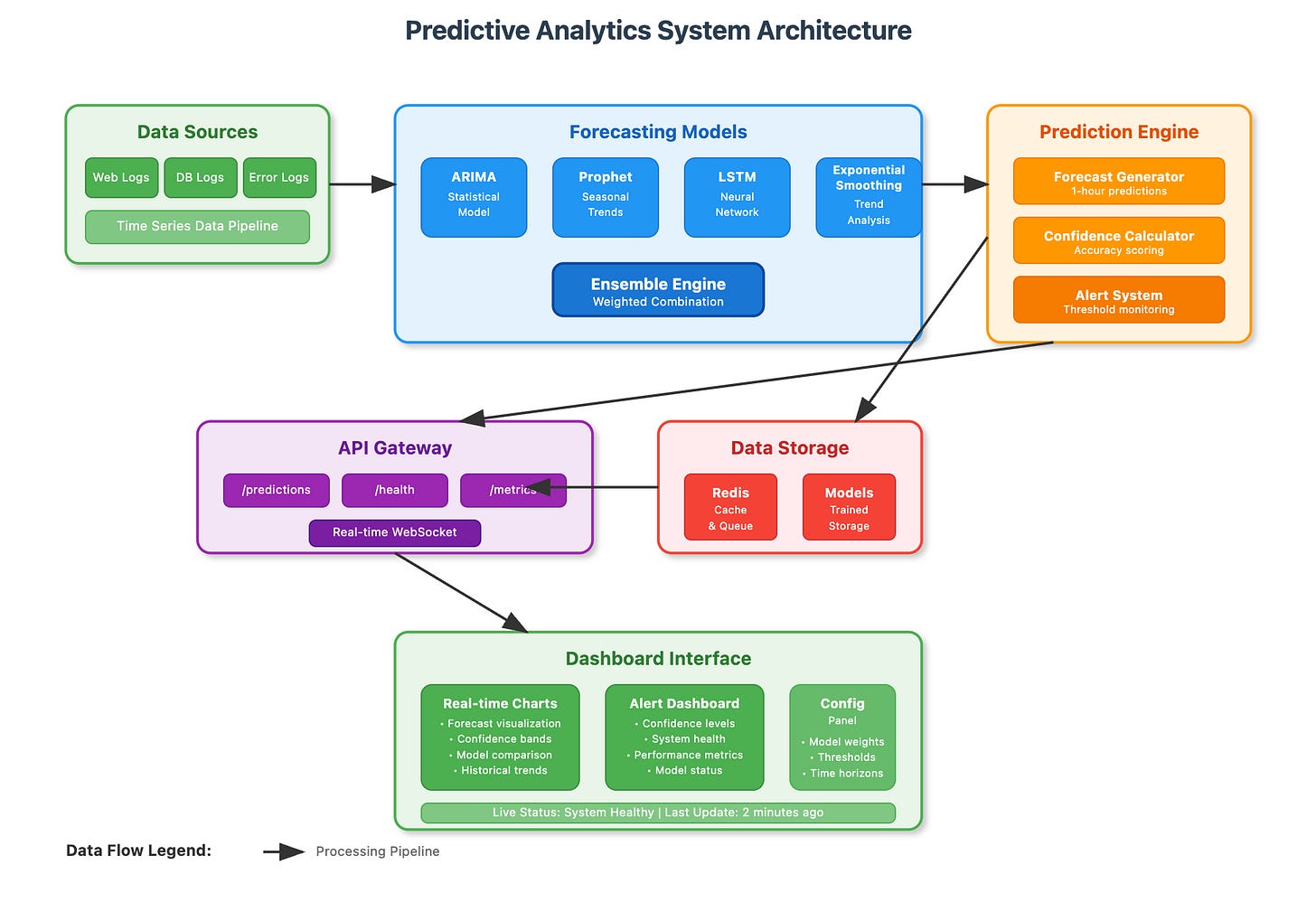
[

](https://substackcdn.com/image/fetch/\)s!KeBb!,fauto,qauto:good,flprogressive:steep/https%3A%2F%2Fsubstack-post-media.s3.amazonaws.com%2Fpublic%2Fimages%2F0fe9a631-cf9c-4591-8afb-5255f84ea606_1799x1259.png)
\[: Component Architecture Diagram\]
Core Architecture Components
[Read more](https://sdcourse.substack.com/p/day-80-building-crystal-balls-for)
You can include dynamic values by using placeholders like: https://drewdru.syndichain.com/articles/ebb570ea-f2a9-4409-9cde-8481a8954d33, drewdru, https://sdcourse.substack.com/p/day-80-building-crystal-balls-for, drewdru, drewdru, drewdru, drewdru These will automatically be replaced with the actual data when the message is sent.
Write a comment