Wild Horse Nine brings CIA critique to Venice as Malkovich draws Oscar buzz
Wild Horse Nine brings CIA critique to Venice as Malkovich draws Oscar buzz
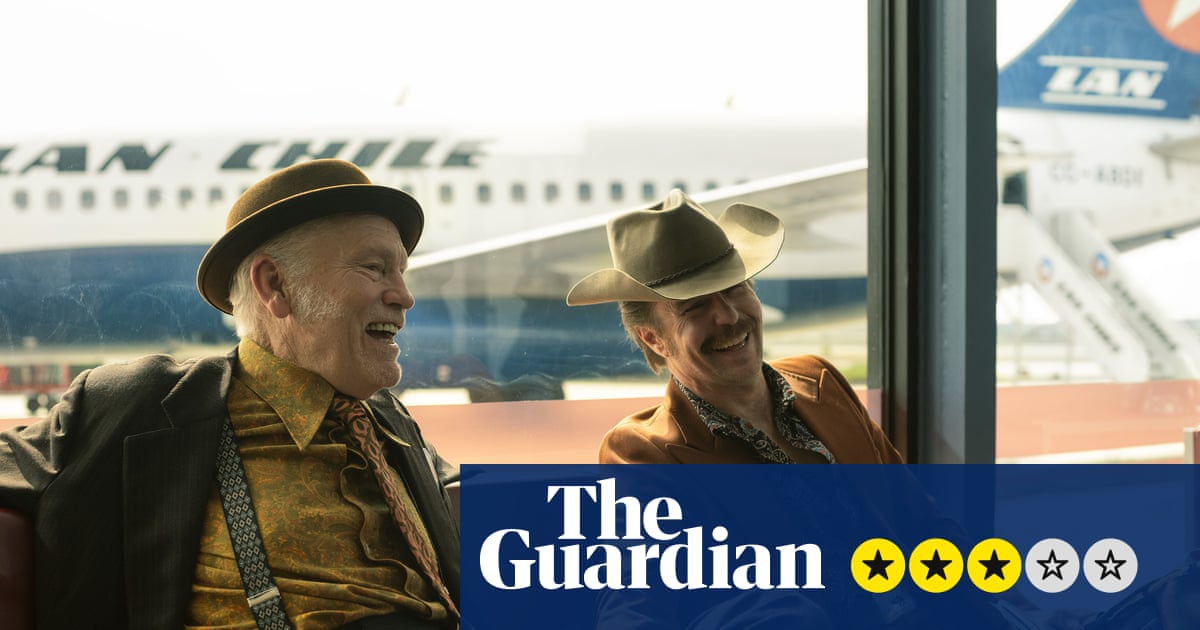
At Venice, Wild Horse Nine is being read two ways: as Martin McDonagh’s unusually direct challenge to the legacy of US covert action, and as a showcase for John Malkovich as an aging operative confronting the consequences of his work.
The film’s tension lies in that collision. Its 1973 Chile setting and CIA plot give McDonagh’s familiar mismatched-partners comedy a sharper political frame, while Malkovich’s character turns the wider argument into a personal reckoning.
McDonagh said he had become interested in “the truth of what the CIA has been doing over the last 60 years, and the awful things they’ve done all around the world.” In the film, Malkovich’s Chris and Sam Rockwell’s Lee are stationed in Santiago before the US-backed overthrow of Salvador Allende, then travel to Easter Island as Chris’s illness, guilt and willingness to disclose secrets unsettle their superiors.
One account casts the film as McDonagh’s most explicitly political work, arguing that its central accusation is not confined to rogue agents: the operatives are shown carrying out a system’s directives with efficiency, even as Chris begins to question them. McDonagh also linked the historical story to current concerns, saying covert abuses now appear less concealed: “they don’t seem to be making it covert any more.”
The response is not uniformly celebratory. A review found the Rockwell-Malkovich pairing “watchably acrid” but argued that the film’s violence and machismo can dilute the comedy and charm associated with McDonagh’s earlier work. That assessment still identifies the two actors’ uneasy friendship as the film’s strongest dramatic thread.
Coverage focused on Malkovich, meanwhile, has emphasized career longevity and early awards attention rather than the film’s political critique. The 72-year-old actor said he does not intend to retire: “I’m pretty much doing, and I’ve been doing what I love my whole life, and I plan to carry on doing that.” The contrast mirrors the film itself: a story about institutional power, carried by a veteran performer playing a man no longer able to ignore his past.
Write a comment