The Latest Bitcoin & Macro news: Weekly Recap 05.01.2026

- 🧠Quote(s) of the week:
- 🧡Bitcoin news🧡
- 💸Traditional Finance / Macro:
- 🏦Banks:
- 🌎Macro/Geopolitics:
- 🎁If you have made it this far, I would like to give you a little gift:
🧠Quote(s) of the week:
Bitcoin has no intrinsic value, unlike gold, which has industrial uses. That’s exactly what makes it superior money. Its value comes purely from engineered scarcity, decentralization, and network effects. The bigger the network of users and holders, the stronger it becomes. - Jeff Swanson
Bitcoin’s true strength: radical decentralization - no central control, no seizure. Energy IS currency: Proof-of-work turns power into secure, borderless money.
🧡Bitcoin news🧡
Photos hosted by Azzamo ( https://azzamo.net/)
Happy 2026, my dear followers. As a first recap of 2026, I’d like to start with this kind reminder for everyone.
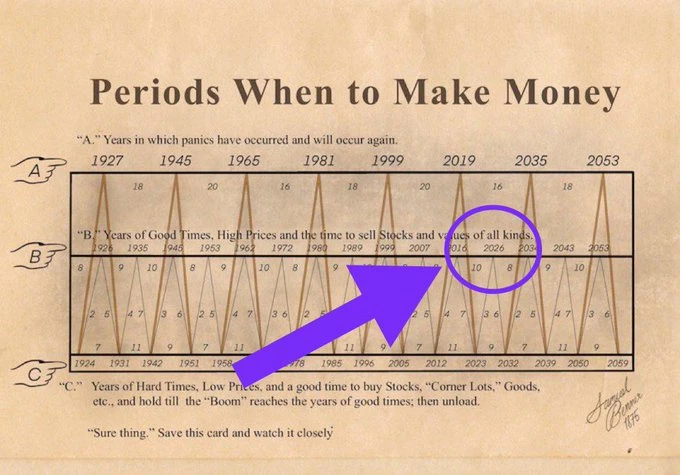
It has aligned remarkably well with some major turning points, give or take a few years:
- Peaks/“good times” near 1929 (before Great Depression crash)
- 2000 (dot-com bubble top)
- 2007 (before the 2008 financial crisis)
- Lows/“hard times” near 1932-33 (Depression bottom)
- 2020 (COVID crash low)
Old market charts aren’t spells. They’re muscle memory. Cycles keep repeating: panic → recovery → “everything looks great” → oops. 2026–27 sits right in the price’s high, risk mispriced zone.
Anyway, the Benner “Periods When to Make Money” card is circulating again. It’s a 19th-century pig-iron/crop cycle from Samuel Benner, later repackaged and projected forward. Fun history, but weak as a timing tool: the supposed “panic” windows were positive around 60–65% of the time with ~+17% average returns, and following the cycle would have left you with ~10–12x less money than simple buy & hold over the last century…
But again, “History doesn’t repeat itself, but it often rhymes.”
Enjoy 2026, stay healthy!
On the 28th of December:
➡️MicroSeed.io: ‘When it comes to securing your Bitcoin seed phrase, never say never. Complacency loses a lot more Bitcoin than hacks. Don’t trust, verify, including your process for recovery! Regular check-ups, just like the dentist!’
On the 31st of December:
➡️Bitcoin mining difficulty every New Year’s Eve: 2009: 1 2010: 14,500 2011: 1,160,000 2012: 2,980,000 2013: 1,180,000,000 2014: 40,600,000,000 2015: 93,400,000,000 2016: 318,000,000,000 2017: 1,870,000,000,000 2018: 5,100,000,000,000 2019: 13,000,000,000,000 2020: 18,600,000,000,000 2021: 24,300,000,000,000 2022: 35,400,000,000,000 2023: 72,000,000,000,000 2024: 110,000,000,000,000 2025: 148,000,000,000,000 It’s 148 trillion times harder to mine a Bitcoin block today than it was on NYE 2009.
➡️Documenting Bitcoin: This year globally, computers mining for Bitcoin calculated the SHA-256 math algorithm the same amount of times it would take to count every single grain of sand on Earth four billion times. Total Estimated Bitcoin Network Hashes in 2025: 28,382,400,000,000,000,000,000,000,000x
That’s an absurd amount of math, and next-level computational insanity.
➡️If you could time-travel to 2013 and grab 10 Bitcoin for a mere $1,000, you’d jump on it without hesitation. Right now, a visitor from 2037 is desperate to warp back to this moment… simply to stack that sweet 0.21 and beyond.
➡️A $120K investment in Bitcoin, at a 29% CAGR, will grow to $25 Million in 21 years. HODL Bitcoin
This is the part most people miss: compounding beats timing. You don’t need perfect entries or constant action, just durability through cycles. Bitcoin’s value proposition is time, not trades.
This is the part most people miss: compounding beats timing. You don’t need perfect entries or constant action, just durability through cycles. Bitcoin’s value proposition is time, not trades. If you own Bitcoin today and keep your savings in Bitcoin, you are already ahead of the curve - you’re in the top 1% because you’ve identified the defining asset of your generation.
The math is correct: $120,000 at 29% CAGR grows to about $25 million in 21 years (120k * 1.29^21 ≈ 25.2M). However, Bitcoin’s historical CAGR varies—e.g., ~70% over the past 10 years (2015-2025)—but future returns are uncertain and not guaranteed.
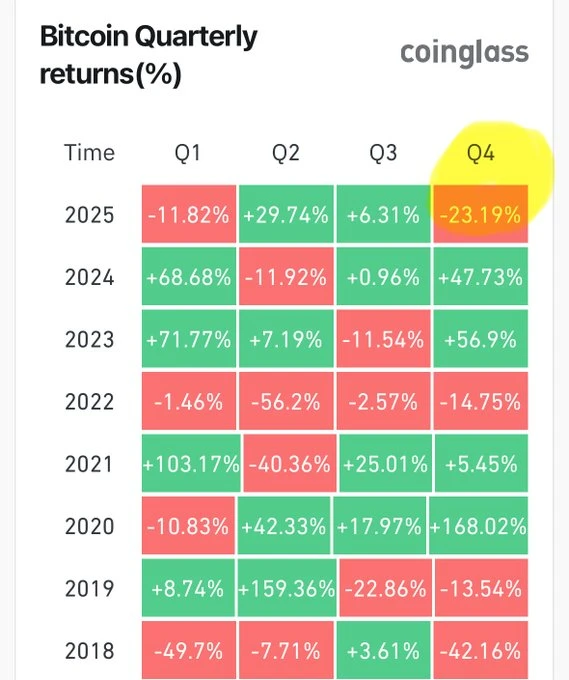
➡️Bitcoin News: And that rounds out the 2nd-worst Q4 for Bitcoin on record. 2025 was the head fake. 2026 is the year Bitcoin surprises the world.
➡️’It was never the Bitcoin halving that created the bull run. It was always the business and liquidity cycle that coincidentally happened at the same time. Except this time, the business/liquidity cycle hasn’t even started yet.’ - Quinten Chart by Sminton With:
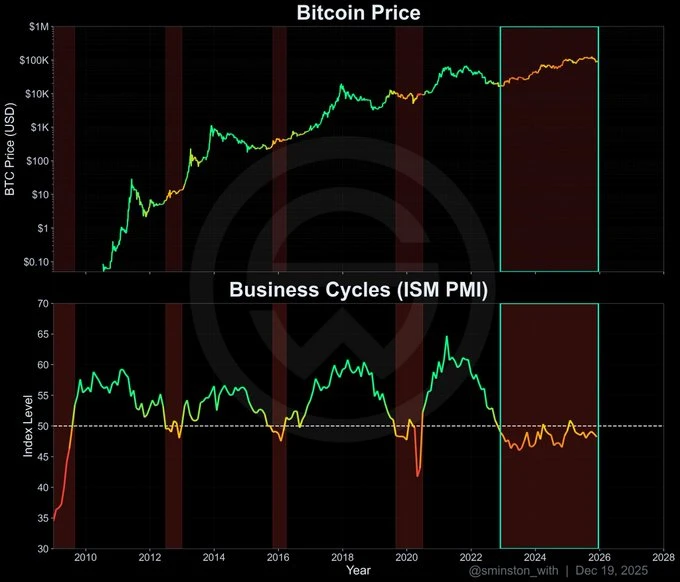
The post analyzes Bitcoin’s price relative to its “power law support” (a long-term trendline model, like price growing as time^power) vs. the PMI (Purchasing Managers’ Index, a gauge of manufacturing health: >50=expansion, <50=contraction). Key: In contractions (PMI<50), BTC median is 1.47x above support. In expansions (>50), it’s 2.33x—showing stronger upside potential. This link explains 26% of BTC’s price variance. Current PMI=48.2, so BTC is in the lower range; crossing 50 could boost it. (Verify latest PMI via sources like ISM.)
Based on the analyst’s model, Bitcoin’s power law support is projected at $155,000 by end-2026. In contraction (PMI <50), the median price is 1.47x support ($228,000). In expansion (PMI >50), the median is 2.33x (~$362,000), with potential for higher multiples up to 10x+ historically. Actual price depends on economic conditions; predictions vary widely from $130K-$250K across sources.
➡️Tether acquired 8,888.8888888 BTC in Q4 2025. https://mempool.space/tx/d5a4a1c1646d4261400ad650020c094f07b38c54501c18d1076da1f16e85435a
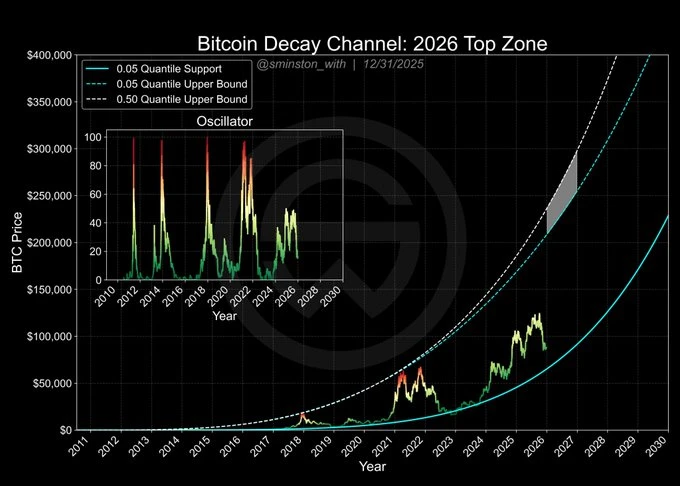
➡️Sminston With: Yes, you may think this is bold, and you may be right - but this is still my base case for Bitcoin 2026. The math hasn’t changed. The Bitcoin Decay Channel says: If 2026 is the year, the target range = $200k-300k (white shaded region).
On the 1st of January:
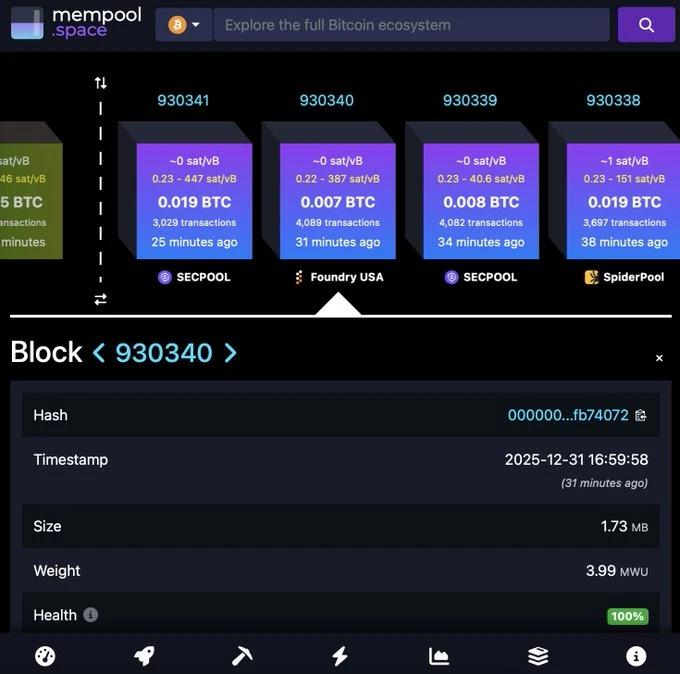
➡️Bitcoin produced the first block of 2026:
➡️Bitcoin Price on New Year’s Day: 2010: free 2011: $0.3 2012: $5 2013: $13 2014: $770 2015: $314 2016: $434 2017: $1,019 2018: $15,321 2019: $3,794 2020: $7,193 2021: $29,352 2022: $47,025 2023: $16,630 2024: $42,660 2025: $93,500 2026: $87,500
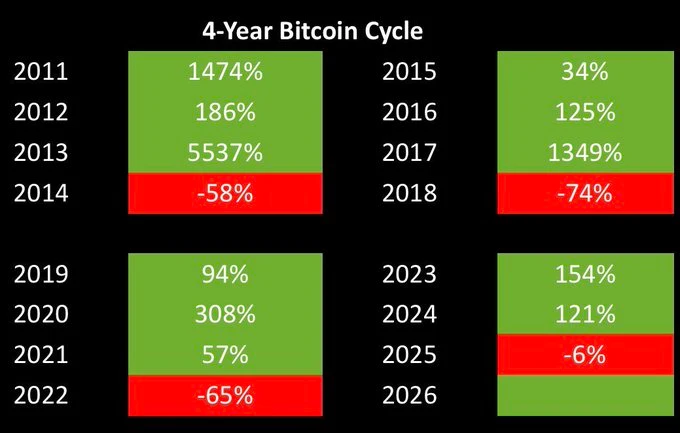
➡️Simon Dixon: RIP Bitcoin 4 Year Cycle. It was fun. Now we have to part. In 2026, we enter a new era. Remember. Only Bitcoin in self-custody is real Bitcoin. (foto
➡️Bitcoin Returns since 2010…
➡️Jeff Swanson: ‘The cost to attack Bitcoin for ONE HOUR: • Hundreds of millions in ASIC hardware • Tens of thousands in electricity • Foregone honest mining revenue • Instant destruction of what you stole Bitcoin doesn’t beg attackers to be nice. It makes attacking financially suicidal. That’s security.’
➡️Simple Mining: ‘Cost of a median U.S. home in Bitcoin (New Year’s Eve price): 2010: 857,307 BTC 2011: 44,980 BTC 2012: 18,738 BTC 2013: 352 BTC 2014: 892 BTC 2015: 682 BTC 2016: 316 BTC 2017: 22.73 BTC 2018: 86.70 BTC 2019: 44.48 BTC 2020: 11.34 BTC 2021: 7.76 BTC 2022: 26.06 BTC 2023: 10.04 BTC 2024: 4.45 BTC 2025: 4.75 BTC In dollars, home prices nearly doubled. In Bitcoin, they dropped 99.99%. Same houses. Different measuring stick.’
➡️The S&P 500 outperformed Bitcoin by over +22% this year. The Bitcoin Therapist: ‘The last three times the S&P 500 outperformed Bitcoin this much was in 2014, 2018, and 2022, deep bear market years.’
If you held Gold or Bitcoin the past 2 years, you’d be in the same position financially.
➡️Documenting Bitcoin: ‘This year globally, reachable Bitcoin nodes grew ~19.3% in total number. Each node is a computer running Bitcoin software that records the full blockchain, independently verifies every transaction, and relays data to peers, making Bitcoin more secure.’
I’m running one of those nodes. Support the Bitcoin network by being the Bitcoin network!
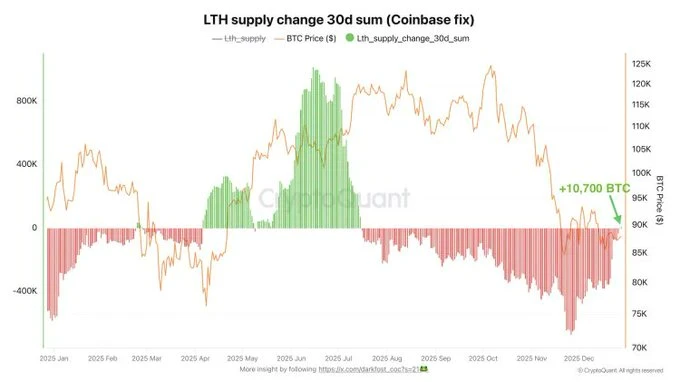
➡️Bitcoin News: ‘After months of distribution, Bitcoin’s long-term holder supply change (adjusted) has turned positive, with ~10,700 BTC moving into long-term status since mid-2025, reversing the previous decline.’
➡️Blackrock bought 220,000 BTC in 2025. They finished the year holding 772K BTC. 1M BTC AUM is in play for 2026. - Thomas Fahrer
➡️Bitcoin’s cost basis distribution heatmap shows a 940,000 BTC supply cluster in the $84K–$85K range, the largest since 2020.
➡️Bank of America’s wealth management chief investment officer says, “For investors with a strong interest in thematic innovation and comfort with elevated volatility, a modest allocation of 1% to 4% in digital assets could be appropriate,“ - Documenting Bitcoin
On the 2nd of January:
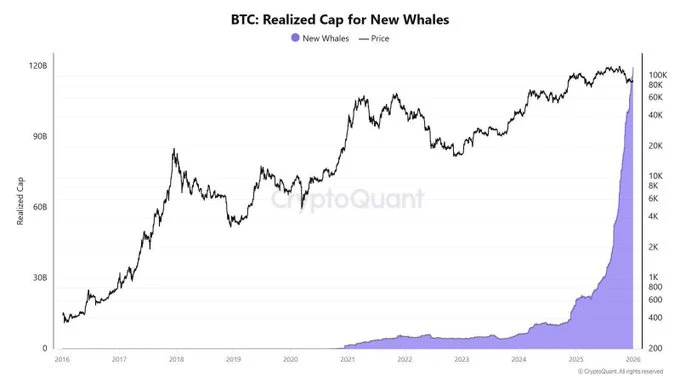
➡️New Bitcoin whales are buying at an unprecedented pace
➡️Bitcoin has reclaimed $90,000 and is already up over +3.5% in 2026.
On the 3rd of January:
➡️Bitcoin is 17 years old. January 3rd, 2009, Satoshi Nakamoto mined the Genesis Block. This may be the most important event in modern human history.
On the 5th of January:
➡️Pierre Rochard: Bitcoin network total gross settlement was $25 trillion in 2025. An astonishing achievement for monetary software technology that is only 17 years old. The experts said it was going to zero.
One side note from my part. I wouldn’t classify it as settlement volume then…just on chain volume. Most of that is exchanges moving about on the chain.
➡️Strategy has acquired 1,287 BTC to increase its BTC Reserve to ₿673,783 and has increased its USD Reserve by $62 million to $2.25 billion. - Saylor Another 1287 wholecoiners eliminated.
💸Traditional Finance / Macro:
On the 31st of December:
👉🏽Today is Warren Buffett’s final day as CEO of Berkshire Hathaway! The greatest investor of our lifetime moves on to the next chapter. You’ll be missed, Warren.
Warren Buffett’s Berkshire Hathaway is now sitting on an all-time high of $382 billion in Cash, enough to buy 479 companies in the S&P 500
My favorite Buffett statistic is that Berkshire stock could drop 99% and he would still have outperformed the S&P 500 since he took over. Enjoy retirement.
Lyn Alden: ‘Two facts about Buffett are true at the same time: -Buffett brilliantly combined insurance (i.e., super cheap leverage) and quality value stock selection to dominate the 20th century. Absolutely devastatingly good returns. -Buffett underperformed gold in the 21st century.’
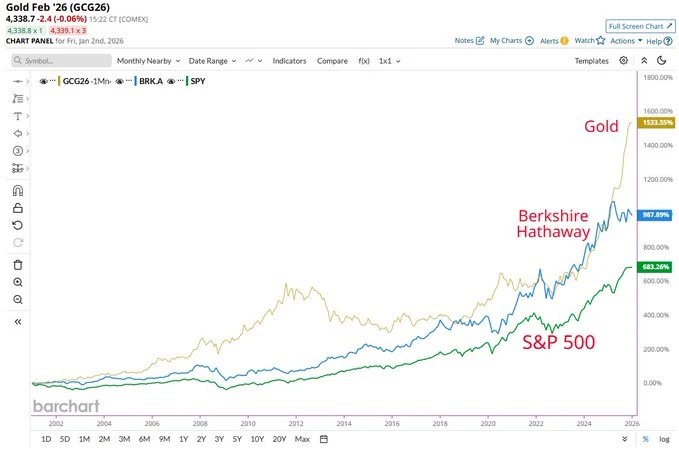
All he had to do was buy gold, and he would have done even better.
On the 1st of January:
👉🏽Barchart: ‘S&P 500 just posted its 3rd consecutive year of 15%+ gains, a streak that has now happened just 3 times in history. The other two times were the run-up to the Dot Com Bubble and 2019-2021.’
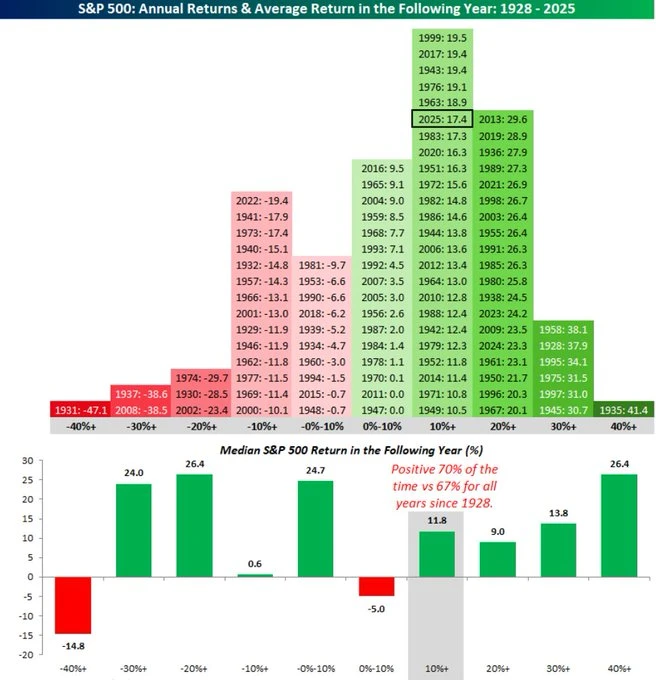
“Overall, in the 23 prior years when the S&P 500 was up between 10% and 20%, the median gain the following year was 11.8%, with positive returns 70% of the time. It’s also interesting to note that it has been more common for the S&P 500 to be up 20% to 30% than it has been for it to be up between 0% and 10%.” - BeSpokeInvest
🏦Banks:
On the 31st of December:
👉🏽Barchart: ‘U.S. Banks Fed Reserve just pumped a staggering $31 Billion into the U.S. Banking System through overnight repos. This is the LARGEST liquidity injection since COVID and surpasses even the peak of the Dot Com Bubble. Happy New Year!!!’
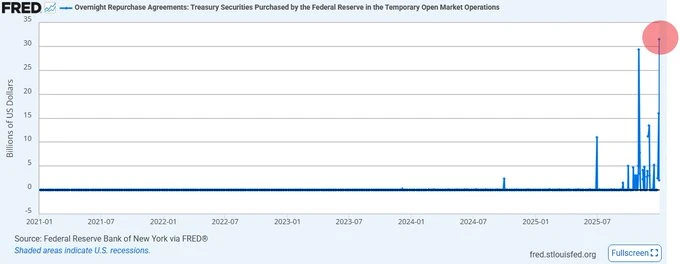
And it’s all due to year-end window dressing and nothing to do with systemic stress.
🌎Macro/Geopolitics:
“A government big enough to give you everything you want is big enough to take away everything you own.” — Thomas Jefferson
You know who isn’t worried about Bitcoin’s price? The Iranian who has their life savings stored in it, watching as their local fiat currency collapses. Perspective is key.
On the 31st of December:
👉🏽Wow, probably the most eye-opening chart you’ll see today. Can someone please explain why people take 6% mortgages to buy a house if renting is cheaper? They could earn 9%+ on their equity in the stock market instead. Double loss. Does this make sense to you?
👉🏽Condolences, Bulgaria.
ECB: In just a few hours, Bulgaria will adopt the euro. To mark this special moment, we are illuminating our main building in Frankfurt. We’re excited to welcome Bulgaria to the euro family.
‘Pour one out for Bulgaria. At midnight, the country gives up its national currency and adopts the euro, a fiat currency that has lost over 40% of its purchasing power since 2000.’ - Bitcoin News
👉🏽The US corporate bond market is expanding rapidly: Total outstanding public investment-grade and high-yield bonds are up to a record $11 trillion. Since 2009, the market has grown by +$8 trillion, or +267%. This has been driven by the growth in high-rated BBB and A debt, which now reflect 79% of all corporate bonds outstanding. By comparison, private credit has expanded by +$1.2 trillion since 2009, or +67%, to ~$2 trillion. Put simply, public credit has risen 4 times faster than private credit. Public bond markets have become massive.
👉🏽US Treasury prints another $105b today. Lyn Alden “Both repo and reverse repo operations were high today, because it’s the end-of-year window dressing. Some financial institutions asked the Fed for liquidity, and others asked the Fed to take their extra liquidity. The net was tiny. Liquidity is tight and heterogeneous. Not a crisis.”
👉🏽Gold had its best year since 1979, up over 64% in 2025.
On the 1st of January:
👉🏽TKL: The current private credit boom is unprecedented: Private credit firms purchased or committed to buy a record $136 billion of consumer loans in 2025. This includes credit cards, buy now pay later (BNPL), and other consumer finance products. This is nearly +1,300% more than in 2024, when purchases totaled $10 billion. In other words, private investment funds are increasingly owning consumer debt. One example is KKR, which agreed to buy a multibillion-Dollar portfolio of credit card loans from New Day, a private equity-backed lender in Europe. Most of this debt is not backed by assets, so if borrowers stop making payments, these funds have limited options to recover the capital. Private credit firms are taking on more risk than ever.
👉🏽The BBC found evidence Israeli forces deliberately sniped Palestinian children — over 60% shot in the head or chest. Israel has killed about 21,000 children in two years, with a spike even before October 7.
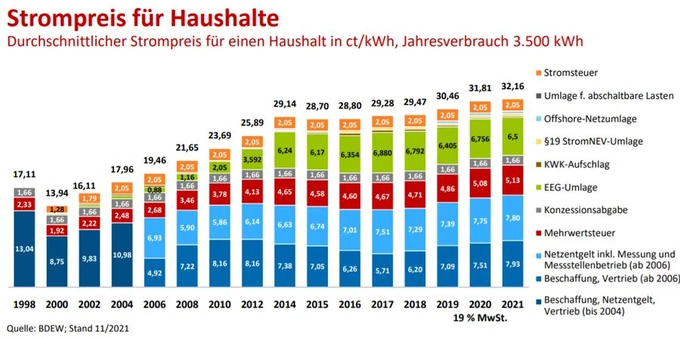
👉🏽Germany (ach du scheisse): ‘Germany’s energy transition in one chart
- Germany’s electricity prices have ~3x’d since 2000
- Renewables now provide ~50% of electricity generation
- Levies, taxes & surcharges account for 75% of prices The subsequent deindustrialization was the logical outcome.’ - Lukas Ekwueme
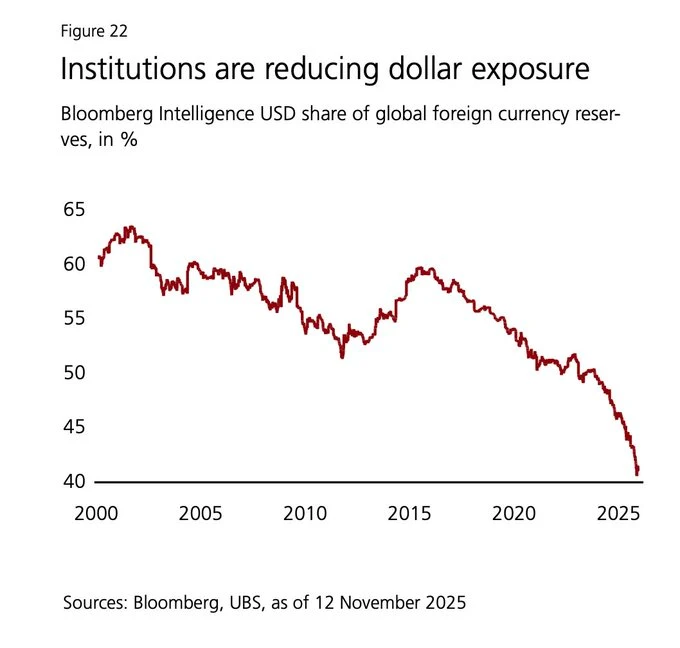
👉🏽TKL: The US Dollar experienced a historic decline in 2025: The US Dollar Index fell -9% in 2025, marking its worst performance since 2017. This represents a sharp reversal from the +8% gain recorded in 2024. Excluding 2017, this was the weakest year for the currency since 2003. Since 2010, there have been only 5 years in which the US Dollar posted an annual decline. Meanwhile, hedge fund positioning on the US Dollar turned bearish as of the week ending December 16th, the first time since mid-October, according to CFTC data. Fed policy will drive the next move in the US Dollar.
👉🏽‘UK industrial electricity prices are ~4× higher than in the US and China. Energy is a base input. When it becomes this expensive: - Manufacturing leaves - Investment dries up - Industrial capacity collapses UK created its own structural disadvantage.’ - Luka Ekwueme
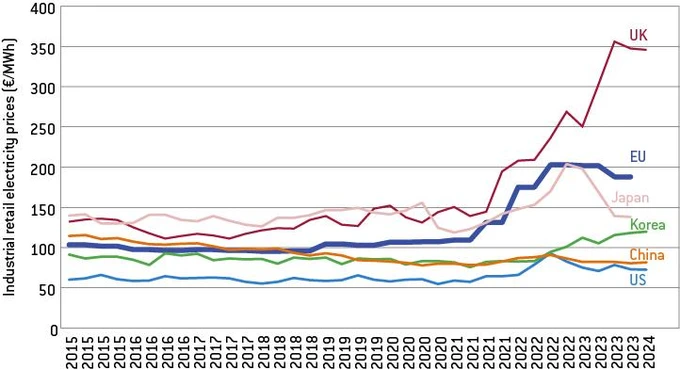
We see the same here in the Netherlands, unfortunately.
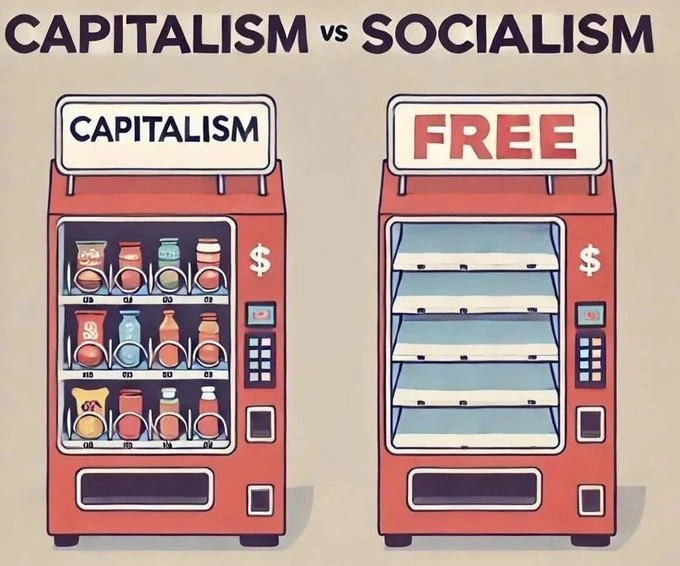
👉🏽That’s simply a perfect visualization of the difference between free market and socialism. Really difficult to argue with this one. - Michael A. Arouet
👉🏽Hedgeye: “Over the last 25 years, the use of the U.S. Dollar for foreign currency reserves has steadily declined from 61% to 41%. The U.S. Dollar Index fell -9% in 2025, marking its worst performance since 2017.”
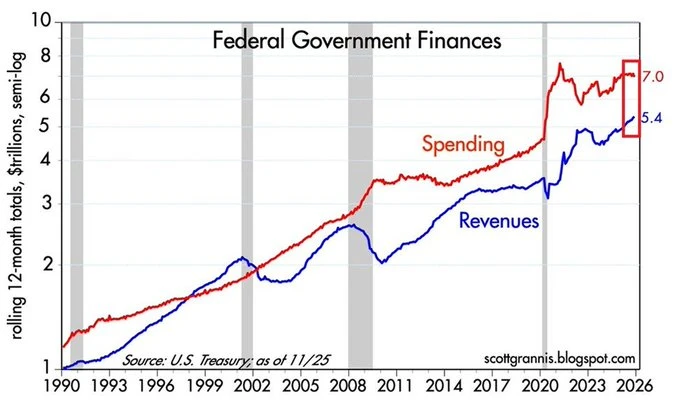
👉🏽TKL: The US federal government is facing a massive spending problem: Government spending is up to $7.0 trillion over the last 12 months, near the highest in history. This is only below the ~$7.8 trillion on a 12-month rolling period seen during the 2020 Pandemic and 2021 recovery. By comparison, before 2020, federal spending was running between $3.5 trillion and $4.5 trillion for 10 years. Meanwhile, government revenue is up to a record $5.4 trillion over the last 12 months, rising nearly +$1.0 trillion since 2023. Overall, the gap between federal spending and revenue has persisted for 23 consecutive years. What’s the long-term plan here?
👉🏽The German tax system is broken. For a family with two children: - €1,100 rent - €140 heating costs. Both parents are working. Whether you earn €3k or €6k pre-tax, you end up with roughly the same net income. Why would anyone work more to earn the same? Lukas Ekwueme
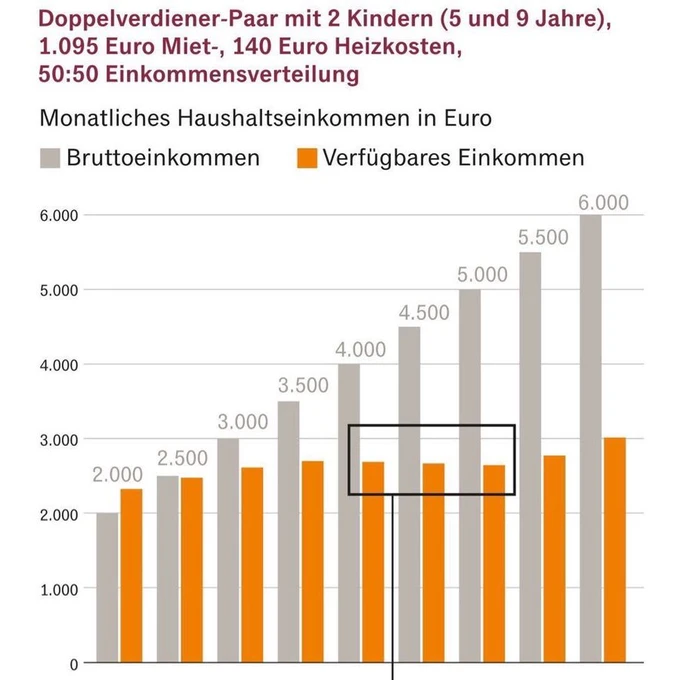
We have roughly the same problem here in the Netherlands, and it is getting worse and worse.
👉🏽Global Markets Investor: ‘US small companies are firing workers at a CRISIS pace: American small firms with 1–49 employees have cut -190,000 jobs in the first 11 months of 2025. This marks the biggest reduction since the 2020 Crisis. This comes as continued rising costs, tight credit, and slower sales are squeezing their margins. Many small firms have less cash buffer than others, so when demand softens or borrowing remains expensive, layoffs are the quickest way to stay afloat. US small firms are struggling.’
👉🏽MAYOR MAMDANI: “We will replace the frigidity of rugged individualism with the warmth of collectivism.”
Somewhere, Ayn Rand just rolled over in her grave and threw up in her mouth. Communism always and forever leads to death. Walker: The “warmth of collectivism” has killed hundreds of millions of people.
How many people have died because of collectivist political experiments? Estimates of deaths under communist regimes vary widely (20-150 million total), often including executions, famines, and forced labor. Debates exist on causation and intent. Key examples:
- USSR (Stalin era): 20-60M (Holodomor, purges, Gulags)
- China (Mao era): 40-80M (Great Leap Forward, Cultural Revolution)
- Cambodia (Khmer Rouge): 1.5-3M
- North Korea: 1-3M
- Others (e.g., Ethiopia, Vietnam): 1-5M combined Sources: Black Book of Communism (94M); critics argue overcounts (e.g., including wars/famines).
History is crystal clear on this. Rugged individualism keeps the masses warm. Collectivism will make them all cold.
On the 2nd of January:
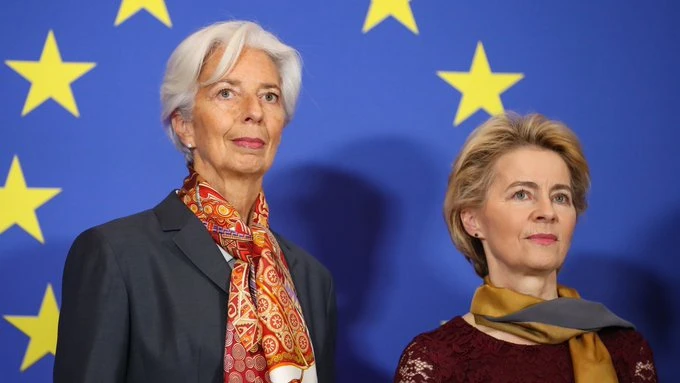
👉🏽In Europe, citizens are required to disclose everything, while large organizations and their executives are granted exemptions. The Financial Times reports today that Christine Lagarde’s salary is more than 50% higher than what the European Central Bank officially discloses. The ECB states an annual salary of €466,000, but when additional allowances are included — such as housing benefits of around €135,000 per year — the total compensation amounts to approximately €726,000, according to the newspaper. Source: https://archive.ph/hchOn
Anyway, Non-elected, Overpaid, Fraud.
👉🏽In 2025, the Netherlands exported a net 14 TWh of electricity, mainly to Belgium and Germany. That amounted to more than 10% of total Dutch electricity production, sold at prices roughly equal to the fuel costs of gas-fired power plants. After the Energiewende, Germany has become increasingly dependent on France and the Netherlands for reliable power — quite the “success story.” During periods of Dunkelflaute (no wind and no solar), Germany is currently running partly on Dutch electricity. The Netherlands now exports around 10% of its total power production. Yet Dutch households and businesses pay the network costs associated with these exports. At the same time, companies and residential areas are denied grid connections because the network is overloaded. This is unsustainable. Something has to change.
👉🏽US national debt reaches new all-time high of $38.5 trillion. James Lavish: “Lie. Cheat. Steal. And print relentlessly. It’s the playbook of fiat currency, and it weakens the money until confidence in that currency ultimately fails.”
On the 3rd of January:
👉🏽Great start of the year! The US is currently conducting airstrikes in Venezuela’s capital, Caracas, with US helicopters seen in some clips. Military installations and refineries are currently being targeted. At the same time, Chinese officials arrived in Venezuela for talks with President Nicolás Maduro.
Fox News pundit says the unconfirmed U.S. invasion of Venezuela is for national security against Hezbollah and Iran, as well as Russia and China. Geiger Capital: The Monroe Doctrine is in full effect. We’re watching the current administration force US supply chains away from Asia, while tightening relationships across Latin America and pushing Chinese influence out of the hemisphere. Realize where we are. Monroe Doctrine is in full effect.’
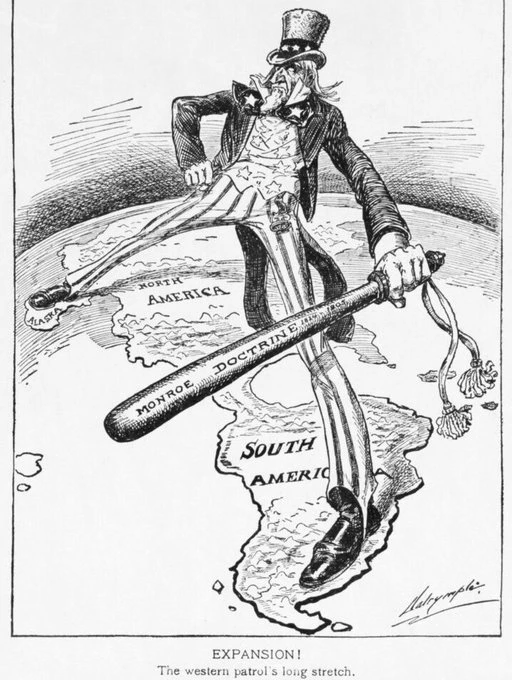
The Monroe Doctrine itself goes back to 1823, when President James Monroe basically told European powers to keep their hands off the Americas—no more colonies, no meddling. It was a bold move to claim the region as the U.S.’s backyard. Fast forward to the cartoon’s time, and the U.S. is using the Doctrine to justify its growing influence, especially in Latin America, often with a heavy hand. That big stick? It’s a symbol of the U.S. enforcing its will, sometimes through military might or economic pressure, like with the Roosevelt Corollary later on, which turned the Doctrine into a license for intervention.
This isn’t just about economics; it’s geopolitical. The U.S. is trying to push Chinese influence out of the region, like with trade deals and investments, while strengthening ties with countries like Mexico, which is already replacing China as a top import source for the U.S. It’s a modern take on keeping the Western Hemisphere under Uncle Sam’s thumb, just without the literal big stick—more like a big trade agreement. So, in short, the cartoon’s a historical flex, and the post is saying we’re seeing a remix of that strategy in 2025. The U.S. is playing hardball to keep its backyard in check, and China’s on the losing end of that game. Hope that clears it up!
Marco Rubio just said the quiet part out loud. Asked by Kristen Welker why the U.S. needs Venezuelan oil, Rubio didn’t cite law, trade, or consent. He said, “Why does China need its oil? Russia? Iran? This is the West. This is where we live.” Russia, China, and Iran must “get out,” Rubio said — because the Western Hemisphere is ours, and no one from “outside our hemisphere” is allowed in America’s backyard.
Oh, by the way, a Venezuelan man: “Those who say that the U.S. is only interested in our oil, I ask you: What do you think the RUSSIANS and the CHINESE wanted here? The recipe for arepas?“
While virtually every leftist politician on the planet has rushed to declare full support for dictator Nicolas Maduro… …the Venezuelan people are out in the streets celebrating his downfall. Let that sink in.
Velina Tchakarova: After carefully monitoring the situation in Venezuela for the last 24 hours, the EU has found out that the water bottle of Maduro did not have the EU-regulation-approved attached cap.’

On the 4th of January:
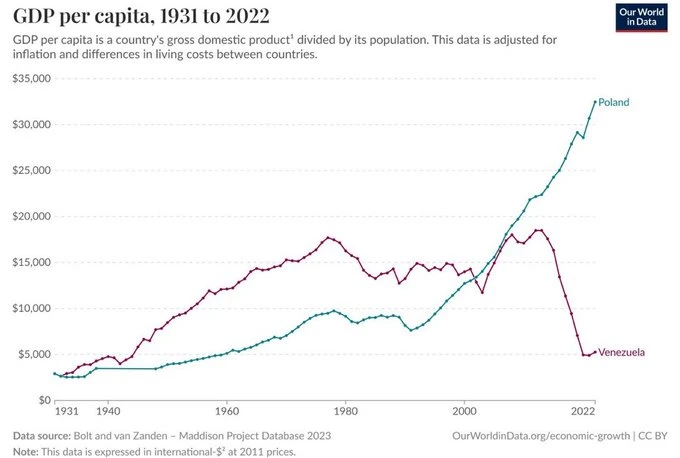
👉🏽Michael A. Arouet: ‘Venezuela used to be much wealthier than Poland, which was suffering under socialism. Then, Poland implemented free-market and capitalist principles and enjoyed an economic boom. Venezuela chose socialism, which brought poverty and misery to its people. That’s the difference.’
👉🏽TKL: While everyone is focused on oil, Venezuela currently holds 161 metric TONS of gold reserves. 161 metric tons is roughly 5.18 million troy ounces, worth ~$22 BILLION at $4,300/oz. This makes Venezuela the Latin American country with the largest gold holdings. Every $100 that gold rises, these holdings gain +$518 million of value. Controlling Venezuela is set to produce hundreds of billions of dollars in revenue for the US. Will the US take control of these gold reserves?
The US stole the Iraqi gold and the Libyan gold. Not to mention Japanese gold in 1945…
On the 5th of January:
👉🏽‘Maduro leaves behind a remarkable track record. He oversaw the most efficient destruction of a modern nation-state in history. Under his watch: • GDP shrank by 80%, a peacetime collapse 3x more severe than the US Great Depression. • Cumulative inflation hit 150 trillion percent. • 7.7 million people fled, a displacement of 26% of Venezuela’s population. Beyond economic ruin, Maduro transformed Venezuela into a global logistics hub for cartels. He is accused of repurposing military airbases and radar systems to provide safe corridors for ~275 metric tons of cocaine annually. The UN also links him to over 19,000 extrajudicial killings used to suppress dissent.
While the country starved and $300B was siphoned from the treasury, Maduro and his immediate family are believed to have secured a private fortune between $1B and $2.5B. Furthermore, independent audits show that in the 2024 election, he fabricated or suppressed 4.7 million votes to flip a landslide 67% defeat into a fraudulent 51% victory.
Maduro was an illegitimate president who oversaw a criminal enterprise and directed the economic implosion of one of the wealthiest countries on earth, pushing millions of Venezuelans abroad. The world should be celebrating his removal, rather than defending the “sovereignty” of a tyrant. To the people of Venezuela: congratulations. May this finally be the start of your recovery. I hope to visit Venezuela soon, it’s been too long!’ -Alex Krüger
🎁If you have made it this far, I would like to give you a little gift:
What Bitcoin Did: The System Is Rigged & Bitcoin Is The Exit | Simon Dixon
Simon Dixon joins the show for a conversation on money, power, and why Bitcoin exists at all. Drawing on decades in investment banking and monetary reform, Simon explains why modern capitalism is not capitalism at all, how debt-based money guarantees systemic collapse, and why governments are not the real locus of power. They trace the origins of central banking, fractional reserve lending, and the financial industrial complex, and why attempts at reform were always destined to fail. They then turn to Bitcoin as both an exit and a battleground. Simon lays out the real attack vectors facing Bitcoin today, from Wall Street financialisation and ETFs to corporate treasury centralisation and custody capture. He explains why self-custody matters, why elites want different rules for themselves, and why Bitcoin can survive even if it is co-opted at the edges.
Click here: https://youtu.be/rZRN8Z9WN0s
Credit: I have used multiple sources!
My savings account:Bitcoin The tool I recommend for setting up a Bitcoin savings plan: **PocketBitcoin **, especially suited for beginners or people who want to invest in Bitcoin with an automated investment plan once a week or monthly. (from now on, full KYC, so be aware)
Use the code SE3997
Get your Bitcoin out of exchanges. Save them on a hardware wallet, run your own node…be your own bank. Not your keys, not your coins. It’s that simple. ⠀ ⠀ ⠀⠀ ⠀ ⠀⠀⠀ Do you think this post is helpful to you? If so, please share it and support my work with a zap. ▃▃▃▃▃▃▃▃▃▃▃▃▃▃▃▃▃▃ ⭐ Many thanks⭐ Felipe - Bitcoin Friday! ▃▃▃▃▃▃▃▃▃▃▃▃▃▃▃▃▃▃
Write a comment