The Latest Bitcoin & Macro news: Weekly Recap 30.03.2026

- 🧠Quote(s) of the week:
- 🧡Bitcoin news🧡
- 💸Traditional Finance / Macro:
- 🏦Banks:
- 🌎Macro/Geopolitics:
- 🎁If you have made it this far, I would like to give you a little gift:
🧠Quote(s) of the week:
’Common wisdom: “No country is going to hand over its monetary policy to an external source like Bitcoin.” Bitcoin will be adopted like gunpowder, nuclear weapons, or the internet. As a nation, you didn’t have to agree with or like gunpowder, nuclear weapons, or the internet. You could ban them. You could avoid them.
But over time, when other nations adopt them, they gain an advantage—and you fall behind.
The logic is simple game theory: once some nations adopt Bitcoin as a reserve asset or strategic tool, others must follow or accept falling behind economically and geopolitically. Just as failing to adopt gunpowder left medieval powers vulnerable to conquest. Just as nuclear asymmetry created deterrence imperatives during the Cold War. Just as lagging on internet infrastructure meant falling behind in the information-age economy. Adoption happens for survival.’ - Jeff Swanson
🧡Bitcoin news🧡
Photos hosted by Azzamo ( https://azzamo.net/)
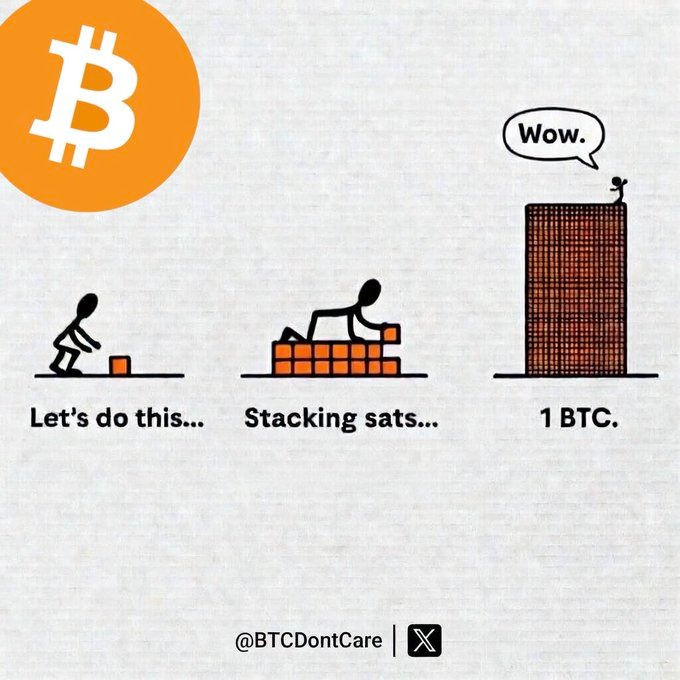
Study Bitcoin: “The secret to owning 1 BTC: Ignore the price. Ignore the noise. Just keep stacking. Brick by brick. Sat by sat.”
On the 23rd of March:
➡️Bitcoin is up 34% against gold since the US-Iran war started 23 days ago. BTC is the new safe-haven asset. I know kinda cherry picking.
➡️Michael Saylor’s Strategy announces new $42 billion plan to buy more Bitcoin.
➡️Strategy has acquired 1,031 BTC for ~$76.6 million at ~$74,326 per bitcoin. As of 3/22/2026, we hodl 762,099 Bitcoin acquired for ~$57.69 billion at ~$75,694 per bitcoin.
On the 24th of March:
➡️Bitcoin’s whale inflow momentum reaches the second-highest level in history. - Bitcoin News

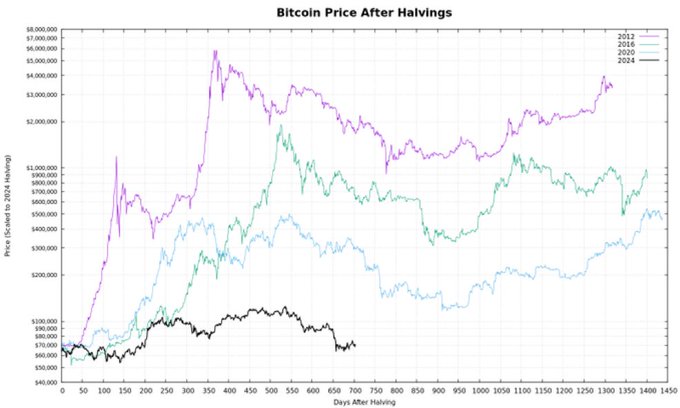
➡️Shaun Edmondson: ‘US Spot BTC ETFs had strong inflows yesterday. Strategy just dropped SEC filings to allow it to buy another $42 billion in BTC - approx 590,000 BTC at today’s price. S1 filings show Morgan Stanley ETF coming soon. We are sub 1 million BTC to be mined in the next 114 years. If you haven’t figured it out yet, I suggest you “get some / get yours” if you can, while you still can.’
Extra information by Eric Balchunas on this topic: ‘Bitcoin ETFs now $2.5b for the month and one good day away from completely digging out of their YTD flow hole. $IBIT is already there and then some, in the top 2% among all ETFs in YTD flows. Again, incredible fortitude in the face of 40% 6mo price drop and widespread media pile-on. For context, when gold fell 40% in a short time frame about 10 years ago, 1/3 of its investors bailed (not that that’s bad either; that’s normal). BTC is just abnormal.
➡️Bitcoin News: ’Bitcoin is holding a key on-chain support level: The 2023 realized price ($63.7K). This level has repeatedly acted as support during corrections, both in 2023 and again after the recent 50% drawdown to $60K. If this level breaks, the next major support sits at the aggregate realized price ($54.3K), a level historically lost only in full bear markets. Meanwhile, newer cohorts are underwater: • 2026 realized price: $77K • 2025: $96.4K • 2024: $81.5K
With BTC just above $70K, recent buyers are feeling pressure while long-term holders remain in profit. The structure remains intact for now.’
➡️Capital B acquires 44 Bitcoin (€2.7M), bringing its total holdings to 2,888 BTC. - Bitcoin News
➡️Bernstein says Bitcoin to hit $150K this year and has likely bottomed. - Bitcoin Archive
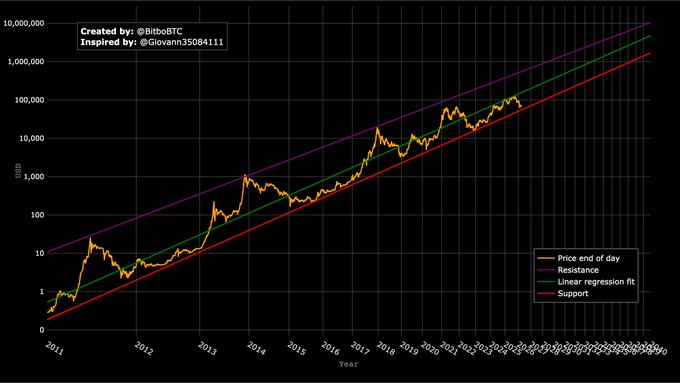
➡️Jeff Swanson: ‘Bitcoin continues its collapse, ultimately going to zero. You can really see it here on this chart.’
➡️Dr. Jan Wüstenfeld: ‘Last year, BlackRock released a chart showing that Bitcoin performs well following geopolitical shocks, a chart that has been widely shared, including me. Using the Geopolitical Risk Index by Caldara and Iacoviello (2022) and extreme GPR spikes (2 SD above the 90-day mean) since 2017, the picture is less clear. It is more of a coin flip. 60-day returns: 55% positive, 45% negative. Median: +3.8%. Bitcoin doesn’t systematically hedge geopolitical risk. It doesn’t systematically suffer from it either.’
On the 26th of March:
➡️’Gold goes to zero against Bitcoin.
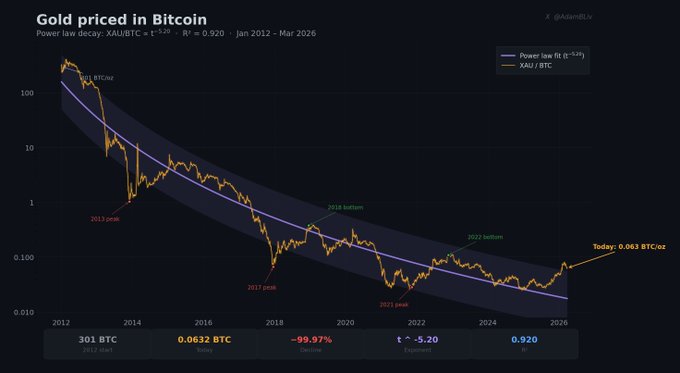
Since 2020, the S&P 500 has lost 1.9% per year to gold and 19.7% per year to Bitcoin. If you’d held SPY instead of gold since 2020, you lost 30%. If you’d held SPY instead of Bitcoin, you lost 87%. Gold eats equities. Bitcoin eats gold.’ - Adam Livingston
https://cdn.azzamo.media/8fe5d72964e83a8dcb349f99bfe60ec929526bca70311ee2920e03d81bf703cb
➡️Most disappointing cycle in history? -Quinten
Personally, I don’t think it is disappointing. Yes, with a fiat mindset it is. But Bitcoin is exactly where it needs to be. Growing…the network, adoption worldwide
➡️Daniel Batten: ‘One of the world’s most respected LGFTE (Landfill Gas To Energy) specialists with 20+ years and 100+ landfill project experience just said that Bitcoin mining is the only profitable solution for mitigating half the world’s landfill methane emissions. Probably nothing’
➡️Bitcoin News: Coinbase and Fannie Mae partner with Better Home & Finance to launch Bitcoin-backed mortgages for U.S. homebuyers. Borrowers can pledge Bitcoin or USD Coin as collateral for down payments, keeping their assets and avoiding triggering taxable sales. The loans are structured as conforming mortgages backed by Fannie Mae, meaning they follow standard underwriting rules and carry the same protections as traditional home loans. The product targets everyday buyers locked out by down payment constraints. Better says 41% of U.S. families can’t purchase homes due to a lack of liquid cash, despite holding savings in other assets. Rising interest rates and high home prices have tightened affordability. A buyer targeting a $400K home may struggle to raise $40K in cash without selling assets or navigating tax and legal hurdles. Coinbase says the offering brings crypto into mainstream housing finance, calling it “as American as apple pie.”
➡️TFTC: ‘Every American who spends bitcoin is technically breaking the law. Today, that might start to change. The Bitcoin Policy Institute is bringing Coinbase, River, and Block to Capitol Hill to push for a de minimis tax exemption on small bitcoin transactions. Right now, buying a coffee with Bitcoin is a taxable event. You have to calculate your cost basis, determine gain or loss, and report it to the IRS. Nobody does this. The same exemption already exists for foreign currency; it just doesn’t apply to Bitcoin yet. What matters is who’s in the room. Coinbase, River, and Block sitting at the same table on the Hill is the kind of unified industry front this fight has needed. Credit to BPI for building a coalition that bridges Bitcoin-native companies and major exchanges. If this gets done, it flips how the U.S. government classifies Bitcoin. It stops being treated purely as a speculative asset and is recognized for what it was designed to be: peer-to-peer electronic cash. That’s the foundation for a Bitcoin circular economy in the largest economy on Earth.’
➡️’MARA sells 15,133 BTC for $1.1B to fund a major balance sheet move and fund AI pivot. The company repurchased ~$1B in convertible notes at a ~9% discount to par, reducing its convertible debt by ~30%. Despite the scale of selling, the Bitcoin price held firm, with demand fully absorbing the supply. CEO Fred Thiel said the move strengthens MARA’s balance sheet and expands flexibility as it moves into energy and AI infrastructure.’- Bitcoin News
on the 27th of March:
➡️Bitcoin News: Every country’s money supply is up 1000’s of % since the US left the gold standard in 1971. But Canada takes the cake.
https://cdn.azzamo.media/5d550d5df6e3e38ea0dabe39148818f87a5e80d3e7b7eb67274c582955fe6b5c
Anyway, got Bitcoin?
➡️Daniel Batten: ’We now have official EEP data that shows Bitcoin mining has nearly doubled Ethiopia’s annual net transmission grid expansion rate.
Even more importantly, it has catalyzed unprecedented new construction activity, never before reported by EEP at this scale.
Consider this context: delivering power to rural Africa, alongside combating youth unemployment, is one of the two biggest political changes in sub-Saharan Africa. Bitcoin mining has just demonstrated it can be a viable solution for one of them.
Let’s dig in. Ethiopia made $220 million from Bitcoin mining in 2024/25, which is expected to increase to $312 million this year (source: https://capitalethiopia.com/2025/11/02/eep-ends-low-cost-tariff-for-cryptocurrency-miners-2/
This electricity would otherwise have been wasted. Why? Although Ethiopia has the capacity to generate 6 Gigawatts from the new dam, Ethiopian Electric Power (EEP) hasn’t yet built the transmission lines to supply all that electricity generated.
So, in the meantime, the dam authorities sell electricity to Bitcoin mining companies. These electricity sales to Bitcoin miners were 67% of EEP’s total Foreign Exchange revenue last year, vastly improving profitability. source: https://birrmetrics.com/ethiopia-electric-power-revenue-hits-br75-4-bln-amid-surge-in-data-mining-demand/
What do they do with that unexpected extra profit? EEP has stated repeatedly that the revenue from Bitcoin mining is used to support “infrastructure expansion” and “rural electrification” source: https://eep.com.et/?article=ethiopias-energy-strategy-a-responsible-balance-between-domestic-priorities-and-emerging-opportunities
News channel Al Jazeera recently confirmed, “Ethiopia doesn’t yet have the distribution network to take electricity to 1/2 the population…The idea is the fees paid by the Bitcoin miners will go towards funding the expansion of the grid.” source: https://youtube.com/watch?v=mqie7bWQHPk
Significantly, EEP’s own data shows that revenue from Bitcoin mining supported EEP’s 2024/25 fiscal year: 28,571 km of new power lines built, 8,700 substation bays installed. Source: https://birrmetrics.com/ethiopia-electric-power-revenue-hits-br75-4-bln-amid-surge-in-data-mining-demand/ Bitcoin mining revenue has already almost doubled EEP’s rate of energized network buildout from ~358 km/year average to +662 km last year. But more important is what is in the imminent pipeline: the 28,571 km of new power lines is larger than the entire size of their grid! source: https://eep.com.et/wp-content/uploads/2025/10/fact-and-bierf-pdf.pdf
Let’s be clear, we cannot say that “Ethiopia builds more than its whole grid in a year” because not all of that new capacity has been fully energized yet, so that would be an apples-for-oranges comparison. But it is still an unprecedented rate of new construction. The good news is that the bulk of this infrastructure, constructed but not yet fully energized, is not “waiting years”; it is currently in active commissioning and is expected to come online progressively over the next 12–18 months. Source: Birr Metrics (EEP’s 2025/26 budget announcement) https://birrmetrics.com/electric-power-plans-251-billion-birr-budget-for-2025-26-fy-majority-self-financed/
When that new network is fully energized, the increase in the speed of energized network buildout will not be 2x. It will be substantially higher, potentially more than 10-20x the historical average, as the backlog comes online. Read that last sentence again. A forecast 10-20x faster buildout of Ethiopia’s electrical grid. Rural electrification in Sub-Saharan Africa is a key strategic focus for over 20 global institutions and development banks, including the UN, the World Bank, IRENA, the African Development Bank, and the Rockefeller Foundation. It is even explicitly one of the UN’s Sustainable Development Goals (SDG 7), where Target 7.1 calls for “universal access to affordable, reliable, and modern energy services by 2030.” Sub-Saharan Africa accounts for 85% of the world’s people still without electricity (mostly in rural areas), making this one of the biggest global priorities. How Ethiopia is achieving this should be one of the biggest stories at the UN right now.
Far from “taking renewable power away” from people, Bitcoin mining’s use of otherwise wasted renewable energy is catalyzing the accelerated delivery of electricity to rural Africa. Bitcoin mining has created a pragmatic solution to an issue that has plagued powerful global institutions for decades. If you are still gaslighting Bitcoin mining in 2026 (based on early studies that have since been widely debunked), you are no longer just uninformed. You are perpetuating harmful myths that slow down power delivery to people living without electricity.’
➡️GameStop discloses that it pledged almost all its Bitcoin ($325M) as collateral on Coinbase as part of a covered-call strategy, without selling any.
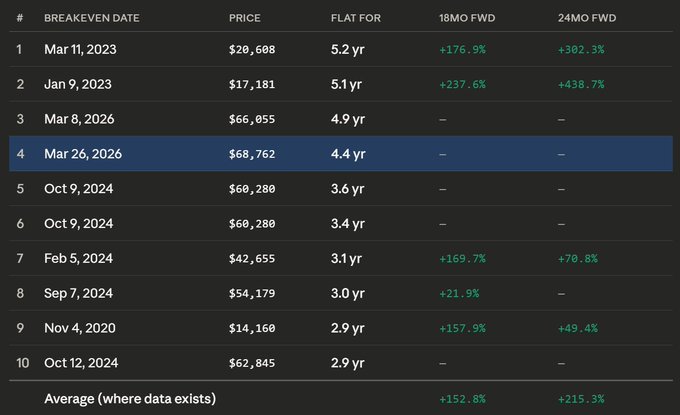
➡️Joe Consorti: ‘Bitcoin is at the same price that it was 4.5 years ago, the 4th-longest period in history. The median 18-month forward return from this point is 214%. Every time BTC has gone flat for 3+ years, what felt like wasted time turned out to be a launchpad.’
➡️Morgan Stanley’s spot Bitcoin ETF will charge the CHEAPEST fee on the market, even cheaper than BlackRock’s ETF. With a 0.14% fee, the lowest fee rate in the industry.
‘The firm just filed an amended S-1 with the SEC for a spot Bitcoin ETF called the Morgan Stanley Bitcoin Trust, ticker MSBT. The fee is 0.14%, making it the cheapest Bitcoin ETF ever proposed in the US. That undercuts Grayscale’s Mini Trust by a basis point and BlackRock’s IBIT by 11 basis points. The pricing is deliberate. At 0.14%, no advisor in their network can argue the fee is too high to recommend. Bloomberg ETF analyst Eric Balchunas put it bluntly: “They are the ultimate gatekeepers of rich boomer money.” This is also the first time a traditional bank has filed for a spot Bitcoin ETF. BlackRock and Fidelity are asset managers. Morgan Stanley is a bank. That’s a different level of institutional commitment. They’ve tapped Coinbase and Bank of New York Mellon as custodians, applied for a national trust bank charter to custody digital assets directly, and separately filed for a staked Ether ETF and a Solana ETF. None of this came out of nowhere. Last October, Morgan Stanley began recommending a 2 to 4 percent crypto allocation for clients and opened access to bitcoin funds in IRAs and 401(k)s. The ETF is just the next logical step. Wall Street isn’t debating bitcoin anymore. They’re fighting over who gets to sell it.’ -TFTC
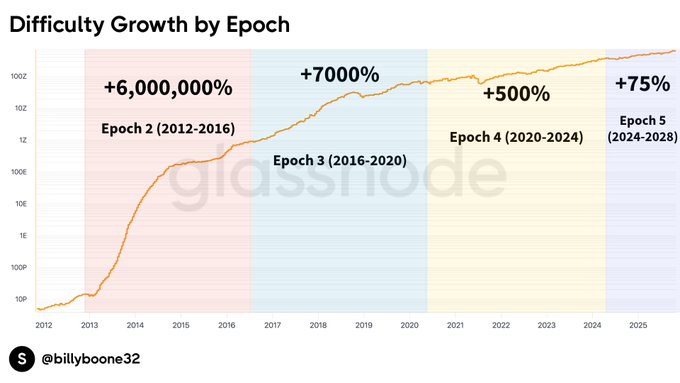
➡️’In case you don’t realize what just happened: MARA sold 15,000 BTC, Bitdeer sold all of its BTC, Riot is selling BTC from treasury to fund data center buildouts, Auradine just rebranded to Velaura AI. The biggest miners are leaving the game. Not necessarily because it’s broken, but because AI pays more per megawatt. Think about what this means: These aren’t small players. They find thousands of blocks and move the global hash rate. These are the people CLOSEST to bitcoin’s monetary properties. They run the machines and understand the halving math. They know the supply schedule better than anyone, and they’re choosing to sell. When they redirect capital and infrastructure toward AI, that hashrate comes offline. Unless equivalent hashrate fills the gap, difficulty drops. It doesn’t appear the gap will be filled in the near term because they’re leaving for better margins elsewhere. Lower difficulty = higher margins for every miner who stays. And there’s a second layer here. If the Strait of Hormuz stays closed into April, energy prices climb. Oil-dependent miners get hit hardest. This might be the best setup small/medium miners with stable PPA’s have seen since the 2021 China mining ban.’ Billy Boone
On the 28th of March:
➡️Bitcoin News: ‘CoinShares reports that Bitcoin mining is tightening, with 15–20% of miners now unprofitable due to a post-halving low hashprice of around $28 PH/s/day in February 2026.’
On the 29th of March:
➡️The World Uncertainty Index just hit 105,000, the highest level in recorded history. Higher than Covid. Higher than 9/11. Higher than the Iraq War and the Global Financial Crisis combined. - TFTC
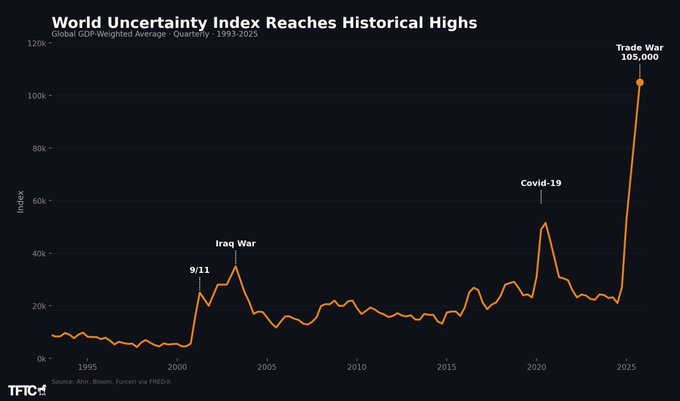
In times of uncertainty, you need an asset that is predictable, immutable, and certain: Bitcoin. ‘The decline in uncertainty following the Covid-19 panic peak helped fuel a ~10x Bitcoin rally (from $7k to $70k’ -Jesse Myers
On the 30th of March:
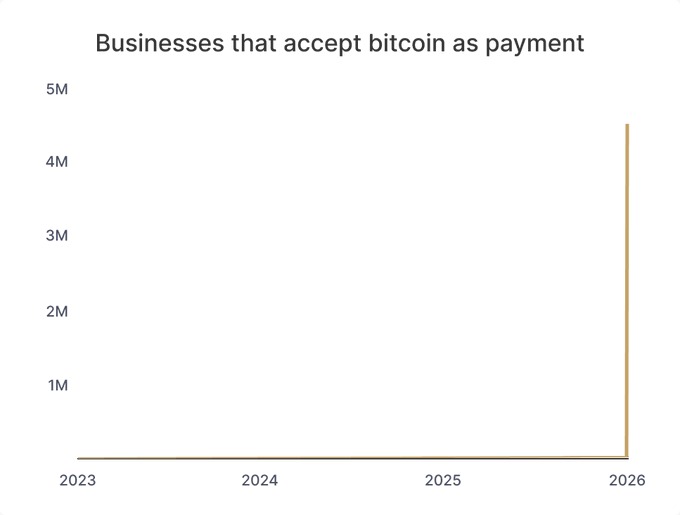
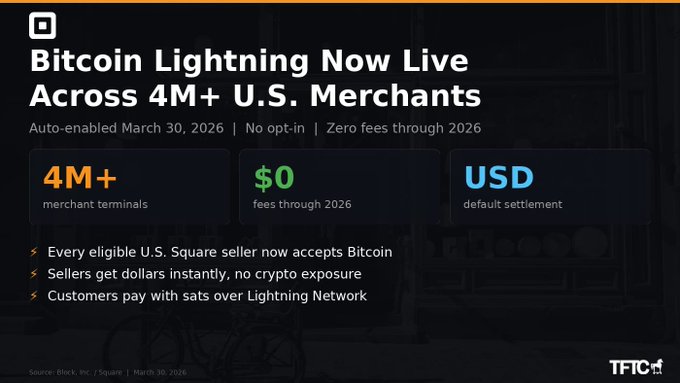
➡️The number of businesses accepting Bitcoin as payment went parabolic today as Square enabled automatic BTC payments.
➡️If you care about financial privacy, then this is probably the most important research you will read all year. The Dutch Court of Audits has released a paper on the effectiveness of AML measures, and lo and behold, it found no evidence that AML actually works. These laws are used to de-bank law-abiding citizens, throw developers in prison, surveil every transaction you make, and collect your identity in central databases that end up hacked. Governments have built a complete and total surveillance dragnet around your finances under the guise of AML, and this Dutch Court just said the quiet part out loud: AML is discriminatory, overly expensive, and we have no proof of it stopping crime.’ - L0laL33tz
➡️You, younger generations, are just lazy. Also, Boomers: Bought a house with an $8,200 down payment.’- Bitcoin News
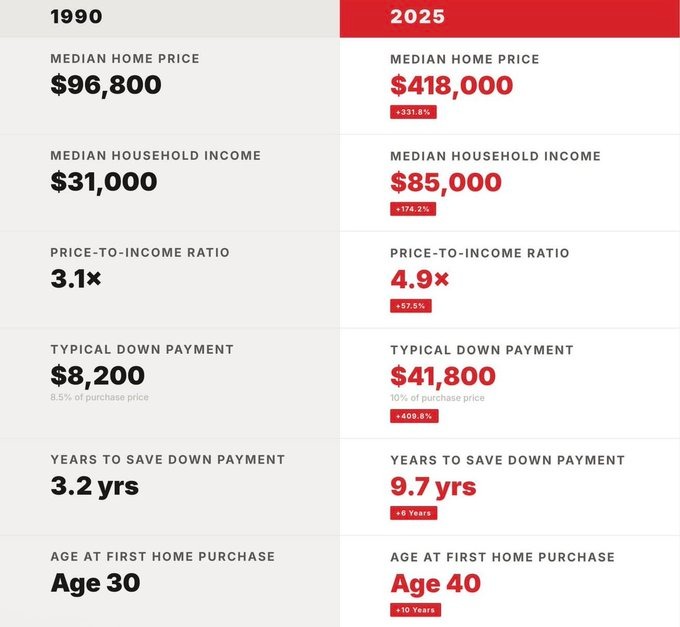
Anyway? Got Bitcoin!
➡️El Salvador has added more Bitcoin to their national reserves every single day through this bear market, no matter the price. - Bitcoin Magazine
➡️Adam Livingston: ’This is the most devastating chart in finance. 1971 was when your future was heisted from you. From 1917 to 1971, the Top 1% and the Bottom 90% grew together. Same economy. Same trajectory.
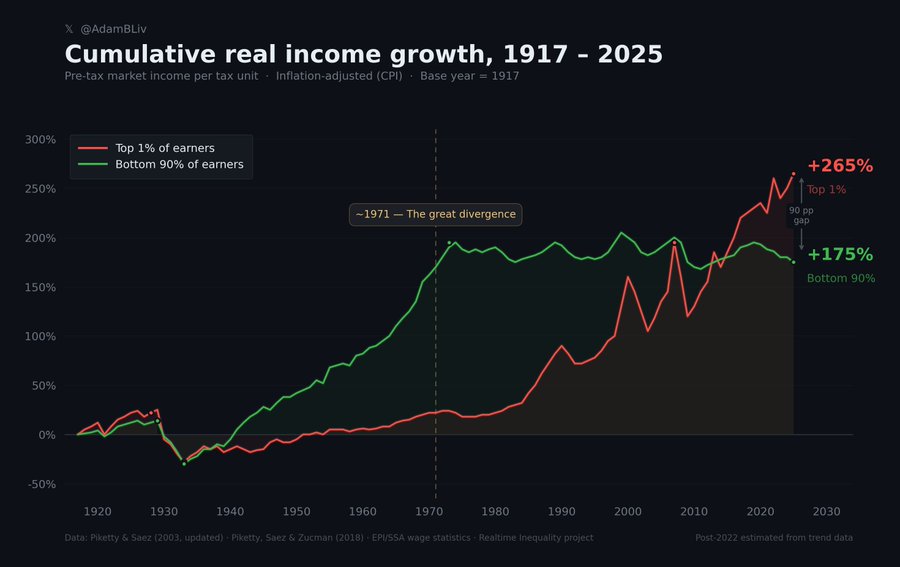
Then Nixon closed the gold window. The money printer turned on. And the two lines never touched again. When you decouple money from scarcity, you don’t create wealth; you create a funnel. Every new dollar printed flows to those closest to the spigot… Wall Street, mega-banks, asset holders, while the bottom 90% watches their purchasing power slowly suffocate.
This is the Cantillon Effect playing out over 54 years in one brutal picture. The Top 1% gained +265% in real income. The Bottom 90%? +175%. That 90-point gap is architecture. Fiat currency manufactures inequality. The rate cuts, every QE program, and every “emergency” liquidity injection. Each one is a wealth transfer dressed up as economic policy. Your grandparents could raise a family on one income because they lived under sound money. Your generation can’t afford a house with two incomes because you don’t. The chart doesn’t lie. The divergence began exactly when the dollar became an IOU backed by nothing but trust in the people who benefit most from printing more of it. 1971 was the heist. This chart is the receipt.’
Got Bitcoin?
➡️’Square auto-enabled Bitcoin Lightning payments across 4 million U.S. merchant terminals. No opt-in required. Sellers receive USD by default. This is the most significant Bitcoin payments infrastructure move since the Lightning Network launched. Every coffee shop, barber, and food truck on Square can now accept sats over Lightning at zero fees through 2026. Jack Dorsey’s Block didn’t ask for permission. They flipped the switch.’ -TFTC
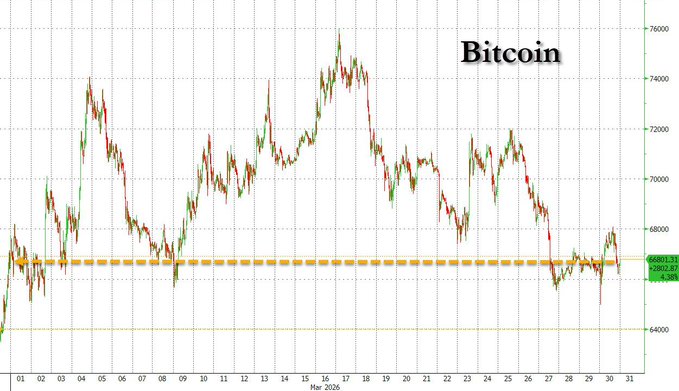
➡️ZeroHedge: ‘With all other risk (and unrisk) assets sliding during the Iran war, bitcoin remains largely unscathed, and despite giving up some recent gains it’s still higher than when the bombs started.’
💸Traditional Finance / Macro:
On the 23rd of March:
👉Apollo has capped withdrawals at one of its private credit funds for retail investors, per Bloomberg
👉Revolut just posted $2.3 billion in profit. $6 billion revenue. 38% margins. Fifth consecutive year of profitability. 76% of neobanks still lose money. Revolut has 11 product lines, each clearing $100M+ in annual revenue.
👉OpenAI reportedly offering private-equity firms a guaranteed minimum return of 17.5% in push to raise fresh capital.
Sue: “A company losing $14 billion a year is guaranteeing investors a 17.5% minimum return. Read that again. They’re offering private equity firms a guaranteed minimum return, downside protection, and early access to unreleased models to secure $4 billion in investment. The most valuable AI company on earth is projected to lose $14 billion this year while making $10 billion in revenue. The math ain’t mathing. Anthropic is also chasing the same investors but only offering equity with no guarantees. OpenAI is sweetening the deal. Two companies are burning billions, racing to see who can lose money faster. lmao.”
On the 24th of March:
👉Just a reminder. The S&P 500 Total Return is still down by >50% in gold terms from 2000 highs…
🏦Banks:
👉🏽No news
🌎Macro/Geopolitics:
If the next 30 years are the same as the last… Here’s how much life will cost by 2055:
- Gallon of gas: $16
- Cup of coffee: $28
- New car: $218,165
- Average rent: $6,500
- Average house: $1.6 MILLION
This wouldn’t be that much of a problem if wages kept up with Inflation. The brutal reality is, they don’t even come close.
And let me make one thing clear: There is an abundance of oil. There is an abundance of coal. There is an abundance of gas. There is an abundance of food. There is an abundance of water. Scarcity is being fabricated by psychopaths.
On the 23rd of March:
👉🏽U.S. Natural Gas Exports and Re-Exports by Country, 2025. Guess which country received the most….bingo! The Netherlands!
The ships that deliver it are really good for the climate. Extracting LNG is also good for the climate. If only we had it underground ourselves… Anyway, not surprising, of course, given the largest port, extensive inland gas infrastructure, storage and facilities on the coast, etc. That imported gas, plus the extra, practically all goes to Germany, undoubtedly at the lower rate agreed upon 10 years ago, given the intellect of our leader
Source: https://www.eia.gov/dnav/ng/ng_move_expc_s1_a.htm
👉🏽More regarding the gas here in the Netherlands: Gas prices are now lower than in the fall of 2021, when Europe still relied heavily on Russian gas. Since then, the EU has actively reduced its dependence on Russian fossil fuel imports, including a phase‑out of Russian natural gas. However, your gas bills may still be higher because the gas tax has risen by more than €0.30 per cubic meter since 2021.
https://cdn.azzamo.media/2b5cca905479d327ce057f5e5b00ab11f1404168b0b1ce613596ce6d84c67f2e
Source: https://www.europarl.europa.eu/RegData/etudes/BRIE/2025/775863/EPRS_BRI(2025)775863_EN.pdf
Okay, more funny stat (see the news on the 25th of March)
👉🏽Germany will import Indians to replace its aging workforce, a government institution says, adding that 288,000 foreign workers are needed per year.
WallStreetMav: ‘There is no shortage of labor in Germany. Factories are shutting down across the country due to regulations and high energy prices. The German government is trying to force wages down for native Germans by bringing in cheap contract labor from India.’
👉🏽72% of Somalis in the UK live off welfare in taxpayer-funded housing. I repeat, 72% of Somalis in the UK live off welfare in taxpayer-funded housing.
👉🏽Just five minutes before Trump’s announcement to halt the attacks on Iran, massive trades reportedly hit the market. In one move, $1.5 billion in S&P 500 (ES) futures was bought while $192 million in oil (CL) futures was sold. These orders were 4–6x larger than anything else at the time. The trader seemingly made huge gains. Unusual.
Daylight Robbery!!! Tuki: “Do you understand what just happened.. five minutes before Trump announced he’s halting attacks on Iran.. someone bought $1.5 billion in S&P 500 futures and sold $192 million in oil.. five minutes.. not five days.. not five hours.. five minutes.. the trades were 4 to 6 times larger than anything else hitting the market at that time.. someone knew the exact words the President was going to say before he said them.. and turned that information into the biggest single trade of the day.. they tell you the stock market is a “free and fair market”.. that “anyone can build wealth”.. that “the system works for everyone”.. the system worked for someone today.. five minutes before you even knew what happened.. they already got paid.. this isn’t insider trading anymore.. insider trading implies they’re hiding it.. this is broad daylight.”
👉🏽 Gold has officially entered a bear market, down -22% from its record high.
On the 24th of March:
👉🏽Michael A. Arouet: ’Eye-opening chart: the UK is on its way to becoming a socialist paradise.
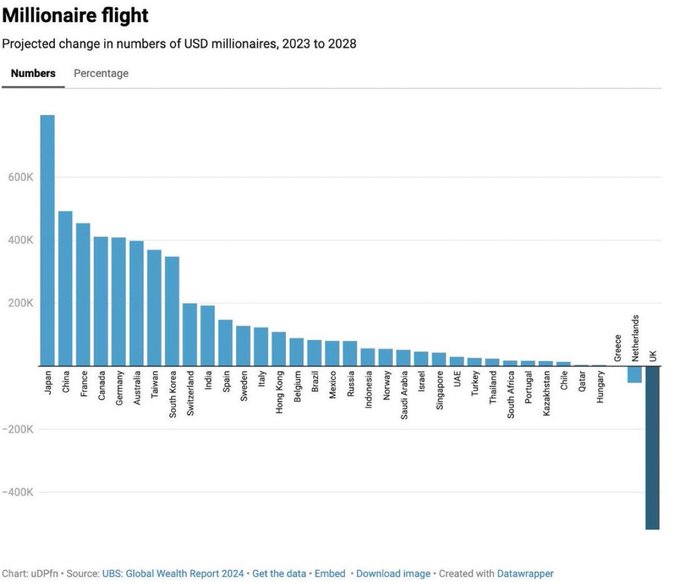
The only issue is that under socialism, everyone is equally poor, not equally wealthy. Every day, 45 tax-paying millionaires leave the UK, taking countless jobs with them. Every day, 3,000 new welfare recipients are added. And what does the government do to stop this slow-motion train wreck? It is seriously discussing a wealth tax. A wealth tax would mean that, for many entrepreneurs, their combined annual income and wealth tax burden would exceed their income. They would have no choice but to close the business or, more likely, emigrate and, in some cases, take the business with them.
The pandemic has shown that businesses can be managed from anywhere; they no longer need to stay in the UK. A wealth tax would reduce tax revenues even further and throttle growth potential. The UK urgently needs deregulation and lower taxes to stimulate growth again. Putting millions of people on permanent welfare while the hardworking ones have no choice but to leave is a recipe for stagnation and a debt crisis down the road. Unfortunately, pro-growth policies that drive prosperity are not compatible with left-wing ideology. There won’t be any change before the next general election. Will Reform be able to turn Britain around?’
👉🏽Dutch people will have to live smaller and more frugally, get shower tokens like the army in Afghanistan, and do their laundry at night, otherwise the power grid will collapse, according to D66 Minister of Housing Elanor Boekholt O’Sullivan in an English newspaper, The Guardian. ‘Luxury takes time. We don’t have time’: The former top military officer on a mission to fix the Dutch housing crisis | Housing | The Guardian
A minister whose “biggest achievement” is designing an office dress for female soldiers is now dictating that citizens live under a military-style regime, with power cuts and shower tokens. Naturally, she conveniently forgets that she herself enjoys the ultimate luxury—a fat taxpayer-funded salary—while everyone else is forced to swallow this bureaucratic misery.
On the 26th, we received the following statement: Minister Elanor Boekholt‑O’Sullivan (#Democrats 66) accused The Guardian of misquoting her remarks about “shower tokens.” It now turns out the newspaper has an audio recording showing that she was lying.
Minister Boekholt (D66) backtracks after ‘shower-coin’ fiasco: “Next time, I’ll choose my words more carefully.”
Rob Jetten on the blatant lies of his D66 colleague Boekholt-O’Sullivan, just now at the weekly press conference: “The wrong metaphor was simply used. She has reflected on it, and as far as I’m concerned, that’s that.”
Lying about what you said, lying about your degree (Van Berkel), ignoring harassment three times (Kaag), threatening your pregnant mistress (Pechtold), harassing young boys (Smeets), and (Van Huffelen) blocking Parliament on the Digital European Identity. Nice team, D66. 👏
👉🏽Dutch Gas Storage Drops To Lowest For Time Of Year Since 2010 - Gas Storage Drops To 6.1% Full, According To GIE Data The Netherlands has absolutely no gas in storage, no Russian gas, the Qatar supplies got bombed, and the U.S. is selling to the highest bidder (obviously). Our solution: Pouring cement into Groningen gas wells so we can never drill gas again. I think that’s the definition of r*tarded. Almost as smart as Germany shutting down all their nuclear power plants just so that Russia would have them over a barrel for gas.
Pray to the Gods for a warm winter next year. We are absolutely fucked in Europe. Most people don’t understand the gravity of the situation, and state propaganda isn’t even addressing it.
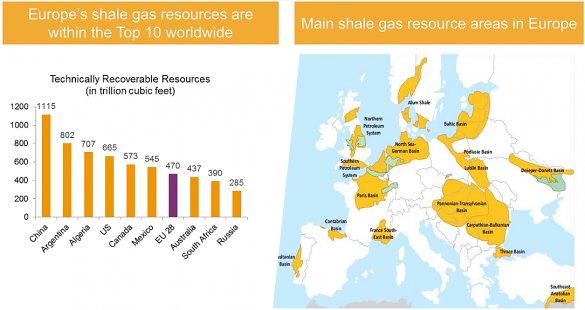
Drieu Godefridi: “REOPEN GRONINGEN NOW — before the next energy crisis turns the Netherlands into Europe’s beggar. Discovered in 1959, the Groningen massive gas field once supplied up to 80% of Dutch gas. It was a national powerhouse. By 2024, the Dutch government shut it down completely due to minor earthquake risks and a major ideological ‘green’ delusion. Result? Total dependence on foreign imports — just in time for the Ukraine war chaos. Now history is repeating… with a vengeance”… “The Netherlands can’t afford ideological fantasies while wars rage and prices explode. Strategic reality check: now. Reopen Groningen as a strategic reserve before the next crisis forces us anyway — at triple the cost and national humiliation.”
I stand with the following claim: ‘Expensive shale gas from the US is considered good, while cheaper shale gas from the Netherlands is considered wrong. Bizarre left-wing logic.’ Keeping our own gas wells as an emergency reserve makes sense. The incoming energy crisis will likely trigger another fundamental shock to energy policies in Europe, prompting a renewed push to resume gas exploration.
👉🏽More energy news, now from Germany: Germany Energy Minister Katherina Reiche: The phase-out of nuclear power was a huge mistake — a huge mistake. We now miss that energy. So, the only way to secure supply is gas.
So let me get this straight. Germany now wants to switch to gas after the enormous mistake of dismantling its nuclear power plants. But the Dutch government is sealing gas fields (with at least 20 years of supply) with concrete and is also shutting down our ultra-modern coal plants. We are governed by a bunch of complete economic idiots.
Still can’t believe they did this.
https://cdn.azzamo.media/44e668e3e32422861cd9daa63aa2363db03cafca7a75b625e0cd4e5db55f8827
‘Germany used to get about 31% of their electricity from nuclear power plants. Great safety record. They had decades of useful life remaining. Because of “Net Zero” and the climate crazies, German politicians decided to shut them down and even blow them up so that the decision couldn’t be reversed later. Then Germany decided to become dependent on Russian natural gas for electricity. But that didn’t last because they decided to sanction Russia and limit imports. Then they let Ukraine/Britain/USA blow up the Nord Stream pipeline, cutting off more energy from Russia. Then they tried to import LNG (liquified natural gas) from the Middle East and the USA. But that is running into problems now because of Iran. So now Asia is outbidding Europe for LNG imports. German electricity rates are 3 to 4 times higher than in the USA. Lousy energy policy has consequences. Germany blowing up their nuclear power plants was one of the craziest decisions ever.’ - Wall StreetMav
Should I share one more funny stat I have shared many times? After Germany blew up their nuclear power plant cooling towers, last year they blew up one of their biggest coal power plants. Right in time for the biggest energy crisis in history to hit… The coal plant was:
- Only 6 years old
- Cost €3 billion
- Produced 1,650 MW.
Germany is doing everything in its power to create a perpetual energy crisis.
On the 25th of March:
👉🏽New Zealand is on track to run out of fuel in about three weeks. First world country, btw. No fuel reserves. Refineries closed down under Jacinda Ardern. Deep-sea oil exploration was banned under Jacinda Ardern. Jacinda Ardern and COVID lockdowns. Jacinda and COVID.’ - Glycine nationalist
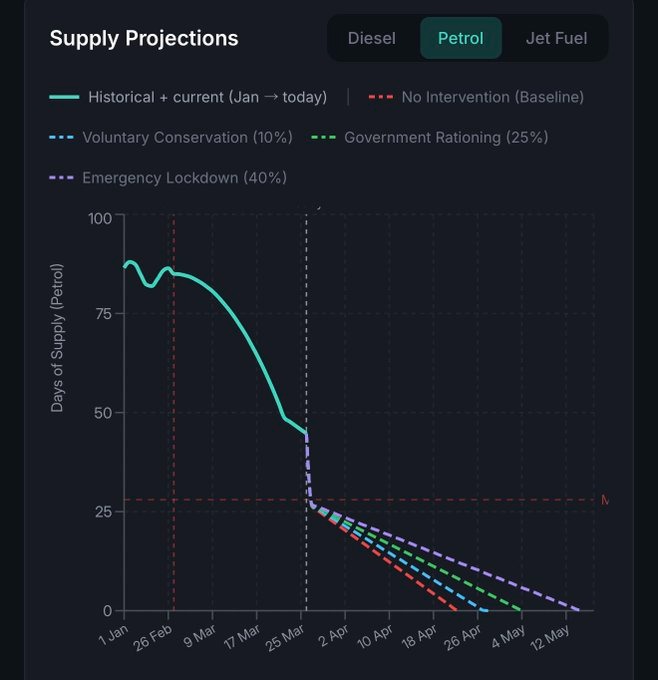
Some background information by Roberto Rios: ‘The east asian energy crisis is getting worse by the day. Let’s sum up what’s happened so far: the Philippines became the first country to declare a national energy emergency. Government offices moved to a 4-day work week, and President Marcos says grounding planes is a “distinct possibility.” Their fuel supply dropped from 57 days to 45 days in less than a month.
South Korea is telling citizens to take shorter showers and charge phones during the day. They’re considering banning naphtha exports, which means petrochemical production starts seizing up. Japan released 80 MILLION barrels from strategic reserves, the largest drawdown since they created the system in 1978. covers about 45 days. 95% of their crude comes from the Middle East. Their refineries are canceling fuel exports and cutting production to prioritize domestic supply.
Vietnam has 20 days of reserves. They panic-bought 4 million barrels from non-Middle East sources, which covers six more days. India is running out of cooking gas. Restaurants are shutting down, and lines are wrapping around LPG distributors in multiple cities. 90% of their LPG imports go through Hormuz. New Zealand has less than 40 days of combined fuel left, gas stations are going dry in parts of the country, and the government is dusting off 1979-era rationing laws. China and Thailand have both banned or restricted fuel exports to hoard domestic supply. Singapore and Indonesian petrochemical companies are declaring force majeure.
The IEA released a record 400 million barrels from its strategic reserves, then said it wouldn’t be enough. Brent peaked at $126, and it’s still above $90 today. The crisis deepens in East Asia.’
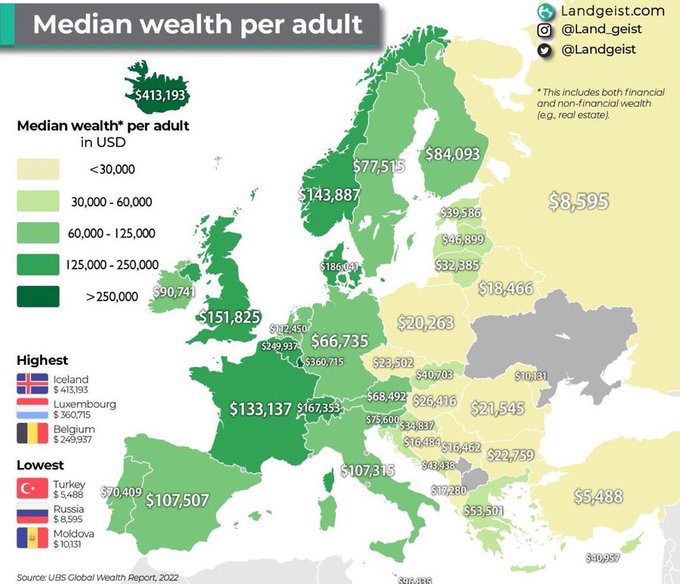
👉🏽Michael A. Arouet: ‘Germany is a rich country with poor people. It has a lower median wealth per adult than Slovenia. Germans rent instead of buying property, don’t own stocks, spend a fortune on insurance, and then seriously blame “inequality. “ You need to take some risks if you want to get wealthy.’
👉🏽The richest man on earth, Elon Musk, offered to pay federal workers out of his own pocket, and the government said no. Read that again. The reason: The White House rejected Elon Musk’s offer to pay TSA workers due to legal prohibitions on private supplementation of federal salaries (18 U.S.C. § 209). https://law.cornell.edu/uscode/text/18/209
👉🏽Dilan Yeşilgöz proposes a climate law: “thou shalt not fly.” Meanwhile, Dilan, now the Dutch Minister of Defense, chartered a private jet costing €100,000 of public money to fly to a frigate for a TikTok video. How many more times will (People’s Party for Freedom and Democracy - VVD) voters let themselves be fooled?
On the 26th of March:
👉🏽The Netherlands: ‘A calculation for our Minister of Finance, @Minister_FIN, who refuses to lower excise duties. He claims: “10 cents costs a billion.” I’ve calculated that the Netherlands loses between €1 and €2 billion in tax revenue due to cross-border leakage. Lost Dutch tax revenue due to cross-border shopping in the broad sense: roughly €1 to €2 billion per year. Fuel sales in the Netherlands already fell by 6.1% in 2025, while 12.7% of refueling already takes place abroad. Tobacco is even more extreme: in 2024, an estimated more than 60% of all tobacco products smoked by Dutch consumers were purchased abroad. The government itself calculated that tobacco alone results in approximately €1.3 billion in lost tax revenue. And that doesn’t yet fully include alcohol, groceries, and travelers shifting to foreign airports. A classic Laffer effect.’ - Maarten van den Berg
https://cdn.azzamo.media/bc7120d10cbb48cc34896ebd446087d48a739b24a2ab624992bf45edbc2002bd
It’s always striking when ministers (the Ministry of Finance in this case) claim that “cutting excise duties costs a billion,” when that’s not actually true. They weren’t earning that money to begin with. They’re missing a billion — in other words, they’re spending a billion too much. That’s the reality. “10 cents costs the treasury €1 billion.” In other words, 10 cents costs society €1 billion that could otherwise have been spent elsewhere, stimulating the economy instead of cooling it through Inflation.
👉🏽‘Foreign holdings of US Treasuries surged +$34.8 billion in January, to $9.3 trillion, the 2nd-highest on record. Japan, the largest foreign owner, purchased $39.8 billion, bringing the total to $1.2 trillion, the highest since July 2022. The UK, the 2nd-largest holder, posted a +$29.3 billion increase, to $895.3 billion, the 3rd-highest on record. China’s stockpile, the 3rd-largest holder, increased by $ 10.9 billion to $694.4 billion, the highest since September. Meanwhile, European Union holdings rose by $ 8.0 billion to $2.1 trillion. Foreigners now own more US debt than ever.’ -TKL
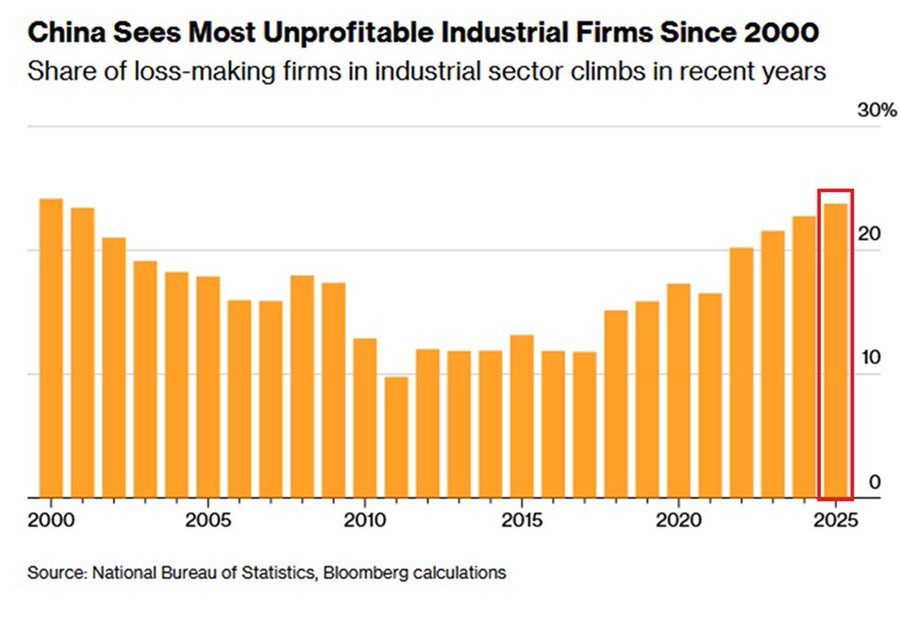
👉🏽China’s industrial sector is under heavy pressure: 23.8% of Chinese industrial firms were unprofitable in 2025, the highest level since 2000 and more than double the rate since 2017. This marks the 4th consecutive annual increase, their worst streak on record. Profit margins for private industrial firms are down to just 4.5%, the lowest since at least 2014 and down for 4 straight years. This comes as China continues to battle the longest deflation streak on record, weak domestic demand, and now uncertainty about energy costs due to the Iran War. China’s industrial recovery remains nowhere in sight.
👉🏽Bloomberg Economics: In a scenario where oil hits $170 (straight closed for 3 months) before returning to $100 by year-end, how big is the modeled shock? US Inflation +1.6%, US GDP -0.3% UK Inflation +1.9%, UK GDP -1.1% EZ inflation +2.0%, EZ GDP -1.2%
👉🏽Germany: ‘Where consumer sentiment is sliding as the Iran war fuels fears of stagflation. The GfK consumer sentiment index dropped by 3.2 points to -28.0, the weakest reading since 2024. Income expectations have fallen back into negative territory, while economic expectations have declined to their lowest level since Dec 2022. The message is clear: rising energy prices are hitting confidence, w/households bracing for weaker growth and higher Inflation at the same time.’- Holger Zschaepitz
Germany’s Economy At The Point Of No Return | ZeroHedge
👉🏽Ferrari is flying supercars to the Gulf by airplane because the Strait of Hormuz is closed and ship deliveries are impossible. Air freight now costs 4-5x more than shipping. Customers are still paying for it. The Middle East is the most profitable luxury car market in the world because wealthy buyers spend huge amounts on personalization, so Ferrari isn’t walking away from those sales. Source: Financial Times
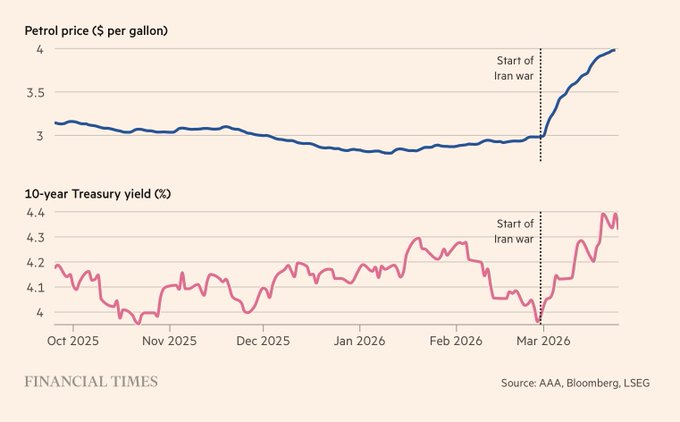
👉🏽The war in Iran has sent US petrol prices and government borrowing costs soaring.
👉🏽Dutch national debt has exceeded €500 billion for the first time. Is this including or excluding the debts from the COVID recovery fund that our Minister of Finance, Kaag (D66), left us with while calling the finances “remarkably healthy”? Answer: It was decided that these debts would not be recorded as part of individual member states’ national debt. And on top of that, additional joint European debts are still being added. Repayment is scheduled to begin in 2027 — and will continue for 30 years. Then again, we’ve never before given away €20 billion (and counting) to a corrupt country like Ukraine.
👉🏽Mario Nawfal: “The EU just started the procedure for the toughest migrant detention and deportation plan yet. Today, the EU Parliament voted 389 to 206 to authorize immediate negotiations on the new Return Regulation. This plan brings return hubs outside the EU, detention up to 24 months or more, return orders that work across the whole Union, and deportations to safe countries even if the person never lived there. It is the hardest crackdown on irregular migration Europe has ever pushed. But it is not the law yet. They still have full negotiations ahead with the Council before anything becomes official. Europe is moving hard and fast on sending migrants back. Finally, Source: Europa Press
Overview:
- Deportation centres
- Forced cooperation from authorities
- Abolition of the automatic right to appeal
- All EU member states must comply with another member state’s return decision
The left is furious.
Funny thing from a Dutch point of view: The RenewEurope (D66-VVD) “monkey is finally out of the sleeve.”
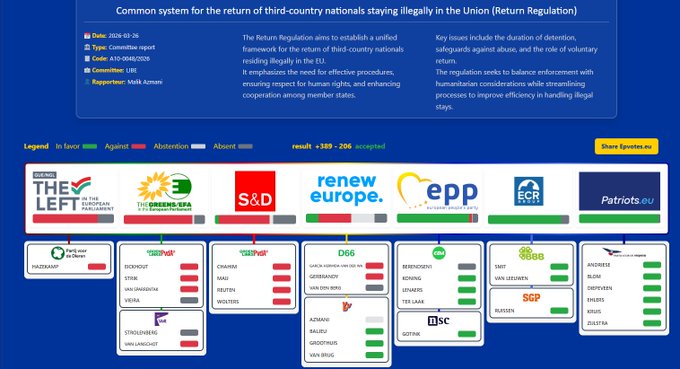
In the final vote, eight Renew members said no, Malik Azmani abstained—and not a single Renew member voted yes. Basically, VVD = D66. No wonder our coalition acts the way it does. Yes, before the elections, both parties were bragging about getting stricter with the migration policy. As always, don’t believe what politicians are bragging about 1,5 month before the elections. She shows how they “VOTE”, how they act, and the results of that.
MEP Azmani (VVD - Renew Europe) must step down as lead negotiator on the EU Return Directive. He not only abstained from voting but also opposed this proposal and pushed for a much milder version. This once again shows what VVD stands for. Good to remember ahead of the Provincial Elections: if you want to vote right-wing, VVD is not your party.
👉🏽For the Dutch readers, the graph below is in Dutch. Most people become poorer every year… without noticing it. Inflation: ~5.9% Box 3 tax: ~2.1%
👉 You need roughly ±8% return to break even. Less than 8% = loss of purchasing power. Are you making more or less than 8%?
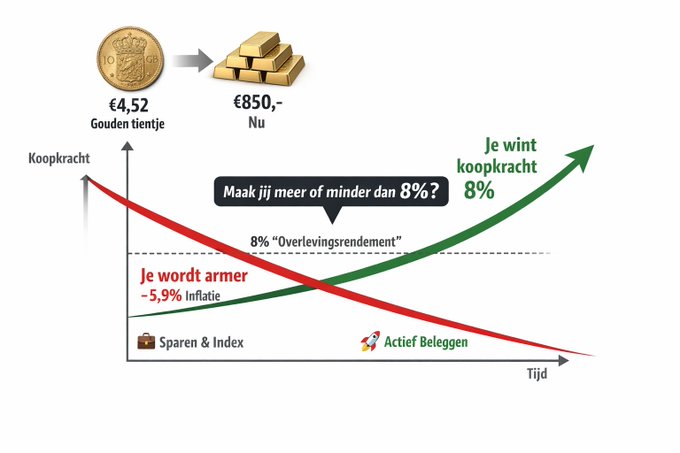
It is just simple math.
👉🏽A war in Iran…why? Nobody knows, oh well, it is all about the geopolitical benjamins, right? In the words of William Blum, “democracy” is “America’s Deadliest Export”. And the US has incessantly been on the warpath since 1945, ‘spreading’ its own brand of democracy across the world.
Matt Kennerd: ‘Between 1965 and 1973, the U.S. Air Force dropped 2.7 million tons of explosives – more than the Allies dropped in the entirety of World War 2 – on Cambodia, a country with which it was not officially at war. At the time, Cambodia’s population was smaller than New York City’s’
’Paved the way for Pol Pot & the Khmer Rouge (2 million dead) genocide! The US nemesis, the Vietnamese army, invaded to get rid of the genocidal regime. Still, the Khmer survivors escaped into the jungles to fight on, murdering civilians & armed and funded, you guessed it, by the US - Bernie Davies.
👉🏽The Netherlands is once again sending €3 billion to Ukraine. Now I have no problem; we are sending money to a corrupt country like Ukraine. My problem, though: Per capita, the Netherlands spends 55 times as much on Ukraine as Spain does. Is security more expensive for a Dutch citizen than for a French or Spanish citizen? The narrative — “we’re doing this for our security” — doesn’t hold up.
Let me break it down for you:
The Netherlands is once again sending €3 billion to Ukraine. Meanwhile:
- Energy prices remain high
- Purchasing power declines
- Citizens are told there is “no money.”
Yet the Netherlands has already committed over €20 billion. More than:
- France
- Spain
- Italy
Despite having a much smaller economy and population. Per capita: A Dutch citizen contributes: ~€1,150 A French citizen: ~€80 A Spanish citizen: ~€25
So the question becomes: Is Dutch security really 10 to 50 times more expensive? Or is the Netherlands once again trying to be the best boy in class? Even measured by GDP, the Netherlands ranks among the higher contributors, while large economies like France and Spain contribute far less. Supporting Ukraine is one thing. But disproportionate burden-sharing is another. And that’s where the real debate should be.
Wierd Duk responds:
“If you throw €20 billion at Ukraine, and as a government you refuse to make things even slightly easier for citizens during these times, then your priorities are simply not in order. Don’t forget, the Netherlands is one of the most generous countries when it comes to Ukraine. Other countries give much less.” “Why do we always have to be the best boy in the class? We’re giving absurdly more money to Ukraine than to other countries, and at the same time, we’re doing nothing about energy prices. Typically Dutch.” “And the Dutch just let it happen and simply keep voting for the parties that are causing all of this.”
👉🏽Venezuela used to be twice as wealthy as Chile. Then Chile adopted free-market capitalist principles while Venezuela chose socialism. Now, Chile is the wealthiest large country in South America, and Venezuela is the poorest. Free markets work, socialism makes nations poor.’ - Michael A. Arouet.
Whatever you believe, one thing is clear: Capitalism creates prosperity.
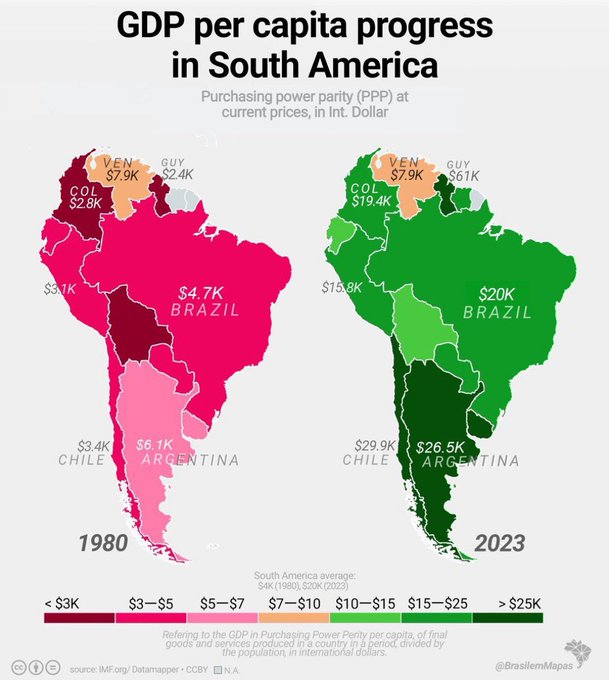
source: Economic Freedom of the World, 2024 Annual Report
‘Socialism fails because you can’t calculate without prices. Mises destroyed this fantasy in 1920 — central planners literally cannot know what to produce or how much without market signals. Venezuela burned through $1 trillion in oil wealth. The Soviet Union collapsed despite controlling half of Europe. What about the incentive problem? When you divorce effort from reward, productivity craters. Why work hard when your neighbor gets the same paycheck for doing nothing? (Cuba’s sugar harvests dropped 75% after collectivization.) Private property rights create the feedback loops that make prosperity possible. Every socialist experiment ends the same way: shortages, corruption, and people fleeing to capitalist countries. The Berlin Wall kept people IN, not out.’- Handre.
To make it more visible for you:
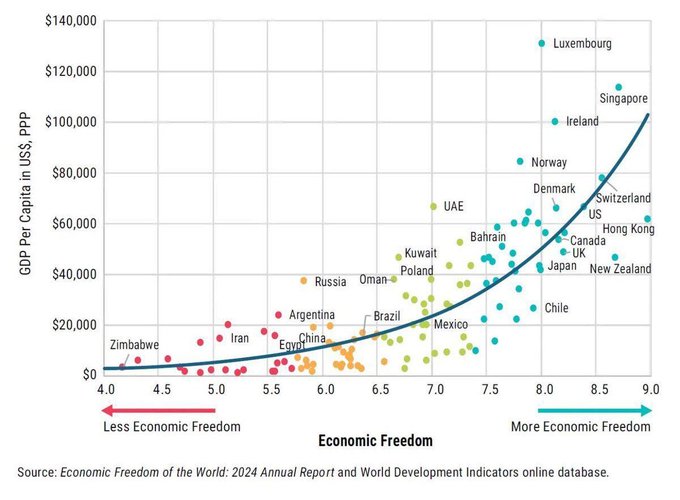
Capitalism creates so there’s more for everyone. Socialism is the weaponization of greed and envy, making everyone worse off. I stand with the following: with Capitalism, I can buy another plot. With socialism, someone else gets my plot. More people lose the plot than with Capitalism. Capitalism creates plots. And ownership. We are lacking more and more ownership.
Now, don’t confuse Capitalism with corporatism. That’s exactly how Capitalism works. Unfortunately, we’re devolving into corporatism, where big corporations work with the government to protect their interests through legislation. Yes, we need a significant reform. Unfortunately, what we end up getting sold are stupid fantasies about how getting the rich to “pay their fair share” will fix anything. Instead, we need to do the difficult work of both reducing the size of government and removing large corporations’ ability to engage in rent-seeking (which they often do by getting the government to help them). But that is something different from making the mistake of going back to socialism. As Marx said, socialism is just a stop along the way to communism. Definitely an extreme of the other.
Grok: Data from cross-country studies (Heritage Index, Fraser EFW, World Bank/ILO 1995-2024) show a strong inverse correlation: higher economic freedom (capitalist/market systems) is associated with lower absolute/working poverty. Freest quartile: ~1.5% extreme poverty ($2.15/day), working poor rates <5% in developed cases. Least free (more socialist/centralized): 30-50%+ extreme, working poverty often 20-40%+ (e.g., Venezuela, Cuba vs Singapore/South Korea). China/Vietnam drops tied to market reforms. Relative poverty varies in mixed Europe. Scatter: freedom score up, poverty % down sharply.’
👉🏽TKL: ‘Bond markets are telling the future: 1. Trump paused tariffs with the 10Y Yield at 4.60% 2. Trump bought $200 billion of mortgage bonds when the 10Y Yield was 4.30%. 3. Trump delayed Iran strikes with the 10Y Yield at 4.45% 4. Trump further delayed Iran strikes with the 10Y at 4.45%. Trump knows the bond market is existential.’
On the 27th of March:
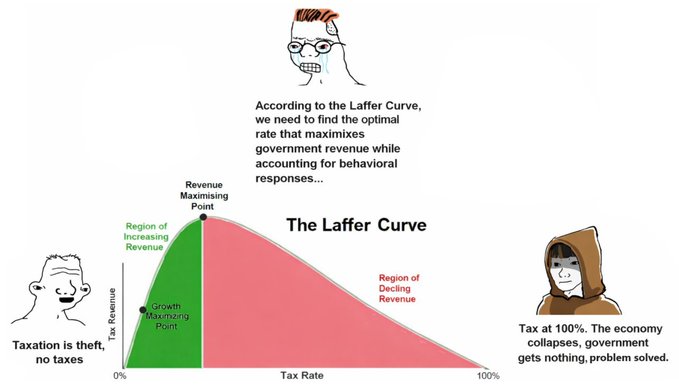
👉🏽Jeroen Blokland: ’Has the limit been reached? Norway raised its wealth tax → $50 billion in wealth moved to Switzerland → the state treasury lost $450 million. California wants to tax billionaires more heavily → 30% of taxpayers have already left → expected loss: $25 billion. The Netherlands increases Box 3 taxes further → people are leaving → raising €4 billion will become an illusion. This is the Laffer Curve in action. An economic law that has existed for 50 years—and is still being ignored. So here’s a message to taxpayers, policymakers, investors, and politicians: at least read up before you decide.
One more example: ‘The recent capital gains tax increase in the UK was expected to bring additional tax revenue. Instead, high-net-worth individuals and families are leaving the country, leading to a 10% fall in net capital gains tax revenue. Welcome to the Laffer curve, suckers.’
The government believes it can raise more revenue by taxing capital more heavily. But in practice, capital often moves elsewhere — and with it, knowledge, investment, and entrepreneurship. The result? Less economic activity… and ultimately less tax revenue, not more.
👉🏽‘The reason many of our leaders hate people like Nayib Bukele in El Salvador is that he has quickly proven that crime and societal decline are not inevitable or beyond control… It’s a deliberate choice allowed by weak leaders, terrible policies, and suicidal empathy.’ - Geiger Capital
President of El Salvador Nayib Bukele releases a video showing the transformation of his country. Since Bukele took office:
- Homicides plunged from 2,398 in 2019 to just 114 homicides in 2024.
- Murder rate is now 1.19 per 100,000 people, a historic low.
- In 2022, Bukele declared a state of exception and made over 85,000 arrests. “Everything in life has a cost, and the cost of being called authoritarian is too small to bother me much,” he once said.
Cuadra por cuadra... tardará un poco, pero quedará hermoso. pic.twitter.com/uoiBfi7SqP
— Nayib Bukele (@nayibbukele) March 27, 2026
Some solutions are simple, but they require conviction and courage to do them, and few politicians have the latter. Law & order and clean streets are all that people want from the government. Bukele is delivering that and more. El Salvador is soaring.
👉🏽The US Federal Reserve is no longer expected to cut interest rates until December 2027. There is now a 51% chance of an interest rate HIKE by March 2027. Rate HIKES are now more likely than rate CUTS. How did we end up here?
👉🏽The Netherlands: The Netherlands has the highest fuel prices in Europe, mainly due to taxes. Politicians say cutting them is difficult because the money would have to be raised elsewhere. But why not look at lower government spending? If Switzerland can do it… Maarten van den Berg: ’I even made a little chart. Edin Mujagic’s suggestion isn’t that crazy. Let the government spend 1% less of GDP on itself. 🔹That would save €10 billion! 2%? That’s €20 billion. Just saying.
👉🏽Martien Visser: ‘A major setback in network investments up to 2040. I had expected a significant drop, since offshore wind in 2040 has fallen from 50 GW to 30 GW. However, required investments are actually rising—from €195 billion to €235 billion (+20%). And even €269 billion (+40%) if offshore wind reaches 40 GW.’
https://cdn.azzamo.media/2f60eee07888cf64aca7c645466f82e4534c7f7c464c27fbc12329a4ac0e7e3f
👉🏽R. Genis: We hear asylum seekers are needed for our labor market. Facts tell a different story:
- 2 years in → 90% still on benefits
- 5 years in → 50% still on benefits
- 10 years in → 45% still on benefits
They make up 30% of all social assistance recipients Facts matter.
A recognized refugee receiving social assistance costs (including all support services) about €50,000 per year in the first 5 years. That’s €250,000. At minimum wage, they contribute roughly €7,000 in taxes per year. It takes almost 36 YEARS for a refugee to become financially net positive. For the Netherlands, the numbers largely hold (CBS Asylum & Integration 2025): the 2014 cohort → ~89% on benefits after 2 years, ~50% after 5 years, ~31% after 9 years (slightly lower than 45%, varies by cohort). Refugees make up ~30% of social assistance recipients, which is plausible due to overrepresentation. Of course, you can question this. Plug my data into an AI tool or check: • CBS: Asylum and Integration Report • Divosa: Refugee Benchmark • SER: Refugees in the labor market – facts and figures
On the 28th March:
👉🏽D66 voted against the stricter EU return law with return hubs in the European Parliament. If you actually thought this European plan was humane, what’s D66’s reason for voting against it? Rob Jetten: “You really have to ask the European Parliament members, not me.” Rob Jetten is trying to give the impression that he has no control over the European D66 faction. Nobody actually believes that. D66 remains an outspokenly pro-immigration party.
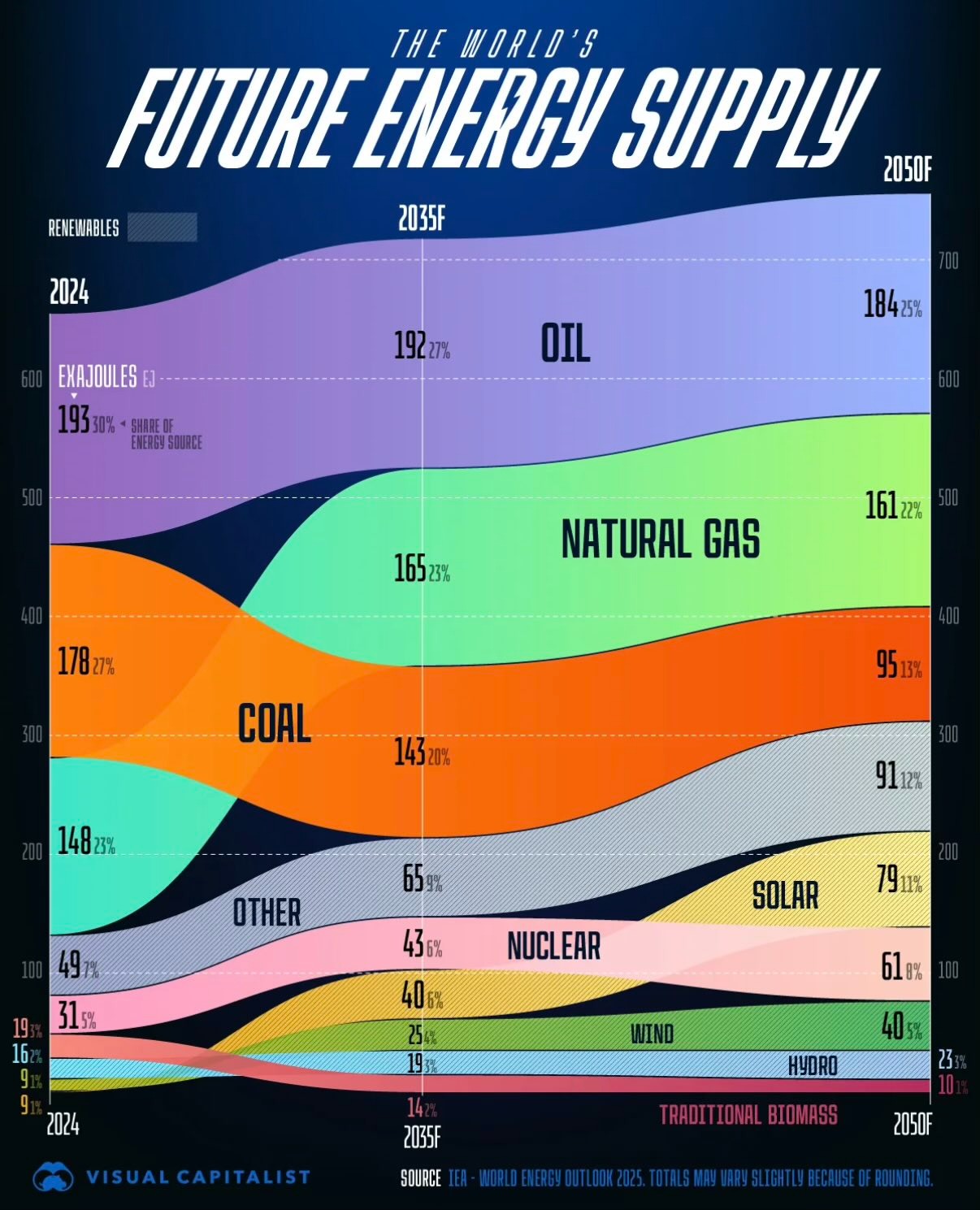
👉🏽‘Oil, gas, and coal will remain the top three sources of global energy demand until 2050. Anyone presenting a different picture should structurally be considered as spreading disinformation.’ - Maarten van den Berg Source: IEA World Energy Outlook 2025, https://iea.blob.core.windows.net/assets/af5ac385-8fce-4cc7-8c73-107a3aade95e/WorldEnergyOutlook2025.pdf
On the 29th of March:
👉🏽The World Uncertainty Index just hit 105,000, the highest level in recorded history. Higher than Covid. Higher than 9/11. Higher than the Iraq War and the Global Financial Crisis combined. - TFTC
https://cdn.azzamo.media/47aedae07f150d89a0332ceb7f588b59a1ed087e71072e92a18237bc9a9e8ae3
In times of uncertainty, you need an asset that is predictable, immutable, and certain.
On the 30th of March:
👉🏽In 26 months, Javier Milei’s government slashed public spending by USD 67 billion — equivalent to a massive 5.7 points of GDP adjustment. 78% of the cuts were aimed at closing the fiscal deficit, and the country now runs a surplus. This is how you fix decades of populism and irresponsibility.
President Javier Milei was inaugurated in Argentina. Since then: -Eliminated 12 out of 21 cabinet posts -Firing 5,000 government employees -Ending 380k government regulations -Banned woke language in the military -Bill to affirm the right to self-defense -Bill to legalize homeschooling of kids -Proposal to punish all riot organizers -Future welfare cuts for road-blocking -Legalized paying contracts in bitcoin -Privatization of state-run companies -Opened up the Argentina oil industry.
👉🏽Rebuild and return: Germany expects 800,000 Syrians to leave before 2030. Expects? What the fuck is Germany going to do if they don’t leave voluntarily (which they won’t)? Is it election time?
More news on Germany:
👉🏽Germany’s Inflation rate jumped from 1.9% in Feb to 2.7% in March, driven by a sharp rise in energy prices linked to the war in Iran. So far, the impact has been largely limited to energy. Core Inflation – which excludes energy and food – remained unchanged at 2.5%. Service Inflation stayed unchanged at 3.2%. However, if the conflict drags on and pushes up the cost of energy and other raw materials, or reduces their supply, underlying Inflation is likely to rise as well, as business surveys already indicate. (via CBK) - Holger Zschaepitz
👉🏽The UK Government BLOCKED a ban on Cousin Marriage. Yes, you read that correctly, Prime Minister Keir Starmer got up in Parliament and defended INCEST. Why is this even up for debate? It’s up for debate because Starmer thinks the people marrying their cousins will keep him in power.
👉🏽The Netherlands: €19 million in extra funding to UNRWA (controversy over alleged links to Hamas). Only 32 out of 150 MPs voted in favor — yet Sjoerd Sjoerdsma (D66) pushes ahead regardless. New elections seem to be getting closer.
🎁If you have made it this far, I would like to give you a little gift:
Peter McCormack - How to SURVIVE The “Final Reset” of The Economy | Jeff Booth
In this episode, Jeff Booth explains why the natural state of a free market is deflationary and why a debt-based monetary system can’t allow it. We discuss AI as an acceleration event: exponential productivity should make life cheaper, but the system has to create scarcity to keep debt serviceable. They cover how Inflation functions as hidden extraction, why regulation favors monopolies, why politics becomes a fight over who controls broken money, and why AI will intensify centralization, surveillance, and social conflict unless the monetary layer changes.
Click here: How to SURVIVE The “Final Reset” of The Economy | Jeff Booth https://youtu.be/lhHKljqRa-M?si=US9esrJLL2Phridr
Credit: I have used multiple sources!
My savings account: Bitcoin. The tool I recommend for setting up a Bitcoin savings plan is PocketBitcoin, especially suited for beginners or people who want to invest in Bitcoin with an automated investment plan once a week or monthly. (from now on, full KYC, so be aware)
Use the code SE3997
Get your Bitcoin out of exchanges. Save them on a hardware wallet, run your own node…be your own bank. Not your keys, not your coins. It’s that simple. ⠀ ⠀ ⠀⠀ ⠀ ⠀⠀⠀ Is this post helpful to you? If so, please share it and support my work with a zap. ▃▃▃▃▃▃▃▃▃▃▃▃▃▃▃▃▃▃ ⭐ Many thanks⭐ Felipe - Bitcoin Friday! ▃▃▃▃▃▃▃▃▃▃▃▃▃▃▃▃▃▃
Write a comment