Sher Darwaza and Asamai: The Two Mountains That Frame Kabul

- Sher Darwaza: the wall mountain
- Asamai: TV Hill
- The gap between them
- Seeing the mountains on a visit
- See Kabul with Tour.af
By Tour.af
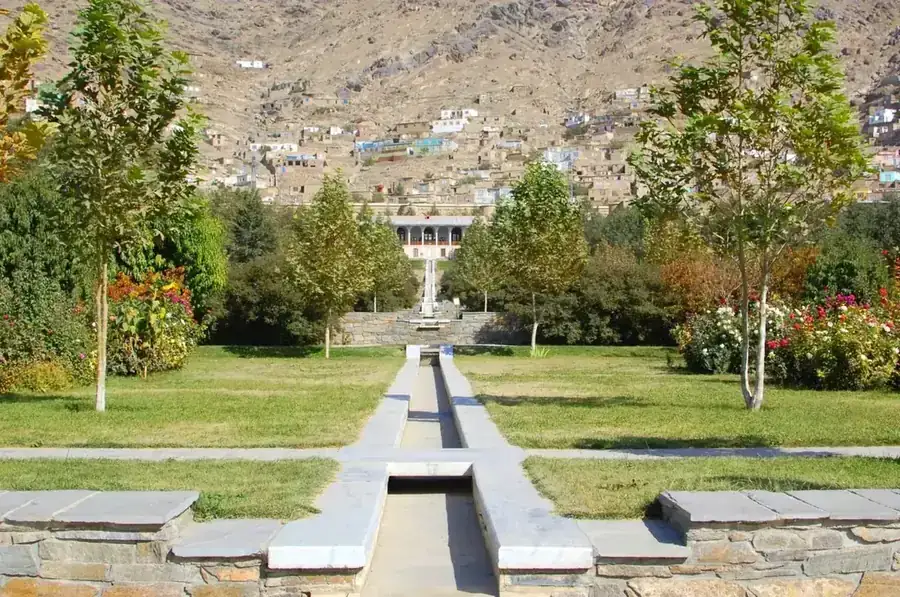
Stand almost anywhere in central Kabul and two ridges fill the skyline. To the south and east runs Koh-e Sher Darwaza, the long rocky mountain carrying the old city walls. To the west rises Koh-e Asamai, better known to Kabulis as TV Hill because of the masts on its summit. Between them the Kabul River squeezes through a narrow gap, and the city spreads out on either side. Understanding these two mountains is one of the quickest ways to make sense of Kabul.
Sher Darwaza: the wall mountain
Sher Darwaza means “Lion Gate”. The ridge climbs steeply from the river and runs towards the Bala Hissar, the old fortress on the city’s south-eastern edge. Along its crest you can still trace the old defensive walls of Kabul, built and rebuilt over many centuries. From the city below they look like a broken line of stone and mud brick following the skyline.
On the western foot of the mountain lies Bagh-e Babur, the terraced garden laid out for Babur, the first Mughal emperor, who loved Kabul and asked to be buried here. Walking up through the garden’s terraces gives you a gentle taste of the mountain without any real climbing, and from the top terrace you look out across the western city.
Asamai: TV Hill
Koh-e Asamai takes its name from Asamai, a Hindu goddess, and a small temple at the foot of the hill has long been associated with Kabul’s Hindu and Sikh communities. Today most people simply call it TV Hill. Houses climb a long way up its slopes, many of them built by families who arrived in the city over the past decades and settled wherever they could find space.
From the lower slopes of Asamai the view takes in the river, the old city around Shor Bazaar and Pul-e Khishti, and Sher Darwaza opposite. On a clear winter morning after snow, the mountains beyond the city stand out sharply behind both ridges.
The gap between them
The Kabul River passes between the two mountains near Deh Mazang. For most of history this gap was the natural western gate of Kabul, the place where roads from the west and south entered the valley. It still feels like a threshold today: traffic narrows, the river bends, and the city on the far side has a different character.
Seeing the mountains on a visit
You do not need to climb either mountain to appreciate them. A few easy ways to see them:
- From Bagh-e Babur. The garden sits right on the slope of Sher Darwaza and is the most relaxed viewpoint.
- From the river. A walk along the Kabul River near the old city shows how tightly the mountains pinch the valley.
- From a hillside viewpoint with a guide. A local guide knows which spots are calm and suitable on the day.
- In the evening. Lights from the hillside houses give both ridges a soft outline after dark.
Please do not hike the ridges on your own. Paths are informal, conditions change, and a guide can tell you what makes sense on the day. Our notes on customs in Afghanistan cover photography and behaviour in residential areas.
See Kabul with Tour.af
Tour.af is a licensed tour operator in Kabul. A private Kabul week from $1,599 runs on your own dates with a licensed guide, and gardens and viewpoints like these fit easily into it. For a longer trip, the Silk Road Highlights tour runs 10 days from $2,499. The letter of invitation and permits come with the quote. Browse all Afghanistan tours or visit tour.af.
Tour.af, Ahmad Shah Baba Mena, Kabul 1012, Afghanistan. +93 70 521 4101. WhatsApp · tour.af
Written with AI assistance and reviewed by Tour.af.
- Reference: https://tour.af
Write a comment