How Ozempic Marketing Mirrors Historical Cigarette Advertising 🚬💉

- 📋 Parallels Between Cigarette & Ozempic Marketing Tactics:
- ⚖️ Ethical Concerns: History Repeating Itself?
- My Recommendation
- Side Effects of Ozempic vs Eating Real Food
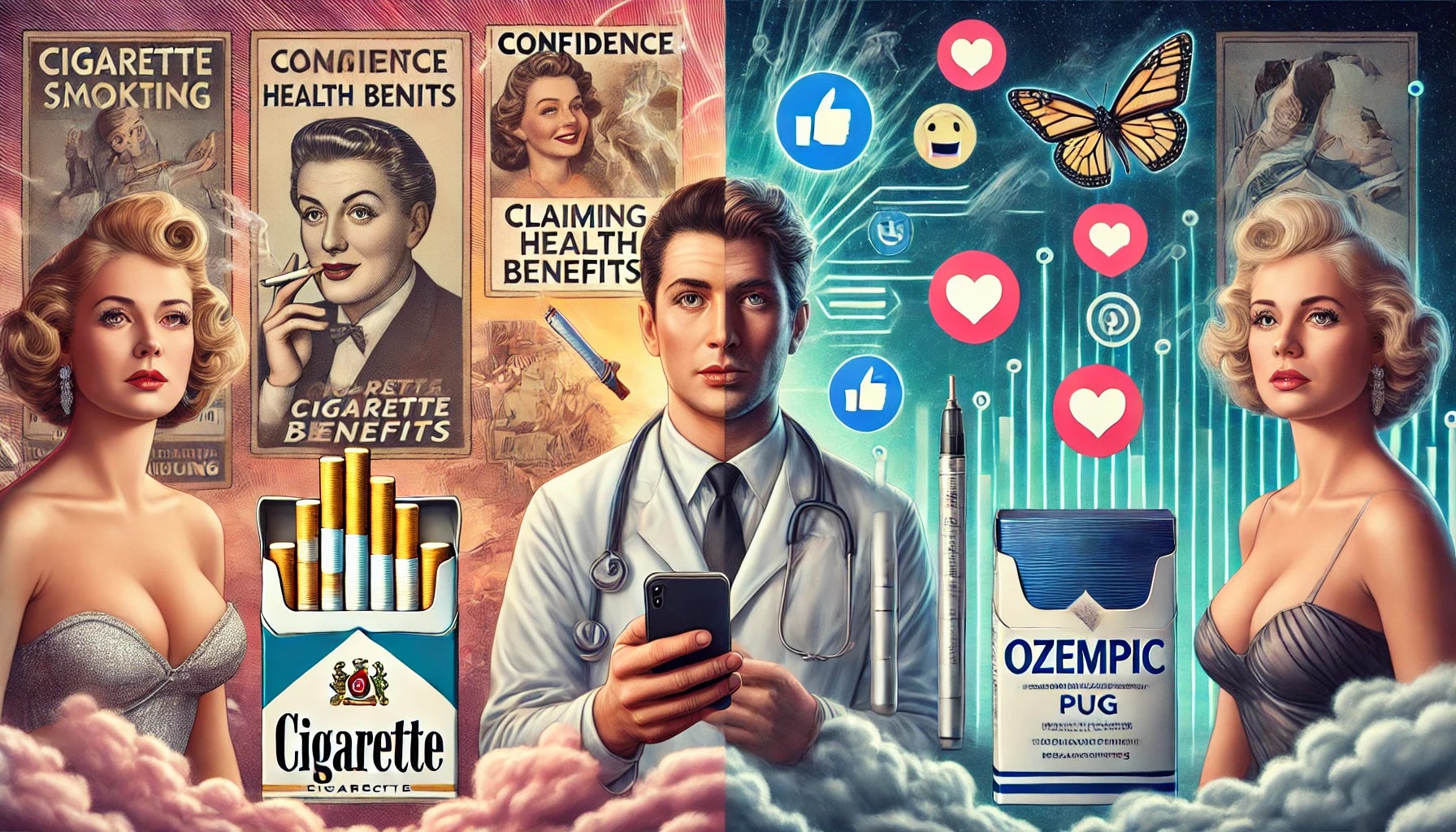
📋 Parallels Between Cigarette & Ozempic Marketing Tactics:
1️⃣ Celebrity & Influencer Endorsements 🌟
- Cigarettes:
✔ Tobacco ads featured Hollywood stars, athletes, and cultural icons (e.g., Marlboro Man) to make smoking seem glamorous and desirable. - Ozempic:
✔ Celebrities and influencers on social media subtly or openly promote Ozempic for weight loss, making it seem like a miracle drug for body image.
✔ Some stars admit to using Ozempic off-label for cosmetic weight loss, normalizing its use beyond medical necessity.
2️⃣ Downplaying Health Risks ⚠️
- Cigarettes:
✔ Early ads claimed smoking was safe, with slogans like “More Doctors Smoke Camels”.
✔ Tobacco companies funded biased studies to cast doubt on smoking-related health risks. - Ozempic:
✔ While FDA-approved for diabetes and weight loss, Ozempic’s off-label use is often framed as risk-free, despite side effects like nausea, muscle loss, thyroid tumors, and potential cardiovascular risks.
✔ Some marketing focuses heavily on weight loss benefits without fully disclosing potential long-term consequences.
3️⃣ Emotional & Aspirational Marketing 🎯
- Cigarettes:
✔ Campaigns tied smoking to freedom, attractiveness, and social acceptance, especially targeting women with slogans like “Reach for a Lucky Instead of a Sweet”. - Ozempic:
✔ Ads and social media posts focus on the emotional benefits of weight loss—like improved confidence, beauty, and social desirability—rather than health outcomes.
✔ The “quick fix” appeal taps into societal pressures around body image, much like cigarettes were marketed as tools for weight control.
4️⃣ Medical Endorsements & “Doctor-Approved” Messaging 🩺
- Cigarettes:
✔ Ads in the 1940s-50s used doctors in white coats claiming specific brands were better for your throat or smoother. - Ozempic:
✔ Modern ads use physicians and medical experts to endorse Ozempic, often framing it as a safe, science-backed solution to weight loss.
✔ Some doctors prescribe it off-label to patients without diabetes or obesity, blurring ethical lines.
5️⃣ Social Acceptance & Normalization 🌐
- Cigarettes:
✔ Smoking was marketed as a social norm, with ads showing groups of people smoking together, enhancing its cultural acceptance. - Ozempic:
✔ Widespread use of Ozempic is being normalized through TikTok trends, Instagram posts, and even casual celebrity mentions, making it seem like everyone is doing it.
✔ This creates social pressure to use the drug for weight loss, regardless of medical necessity.
6️⃣ Ignoring Root Causes & Promoting Quick Fixes 💉➡️⚡
- Cigarettes:
✔ Promoted as a stress reliever or weight control tool without addressing the underlying mental health or lifestyle factors. - Ozempic:
✔ Marketed as a quick solution to weight loss without addressing diet, exercise, mental health, or lifestyle changes.
✔ Risks like muscle wasting or metabolic slowdown from rapid weight loss are often underplayed.
⚖️ Ethical Concerns: History Repeating Itself?
- Just as cigarette companies prioritized profits over health for decades, critics argue that pharmaceutical companies are now using similar marketing tactics with drugs like Ozempic, focusing on profitability rather than long-term health outcomes.
- Off-label use, underreported risks, and emotional marketing can mislead consumers, much like early cigarette ads did before public health backlash.
💡 Key Takeaway:
Both cigarette and Ozempic marketing have:
✔ Glamorized the product
✔ Downplayed health risks
✔ Used emotional triggers (beauty, confidence, weight control)
✔ Leveraged trusted figures (doctors, celebrities)
My Recommendation
If you want to lose weight, eat real food. Real food activates the same GLP-1 that Ozempic produces artificially, which reduces hunger and food cravings.
Since doing this two years ago, I have not been hungry once. I don’t monitor how much I eat or what I eat as long as it is real food. By doing this, I no longer crave junk food, freeing me from the temptation that controls so many.
The difference is that Ozempic comes with a slew of both unknown and known negative consequences while eating real food comes with a slew of both unknown and known positive consequences.
Below are the known side effects within the first few years of this new drug, but imagine what we will know after 40 years, like cigarettes.
Side Effects of Ozempic vs Eating Real Food
Side Effects of Ozempic
📋 Most Common Side Effects (Mild to Moderate):
1️⃣ Gastrointestinal Issues:
- Nausea 🤢 (most common, especially when starting)
- Vomiting
- Diarrhea 💩
- Constipation
- Abdominal pain or bloating
2️⃣ Appetite & Weight Changes:
- Decreased appetite (leads to weight loss)
- Altered taste (metallic taste reported in some users)
3️⃣ Fatigue & Dizziness:
- Tiredness or low energy
- Dizziness or lightheadedness
⚠️ Serious Side Effects (Seek Medical Attention):
1️⃣ Pancreatitis:
- Severe stomach pain (radiating to back)
- Nausea/vomiting that doesn’t go away
2️⃣ Thyroid Tumors (Including Cancer):
- Swelling or lump in the neck
- Difficulty swallowing or breathing
- Hoarseness
⚠️ Note: In animal studies, Ozempic has been linked to thyroid C-cell tumors, but the risk in humans remains under investigation.
3️⃣ Gallbladder Issues:
- Gallstones or cholecystitis (inflammation)
- Symptoms: Severe upper right abdominal pain, fever, jaundice
4️⃣ Kidney Problems:
- Reduced kidney function or acute kidney injury
- Symptoms: Swelling in legs/feet, decreased urination
5️⃣ Severe Allergic Reactions (Rare):
- Rash, itching, swelling (especially face/tongue/throat)
- Severe dizziness
- Trouble breathing
6️⃣ Hypoglycemia (Especially with Other Diabetes Meds):
- Shakiness, sweating, confusion, blurred vision
- More common if combined with insulin or sulfonylureas
💡 Other Notable Symptoms Reported:
- Muscle loss: Rapid weight loss may lead to muscle wasting if not managed properly.
- Hair thinning: Some users report hair loss due to rapid weight loss or nutritional deficiencies.
Side Effects of Eating Real Food
📋 Top Benefits of Eating Real, Whole Foods:
1️⃣ Natural Weight Regulation ⚖️
- Real foods are nutrient-dense and calorie-light, helping regulate hunger and satiety naturally.
- High-fiber foods (vegetables, fruits, legumes) keep you full longer, reducing overeating.
- Supports fat loss while preserving muscle mass without extreme calorie restriction.
2️⃣ Stable Energy Levels ⚡
- Whole foods provide slow-digesting carbohydrates (sweet potatoes, sourdough, honey) that maintain steady blood sugar.
- Healthy fats (avocados, raw dairy, olive oil) and proteins (eggs, fish, meat) offer long-lasting energy without crashes.
3️⃣ Improved Gut Health 🦠
- High-fiber foods (vegetables, fruits, legumes) feed beneficial gut bacteria, improving digestion and nutrient absorption.
- Fermented foods (sauerkraut, yogurt, kimchi) support the microbiome and boost immunity.
4️⃣ Balanced Hormones 🧬
- Healthy fats (omega-3s from fish, nuts, and red meat) aid in hormone production (including sex hormones and cortisol).
- Cruciferous veggies (broccoli, kale) support estrogen metabolism and hormone balance.
5️⃣ Stronger Immune System 🛡️
- Whole foods (raw milk, honey, & 100% cacao) are rich in antioxidants, vitamins (A, C, E, D, B, and K), and minerals (zinc, selenium, magenisum) that boost immunity.
- Foods like garlic, ginger, and mushrooms have natural antimicrobial and immune-boosting properties.
6️⃣ Improved Mental Clarity & Mood 🧠
- Nutrient-dense foods provide essential fats, amino acids, and vitamins that support brain health.
- Leafy greens, berries, and fatty fish are linked to better memory and reduced risk of cognitive decline.
- Stable blood sugar from real foods helps regulate mood and reduce anxiety or depression symptoms.
7️⃣ Glowing Skin, Hair, and Nails ✨
- Vitamin C-rich foods (citrus, bell peppers) boost collagen production.
- Zinc, biotin, and omega-3s support healthy skin, strong nails, and shiny hair.
- Antioxidant-rich foods (berries, nuts, seeds) reduce inflammation and prevent skin aging.
8️⃣ Reduced Inflammation 🔥
- Whole foods rich in omega-3s, polyphenols, and antioxidants help lower chronic inflammation.
- Avoiding ultra-processed foods reduces inflammatory markers tied to heart disease, diabetes, and arthritis.
9️⃣ Better Sleep 😴
- Magnesium-rich foods (cacao, pumpkin seeds, spinach) promote muscle relaxation and deep sleep.
- Balanced blood sugar levels reduce nighttime wake-ups and improve overall sleep quality.
🔟 Disease Prevention ⚕️
- Diets rich in real foods lower the risk of:
✔ Heart disease
✔ Type 2 diabetes
✔ Cancer (due to antioxidants and fiber)
✔ Cognitive decline (e.g., Alzheimer’s)
Why take on both the known and unknown risk when there is a better alternative that leads to all sorts of other benefits as well?
If you still need more information on your decision-making, let’s explore this further.
Does Eating Real Food Mimic Ozempic? 🍳🥦💉
Let’s explore how Ozempic works through GLP-1 stimulation and how real food can achieve similar effects naturally, without the side effects.
💉 How Ozempic Works (GLP-1 Agonist):
Ozempic (semaglutide) is a GLP-1 receptor agonist that mimics the body’s natural GLP-1 hormone (glucagon-like peptide-1), which plays a key role in appetite regulation, blood sugar control, and digestion.
📋 Key Functions of GLP-1 (In Both Ozempic & Real Food):
1️⃣ Regulates Appetite & Satiety:
- GLP-1 activates receptors in the brain (especially the hypothalamus) that reduce hunger and increase feelings of fullness.
- Ozempic artificially stimulates these receptors, leading to reduced food intake.
- Real foods (especially high-protein and fiber-rich) can naturally boost GLP-1 secretion after meals.
2️⃣ Slows Gastric Emptying:
- GLP-1 slows how fast food leaves the stomach, leading to longer-lasting fullness.
- Ozempic directly mimics this, which can lead to reduced caloric intake.
- High-fiber foods (chia seeds, oats, legumes) naturally slow gastric emptying.
3️⃣ Balances Blood Sugar Levels:
- GLP-1 increases insulin secretion and reduces glucagon, leading to better blood sugar control.
- Ozempic enhances this effect, making it effective for Type 2 diabetes.
- Low-glycemic whole foods (sweet potatoes, quinoa, leafy greens) can similarly stabilize blood sugar.
4️⃣ Promotes Weight Loss:
- Ozempic leads to weight loss by reducing appetite and lowering calorie intake.
- Real food promotes weight loss naturally through balanced satiety signals without medication.
🥑 How Real Food Naturally Boosts GLP-1:
Certain foods can stimulate natural GLP-1 secretion, mimicking some of Ozempic’s benefits:
Best GLP-1 Stimulating Foods:
- High-Protein Foods: Meat, Eggs, fish, chicken, raw dairy, legumes (protein boosts satiety hormones).
- High-Fiber Foods: Fruit, Leafy greens, oats, beans, chia seeds (fiber slows digestion & increases GLP-1).
- Healthy Fats: Avocados, nuts, olive oil, raw dairy (fats delay gastric emptying, enhancing satiety).
- Fermented Foods: Yogurt, kimchi, sauerkraut (a healthy gut microbiome supports GLP-1 release).
- Bitter Foods: Arugula, dandelion greens (bitters stimulate gut hormone secretion, including GLP-1).
💡 Can Real Food Do What Ozempic Does?
✅ YES:
- Supports sustainable weight loss without side effects.
- Promotes blood sugar balance naturally.
- Enhances satiety and appetite control through nutrient density.
- Improves overall metabolic health long-term.
🔑 Key Difference:
- Ozempic offers a quick fix but comes with risks.
- Real food promotes a holistic, sustainable solution with benefits beyond weight loss.
With Truth & Love 🥛🍯,
Shaughnessy
Write a comment