Florida’s New Gang-Labeling Law Risks Turning Speech Into Suspicion

Beginning October 1, Florida will expand the legal criteria authorities may use to classify someone as a “criminal gang member.” The law does not make a single social-media post, by itself, enough for that designation. But it does make an online admission one of the statutory criteria, and it permits a single factual episode to satisfy multiple criteria at once.
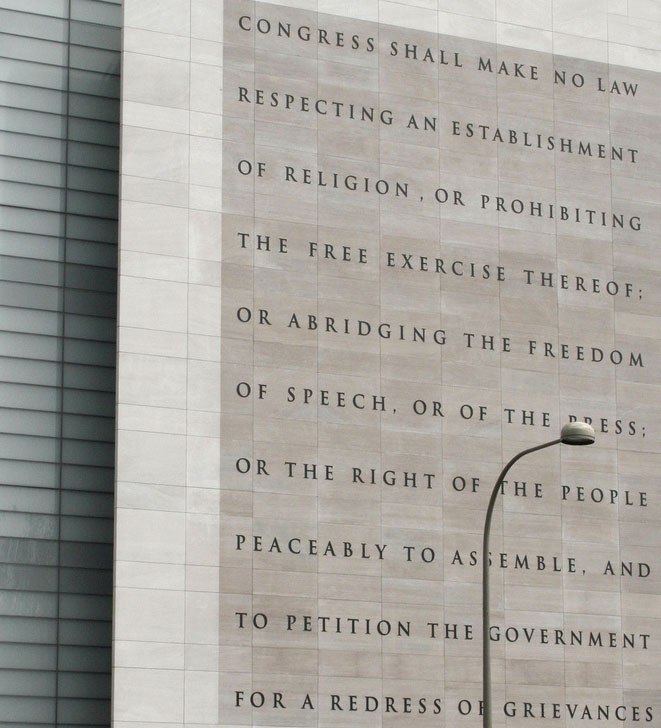
That is a serious First Amendment problem. Florida is moving closer to treating speech, symbolism, association, and online persona as proxies for criminality.
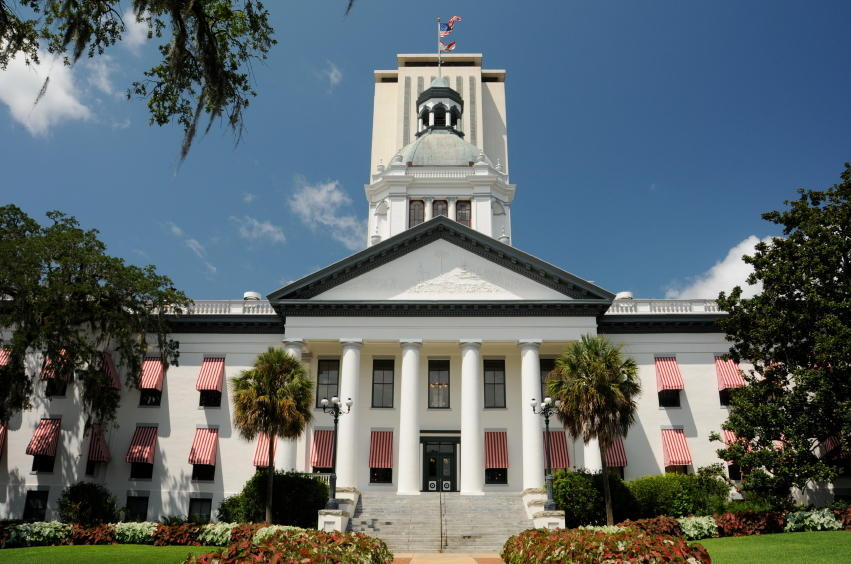
Florida’s expanded criminal-gang classification criteria take effect October 1.
What Changes October 1
Under Florida Statute § 874.03, a “criminal gang member” is a person who meets two or more listed criteria. The expanded criteria include:
Admitting in person, online, or on social media to being a criminal gang member.
Being identified or “claimed” by a criminal gang.
Being identified by a live-in parent, guardian, or spouse.
Being seen with known gang members on two or more occasions, a reduction from the prior four-observation threshold.
Authoring communications indicating gang affiliation or gang activity, or taking responsibility for a crime committed by a gang member.
Using “gang-related language” online or on social media in furtherance of criminal gang-related activity.
The statute’s definition of “gang-related language” is broad. It covers verbal or written statements that signal affiliation, support gang activity, or use recognized gang codes, symbols, and terminology associated with criminal organizations. It explicitly includes digital and electronic statements, which means posts, captions, videos, comments, messages, emojis, and other social-media activity can become part of the state’s case.
The statute also provides that when one act or factual transaction satisfies more than one criterion, every applicable criterion may be counted as satisfied. That means the supposed two-factor safeguard may not always require two genuinely independent pieces of evidence.
That is the central concern. The state is not simply using speech as evidence in a prosecution for a specific criminal act. It is building a legal status—a “criminal gang member” designation—through expressive conduct and social inference.
The Constitutionality Problem
The First Amendment does not protect criminal conduct simply because someone talks about it. A genuine threat, criminal solicitation, conspiracy, an admission connected to an actual offense, or speech intended to coordinate unlawful conduct can be investigated and used as evidence.
But that is very different from allowing the government to attach a quasi-criminal label to someone because they post, speak, dress, gesture, associate, or present themselves online in a way officials interpret as gang-related.
Merely claiming gang membership does not establish that someone has committed a crime, planned one, aided one, or even belongs to an organization engaged in criminal activity.
People exaggerate online. They joke. They role-play. They quote lyrics. They mimic a style. They perform for attention, status, fear, popularity, or artistic expression. Teenagers and young adults, in particular, often use slang, symbols, music references, memes, emojis, and identity performance that can be misunderstood by police, prosecutors, judges, and jurors who do not share their cultural context.
The government cannot constitutionally leap from “this person said something troubling, offensive, or suspicious” to “this person can be formally classified as criminal.”
The question is not whether gangs exist or whether they can cause enormous harm. They do. The question is whether the Constitution allows the government to convert ambiguous speech into legal suspicion without proving knowing participation in criminal activity.
It should not.
A free society has to preserve the line between speech and conduct. Florida’s law risks blurring that line beyond recognition.
Under the new criteria, a person’s online statement can help establish gang-member status even before the state proves that person committed a gang-related offense. A post that allegedly signals affiliation can be combined with a claimed association, a tattoo, clothing, a hand sign, a spouse’s identification, a police observation, or an alleged identification by a gang.
Some of those factors may be relevant in a real investigation. But relevance is not the same thing as reliability. And it is certainly not the same thing as proof of criminality.
Imagine an artist posting a lyric, a teenager using a hand sign copied from a music video, or a person appearing twice in photos with relatives, classmates, neighbors, or friends whom police have classified as gang members. Add an ambiguous caption, an emoji, or a tattoo that an officer interprets as gang-related, and authorities may argue that the statutory threshold has been met.
That is not merely a concern about bad people facing consequences for bad acts. It is a concern about a legal framework that turns cultural expression, neighborhood ties, family relationships, and online language into evidence of a criminal identity.
Florida’s law defines a “criminal gang” broadly as a formal or informal ongoing group of three or more people that has criminal or delinquent acts among its primary activities and shares a name, signs, colors, or symbols. The statute also includes terrorist organizations, transnational crime organizations, and hate groups within that definition.
When the label carries potentially serious consequences, the proof should be concrete. The state should have to show purposeful participation in a criminal enterprise, coordination around unlawful acts, or an actual crime committed with the required criminal intent.
The government should not be allowed to engage in the constitutional equivalent of guilt by caption.
The State’s Case
Florida lawmakers and law-enforcement officials do have a legitimate public-safety argument.
Gangs can use social media to recruit, intimidate rivals, threaten witnesses, claim responsibility for violence, display weapons, publicize illicit profits, coordinate activity, and increase a member’s status. Online posts can reveal real connections that were once more difficult for investigators to establish. The Legislature’s 2026 bill text reflects the state’s belief that digital admissions and coded online communications should be available when authorities investigate criminal organizations.

The state can also argue that the statute does not punish a single post in isolation. Technically, a person must satisfy at least two criteria before being classified as a criminal gang member. The provision involving “gang-related language” is also not written as a blanket ban on slang; it applies where the language is used “in furtherance of criminal gang-related activity.”
Those limits matter. No serious civil-liberties position should deny investigators the ability to use social-media evidence in a legitimate criminal case. If someone posts an authentic confession, threatens a witness, directs a crime, solicits violence, or coordinates with accomplices, those communications can be relevant evidence.
But public safety does not eliminate the need for constitutional boundaries.
The state can investigate actual criminal conduct without treating speech and online expression as a shortcut to a legally meaningful criminal designation.
Liberty Must Come First
The proper principle is straightforward: speech may be evidence of a crime, but speech is not itself the crime. And it should not substitute for proof of criminal conduct.
Florida should require a far stronger showing before imposing or relying on a “criminal gang member” designation. At minimum, the state should have to establish independent and reliable evidence that a person knowingly participated in, assisted, directed, or intended to further actual criminal gang activity.
A single post, a single photograph, a single encounter, or a single ambiguous statement should not be reclassified into multiple statutory factors so the government can claim it has met a two-part test.
The law needs real guardrails:
Require two genuinely independent criteria, not multiple labels derived from one post, one photograph, or one police encounter.
Require corroboration for online admissions, particularly when a statement is ambiguous, artistic, sarcastic, performative, or disconnected from a specific criminal act.
Protect artistic, political, journalistic, and cultural expression unless prosecutors can prove a direct connection to actual criminal conduct.
Give people meaningful notice and a real opportunity to challenge a gang-member designation before it is used to increase punishment, influence bail, affect detention conditions, or otherwise burden liberty.
Require proof of knowing and intentional participation in criminal activity—not mere proximity, personal style, speech, reputation, family relationship, or social-media persona.
The Constitution does not require Florida to ignore gangs. It requires Florida to distinguish between people who commit crimes and people who say things the government dislikes, fears, or misunderstands.
That distinction is not a technicality. It is liberty.
Once the state can allow an online boast, a lyric, a code word, a hand sign, a tattoo, or an association to help create a legally consequential criminal identity, the government’s interpretation of expression can become more important than proof of wrongdoing.
That is exactly where the First Amendment should draw a hard line.
Write a comment