Monday Morning News Roundup: 10/26/2026

- Iran: Threats, Oil, and a Long Standoff
- Ukraine and Russia: Starlink Fights and Peace Talks
- France and Europe: A Second Weekend of Unrest
- Domestic: Prices, Rallies, and Black Triangles
Midterms are just over a week away, and the news this week covered a lot of ground. The standoff with Iran kept getting more tense, Russia and Ukraine are heading back to the negotiating table while arguing over Starlink, France saw a second straight weekend of riots, and at home, voters are still unhappy about prices. Here’s what you need to know heading into the week.
Iran: Threats, Oil, and a Long Standoff

The biggest warning of the week came from Director of National Intelligence Jay Clayton. In an unclassified memo to Secretary of State Marco Rubio, he said Iran has “substantially increased efforts to target U.S. personnel“ and that Iranian plots to kill Americans have reached “advanced stages” in the Middle East and other countries. The memo didn’t name targets, countries, or say whether an attack was imminent. Still, the State Department has already ordered non-essential embassy staff and their families out of Saudi Arabia, and other embassies in the region have cut back staffing. Houthi militants have also stepped up drone and missile attacks on Saudi Arabia. A strike on Riyadh’s King Khalid Airport earlier this month killed at least 12 people, including an American citizen.
President Trump, meanwhile, is giving mixed signals about what comes next. For the second day in a row on Friday, he hinted at escalating after the midterms while also suggesting the U.S. could just wait Iran out. “The question is: Do we want to finish it off or do we just want to let it wither because we’re getting everything we wanted,” he said. U.N. Ambassador Mike Waltz told the Financial Times the war could last another year and that the U.S. “can maintain \[its\] blockade for the foreseeable future.” Trump pointed to Kpler shipping data showing Persian Gulf oil exports are back above prewar levels, but prices are still painful: Brent crude hovered around $110 a barrel and West Texas Intermediate around $100. At a Florida rally, Trump summed up his options this way: “We may do another little Epic Fury, or they’ll agree.” Epic Fury is the name of the military campaign the U.S. launched in February.

That leads to the story that went viral this weekend. A post from The Hormuz Letter on X racked up millions of views by claiming the Pentagon is preparing every major U.S. base to run for 90 days without outside power, fuel, water, or supplies. The post is based on a real report. Fox News Digital reviewed documents describing a Pentagon initiative called FORTRESS. Under the plan, major bases in the continental U.S. would need to keep running on their own for at least 90 days if the civilian grid and supply chains fail. Ideas include portable nuclear reactors, large-scale battery storage, and microgrids that can cut a base off from the public grid entirely. The plan also calls for stockpiles of munitions, fuel, critical minerals, and medical supplies, plus a “Civil Reserve Manufacturing Network” to quickly convert civilian factories to defense production. Pentagon spokesperson Sean Parnell called relying on civilian infrastructure “an intolerable risk” and said, “Power is combat now.” The documents don’t name Iran or any specific enemy. Parnell framed the plan as “an insurance policy for the homeland” in case of a global, multi-front war.
Ukraine and Russia: Starlink Fights and Peace Talks

Ukraine’s battlefield internet became a political fight this week. Elon Musk admitted SpaceX had throttled Starlink in Ukraine and accused Ukraine’s military of breaking the terms of service by using the civilian network for offensive drone strikes. “That loophole was closed last week,” he wrote. Ukrainian officials pushed back. Serhii Beskrestnov, a defense technology adviser to President Zelenskyy, said existing restrictions had made that kind of use impossible for a long time: “It’s very strange that Elon Musk doesn’t know about the restrictions on Starlink’s operation in Ukraine.” The bigger problem involved Starshield, SpaceX’s military-focused network. Earlier this month, Ukrainian drones connected to it lost signal at high speeds, which disrupted air defenses during Russian attacks. Officials say those speed caps were lifted Saturday. As for who actually made the call, nobody seems to agree. Musk said the U.S. government controls Starshield changes, Trump said he didn’t make the decision, and Vice President JD Vance suggested the White House coordinated with Musk. The BBC looked at who actually controls Ukraine’s access to Starlink as Zelensky says the limits are still affecting Ukrainian forces.
Diplomacy is also starting up again. The day after meeting U.S. envoy Steve Witkoff, Vladimir Putin told Russian television that Russia is ready to resume U.S.-mediated talks with Ukraine next month. He said any deal has to cover security guarantees for both countries and “the architecture of European security as a whole.” Putin made clear he wants a final settlement, not “a temporary ceasefire for some short period of time.” He also repeated his claim that eastern Ukraine is “the territory of historical Russia.” That’s a reminder that the fight over Donbas, which Russia wants Ukraine to give up entirely, is still the main obstacle. Zelenskyy says Ukraine is ready for talks, which will likely happen by early November.

There are a couple of small signs of progress. Kyiv and Moscow agreed to a local ceasefire around Oleshky in occupied Kherson, brokered by First Lady Melania Trump. But the war isn’t slowing down. Zelenskyy said Russia launched nearly 2,300 drones, about 1,600 guided bombs, and 48 missiles at Ukraine over the past week, hitting power plants, grain stores, and homes across nine regions.
France and Europe: A Second Weekend of Unrest

France got through a second straight weekend of nationwide protests over school funding, the cost of living, and inequality. The Interior Ministry counted 410,000 demonstrators, while unions claimed twice that number. Most marches were peaceful, but violence flared after dark in Paris and Marseille. Riot police in Paris used tear gas and water cannon on about 500 hooded youths, and jewelry stores in Marseille were ransacked. Clashes also broke out in Lyon, Bordeaux, Lille, Toulouse, and several other cities. The government deployed 70,000 police and gendarmes, 10,000 more than the weekend before, after admitting it had underestimated the October 17 unrest. More than 20 Paris metro stations closed, and so did the Louvre, the Musée d’Orsay, and the Paris Opera. Far-left leader Jean-Luc Mélenchon predicted weekly protests until President Macron deals with France’s “social malaise,” warning that otherwise “the only thing left to him will be the exit door.”
Live coverage from Paris reported nearly 1,000 arrests nationwide on Saturday. It also reported that Prime Minister Sébastien Lecornu quietly asked France’s major telecom companies to prepare for a possible temporary block on Snapchat, TikTok, and Instagram during urban violence. Lecornu called the request exploratory. The unrest is already affecting betting markets: Marine Le Pen’s odds of winning the 2027 presidency rose to 65% on Polymarket. And in a very American side story, Saints fans still showed up in Paris for Sunday’s game against the Steelers at Stade de France. As one superfan in a gold suit and crown put it: “Protests be damned.”

The economic cost is getting bigger. More than 3,000 French businesses were looted or damaged during the first weekend, including Hermès, Louis Vuitton, and The North Face stores in Paris’s Les Halles district. Within hours, stolen items were showing up for sale online, and the hashtag “October 17” briefly trended on the resale app Vinted. French ministers called in Vinted, Leboncoin, Amazon, eBay, Meta, and TikTok and demanded they remove suspicious listings. Morningstar DBRS estimates insured losses could reach €1.2 billion. Carrefour cut its 2026 profit forecast after about 50 of its stores were hit on the first day, and its stock dropped as much as 15%. The French Senate is set to debate a “rioters pay” bill on October 27 that would make participants in destructive gatherings jointly responsible for the damage.

This isn’t just happening in France. Gen Z is leading protests across Europe over education funding, housing, jobs, and corruption, driven by a fear that they won’t get the same opportunities their parents had. In Spain, the eviction of an 87-year-old woman sparked housing protests. In Portugal, 55 people were arrested after a rent protest in Lisbon. Italian students say they’re taking cues from France, and Giorgia Meloni sent 500 troops to Milan. There have also been demonstrations in Greece, Belgium, Albania, and Serbia. More are planned: German protests on October 31, general strikes in France and Spain on November 5 and 11, and student actions in Britain and Italy on November 20. Governments facing high debt don’t have much room to spend their way out, especially with French bond yields at their highest level since 2002.
Domestic: Prices, Rallies, and Black Triangles
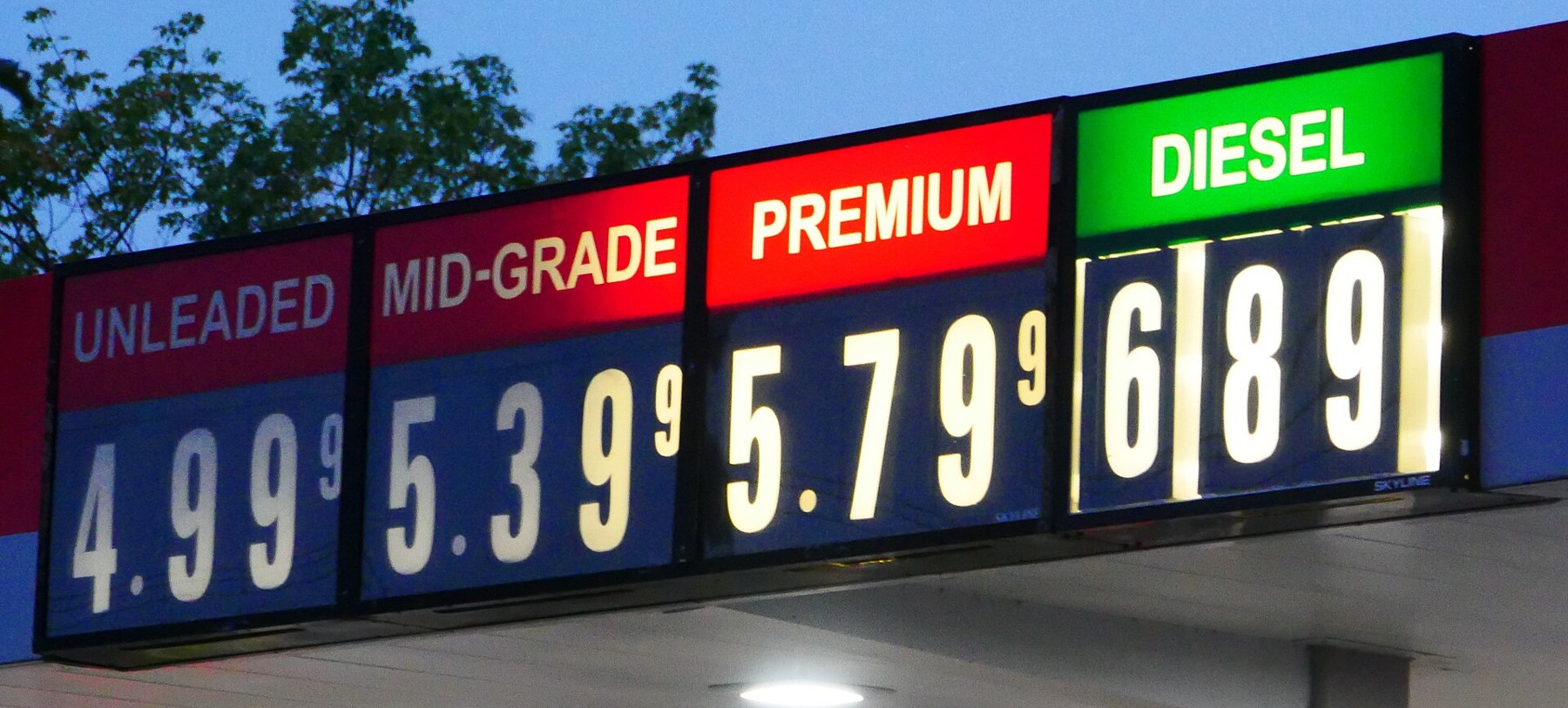
The economy is the biggest issue going into the midterms, and the numbers are tricky for the White House. Prices have risen 5.4% in almost two years of Trump’s second term. That’s about half the inflation rate under Biden, which topped 20% over his four years. But voters don’t seem to care much about that comparison. Trump’s disapproval on inflation sits at 72%. Gasoline and fuel oil have jumped more than 30% since March because of the Iran war and the closure of the Strait of Hormuz, and AAA has gas at about $4.30 a gallon. Tariffs also show up in the details: coffee rose nearly 23% before many coffee duties were dropped, and toy prices are up 7.8% after falling under Biden. Eggs are one bright spot for the administration, with prices dropping an average of 3.82% a month. With early voting underway for November 3, Trump has announced $8 billion in farm support and invoked the Defense Production Act to boost refining capacity.
He’s also trying to deliver economic news on the campaign trail. At a rally in Perry, Georgia, Trump announced that Audi will build its first Georgia plant near Macon. It’s a $4.2 billion investment that Trump said will produce 200,000 cars a year, and Audi says it will create about 4,500 jobs. Audi CEO Gernot Döllner appeared on stage and said the plant will build “our biggest and most premium SUVs,” and Trump credited his tariffs. There’s a catch: construction doesn’t start until 2027, and production isn’t expected until the early 2030s. The announcement looks timed to help Republican Rep. Mike Collins, who is trying to unseat Democratic Sen. Jon Ossoff. Republicans are bracing for losses because of high costs and the Iran war.
We’ll end with something a little stranger. The Pentagon’s latest UFO document release includes a report from two anonymous senior military observers who say they saw a mysterious black triangle moving at about 1,800 mph over a sensitive site in the western U.S. earlier this year. They described it as looking like a delta-wing drone with a wingspan of 9 to 15 feet. They say it vanished silently within seconds and left no exhaust trail. The location is redacted. The images aren’t very convincing: they’re nine copies of the same canyon photo with tiny triangle shapes added in. Penn State historian Greg Eghigian said the visuals don’t add “anything substantive to the report itself.” The release is part of Trump’s promised UFO transparency push, but the drops have been getting thinner since he ordered full disclosure in February. Friday’s batch included fewer than 25 documents.

That’s the week. Hostilities with Iran could resume after the election, peace talks are coming in November, and the next European strike dates are already set, so expect a busy stretch.
See you next Monday.
Write a comment