Monday Morning News Roundup 11/16/2026

- What Actually Happened to America’s Flights?
- The Ground Stop Ended. The Travel Mess Didn’t.
- Meanwhile, Microsoft’s Problems Went Beyond Email
- Was It a Cyberattack? Did AI Have Anything to Do With It?
- What We’re Watching This Week
Good morning, and welcome to the Monday Morning News Roundup.
Two massive outages hit the systems we depend on last week—and the recovery wasn’t as simple as flipping a switch.
First, Microsoft’s outage disrupted email and workplace tools around the world. A day later, a telecommunications failure forced the Federal Aviation Administration to halt departures nationwide.
The timing raised an obvious question: were they connected? Officials say no connection has been established. These were separate breakdowns, not a confirmed coordinated attack or a single Microsoft failure that grounded America’s planes.
But both incidents left us with a bigger question: how can changes inside essential networks cause so much disruption—and why can recovery take so long?
What Actually Happened to America’s Flights?
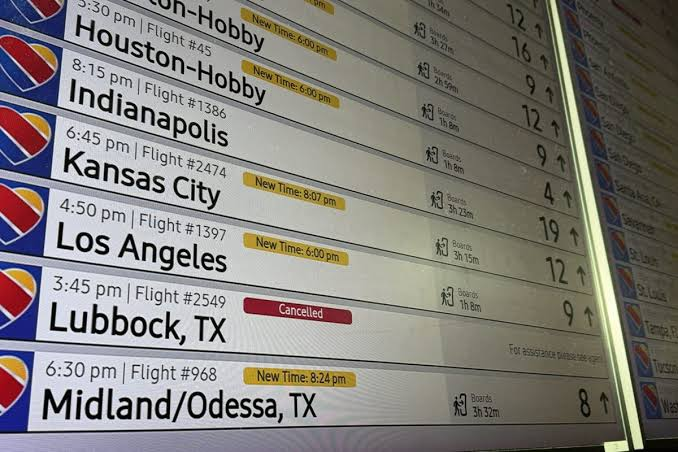
The FAA began experiencing telecommunications problems around 3:30 p.m. Eastern on Friday, November 13. Shortly afterward, it imposed a nationwide ground stop. Departures resumed at 8:15 p.m., ending a halt that lasted roughly four and a half hours, according to the FAA’s official account.
That didn’t mean every airplane in the sky had to land immediately. It also didn’t mean controllers lost every radar display and radio connection. The FAA says approximately 3,500 airborne aircraft landed safely, some radar and communications capabilities remained available, and critical flights continued. Stopping departures kept additional traffic out of an unstable system.
The agency’s preliminary explanation centers on excessive traffic flooding its telecommunications network during contractor maintenance. Officials identified sites in El Dorado, Arkansas, and Amarillo, Texas, as potential sources. The resulting instability affected 17 of the FAA’s 22 regional air traffic control centers, along with several terminal radar facilities. Blocking the two locations helped stabilize the network.
Contractor L3Harris was performing telecommunications upgrade work, but the ultimate cause—and responsibility—remained under investigation. As Reuters reported Sunday, officials were still examining how the equipment and maintenance work contributed to the failure.
The Ground Stop Ended. The Travel Mess Didn’t.
Restoring a network doesn’t instantly put aircraft, crews and passengers where they need to be. Airlines continued rebuilding their schedules after departures resumed.
Reuters’ Sunday update reported more than 6,400 cancellations Saturday. Its Sunday reporting counted another 1,600-plus cancellations and almost 3,600 delays at that point in the day. Those Sunday figures were a snapshot, not final totals.
That distinction matters heading into Monday: a stable FAA network and a fully recovered airline schedule are not the same thing.
Meanwhile, Microsoft’s Problems Went Beyond Email

Microsoft’s disruption began Thursday, November 12, and continued into Friday. It centered on Exchange Online, the cloud platform supporting organizational email, calendars and other functions used across Microsoft 365, according to Reuters’ coverage of the outage.
That helps explain why the problems spread beyond Outlook. Some Teams, Copilot, SharePoint and other features depend on Exchange, so an outage in one underlying service can interrupt several tools people use throughout the workday. This was not a failure of every Microsoft product, and the impact varied by service.
Microsoft said a problem introduced during an earlier network-capacity upgrade surfaced following a subsequent network change. Recovery was uneven: initial improvements did not hold, and some infrastructure struggled as traffic returned. Macworld’s outage recap reported service restoration by early Saturday.
The disruption affected workflows across government, business and technology organizations internationally. At the peak, Downdetector recorded more than 130,000 U.S. Outlook problem reports—but that number is not a complete count of affected users. The reporting reviewed did not establish a verified worldwide total.
Was It a Cyberattack? Did AI Have Anything to Do With It?
Those theories attracted attention. The available evidence doesn’t support them.
Microsoft described its outage as a technical issue unrelated to cyberattacks or AI agents. The FAA likewise reported no indication of a malicious outside actor and rejected a connection to its SMART AI system. The agency describes SMART as a data aggregator that does not feed information into air traffic control operations.
An AI-powered product experiencing an outage is not evidence that AI caused the outage. And two major failures happening on consecutive days does not establish a connection between them.
The more useful questions are about safeguards. Why could excessive traffic from remote FAA sites destabilize so much of the network? How did Microsoft’s network changes expose a problem that proved difficult to resolve? Those are questions the agencies and companies involved still need to answer in their fuller technical accounts.
What We’re Watching This Week
-
Airline recovery: Officials forecast improving operations, but passengers were still dealing with cancellations and delays Sunday. Watch for updated conditions rather than assuming every route has returned to normal.
-
The FAA investigation: A definitive root cause, a clear account of contractor involvement and a public corrective-action timetable remain important next steps following the FAA’s preliminary explanation.
-
Microsoft’s explanation: The company has promised a fuller post-incident report. That should clarify the failure, its scope and the changes intended to prevent a repeat.
-
The modernization debate: Transportation Secretary Sean Duffy is pushing for additional air traffic control funding, while lawmakers are questioning how existing funding is being used. The key issue is which specific improvements would address the weaknesses exposed Friday.
Two separate outages. Two very different systems. The shared issue is resilience: preventing a localized technical problem from becoming everyone else’s problem—and recovering effectively when it does.
For more commentary on this, and SO much more, check out the latest episode of our podcast here!
Write a comment