Monday Morning News Roundup 11/22/2026

- A Court Challenges Pandemic-Era Voting—with a Narrower Immediate Impact
- The FBI Investigates a Breach of a System Police Rely on Daily
- A Guilty Verdict in the Palisades Fire Case
- “We’ve Got Time”: Trump Looks Toward 2027 on Iran
- After 13 Years, GTA VI Is Finally Here
Some weeks, the news is about what just happened. Others are about decisions, disasters, and promises that refuse to stay in the past.
This week brings a court ruling questioning how Congress passed a major spending bill four years ago, a conviction tied to one of California’s most destructive wildfires, and fresh questions about the security of a system police officers depend on every day. Overseas, the prospect of an end to the Iran war appears to be slipping toward another calendar year. And in entertainment, a wait measured in console generations is finally over.
Here’s what you need to know heading into the week.
A Court Challenges Pandemic-Era Voting—with a Narrower Immediate Impact
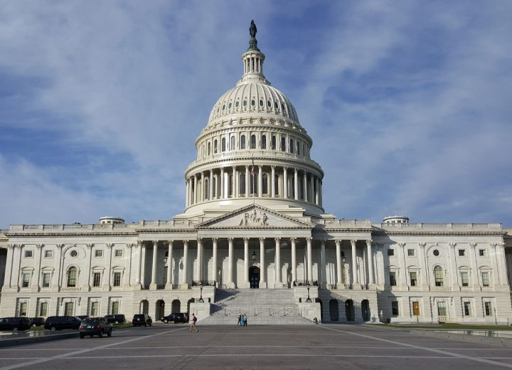
A sharply divided federal appeals court ruled Friday that the House unconstitutionally passed a $1.7 trillion spending package in 2022 because it relied on pandemic-era proxy voting rather than having enough lawmakers physically present. The 9–8 decision from the 5th U.S. Circuit Court of Appeals upheld an injunction involving the Pregnant Workers Fairness Act, which Congress included in that package.
The House approved the legislation 225–201, with 226 members voting by proxy. The majority concluded that the Constitution’s quorum clause requires a majority of House members to be physically present to conduct legislative business. The proxy rule, introduced under then-Speaker Nancy Pelosi in May 2020, ended after Republicans took control of the chamber.
The important distinction is between the ruling’s reasoning and its immediate effect. Although the court challenged how the entire spending package passed, the injunction does not invalidate every provision or eliminate pregnancy-related workplace protections nationwide. It blocks the Justice Department and Equal Employment Opportunity Commission from enforcing the Pregnant Workers Fairness Act against Texas.
That mismatch was central to the dissent. Judge James Graves disputed the majority’s physical-presence requirement and questioned why a supposedly unconstitutional legislative process would justify blocking only one narrow piece of the resulting law. For now, the decision leaves a sweeping constitutional argument attached to a much more limited remedy.
The FBI Investigates a Breach of a System Police Rely on Daily
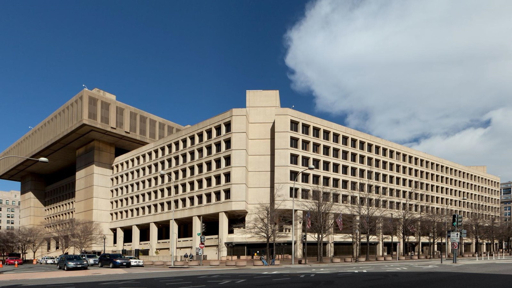
The FBI is investigating an apparent intrusion into the National Crime Information Center, the nationwide database law enforcement agencies use to share information about warrants and conduct checks, according to CNN. Two people briefed on the investigation described the incident, and the bureau had not immediately responded to CNN’s request for comment.
The concern goes beyond whether someone accessed sensitive records. A former FBI official told CNN that the accuracy of the database is also critical: officers depend on its information when identifying wanted people and making decisions that can affect public and officer safety. The report does not establish that hackers changed records, but that possibility explains why the integrity of the system matters as much as its confidentiality.
The apparent intrusion follows a separate September breach involving sensitive employee information from an FBI jobs website. It also creates an uncomfortable contrast with Director Kash Patel’s public messaging: after officials learned of the latest incident, Patel appeared on Fox News promoting the bureau’s cybersecurity work and saying the administration was “staying ahead of the curve.”
Key questions remain unanswered in the report, including who was responsible, how much information was exposed, and whether the intruders could alter anything. Those details will determine the scale of the damage—not simply the fact that another breach occurred.
A Guilty Verdict in the Palisades Fire Case
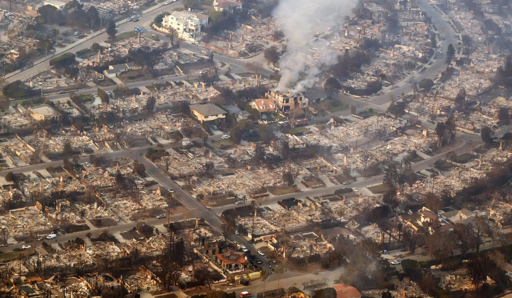
A federal jury convicted Jonathan Rinderknecht, 30, on two charges connected to the fires that culminated in the deadly January 2025 Palisades Fire. Friday’s verdict followed a retrial after his first case ended with a deadlocked jury in June.
According to the Associated Press, prosecutors established that Rinderknecht started the January 1 Lachman Fire, which continued smoldering underground in root systems before flaring back up on January 7. The resulting Palisades Fire killed 12 people and destroyed neighborhoods in Los Angeles and Malibu.
The government’s case combined cellphone data, photographs, fire-detection camera images, expert testimony, and evidence about Rinderknecht’s behavior. The defense challenged investigators’ identification of the ignition area, questioned gaps in the evidence, and offered fireworks as an alternative explanation. Jurors ultimately convicted him on both counts.
Sentencing is scheduled for March 17, 2027. Each count carries a mandatory minimum of five years and a maximum of 20 years in federal prison. His attorney said the defense would review its options regarding an appeal.
For communities still living with the destruction, the verdict is a significant development in assigning criminal responsibility. It does not, of course, restore what the fire took.
“We’ve Got Time”: Trump Looks Toward 2027 on Iran
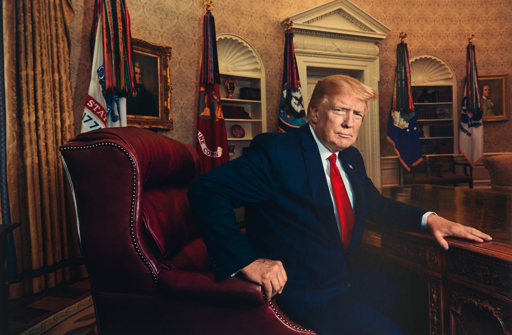
President Donald Trump is signaling that major decisions about the Iran war may wait until the new year—even as reports describe consideration of another substantial military campaign. Asked by Reuters about possible new major strikes, Trump said, “I’ll talk to you about it after the beginning of the year,” adding, “We’ve got time.”
As TIME reports, the comments follow earlier promises that the conflict would last only weeks and later end after the November 3 midterm elections. Instead, the war has stretched to nearly nine months. Major hostilities have subsided, but limited American strikes and the broader confrontation have continued.
Reports cited by TIME indicate that Israel has advocated another joint campaign and that the White House has sought assessments of how Iran might respond to different strike options. Those are reported deliberations, not an announced decision to launch a new offensive.
The political clock matters, too. Democrats won control of Congress in the midterms and take office in January, potentially complicating the administration’s next moves. The current Republican-led Senate rejected a measure aimed at curbing the war on Thursday.
Waiting until January is not the same as ending the conflict. For now, Trump’s comments offer a timeline for revisiting the decision—not a clear path out of the war.
After 13 Years, GTA VI Is Finally Here

We’ll close with a different kind of long-running story: people are finally playing Grand Theft Auto VI.
Rockstar’s latest arrived November 19 on PlayStation 5 and Xbox Series X|S, bringing players to Leonida, its fictionalized version of Florida. Yahoo’s launch coverage describes enthusiastic early reviews, a flood of livestreams and clips, and an installation footprint of roughly 212GB. The standard edition costs $79.99, with an Ultimate version priced at $99.99.
The celebration comes with technical caveats. Yahoo reports that the game targets 30 frames per second, with some players experiencing drops to roughly 15–20 during combat on base PS5 and Xbox Series S hardware. Its coverage says Xbox Series X and PS5 Pro appear better able to maintain the target. Those early reports are worth distinguishing from a claim that every player will experience the same problems.
One particularly interesting gameplay detail is a criminal-profile system that responds to how players approach violence. More restrained play can unlock different bonuses from an indiscriminate shooting spree, while the most extreme “Irredeemable” classification reportedly becomes permanent unless players return to an earlier save. That gives the familiar freedom to cause chaos a more persistent consequence.
After 13 years between numbered entries, the conversation has finally moved beyond trailers and release dates. Now comes the more interesting test: what players discover once the anticipation gives way to actually living in Rockstar’s world.
Check out the latest episode of our podcast, that breaks down more of the cultural impact of GTA VI here.
Write a comment