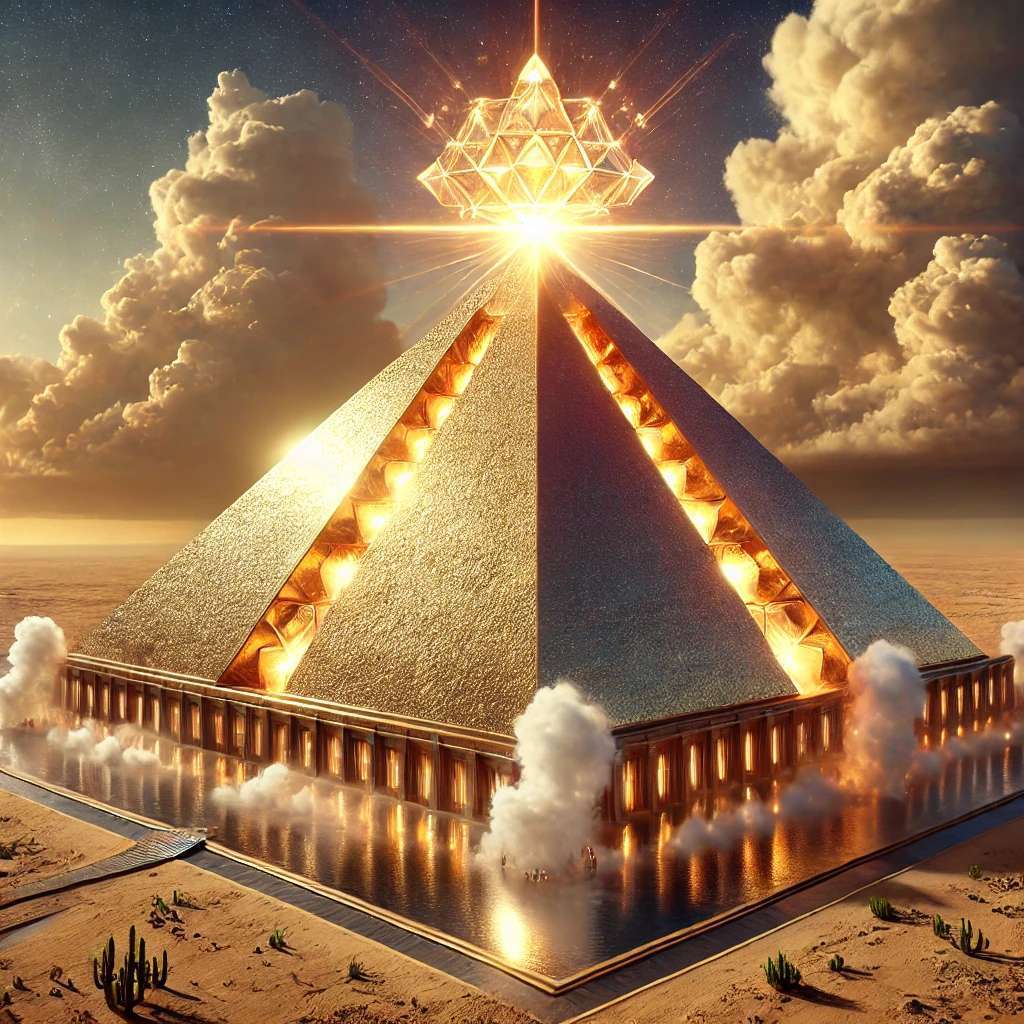
The real tree of life: The Pyramid of Giza
The truth is hidden in plain sight

GM☕ since https://mempool.space/block/000000000000000000023ab241141d6cd0d0ea2f41295a830a6724407d450211">759233
I'm not vegan, BTW.
The truth is hidden in plain sight
A Comparative Analysis of Baseload Electric Power Generation Under Optimized Assumptions

Can modern nuclear power be viable and economical?

Powering the Fourth Industrial Revolution

Could speaking in tongues mean something other than being "slain in the spirit" or babbling incomprehensibly?

Could the great pyramid have been part of terra-forming earth?
Can the west survive freedom?

Today's bitcoin technology is up to the task of replacing and improving yesterday's insecure and costly conveniences.

A high-level breakdown of the major components and subsystems required to implement an e-voting system using blinded ephemeral keys, threshold cryptography, open timestamp proofs, and Nostr (or any decentralized relay approach). Each component is described in terms of functionality and roles—in practice, some of these can be combined or implemented as separate modules/services.

A white paper describing a Nostr-based election system that incorporates: Voter-Generated Ephemeral Keys (the voter, not the authority, generates the key). Blind Signatures from the Election Authority (EA) to authorize that ephemeral key. Homomorphic or Mix-Net Encryption to protect ballot secrecy. OpenTimestamps-style proofs to give each ballot (and any re-cast ballot) a tamper-proof, verifiable time anchor. Re-Voting until the cutoff, allowing a voter to replace a previously cast ballot. This design emphasizes privacy, integrity, verifiability, and resilience in a decentralized setting using Nostr.