Direct-Socket AI: Why Power Users Choose Desktop Over Web Chat SaaS
- The Limits of Browser-Sandboxed Web Chat SaaS
- The Desktop Advantage: The Direct-Socket Architecture
- Reclaim Computing Sovereignty
Direct Answer: Power users are migrating from browser-based AI chat SaaS to aiFetchly because desktop software provides direct-socket connectivity to local inference engines, sub-100ms response times, and unrestricted filesystem access. By eliminating cloud middleboxes, aiFetchly allows operators to route AI Chat through local Ollama or vLLM instances with zero recurring token fees, full NVMe data persistence, and absolute data sovereignty.
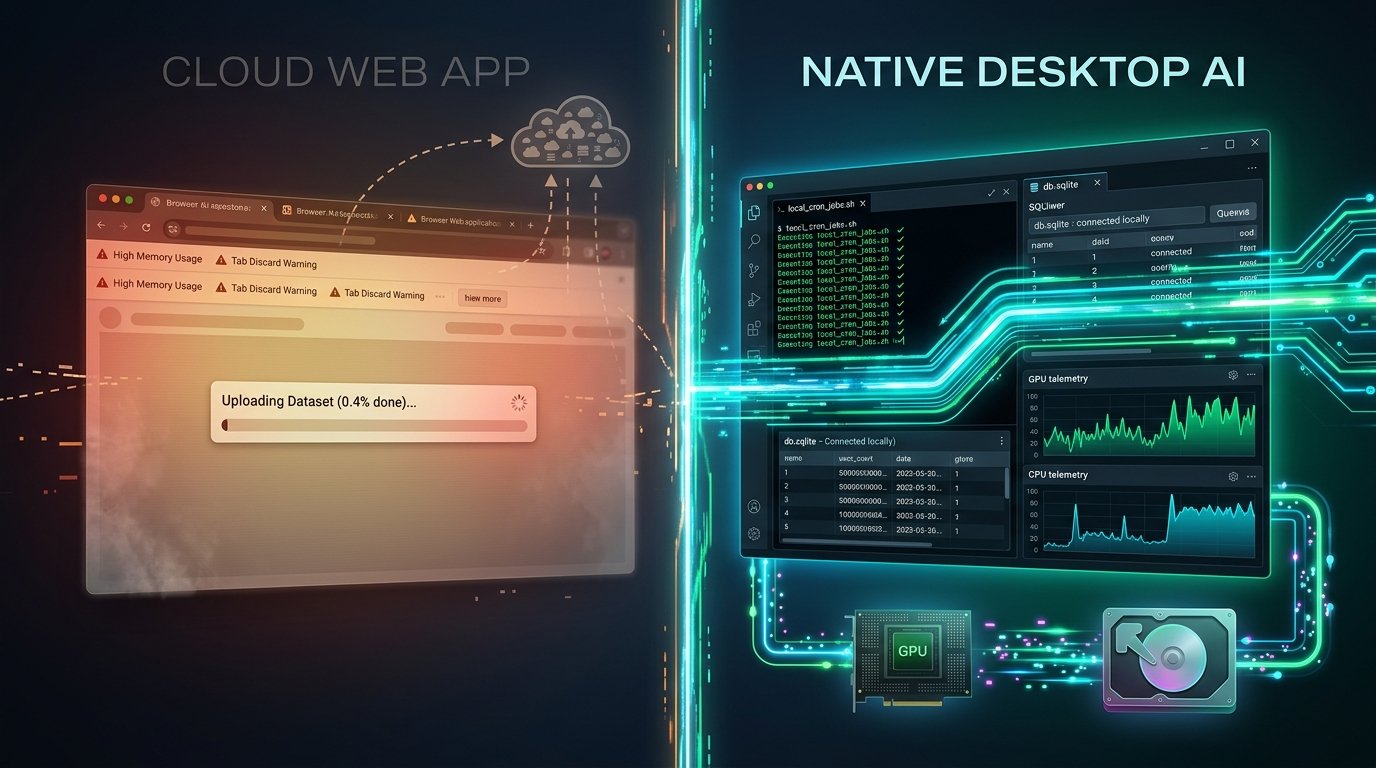
The Limits of Browser-Sandboxed Web Chat SaaS
In 2026, web-based AI chat portals remain the default on-ramp for general consumers. However, for power users managing high-volume data pipelines, custom scripts, and confidential analytical workflows, browser-confined SaaS platforms present severe operational roadblocks.
Operating inside a standard web browser creates three structural bottlenecks:
- Network Latency & Token Egress: Every conversational turn and context payload transits public cloud gateways. Round-trip network overhead typically introduces 800ms to 1.2s of latency before token generation begins, coupled with metered cloud token billing.
- Strict Browser Sandbox Confinement: Web apps cannot access your local NVMe disk, query native SQLite databases, or inspect background system processes without manual file uploads and clunky export steps.
- Intellectual Property Exposure: Transmitting proprietary research datasets, codebase architectures, and strategic business criteria to third-party multi-tenant servers presents unacceptable compliance risks.
Power users require an on-device operational environment that pairs language model intelligence directly with local computing power.
The Desktop Advantage: The Direct-Socket Architecture
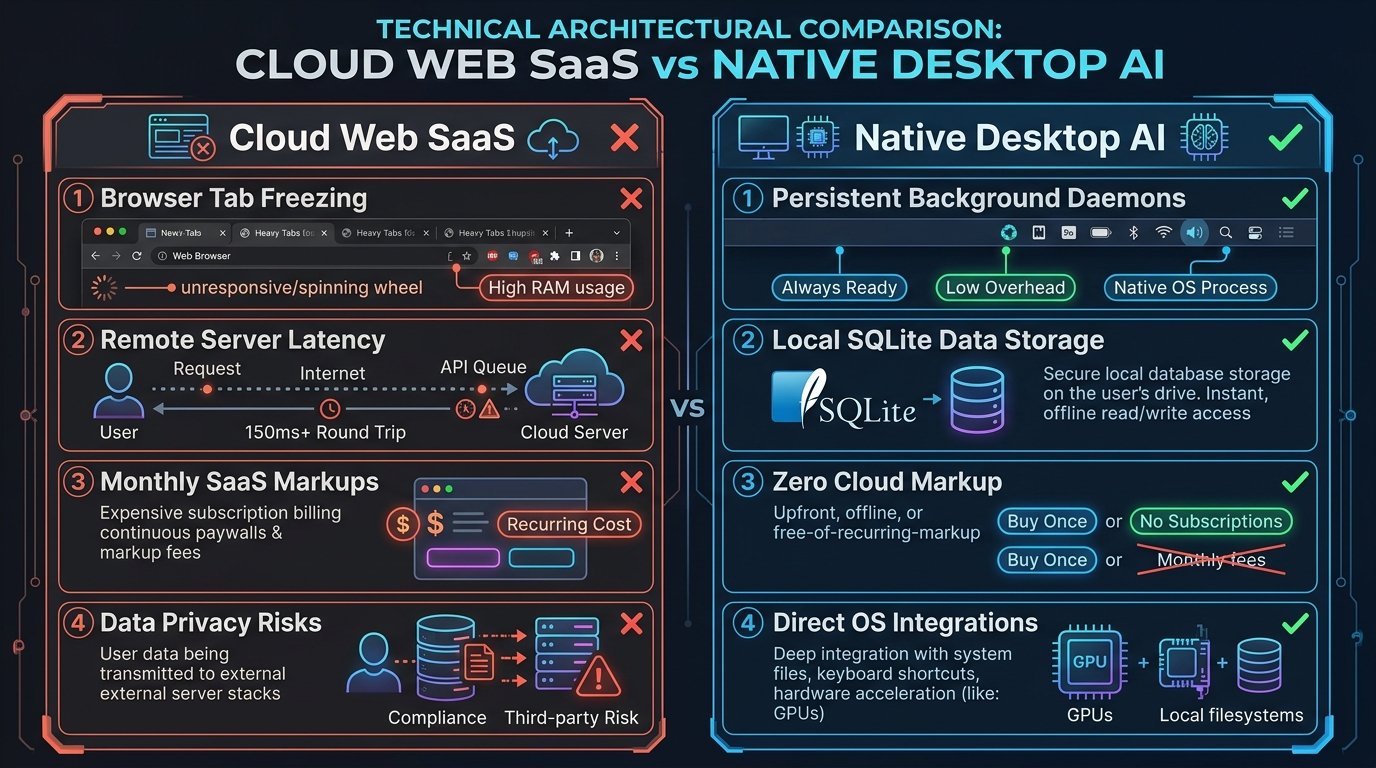
The aiFetchly desktop platform shifts the AI interaction paradigm from rented remote servers to dedicated local workstations.
1. Zero-Egress Direct Socket Routing
Rather than forcing all prompts through a centralized cloud proxy, aiFetchly’s backend communicates directly with local OpenAI-compatible endpoints via native loopback sockets. Operators can link local instances of Ollama (http://localhost:11434/v1), LM Studio, or vLLM with zero cloud token consumption and sub-100ms time-to-first-token speeds.
2. Native Hardware & File Operations
Operating as a native desktop application unlocks unrestricted local filesystem agility. Through the integrated File Operations panel, the assistant inspects local documents, processes datasets, and serializes clean markdown directly onto high-speed NVMe storage without cloud upload caps.
3. Sovereign Speech-to-Text and Synthesis
While cloud chat interfaces transmit raw audio streams to remote transcription servers, aiFetchly features built-in on-device voice processing. Operators activate push-to-talk speech recognition and audio playback entirely on local hardware, safeguarding spoken conversations.
4. Deterministic System Control
aiFetchly allows power users to integrate local Model Context Protocol (MCP) servers, orchestrate automated Chromium sessions via the Chrome DevTools Protocol, and construct custom lifecycle safety hooks.
System configuration guidelines and endpoint setup instructions are detailed in the aiFetchly documentation.
Reclaim Computing Sovereignty
Web chat SaaS rents convenience at the expense of privacy and performance. By anchoring AI workflows in a native desktop architecture, aiFetchly gives power users total ownership over their models, data, and compute.
aiFetchly is a local-first desktop AI business agent (free to download). Home: aifetchly.com · features: www.aifetchly.com/features
- Reference: https://www.aifetchly.com
Write a comment