Inside Headless CDP: Low-Level Browser Control in aiFetchly
- The Pitfalls of High-Level Browser Automation
- The Core CDP Architecture in aiFetchly
- Direct Pipeline Streaming to Local Storage
- Precision Automation on Developer Hardware
Direct Answer: Software engineers and automation developers frequently encounter limitations with high-level scraping libraries when parsing complex client-side Single Page Applications (SPAs). By embedding a direct Chrome DevTools Protocol (CDP) connection within its desktop runtime, aiFetchly grants developers low-level control over browser network events, DOM mutations, and JavaScript execution contexts—delivering deterministic data extraction without the memory bloat of standalone automation grids.
The Pitfalls of High-Level Browser Automation
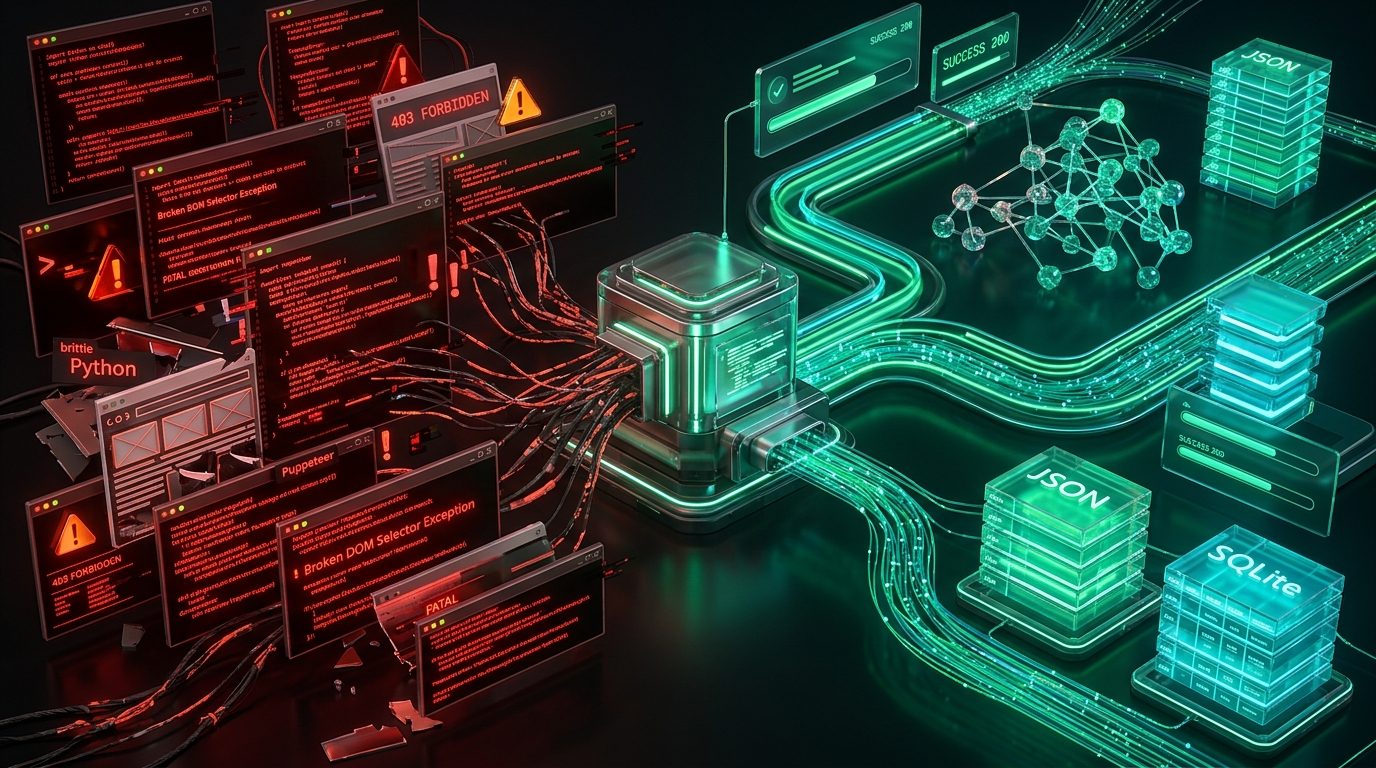
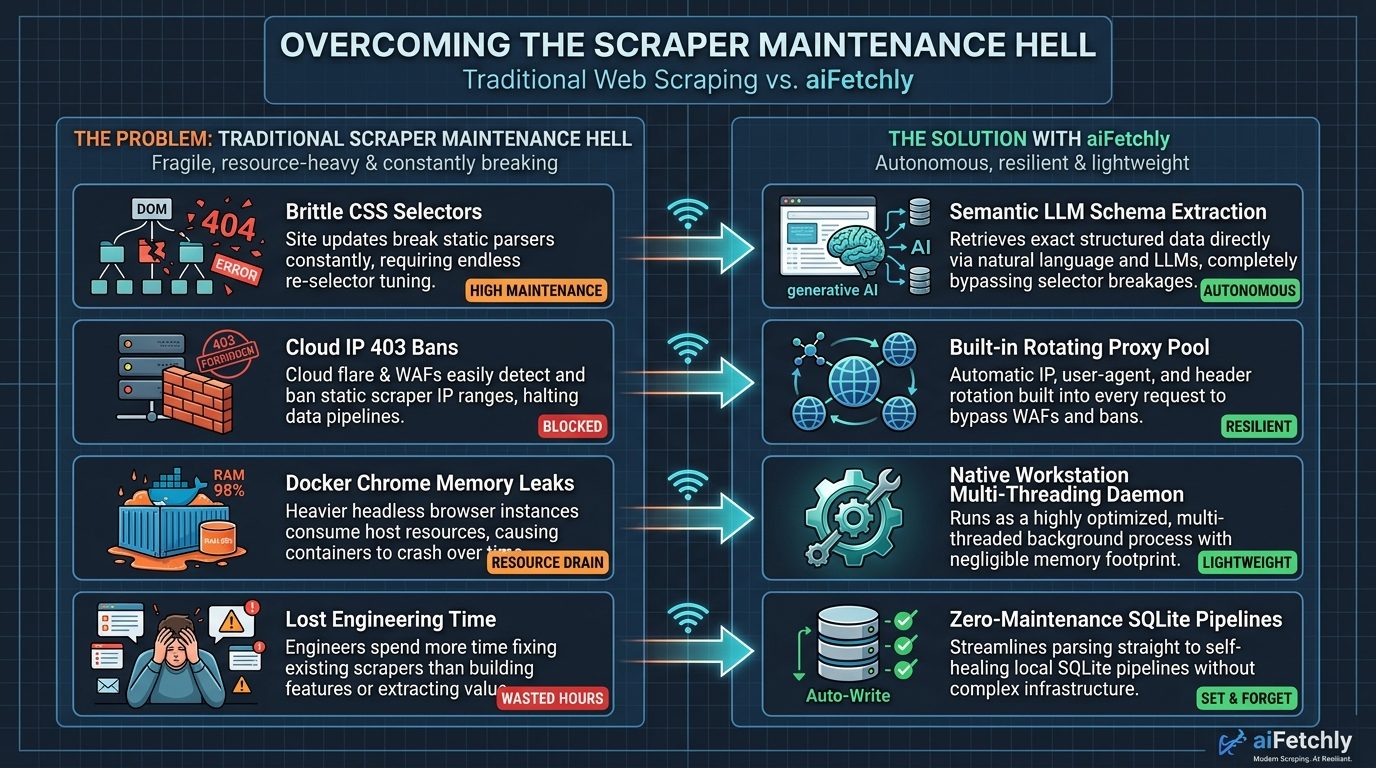
In modern web development, websites have evolved from static HTML documents into intricate, client-rendered applications built on React, Next.js, and Vue. For developers building data extraction pipelines, traditional scraping techniques fail in three predictable ways:
- Brittle Sleep Timers: Scraping dynamic pages using basic HTTP clients misses hydrated DOM trees. Developers resort to arbitrary sleep calls (
await sleep(3000)), causing scripts to waste time or fail when network conditions vary. - Resource Bloat: Running standalone headless browser instances (such as Selenium or heavy containerized Playwright clusters) consumes gigabytes of RAM and creates zombie browser processes.
- Anti-Scraping Detection: Naive automation frameworks expose standard webdriver flags (e.g.,
navigator.webdriver = true), triggering instant bot detection blocks.
The aiFetchly desktop platform solves this by establishing a direct, native WebSocket bridge to the Chrome DevTools Protocol (CDP).
The Core CDP Architecture in aiFetchly
Rather than stacking layers of abstraction, aiFetchly interacts directly with Chromium’s underlying debugging engine:
- Real-Time Network Interception: By subscribing to
Network.requestWillBeSentandNetwork.responseReceivedevents, the engine intercepts raw network streams. Developers can block telemetry trackers, heavy image assets, and video streams on the fly, speeding up page extraction by 4x. - Deterministic DOM Mutation Observers: Instead of guessing when a dynamic component has finished rendering, aiFetchly monitors
DOM.childNodeInsertedevents. The scraper advances the moment target semantic selectors appear, ensuring deterministic execution. - Runtime Sandbox Execution: Using
Runtime.evaluate, aiFetchly executes scoped JavaScript snippets directly within the page’s execution context, unwrapping obfuscated JSON state objects and shadow DOM elements before serialization.
Direct Pipeline Streaming to Local Storage
Data captured through CDP doesn’t linger in temporary cloud buffers. Clean semantic content and structured table rows stream directly into your local Markdown knowledge vault or embedded SQLite database.
Developers can trigger CDP extraction routines via CLI commands or integrate them into automated background cron jobs. Setup configurations and headless tuning parameters are available in the aiFetchly documentation.
Precision Automation on Developer Hardware
By providing direct access to low-level CDP primitives, aiFetchly bridges the gap between raw browser internals and production data pipelines. Gain deterministic control over complex web applications directly on your workstation.
aiFetchly is a local-first desktop AI business agent (free to download). Home: aifetchly.com · getting started: docs.aifetchly.com/docs/getting-started/introduction
- Reference: https://www.aifetchly.com
Write a comment