First People Sickened By COVID-19 Were Chinese Scientists At Wuhan Institute Of Virology, Say US Government Sources
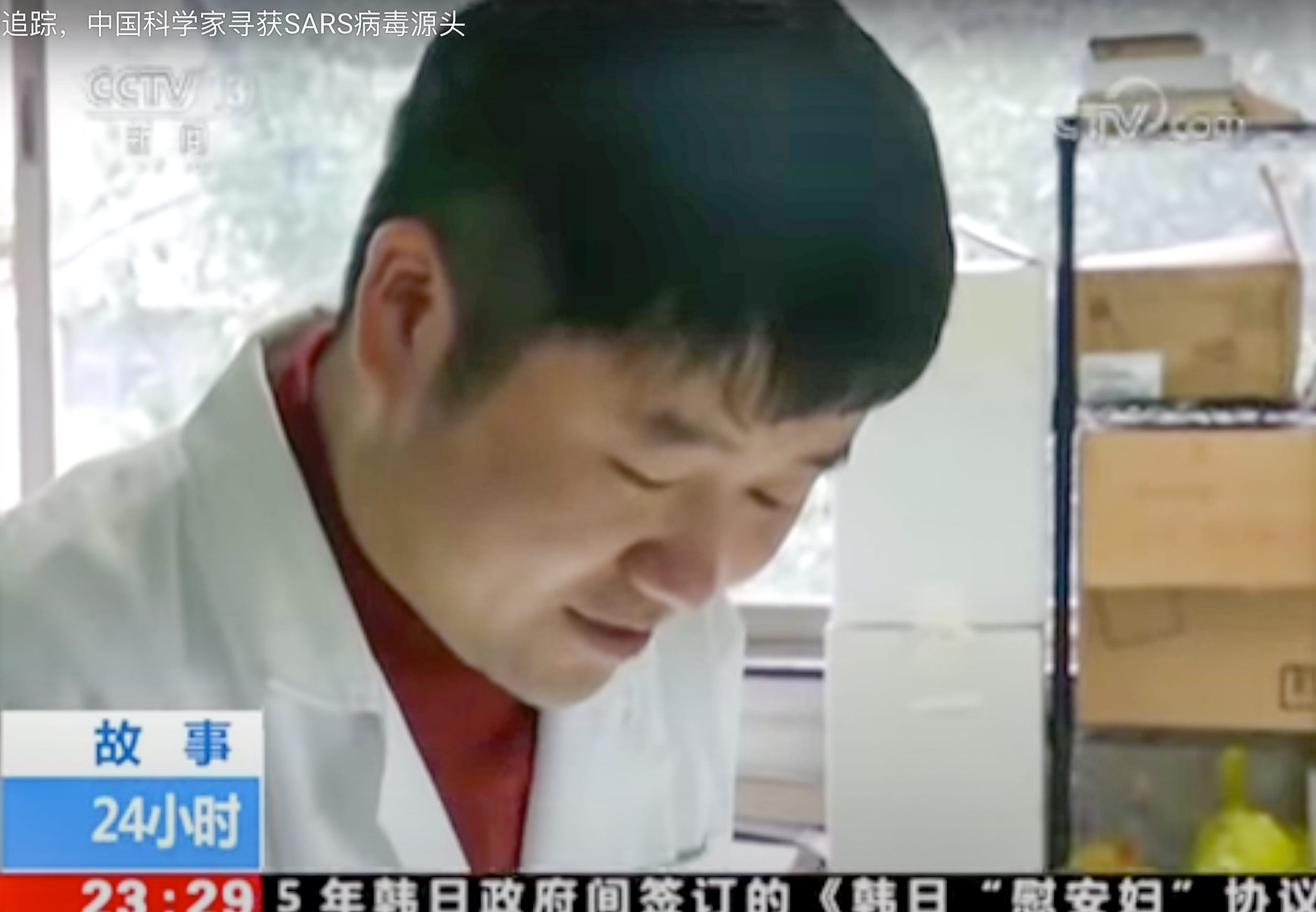
Source: First People Sickened By COVID-19 Were Chinese Scientists At Wuhan Institute Of Virology, Say US Government Sources
Publisher: Public | Author: Michael Shellenberger
Published: June 13, 2023 | Archived: July 18, 2026

*Ben Hu, one of threee “patients zero,” and a researcher who led the Wuhan Institute of Virology’s “gain-of-function” research on SARS-like coronaviruses, which increases the infectiousness of viruses.*
After years of official pronouncements to the contrary, significant new evidence has emerged that strengthens the case that the SARS-CoV-2 virus accidentally escaped from the Wuhan Institute of Virology (WIV).
According to multiple U.S. government officials interviewed as part of a lengthy investigation by Public and Racket, the first people infected by the virus, “patients zero,” included Ben Hu, a researcher who led the WIV’s “gain-of-function” research on SARS-like coronaviruses, which increases the infectiousness of viruses.
More than three years after the pandemic’s outbreak, many around the world had given up on learning the origin of SARS-CoV-2, the highly infectious respiratory virus that has [killed millions](https://www.economist.com/graphic-detail/coronavirus-excess-deaths-estimates), and the response to which shut down businesses and schools, upended societies, and caused enormous collateral damage.
Public officials in the U.S. and other countries have repeatedly suggested that uncovering the pandemic’s origin may not be possible. “We may never know,” [said Anthony Fauci](https://nypost.com/2023/02/28/fauci-says-we-may-never-know-origin-of-covid-despite-report/), the former director of the National Institute of Allergy and Infectious Diseases, who oversaw pandemic response for two administrations.
Now, answers increasingly look within reach. Sources within the US government say that three of the earliest people to become infected with SARS-CoV-2 were Ben Hu, Yu Ping, and Yan Zhu. All were members of the Wuhan lab suspected to have leaked the pandemic virus.
As such, not only do we know there were WIV scientists who had developed COVID\-19-like illnesses in November 2019, but also that they were working with the closest relatives of SARS-CoV-2, and inserting gain-of-function features unique to it.
When a source was asked how certain they were that these were the identities of the three WIV scientists who developed symptoms consistent with COVID-19 in the fall of 2019, we were told, “100%”
[Subscribe now](https://www.public.news/subscribe?)
“Ben Hu is essentially the next Shi Zhengli,” said Alina Chan, a molecular biologist at the Broad Institute of MIT and Harvard, and coauthor with Matt Ridley of [Viral: The Search for the Origin of Covid19](https://www.harpercollins.com/products/viral-matt-ridleyalina-chan?variant=40127936987170). Shi is known as “the bat woman of China,” and led the gain-of-function research at the WIV. “He was her star pupil. He had been making chimeric SARS-like viruses and testing these in humanized mice. If I had to guess who would be doing this risky virus research and most at risk of getting accidentally infected, it would be him.”
s_!9Pml!,w_1456,c_limit,f_auto,q_auto:good,fl_progressive:steep/https%3A%2F%2Fsubstack-post-media.s3.amazonaws.com%2Fpublic%2Fimages%2F94322b78-c690-410e-8e74-4f1c9663ae27_1087x581.jpeg)
Shi Zhengli, “the bat woman of China,” who oversaw Wuhan Institute of Virology’s coronavirus research and engineering. (Getty Images)
Hu and Yu researched the novel lineage of SARS-like viruses from which SARS-CoV-2 hails, and in 2019 coauthored a paper with Shi Zhengli that described SARS-like lineages they had studied over the years.
Jamie Metzl, a former member of the World Health Organization expert advisory committee on human genome editing who raised questions starting in early 2020 about a possible research-related pandemic origin, said, “It’s a game changer if it can be proven that Hu got sick with COVID-19 before anyone else. That would be the ‘smoking gun.’ Hu was the lead hands-on researcher in Shi’s lab.”
Sources tell Public and Racket that other news organizations are chasing aspects of this story. On Saturday, The Times of London quoted an anonymous U.S. State Department investigator saying, “It has become increasingly clear that the Wuhan Institute of Virology was involved in the creation, promulgation, and cover-up of the Covid-19 pandemic.”
Public and Racket are the first publications to reveal the names of the three sick WIV workers and place them directly in the lab that collected and experimented with SARS-like viruses poised for human emergence.
Next week, the Directorate of National Intelligence is expected to release previously classified material, which may include the names of the three WIV scientists who were the likely among the first to be sickened by SARS-CoV-2.
A bill signed by President Biden earlier this year specifically called for the release of the names and roles of the sick researchers at the WIV, their symptoms and date of symptom onset, and whether these researchers had been involved with or exposed to coronavirus research.
On Dec. 29, 2017, two years before the pandemic began, Chinese state-run television aired a video that includes a scene of Ben Hu watching a lab worker handle specimens. Neither are wearing protective gear. The same video shows WIV scientists hunting for bat viruses with little protective gear. “If they were worried about being infected in the field, they would need full body suits with no gaps” to be safe, said Chan. “That’s the only way.”
The WIV research with live SARS-like viruses was performed at too low of a safety level, “BSL-2,” explains Chan, “When we now know that the pandemic virus is even capable of escaping from a BSL-3 lab and infecting fully vaccinated young lab workers.”
While scientists justify such research as necessary for developing vaccines, President Barack Obama banned federal funding for gain-of-function research of concern in 2014, because experts had come to the consensus that it was too dangerous. However, the National Institute of Health and NIAID headed by Francis Collins and Fauci, and a major U.S. government grantee, EcoHealth Alliance, deemed their work on SARS-like viruses as not falling under the gain-of-function research of concern definitions and funded this project in China and Southeast Asia.
In March 2018, the WIV, the EcoHealth Alliance, and the University of North Carolina applied for a \(14 million grant from the U.S. Defense Advanced Research Project Agency DARPA to engineer “furin cleavage sites” into SARS-like coronaviruses to study how this affected their ability to grow and cause disease.
Scientists say the key piece of the COVID-19 virus, which made it so transmissible compared to its closest relatives, was its unique furin cleavage site.
DARPA rejected the grant, but it now appears the WIV went forward with the research anyway. The Times of London [reported](https://www.thetimes.co.uk/article/inside-wuhan-lab-covid-pandemic-china-america-qhjwwwvm0) that US collaborators of the WIV had come forward and said the Wuhan scientists had put furin cleavage sites into SARS-like viruses in 2019.
Hu co-authored multiple papers on coronavirus research, including a [2017 paper on chimeric bat coronaviruses](https://www.ncbi.nlm.nih.gov/pmc/articles/PMC5708621/) with Peter Daszak, the head of EcoHealth Alliance, which was funded in part by the NIH and the USAID Emerging Pandemic Threats PREDICT Program. Data privately shared with the NIH revealed that these chimeric SARS-like viruses grew far more quickly and caused more severe disease in humanized mice in the lab.
s_!Owsg!,w_1456,c_limit,f_auto,q_auto:good,fl_progressive:steep/https%3A%2F%2Fsubstack-post-media.s3.amazonaws.com%2Fpublic%2Fimages%2Fc196ab9c-5b3d-4ac7-b3d5-5642e3045c4a_2692x1453.jpeg)
Peter Daszak, the head of EcoHealth Alliance, which was funded in part by the NIH and the USAID Emerging Pandemic Threats PREDICT Program. (Getty Images)
When the WIV put out their first paper about the pandemic virus, they failed to point out the novel furin cleavage site despite having had plans to and allegedly putting such gain-of-function features into SARS-like viruses in their lab. “It’s as if these scientists proposed putting horns on horses, but when a unicorn shows up in their city a year later they write a paper describing every part of it except its horn,” said Chan.
Public sent emails and made phone calls to the NIH, WIV, EcoHealth Alliance, Daszak, Hu, and Shi over the last several days and did not hear back.
It is unclear who in the U.S. government had access to the intelligence about the sick WIV workers, how long they had it, and why it was not shared with the public. “You would expect the country of origin to be defensive,” said Chan, “but you wouldn’t expect a country receiving the virus to be withholding key evidence.”
On January 15, 2021, five days before President Joe Biden took office, the U.S. State Department published a fact sheet that pointed to the likelihood of a lab leak as the cause of a pandemic.
Already, the State Department in 2021 suspected that the WIV had lied to the public. “The U.S. government has reason to believe that several researchers inside the WIV became sick in autumn 2019, before the first identified case of the outbreak, with symptoms consistent with both COVID-19 and common seasonal illnesses. That raises questions about the credibility of WIV senior researcher Shi Zhengli’s public claim that there was ‘zero infection’ among the WIV’s staff and students by SARS-CoV-2 or SARS-related viruses.”
In February of this year, the Director of the FBI, Christopher Wray, told a reporter that “the FBI has for quite some time now assessed that the origins of the pandemic are most likely a potential lab incident in Wuhan.”
The Times of London reported that State Department investigators “found evidence that researchers working on these experiments were taken to hospital with Covid-like symptoms in November 2019.” As previously reported in Vanity Fair, some of the information State Department investigators found in 2021 was “sitting in the U.S. intelligence community’s own files, unanalyzed.”
“Ever since I put out my \[May 2020\] preprint \[research paper\] saying that an accidental lab origin was possible, I was criticized as a conspiracy theorist,” said Chan. “If this info had been made public in May of 2020, I doubt that many in the scientific community and the media would have spent the last three years raving about a raccoon dog or pangolin in a wet market.”
Public is a reader-supported publication. To support our investigative reporting, consider becoming a paid subscriber.
Identifying the first COVID-19 case as a Wuhan Institute scientist overseeing gain-of-function research has significant ramifications for investigators in search of a motive for a cover-up.
Politicians, scientists, journalists, and amateur researchers for years now have zeroed in on the possibility that Covid-19 may have resulted from U.S.-funded gain-of-function research conducted in China.
Publications ranging from the Washington Post to the Intercept to the Wall Street Journal have uncovered suggestive details, including the fact that the NIH awarded funding for at least 18 gain-of-function research projects between 2012 and 2020, and NIH scientists in 2016 expressing concern about supposedly paused hybrid “chimera” virus research.
Had the information come out earlier, governments may have responded to the pandemic differently. After Public shared the information with Chan, she said, “I feel vindicated, but I’m frustrated. If you knew that this was likely a lab-enhanced pathogen, there are so many things you could have done differently. This whole pandemic could have been reshaped.”
Said Metzl, “Had US government officials including Dr. Fauci stated from day one that a COVID-19 research-related origin was a very real possibility, and made clear that we had little idea what viruses were being held at the Wuhan Institute of Virology, what work was being done there, and who was doing that work, our national and global conversations would have been dramatically different. The time has come for a full accounting.”
- Reference: https://www.public.news/p/first-people-sickened-by-covid-19
- Reference: https://substackcdn.com/image/fetch/$s_!Uisk!,f_auto,q_auto:good,fl_progressive:steep/https%3A%2F%2Fsubstack-post-media.s3.amazonaws.com%2Fpublic%2Fimages%2Ffc95afa5-03b2-441d-be51-b252465caa8f_2514x1742.jpeg
- Reference: https://www.economist.com/graphic-detail/coronavirus-excess-deaths-estimates
- Reference: https://nypost.com/2023/02/28/fauci-says-we-may-never-know-origin-of-covid-despite-report
- Reference: https://www.harpercollins.com/products/viral-matt-ridleyalina-chan?variant=40127936987170
- Reference: https://substackcdn.com/image/fetch/$s_!9Pml!,f_auto,q_auto:good,fl_progressive:steep/https%3A%2F%2Fsubstack-post-media.s3.amazonaws.com%2Fpublic%2Fimages%2F94322b78-c690-410e-8e74-4f1c9663ae27_1087x581.jpeg
- Reference: https://www.sciencedirect.com/science/article/pii/S156713481830902X?via%3Dihub
- Reference: https://jamiemetzl.com/origins-of-sars-cov-2
- Reference: https://www.thetimes.co.uk/article/inside-wuhan-lab-covid-pandemic-china-america-qhjwwwvm0
- Reference: https://www.congress.gov/bill/118th-congress/senate-bill/619/text
- Reference: https://www.taiwannews.com.tw/en/news/4102619
- Reference: https://www.documentcloud.org/documents/21066966-defuse-proposal
- Reference: https://www.ncbi.nlm.nih.gov/pmc/articles/PMC5708621
- Reference: https://substackcdn.com/image/fetch/$s_!Owsg!,f_auto,q_auto:good,fl_progressive:steep/https%3A%2F%2Fsubstack-post-media.s3.amazonaws.com%2Fpublic%2Fimages%2Fc196ab9c-5b3d-4ac7-b3d5-5642e3045c4a_2692x1453.jpeg
- Reference: https://www.nature.com/articles/s41586-020-2012-7
- Reference: https://2017-2021.state.gov/fact-sheet-activity-at-the-wuhan-institute-of-virology/index.html
- Reference: https://www.vanityfair.com/news/2021/06/the-lab-leak-theory-inside-the-fight-to-uncover-covid-19s-origins
- Reference: https://www.technologyreview.com/2021/06/25/1027140/lab-leak-alina-chan
Write a comment