A few updates, part I
A few small projects, built mostly to solve my own everyday problems: a tiny social network, a Markdown editor, a sticky-notes app, and a surprisingly capable calculator.
A horror fanatic who prefers to stay at home
New content is available. Refresh the stream when you are ready.
The stream could not be loaded. Use Refresh stream to try again.
Publication and collection details are refreshing in the background. Other available work is shown below.
A few small projects, built mostly to solve my own everyday problems: a tiny social network, a Markdown editor, a sticky-notes app, and a surprisingly capable calculator.
A second round of small projects, personal knowledge archives, terminal experiments, NES games inside Hammer, and my current favorite project, phlog.space, proudly serving exactly one user.
A year ago the Ghost team asked me to take down Ghostbuster. Last week I finally moved this blog off Ghost and onto Statamic, keeping the posts, the feeds and pico, which still thinks it’s talking to Ghost.
Week 41 of 2026 in links: things I read and think are worth your time, from Raspberry Pi Desktop on Debian Trixie to what the creator of Linux thinks about vibe coding.
I owned rss.expert for three years without using it. Now it's a website your terminal can read too: feeds from the small web, ranked with plain weights and arithmetic instead of a model. What it does, where the links come from and how I built it.
What started as a simple way to avoid publishing the same blog post twice gradually turned into a personal POSSE system connecting my main blog to prose.sh, Gemini, Gopher, Mastodon, Bluesky, and other corners of the small web. This article follows that process, from the first Ghost webhook to the less glamorous problems of keeping everything in sync, handling failures, and preventing old events from deleting live content. Along the way, a small collection of scripts became a service that lets me publish once and have my writing find its way across different platforms and protocols, without depending on any single one of them.
I rediscovered NyxPE, a lightweight Windows maintenance ISO I built in July 2026 and nearly forgot about. It started as another little experiment to learn something new, but somehow found an audience. And surprisingly, it still holds up pretty well.
A polite email asked me to stop using the Ghost name on my GitHub page of Ghost resources. In July I decided to leave Ghost CMS for good, knowing dozens of automations and webhooks would have to move with me.
Week 42 of 2026 in links: things I read and think are worth your time, from file tricks Microsoft never put on the menu to deploying a site with a single command.
Few things make me want to pull the plug on my free projects more than trolls and wannabe hackers. A story from Runv Club that, looking back, is actually pretty funny.
A few strange, clever, and useful things I found while wandering around GitHub.
An actually useful guide to moving files between Windows, Linux and the cloud, with a few tricks I wish I'd learned earlier.
A RAT is the malware that puts a hidden person inside your computer or phone. Brazilian cases show how attachments, fake apps and remote support can end in spying and bank fraud carried out live.

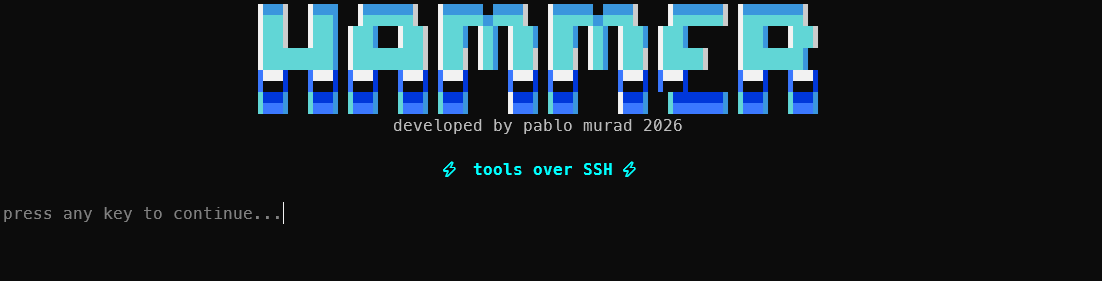
Hammer is a little corner of the old internet that still breathes: a modern BBS you reach over SSH, full of handy terminal tools, written in Go, open source and built out of pure fun, nostalgia and love for the old net.
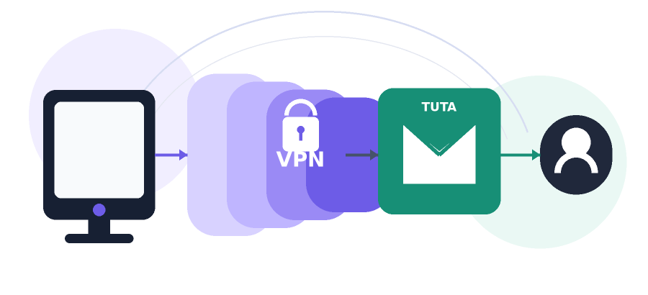
You can cut down a lot of the traces you leave when creating and using an email address. The most realistic result is a pseudonymous identity kept well apart from your everyday life. Calling that absolute anonymity would be dishonest.
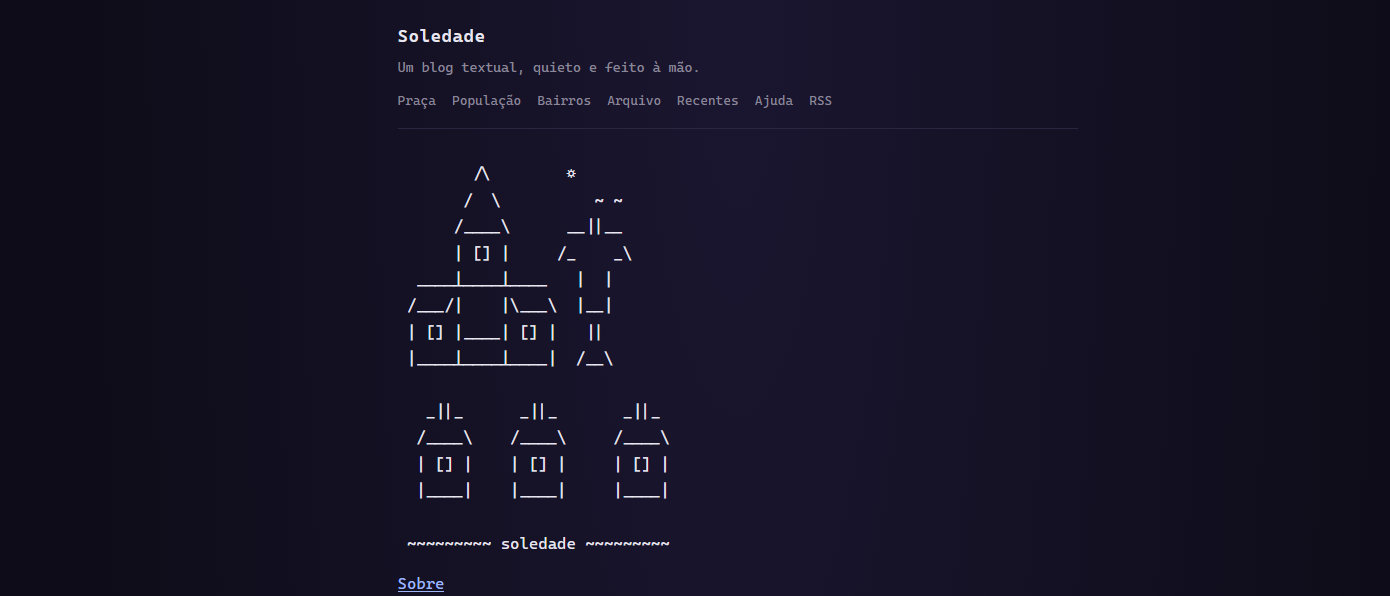
It's not an ordinary blog, nor a social network. It's a textual city: a place made of words, houses and neighborhoods, with no database, no dashboard and no algorithm. This is the story of what it is and how the system was built.
What Bell Labs tried to do after Unix, and why this system still deserves a try.
For a good part of the 20th century, a phone company brought together physicists, mathematicians, engineers, musicians and programmers to solve problems that didn't even have names yet. Out of there came the transistor, information theory, Unix and even the C language.

How to publish a pseudonymous site, reduce public traces and hide the origin — without confusing privacy with invisibility.

Claude Shannon studied bits, built mechanical mice and juggled on a unicycle. A biography with a sense of humor about the Bell Labs researcher, his ideas and the link between his name and Anthropic's Claude.