That's why Nostr is ideal for bloggers

Following my last article on censorship resistance, a discussion has developed with the user Akamaister (one of the major advantages of Nostr). Here are a few brief excerpts:
“Censorship is usually just the visible consequence of an underlying structural dependency. When identity, media, or payment information are tied to third-party infrastructure, vulnerability arises—even if no one is actively censoring anything.”
This makes it clear that it is better to argue FOR independence rather than AGAINST censorship. Continuing:
“What happens if a relay disappears?”
“What happens if a media server goes down?”
“What happens if a client goes offline?”
“Who controls the key?”
“If you take the time to think these questions through, it becomes clear why minimizing dependencies makes sense. Independence is demonstrated by how easily you can leave the system. If all your own data, keys, and content are stored locally, leaving the system is not a dramatic break, but a normal state.”
By “system,” we don’t mean Nostr itself, but rather the apps and services used. With Nostr, it’s not about THAT tool, but about THE tools! Interchangeability through redundancy ensures full control at all times; here are a few suggestions on that.
Content creation
Nostr saves texts in Markdown format (MD). Markdown has been around for ages, and there is a correspondingly wide range of editors available. This means you can choose tried-and-true software and aren’t dependent on specific Nostr clients.
Desktop editors (local-first strategy) Ghostwriter, Obsidian, Zettlr, Joplin
Browser editors (location- and device-independent, collaboration) StackEdit, HackMD (both sync via GitHub), GitHub (basic)
Nostr editors Yakihonne, Nostria, Primal, Pareto (not freely accessible)
The sticking point with drafts:
While blog posts (kind 30023) can be viewed in numerous Nostr apps, the apps sometimes behave incompatibly with drafts (kind 30024); for the most part, they are not displayed or cannot be further edited.
Pareto can process Yakihonne designs in addition to its own Nostria can process Yakihonne designs in addition to its own Yakihonne can process Nostria designs in addition to its own Primal can only process its own designs
Therefore, it is better to manage drafts in your own MD editor and upload them only when you are ready to publish.
The sticking point with images:
Images are not stored in Nostr events or on relays, but rather as references in the text to an image source. A standard URL points to a specific storage location and is therefore a single point of failure.
Example: pics.filmaffinity.com/the_matrix-155050517-large.jpg
The Blossom protocol offers a better solution here with the URI, because it enables pool concepts.
Example: mibo.eu.nostria.app/1f8d0def2f9454f2fce3e2530c9e7f61d995c63bbda93ede3a2d74c0e96e720e.webp
Images are synchronized across pools of multiple Blossom servers; when accessed via Nostr, the URI is queried across the entire pool.
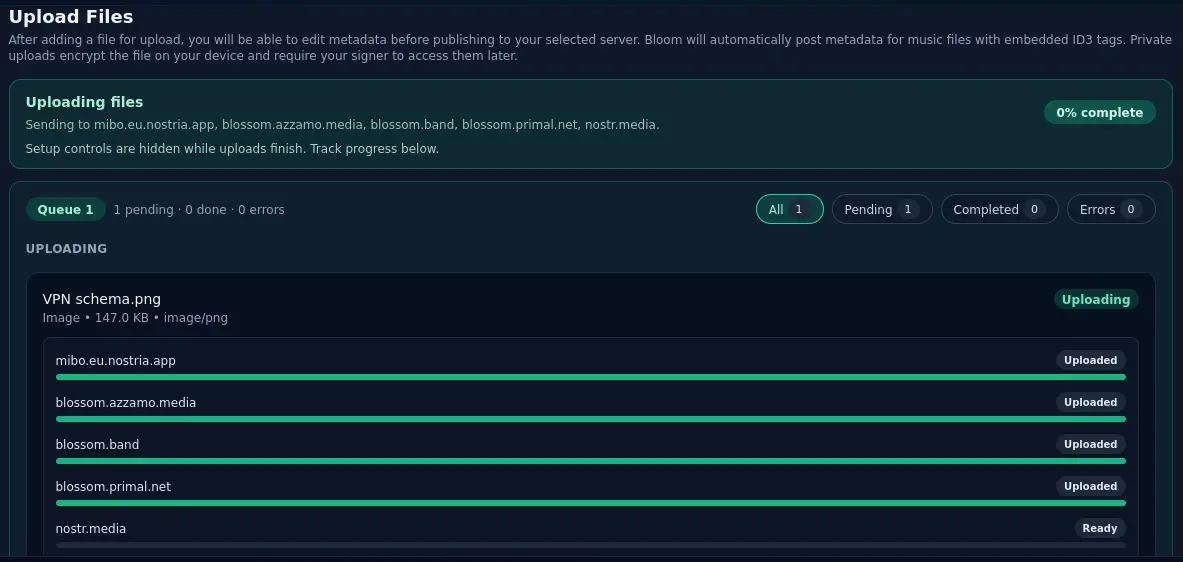
Recommendations:
https://primal.net/settings/uploads https://nostria.app/collections/media
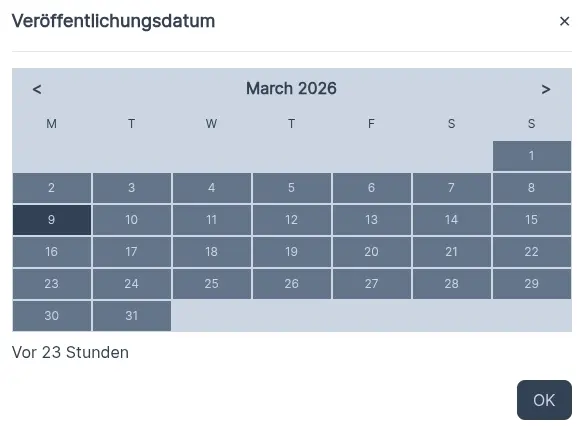
The sticking point with the publishing date: A Nostr event (JSON file) includes both a creation date and a publication date. Items are sorted in the Nostr feed based on the latter. It is generally possible to backdate the publication date, and some clients (such as Primal and Pareto) also allow you to schedule publication for a later time. This is particularly useful for batch imports via RSS, so that not all articles are published at the same time.
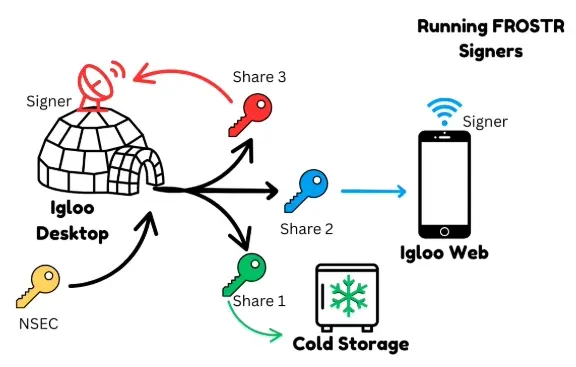
The sticking point with team processes: Editorial teams typically have workflows for publishing (draft, review/editing, approval) that involve multiple people. This requires roles and permissions, which can be implemented in Nostr using key sharing and key delegation. DIY tools like Frostr support this, while Primal Prime offers it out-of-the-box (though it’s quite expensive). This topic will be explored in greater depth in an upcoming article.
Content import with RSS
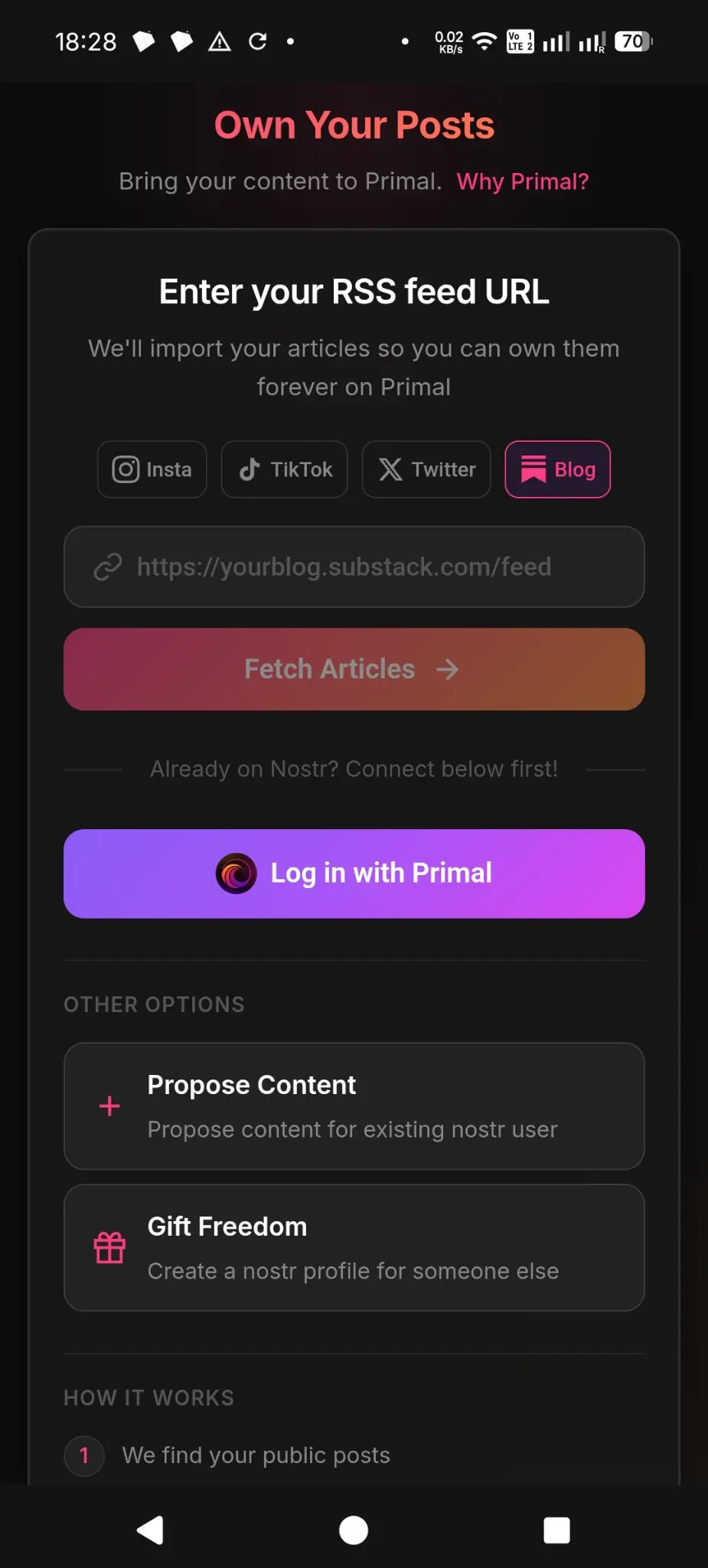
Existing posts on other blogging platforms can be seamlessly imported into Nostr via RSS, eliminating the need to recreate them. Content from Substack, Medium, Ghost, and WordPress can be synchronized fully automatically; Pareto and Primal, among others, offer solutions for this. Primal ownyourposts.com (also with Insta, TikTok and X) well done: propose Content for existing Nostr user (import on behalf) not so good: publish immediately only (without editing options)
Pareto (not publicly available) well done: import to the drafts folder → further editing and scheduled publishing are possible
Content-Distribution
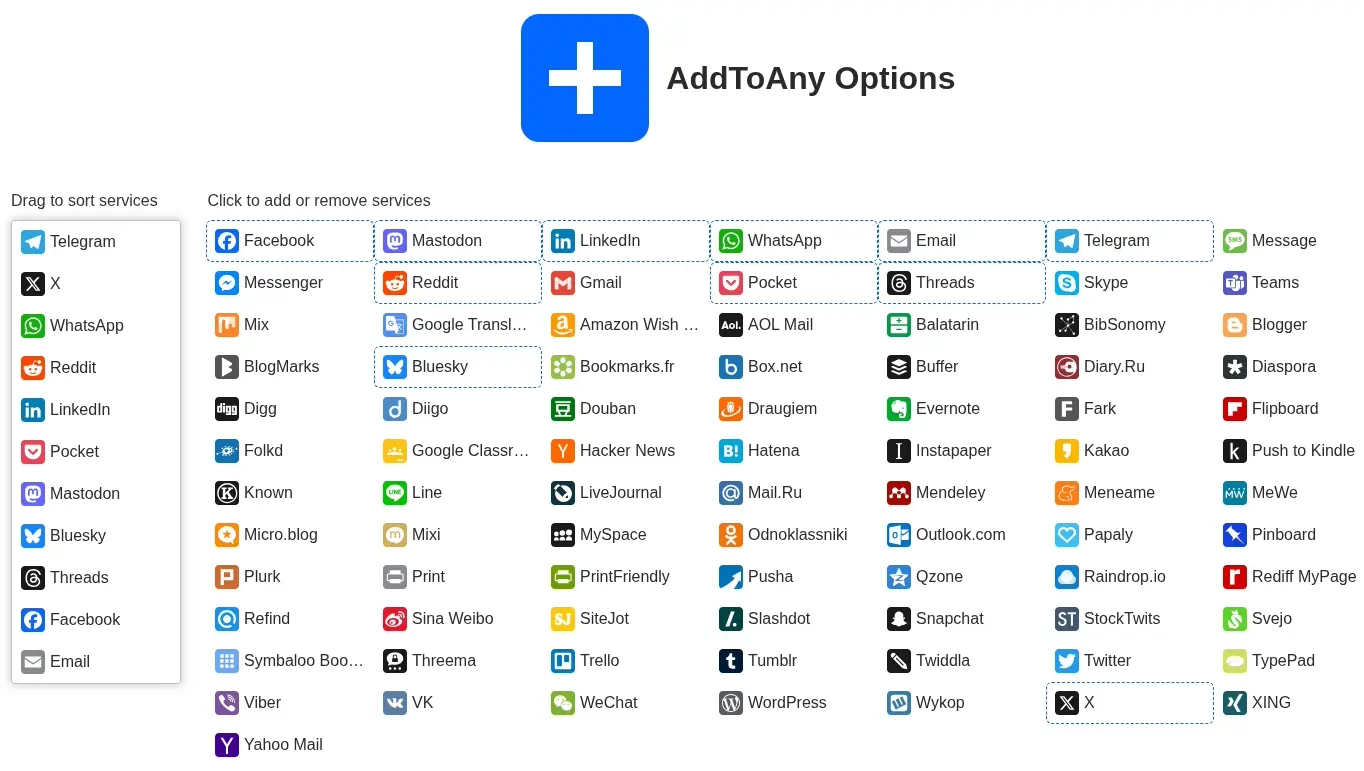
Nostr is well-suited for self-sufficient content creation and user interaction, but the user base is still small. Sharing Nostr content via traditional social media is therefore essential, and there are tools available for this purpose.
Pareto Nostr2X (not publicly available) https://www.addtoany.com/
Payments / Value4Value
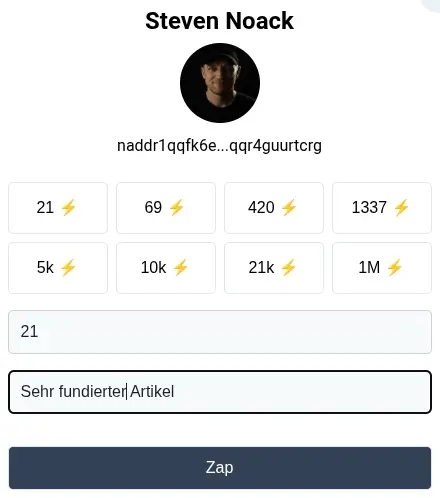
Nostr is the only publishing system with built-in payment features in the form of Lightning and eCash. This enables global micropayments with a single click, in real time, and with virtually no fees. Nostr offers several unique out-of-the-box features that can be customized and expanded through programming.
zaps possible for every Nostr event boosts for the author zapsplit e.g. with Yakihonne subscriptions ?? recurring orders with Alby ZapPlanner zap streaming e.g. with Fountain and zap.stream paywall several tools (not Nostr like)
A more in-depth look at payment options in Nostr, with additional details, will follow in an upcoming article.
Summary
With Nostr, bloggers can create, publish, and monetize their content completely independently. They can choose from a wide range of apps, customize them, and combine them into personalized workflows. The future of content creation is decentralized and self-sufficient, and Nostr is the ecosystem that makes it possible.
Write a comment