Dubai South residential index due diligence guide
- What the index actually measures
- Verify the developer before paying
- Inspect the property instead of trusting the listing
- Packaging and consolidation do not belong in the property calculation
- Compare rental income with real ownership costs
- Acceptance checklist before signing
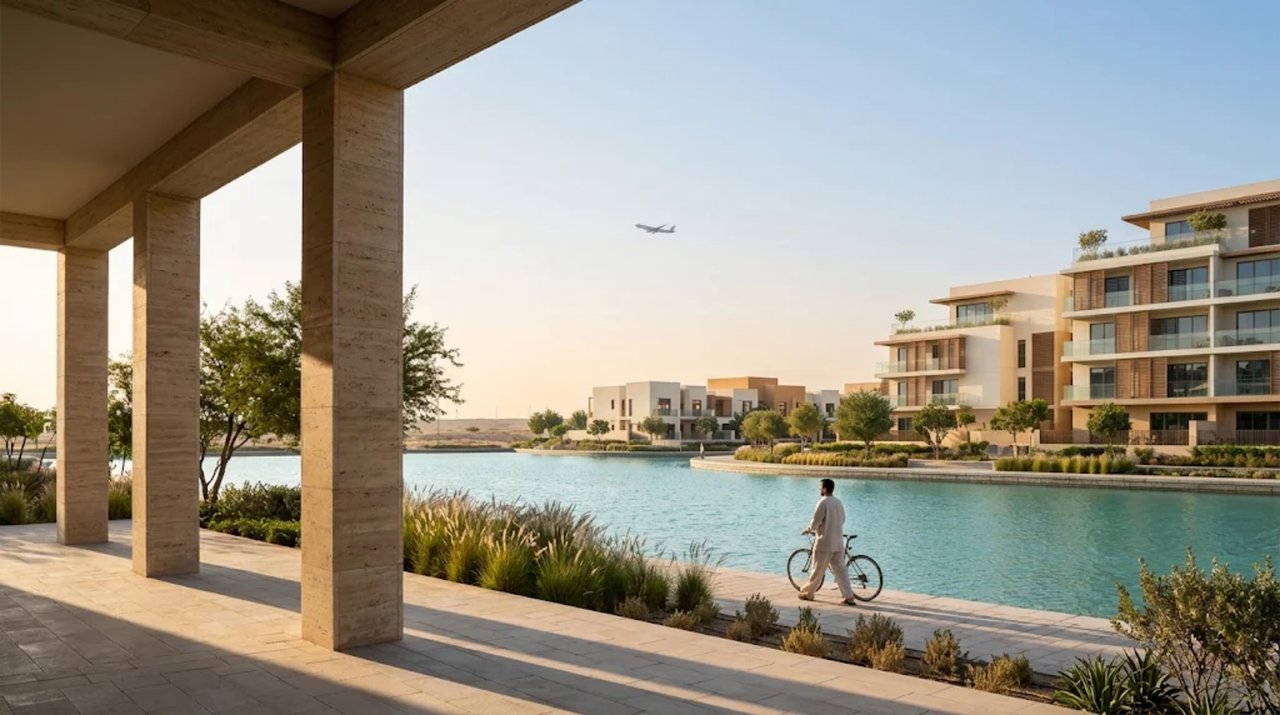
The Dubai South residential index helps compare asking prices, unit sizes, rental yields, and development stages. It does not replace due diligence on the property itself. The market snapshot shows a median price of AED 1.02 million and a median rate of AED 1,650 per sq. ft., and the average gross rental yield was about 4% in 2025. Before committing, verify the developer, inspect the completed property or the construction progress, and separate advertised prices from completed sale data.
Treat the Dubai South residential index as a screening tool. It narrows the search between studios, apartments, townhouses, and villas. The final decision still depends on document checks, a physical inspection, and a calculation of ownership costs.
What the index actually measures
The snapshot combines market pricing with property supply across a large master-planned district. Dubai South covers 145 sq. km and includes the Residential District, employment zones, logistics facilities, aviation activity, and access to Al Maktoum International Airport.
Studios commonly measure 340-450 sq. ft., and one-bedroom apartments average about 700-750 sq. ft. Duplex townhouses range roughly from 1,866 to 3,578 sq. ft. With spreads this wide, a lower purchase price may reflect a smaller unit rather than a better deal.
Advertised prices start from AED 435,000 for a studio, AED 2 million for a townhouse, AED 2.05 million for a villa, and AED 2.55 million for a penthouse. All four are asking prices, not confirmed transaction values.
Verify the developer before paying
Dubai South Properties develops residential projects alongside companies such as Emaar, and each project may have its own construction schedule, sales contract, and handover terms. Settle who is building what before comparing payment plans.
Completed and off-plan stock carry different risks. The Pulse was completed in 2020, South Bay is being completed in phases, and Hayat in the Golf District remains off-plan. A buyer with a fixed move-in date faces a different risk from an investor considering a handover in Q2 2027, Q4 2027, or Q1 2028.
- Confirm the legal developer and the project name shown on the sales documents.
- Match the quoted unit number, size, view, parking allocation, and payment schedule with the contract.
- Check whether the stated handover date is contractual or merely a marketing estimate.
- Ask which figures describe asking prices and which come from completed transactions.
Inspect the property instead of trusting the listing
In a completed apartment, check finishes, water pressure, cooling, lifts, parking access, storage, noise, and the condition of shared facilities. None of these show up in an index.
For an off-plan purchase, visit the construction site when access is available and compare the visible progress with the promised program. South Bay is being delivered in phases, so the surrounding roads, retail facilities, and community services may not be ready at the same time as the selected building.
Warehouse inspection belongs to goods logistics and is not a residential property procedure. The Dubai South index contains no warehouse condition data. Proximity to logistics districts is not proof of a property’s quality or rental performance.
Packaging and consolidation do not belong in the property calculation
Exclude packaging reinforcement and batch consolidation from a residential investment checklist. These costs apply to imported goods, not to apartments, townhouses, or villas, unless the buyer is separately importing furniture or construction materials.
The closest property equivalent is the way a developer groups construction phases and shared infrastructure. Phasing can affect access to retail, roads, landscaping, schools, and leisure facilities, so build that timing into the expected occupancy date and rental assumptions.
Compare rental income with real ownership costs
Annual advertised rents start from AED 34,999 for a studio, AED 88,779 for a townhouse, and AED 88,800 for a villa. The district’s average gross rental yield was about 4% in 2025, and that figure comes before service charges, maintenance, vacancy, furnishing, and other ownership expenses.
Some investment listings show projected yields of 3.9%, 6-7%, or 8%. Those figures relate to particular projects and payment plans and are not the Dubai South average. Compact apartments may attract aviation and logistics workers, while families seeking more space often prefer gated townhouses.
Car dependence also shapes the tenant profile. Dubai South has no metro station of its own, although bus DS1 links the area with Expo 2020 Metro Station. Emirates Road, Sheikh Mohammed bin Zayed Road, and Expo Road connect the district to other parts of Dubai, but peak traffic near Expo City can affect commuting time.
Acceptance checklist before signing
- Verify the developer, project status, and ownership documents.
- Confirm the unit size, price, payment plan, parking, and handover terms in writing.
- Inspect a completed unit or document construction progress for an off-plan purchase.
- Separate asking prices from confirmed transaction data.
- Calculate rent after service charges, maintenance, vacancy, and furnishing costs.
- Check road access, public transport, nearby schools, healthcare, and completed amenities.
- Reject packaging, warehouse, or shipment assumptions when they have no connection to the property purchase.
A unit shortlisted from the index is ready to accept once the documents, physical condition, delivery stage, and rental calculation all agree.
- Reference: https://dubai-south-property.ae/
Write a comment