Bitcoin Magazine (News Bot)

bitcoinmagazine@puresignal.news

39% of U.S. Merchants Now Accept Crypto, PayPal Survey Finds

Bitcoin Magazine 39% of U.S. Merchants Now Accept Crypto, PayPal Survey Finds Crypto is no longer niche bar-talk. It has become a part of mainstream commerce in the United States. A new survey conducted jointly by the National Cryptocurrency Association (NCA) and PayPal reveals that nearly 4 in 10 U.S. merchants (39%) now accept digital assets at checkout, with overwhelming consensus that crypto payments will become a standard option within the next five years. The survey, which polled 619 payment decision-makers across retail, e-commerce, hospitality, luxury goods, and digital gaming sectors, highlights customer demand as the primary driver of adoption. Nearly nine in ten merchants (88%) report receiving inquiries from customers about paying with cryptocurrency, and more than two-thirds (69%) say customers request these payments at least once a month. For businesses already accepting digital currencies, crypto is no longer a novelty: it accounts for over a quarter (26%) of sales, with roughly 72% of merchants reporting growth in transactions over the past year. “What we’re seeing both in this data and in conversations with our customers is that crypto payments are moving beyond experimentation and into everyday commerce,” said May Zabaneh, Vice President and General Manager of Crypto at PayPal. “Adoption is being driven by customer demand for faster, more flexible ways to pay — and once businesses start accepting crypto, they see real value.” Zabaneh emphasized that when crypto payments are integrated as seamlessly as traditional cards or online payments, they can become a powerful tool to attract new customers and improve cash flow. Crypto adoption in large enterprises Adoption is strongest among larger enterprises. According to the survey, 50% of companies earning over $500 million annually accept digital assets, compared to 34% of small businesses and 32% of midsize firms. The data also shows that younger shoppers are fueling demand, with 77% of Millennials and 73% of Gen Z or younger customers expressing interest in using digital assets. Small businesses, in particular, report high engagement from Gen Z, with 82% of inquiries coming from this demographic. Merchants cite several key benefits to accepting digital assets, including faster transaction speed (45%), access to new customers (45%), enhanced security (41%), and greater privacy for buyers (40%). Industries leading adoption include hospitality and travel (81%), digital goods, gaming, and luxury retail (76%), as well as retail and e-commerce (69%), where speed, global reach, and digital-native audiences play a significant role. Despite the momentum, simplicity and usability remain barriers to wider adoption. The survey found that 90% of merchants would consider accepting digital assets if the setup were as straightforward as accepting credit cards, and the same percentage said they would adopt it if the payment experience were as seamless as traditional methods. “Interest isn’t the problem; understanding is,” said Stu Alderoty, President of the NCA. “Partnerships with trusted platforms like PayPal are crucial to bridge the knowledge gap and demonstrate that crypto can be simple, accessible, and effective for everyday businesses and consumers.” This post 39% of U.S. Merchants Now Accept Crypto, PayPal Survey Finds first appeared on Bitcoin Magazine and is written by Micah Zimmerman.

Cover image for 39% of U.S. Merchants Now Accept Crypto, PayPal Survey Finds

Samourai Letter #3: Notes From The Inside

Bitcoin Magazine Samourai Letter #3: Notes From The Inside Dear Reader, Since my last letter where I tried to explain the underground economy of FPC Morgantown I have been struggling to come up with an idea of what further information you may be interested in. In modern life on the outside we are all so used to immediate feedback on everything we do. We write and publish an article and almost instantly comments start to roll in. You push to Twitter and the peanut gallery chimes in and has their say, and you as the content creator have an immediate idea of the general sentiment surrounding your work. It takes some getting used to not having that modern feedback loop, but on the other hand it is quite liberating as well. All that said I have decided that today I am going to write you about the food situation at FPC Morgantown. I hope this letter will be interesting to you. Feel free to write me a letter with your thoughts and suggestions. My address will be posted at the bottom of this letter. If you have time to read this article, you have time to sign the petition to free Samourai Wallet developers Keonne Rodriguez and William Hill. Every signature counts. CLICK THE IMAGE ABOVE OR HERE. One of the things I have been doing regularly since arriving at FPC Morgantown is keeping a daily journal. Usually towards the end of my day around 8:00PM I sit at a desk flanked by chess tables and write a summary of the days events. I write about any thoughts I had throughout the day or any incidents that have occurred. When I first got here I only had some blank white printer paper and a very uncomfortable pen (thanks to Omar who provided me with these supplies). Now, after a shopping trip to the commissary I have a wide ruled notebook and a slightly more comfortable pen. In any case, around the third day of journaling I realized a great majority of what I was writing about was about food or at least somewhat tangentially related to food. I now make an effort to avoid writing about the food in my daily journal as it gets repetitive. However it got me pondering why so much of my energy went to writing about the food served in the “Chow Hall”. The conclusion I have come to is that so much of a prisoners day revolves around the three main meals and food quantity, quality, and variety in general, that it becomes a naturally big part of our daily life. At 6:00 AM a crackling static hiss fills the empty hallways and the sleeping rooms of the housing unit. A loud announcement proceeds from the overhead speakers embedded in the ceiling: “ATTENTION BATES UNIT: MAINLINE IS NOW OPEN”. This is our first call to food of the day. “Mainline” is some BOP lingo to mean meal time. Most prisoners avoid the 10 minute walk to the Chow Hall at this call to breakfast – myself included now. On Monday, Wednesday, and Friday there is supposed to be a “hot breakfast” which could be pancakes (always stodgy and undercooked) served with a brown liquid in a condiment package that is apparently margarine and another brown liquid in a condiment package which is some sort of syrup; French toast (actually pretty tasty) served with the same margarine and syrup; or biscuits and gravy (biscuits are good, avoid the gray soup that is less gravy and more dirty laundry water). Each of these is served with oatmeal or grits both quite tasteless and reminiscent of wallpaper paste. Though more often than not we do not get any of those things, we get something they call “spice cake” which is a giant piece of cake (without icing) where the batter is mixed with cinnamon until it turns brown. It doesn’t taste terrible, but one starts to resent the taste of cinnamon cake when it is served every morning (and again for lunch if there is any left over from breakfast – and there always is). Every other day is what we call Cold Breakfast. This consists of some sort of bran flake so stale it is reminiscent of eating cardboard. Even the most stoic prisoner who attends every breakfast will otherwise avoid the Chow Hall on a cold breakfast day. I do not remember if I told you about the multitude of ducks and geese who live on the compound. They were supposed to migrate south for winter at some point in the past, but instead they found such a hospitable environment among the prisoners who happily feed them leftovers (against the rules by the way) that they decided to forgo the instinct to migrate to warmth and stay here year round. They reproduced in the way only animals can and now there must be hundreds of geese and mallard ducks that waddle around the entire compound. These prisoner water fowl know the food schedule just as well as us human prisoners do. They wait by the exit of the Chow Hall for altruistic prisoners to throw them a few pieces of bread after every meal, quacking and squawking demanding their fair share. On Cold Breakfast days, throw the fowl the bran flakes and each one will refuse to eat them. That should tell you everything about the universally hated Bran Flakes. In any case, the 6:00AM Breakfast is the only time you have access to milk. You are offered two small cartons of fat free skim milk – which appears to be closer to water than milk – that is often several days expired. Usually the milk is still drinkable, sometimes however the carton swells so much it appears it is about to explode. That is a good indication the milk has soured. If you are given a sour milk, tough luck. The breakfast mainline closes somewhere around 20 minutes after it is called, so you scarf down your cake and oatmeal, you drink your two cartons of skim milk (or more commonly you pocket the milk to bring back to the housing unit for later use – which by the way is against the rules and may result in disciplinary action for contraband – with a more appetizing cereal you purchased from the Commissary). You make the 10 minute journey back to the housing unit to await the next break in the monotony of your life. Mainline lunch call. Lunch mainline is called around 10:45 AM. Calling it lunch is quite generous, really it is late breakfast. Indeed we often get “breakfast for lunch” which is quite universally hated on the compound. Cold scrambled eggs are usually on the breakfast for lunch menu. You really never know what you’re going to get at lunch time. They post a menu for the week in the housing unit, but from experience that appears to be more aspirational than factual. Some days you will receive a massive portion of “chicken fried rice” which is neither chicken or fried rice. It is turkey and some vegetables with some rice, but it is quite tasty, and somewhat nutritious. Other times you will get an overcooked tiny hamburger patty – that appears to be a piece of leather recycled from our issued work boots – on a stale and occasionally moldy bun with a few onions, a tomato slice, and some iceberg lettuce. We had this yesterday in fact, and it put a damper on the mood across the whole compound. As I put it to my cellmate Mike, “When the onions, tomato, and bun are the star of the show instead of the beef, that is a bad burger”. Portion sizes vary wildly. If the kitchen workers serving that day are black and you are black you likely will receive a bigger portion, maybe a second shoe leather patty. If they are Hispanic they likewise show favor to those of their heritage. I am not black, and while Hispanic, I do not speak Spanish and I look like a gringo, so no extra portions for me. Besides portion size disparity there is also a massive gulf in seasoning reliability. There are times that so much salt has been added you need a gallon of water by your side to replenish your fluids as you eat. Other times it is as if salt is the equivalent of gold and must not ever be used on something so trivial as food. Lunch ends around 11:15 and off we are sent to carry on with our day. Dinner mainline is called around 4:45 PM. I would consider this a late lunch but I do recognize that many people (my dear wife included) consider this an acceptable supper time. Again, the general rule is to expect anything. It may be something delicious or something inedible. You may get a double portion if you are the right race or a half portion if the server doesn’t like the look of you. It may be over seasoned, under seasoned, not seasoned at all. It may be listed on the calendar and it may not be. You never know what to expect, and that is my entire longwinded point as to why the food is such a popular thing to discuss among the prisoners here, and has taken up so much of my energy during my daily journals. Our entire day is couched by calls to eat food. 6:00, 10:45, 4:45, and each and every time it is called it is entirely unpredictable. Every other aspect of our lives here is extremely regimented, extremely predictable, very monotonous. But heading to the Chow Hall three times a day, that is throwing the dice of fate, that is an unknown variable in a well known equation. That is something different every day to talk about. You see the same people over and over again in your Unit. You run into the same person 50 times a day, and frankly you run out of things to say. You can only talk about how fucked up the Feds are, how you were shafted by the prosecutors, how your Judge was a bitch, so many times. The unknown variable of Chow Hall three times a day injects new blood into what could become a very stale social situation. Shared disgust at a horrible meal. Incredibility at how delicious the chicken parmesan was. Complaint at breakfast for lunch again! The shared ordeal of meal times maintains a common social order. You may have gathered from the above paragraphs that the food quality generally is quite low. Most ingredients are supplied by vendors who can get away with selling expired and close to rotten ingredients to the prison system. I have heard from kitchen staff that many boxes arrive in the kitchen labeled “Not For Human Consumption”. Our potatoes are mouldy, our canned vegetables long expired, our protein suspicious. You couldn’t legally give this quality of food away on the outside, but you can legally sell it to the BOP who will use it to feed the adults in their custody. Besides low quality ingredients and bland to actively disgusting recipes the nutritional value of our meals is extremely low. If you are a die hard disciple of the USDA Food Pyramid – bunk nutritional science that everyone but the slow moving feds recognize as a national tragedy, responsible for the exceptional rise of obesity rates – then yes, I suppose we are getting – on paper – the required nutritional value out of every meal. The on-the-ground results of a prolonged diet like one we are subjected to does not lie. I have spoke with many different prisoners, several of them doctors, who have come into the prison system as healthy adults and after several years of custody have developed chronic health problems. High blood pressure and high cholesterol seem to be the most common problems reported. Almost every prisoner is on some sort of prescribed medication for some ailment they developed whilst in custody. Because of the problems I have described. Many prisoners do not bother with the meal time calls to Chow Hall. I have met several prisoners who never go to the Chow Hall and only buy prepared food or cook for themselves. This is also not an ideal solution. The food items the commissary sells must be shelf stable, nothing that can spoil without refrigeration. This naturally means nearly everything is packed to the gills with preservatives and salt. On my first commissary day I purchased 10 pouches of chicken breast, several bags of quick cook ‘minute rice’, several pouches of dried mash potatoes, small bags of shredded mozzarella cheese (there is no expiration date on the cheese, so I suspect it is more preservatives than cheese), 10 pouches of tuna, mayonnaise (again, no need to refrigerate so quite suspicious), hot sauce (vital for making the Chow Hall food more palatable), salt, pepper, onion flakes, garlic powder, soy sauce, jelly, peanut butter, individually wrapped bagels, dried milk, and frosted flakes cereal. Next time I plan on buying granola, oatmeal, protein shakes, and tortillas. The food I am able to prepare is tastier than the chow hall, but I am not yet sure if it is healthier. It is also quite difficult. The only cooking tools legally available to you is: on demand hot water (190 degrees F) and a half gallon plastic jug. It takes some trial and error to cook under those conditions. It is a lot of hassle and expense which makes cooking for yourself prohibitive for those prisoners only relying on their prison jobs. Almost everyone on the outside who hasn’t been to prison themselves or have a loved one incarcerated does not think about the basic needs that individuals have in custody, or how those needs are met. The food and nutrition in the system is woefully inadequate. We need higher quality ingredients, fresh fruit and vegetables, and far more protein. We need better options for cooking our own food within the unit, something more than hot water. We need access to refrigeration so we can keep fresh produce and items not filled with preservatives. Thank you for reading this letter from the inside. I do not mean to use this opportunity writing you to complain. “It is prison after all” some of you will say, “it is not meant to be nice”. Anyway, complaining isn’t in my nature, and it often does nothing but make you and everyone around you miserable. I don’t write this letter looking for sympathy or condolences, I write to simply inform you of my reality, and the reality of countless number of people in the custody of the BOP. Happy New Year dear reader. I hope 2026 brings you (and me) great opportunities. Sincerely, Keonne Write to Keonne: Keonne Rodriguez 11404-511 FPC Morgantown FEDERAL PRISON CAMP P.O. BOX 1000 MORGANTOWN, WV 26507 Mailing Guidelines: Please note: You can only send letters (no more than 3 pages long). No packages or other items are allowed. Books, magazines, and newspapers must be sent directly from the publisher or an online retailer like Amazon. All letters must include a full return address and sender name to be delivered. This post Samourai Letter #3: Notes From The Inside first appeared on Bitcoin Magazine and is written by Keonne Rodriguez.

Cover image for Samourai Letter #3: Notes From The Inside

Tether Launches USAT, a Federally Regulated, Dollar-Backed Stablecoin for the U.S. Market

Bitcoin Magazine Tether Launches USAT, a Federally Regulated, Dollar-Backed Stablecoin for the U.S. Market Tether, the world’s largest digital asset company by stablecoin circulation, announced Tuesday the official launch of USA₮, a federally regulated, dollar-backed stablecoin designed specifically for use in the United States under the recently enacted GENIUS Act. USA₮ is issued by Anchorage Digital Bank, N.A., a federally chartered U.S. bank and one of the first institutions approved to issue payment stablecoins under the new law, Tether said. The launch marks Tether’s first stablecoin built to operate fully within the U.S. regulated financial system, following years of regulatory scrutiny around offshore-issued dollar tokens. The debut follows the company’s announcement late last year detailing the token’s design and naming former White House Crypto Council Executive Director Bo Hines as CEO of Tether USA₮. With Tuesday’s rollout, USA₮ is now available to U.S. users seeking a dollar-backed token that complies with federal banking and stablecoin rules. The GENIUS Act established the first nationwide framework governing stablecoins marketed to U.S. users, requiring full reserve backing, bank or qualified issuer status, and ongoing regulatory supervision. Under the law, offshore-issued stablecoins that do not meet these standards face restrictions across U.S.-regulated exchanges, banks, and payment platforms. USA₮ is structured to meet those requirements. According to the company, Cantor Fitzgerald will serve as the stablecoin’s designated reserve custodian and preferred primary dealer, providing transparency and oversight of reserves from launch. Anchorage Digital Bank will handle issuance, compliance, and on-chain settlement infrastructure. Tether’s dominant role in the crypto space While Tether’s flagship USD₮ remains the most widely used stablecoin globally, its offshore structure limited its role in the U.S. market under the new law. USA₮ allows Tether to maintain USD₮’s international dominance while offering U.S. institutions a regulated alternative tailored to domestic payment and settlement systems. “This launch represents a new chapter for digital dollars in the United States,” said Paolo Ardoino, CEO of Tether. “USD₮ has proven at global scale that digital dollars can deliver trust and utility. USA₮ extends that mission with a federally regulated product made in America.” Bo Hines said the new stablecoin is aimed squarely at institutional users. “USA₮ is designed to meet federal regulatory expectations while delivering stability, transparency, and responsible governance,” he said. “It ensures the United States remains competitive in the evolution of digital money.” During its initial rollout, USA₮ will be available on platforms including Kraken, Crypto.com, OKX, Bybit, and MoonPay, with additional U.S.-regulated exchanges and banking partners expected to follow. According to bitcointreasuries.net, Tether holds 96,370 bitcoin, worth roughly $8.6 billion This post Tether Launches USAT, a Federally Regulated, Dollar-Backed Stablecoin for the U.S. Market first appeared on Bitcoin Magazine and is written by Micah Zimmerman.

Cover image for Tether Launches USAT, a Federally Regulated, Dollar-Backed Stablecoin for the U.S. Market

Trump Family-Backed American Bitcoin ($ABTC) Buys More Bitcoin, Holdings Reach 5,843 BTC

Bitcoin Magazine Trump Family-Backed American Bitcoin ($ABTC) Buys More Bitcoin, Holdings Reach 5,843 BTC American Bitcoin, a miner backed by members of the Trump family, has increased its bitcoin reserves to roughly 5,843 BTC, placing it among the world’s largest corporate holders of the cryptocurrency. The company said it achieved a bitcoin yield of about 116% from its Nasdaq debut on Sept. 3, 2025, through Jan. 25, 2026. Bitcoin yield measures growth in a firm’s bitcoin holdings over time, including coins mined or purchased, without accounting for capital raises. With the latest increase, American Bitcoin ranks as the 18th-largest corporate holder of bitcoin, surpassing companies such as Nakamoto Inc. and GameStop Corp., according to company data. Shares of American Bitcoin were down about 0.50% in premarket trading Tuesday, according to Yahoo Finance, though the stock remains down roughly 12% year-to-date. American Bitcoin’s ties to the Trump family American Bitcoin is approximately 20% owned by Donald Trump Jr. and Eric Trump and became a standalone public company last year after merging with Gryphon Digital Mining and spinning out from Hut 8’s mining operations. Hut 8 retains an estimated 80% ownership stake. The company’s growing reserves follow a period of operational expansion after going public. In its third-quarter 2025 earnings report, American Bitcoin posted a return to profitability and reported higher revenue as it increased mining capacity and benefited from higher bitcoin prices earlier in the cycle. At that time, the company held just over 4,000 BTC, indicating reserves have increased by more than 1,800 coins in recent months. According to Eric Trump, American Bitcoin has climbed rapidly up the rankings of corporate bitcoin holders, moving from 30th place to 18th in less than five months. The company recently surpassed firms including DeFi Technologies, Capital B, Bitcoin Group SE, and Next Technology Holding Inc. American Bitcoin said its accumulation strategy reflects a broader trend among publicly listed miners that are increasingly treating bitcoin as a long-term balance-sheet asset rather than a source of near-term liquidity. That approach has gained traction even as investors rotate into assets such as precious metals and bonds amid market uncertainty. Bitcoin is currently trading at $88,144, with 24-hour trading volume of about $40 billion and up roughly 1% over the past day. The price is about 1% below its seven-day high of $88,763 and roughly 1% above its seven-day low of $87,180. Bitcoin’s circulating supply stands at 19,981,153 BTC, out of a maximum supply of 21 million, giving it a global market capitalization of about $1.76 trillion, up around 1% in the last 24 hours. This post Trump Family-Backed American Bitcoin ($ABTC) Buys More Bitcoin, Holdings Reach 5,843 BTC first appeared on Bitcoin Magazine and is written by Micah Zimmerman.

Cover image for Trump Family-Backed American Bitcoin ($ABTC) Buys More Bitcoin, Holdings Reach 5,843 BTC

Citrea Launches Mainnet, Bringing Lending, Trading, and USD Settlement to Bitcoin

Bitcoin Magazine Citrea Launches Mainnet, Bringing Lending, Trading, and USD Settlement to Bitcoin Citrea, a Bitcoin application platform backed by Founders Fund and Galaxy Ventures, announced today the launch of its mainnet, in hopes to unlock lending, trading, and other capital market activity directly on the Bitcoin network. Alongside the mainnet debut, Citrea introduced ctUSD, a U.S. dollar–denominated stablecoin issued by MoonPay and powered by M0. The stablecoin is fully backed by short-term U.S. Treasury bills and cash and is designed to align with the forthcoming GENIUS Act, positioning it as a compliant settlement layer for Bitcoin-based financial activity. Despite Bitcoin’s roughly $1.3 trillion market capitalization, on-chain data suggests a significant portion of BTC remains economically idle. More than 61% of bitcoin — worth an estimated $1.2 trillion — has not moved in over a year, underscoring the limited availability of native financial infrastructure on the network. “Bitcoin is the world’s largest digital asset, yet its role in financial markets has been largely constrained,” said Orkun Kilic, co-founder and CEO of Chainway Labs, the company behind Citrea. “By bringing Bitcoin-secured financial applications on-chain, the Citrea mainnet enables capital to be deployed, managed, and settled directly within Bitcoin-native markets.” Citrea’s bitcoin lending and products At launch, the platform is focusing on two core product categories: BTC-backed lending and BTC structured products. The platform’s lending infrastructure was developed in collaboration with decentralized finance firms Morpho and UltraYield by Edge Capital. For structured products, Citrea is working with digital asset market makers such as Keyrock to offer BTC-denominated yield strategies that combine on-chain and off-chain components. The company says more than 30 Bitcoin-native applications are already prepared to launch on the platform, spanning a range of institutional and retail financial use cases. “Citrea is addressing a huge market opportunity in helping to make Bitcoin truly programmable,” said Bridget Harris, an associate at Founders Fund. “By leveraging Bitcoin’s security while enabling application development, Citrea scales the Bitcoin economy as a whole.” Galaxy Ventures general partner Will Nuelle added that bringing capital markets and stablecoin liquidity directly onto Bitcoin could deepen institutional engagement with the network. Beyond expanding Bitcoin’s utility, this approach could also impact miner economics. As block subsidies decline over time, increased transaction-driven activity may help sustain miner incentives by anchoring real economic usage directly to the base layer. The mainnet and ctUSD are now live. This post Citrea Launches Mainnet, Bringing Lending, Trading, and USD Settlement to Bitcoin first appeared on Bitcoin Magazine and is written by Micah Zimmerman.

Cover image for Citrea Launches Mainnet, Bringing Lending, Trading, and USD Settlement to Bitcoin

Peter Schiff Says Bitcoin Won’t Become the World’s Reserve Currency in Tucker Carlson Interview

Bitcoin Magazine Peter Schiff Says Bitcoin Won’t Become the World’s Reserve Currency in Tucker Carlson Interview Gold advocate and longtime Bitcoin critic Peter Schiff renewed his attacks on Bitcoin during a recent interview with Tucker Carlson, arguing that the cryptocurrency industry is seeking government regulation and a government bailout not to restrain itself, but to gain legitimacy in the eyes of the public. Schiff said that calls for regulatory “clarity” in crypto amount to an attempt to secure government endorsement. According to Schiff, regulation would allow Bitcoin proponents to claim official approval, encouraging new investors to enter the market under the belief that the asset has been validated by the state. “The government now endorses it. The government is supporting it,” he said, adding that political support for Bitcoin has been driven by financial incentives rather than monetary fundamentals. Schiff alleged that early Bitcoin holders who profited from later inflows of capital used their gains to influence politicians, including President Donald Trump, to publicly support the asset. He pointed to proposals for a U.S. Bitcoin strategic reserve as an example, characterizing them as a potential “Bitcoin bailout fund” that would use taxpayer money to support the market. Schiff did not present evidence for claims that politicians were “paid off,” framing them instead as his interpretation of political incentives surrounding crypto policy. Carlson pushed back by arguing that the declining purchasing power of the U.S. dollar and its use as a geopolitical tool suggest the need for a new global reserve asset. He asked why Bitcoin or stablecoins like Tether could not fill that role. In response, Schiff reiterated his long-held distinction between money and currency, arguing that gold is money while fiat currencies and Bitcoin are substitutes that depend on confidence rather than intrinsic value. He said Bitcoin’s value rests on speculation that it can be sold later for more dollars, rather than on its usefulness as a stable store of value. “Most people who are buying Bitcoin are buying it to get more dollars,” Schiff said. “If they wanted a safe store of value, they’d buy gold.” Schiff: Bitcoin is a fad Schiff argued that Bitcoin is unsuitable as a reserve asset for central banks, claiming its volatility would make it impossible to hold at scale without destabilizing markets. He said that while some sovereign wealth funds and governments have gained limited exposure to Bitcoin-related assets, such allocations are small and driven by performance pressure rather than conviction. He predicted that institutional interest would fade and warned that recent buyers could face losses. Schiff noted that Bitcoin remains well below its peak when measured in gold terms, claiming it has declined roughly 40% relative to gold over the past four years. Schiff also rejected overall comparisons between Bitcoin and gold, arguing that Bitcoin is a speculative asset rather than a form of sound money. He likened bitcoin and crypto to past manias like tulips and ‘Beanie Babies,’ saying it lacks intrinsic value and would fall alongside stocks in a major financial crisis. This post Peter Schiff Says Bitcoin Won’t Become the World’s Reserve Currency in Tucker Carlson Interview first appeared on Bitcoin Magazine and is written by Micah Zimmerman.

Cover image for Peter Schiff Says Bitcoin Won’t Become the World’s Reserve Currency in Tucker Carlson Interview

Bitcoin Price Fights for $88,000 as Fed Looms and Bearish Technical Pressure Builds

Bitcoin Magazine Bitcoin Price Fights for $88,000 as Fed Looms and Bearish Technical Pressure Builds The bitcoin price steadied a bit today after an early slide to $86,000 over the weekend, as traders weighed Federal Reserve risk, heavy recent liquidations, and growing technical pressure. The largest cryptocurrency was up about 1% at $87,850 by midafternoon, after falling as low as $86,000.13 earlier in the session. Price action remained volatile, with market participants cautious about sharp reversals following a weekend selloff. Attention is now centered on the Federal Reserve’s policy decision due Wednesday. The central bank is widely expected to keep interest rates in the 3.50%–3.75% range, but the meeting has drawn unusual scrutiny amid debate over the Fed’s independence. Recently, President Trump’s administration escalated its fight with Federal Reserve Chair Jerome Powell by starting a rare criminal-investigation threat tied to Powell’s oversight of a big Fed renovation project. At the same time, Trump is pushing to reshape the central bank leadership as Powell’s term ends this spring, drawing legal pushback (including a Supreme Court case over Trump’s attempt to remove a Fed governor) and sparking a broader debate over the Fed’s independence from politics. Crypto markets continue to absorb the impact of continued selloffs, which was exacerbated by forced liquidations across leveraged positions. U.S.-listed spot bitcoin exchange-traded funds remained a source of pressure. Spot bitcoin ETFs recorded $1.33 billion in net outflows in the week ending Jan. 23, marking the largest weekly outflow in nearly a year. The redemptions have contributed to selling pressure amid already fragile market conditions. Corporate bitcoin accumulation persisted but failed to stabilize sentiment. Strategy., the software company that has shifted toward a leveraged bitcoin acquisition strategy, disclosed in a recent SEC filing that it purchased 2,932 bitcoin between Jan. 20 and Jan. 25 for approximately $264.1 million, paying an average of $90,061 per coin. The firm now holds 712,647 bitcoin, with the latest purchases financed primarily through its at-the-market equity offering program. These purchases did little to change the bitcoin price. The company’s aggregate purchase price for its holdings stands at approximately $54.2 billion, including fees and expenses, translating to an average acquisition bitcoin price of $76,037. Bitcoin price analysis According to Bitcoin Magazine analysts, the bitcoin price posted a sharp bearish reversal last week, closing the week near $86,588 after failing to hold momentum following a test of $98,000 resistance. The move marked a decisive loss of the $87,000 support level and shifted near-term market control back to sellers. The $84,000 level is now critical. A sustained daily close below that support could accelerate downside pressure toward the $72,000–$68,000 zone, with a deeper retracement toward $58,000 possible if selling intensifies. Bulls are expected to defend $84,000 aggressively to avoid a broader breakdown. On the upside, buyers must first reclaim $88,000 to stabilize price action. Additional resistance sits at $91,400 and $94,000, while $98,000 remains a major ceiling. A move above that level is considered unlikely in the near term, though a breakout could open a path toward $103,500. Technical indicators reinforce the bearish outlook. Bitcoin price closed below the 100-week simple moving average, the MACD remains in bearish territory, and the relative strength index has turned lower again. This coming week is pivotal, with broader market earnings potentially influencing sentiment, though correlations with equities remain uncertain. At the time of writing, the Bitcoin Fear and Greed Index is currently at 20 out of 100, signaling extreme fear among market participants. Historically, periods of extreme fear have coincided with heightened uncertainty and, at times, potential buying opportunities as prices trade below perceived value. The bitcoin price is currently $87,698. It is currently -1% from its 7-day all-time high of $88,635, and 2% from its 7-day all-time low of $86,126. This post Bitcoin Price Fights for $88,000 as Fed Looms and Bearish Technical Pressure Builds first appeared on Bitcoin Magazine and is written by Micah Zimmerman.

Cover image for Bitcoin Price Fights for $88,000 as Fed Looms and Bearish Technical Pressure Builds

Colombia’s Second-Largest Pension to Launch Bitcoin Fund for Qualified Clients

Bitcoin Magazine Colombia’s Second-Largest Pension to Launch Bitcoin Fund for Qualified Clients Colombia’s second-largest private pension and severance fund manager, AFP Protección, plans to launch an investment fund with exposure to Bitcoin. The plan was confirmed by Juan David Correa, president of Protección SA, in an interview with local outlet Valora Analitik. Correa said access to the product will be limited and offered only through a personalized advisory process that evaluates each client’s risk profile. Only investors who meet defined criteria will be able to allocate a portion of their portfolios to Bitcoin. Correa framed the initiative around diversification rather than a change in core investment strategy. “The most important element is diversification,” he said, adding that eligible clients will be able to assign a percentage of their portfolios to exposure to this type of asset if they choose. Protección’s move follows a similar step by Skandia Administradora de Fondos de Pensiones y Cesantías, which introduced Bitcoin exposure in one of its portfolios in September. With this launch, Protección became the second major pension fund administrator in Colombia to offer clients access to Bitcoin-linked investments. JUST IN: Colombia’s second-largest pension fund AFP Protección to offer Bitcoin exposure. Pensions are coming pic.twitter.com/K4Mh0n8pHr — Bitcoin Magazine (@BitcoinMagazine) January 26, 2026 Bitcoin as an additional investment option for Colombia The company said the new product does not alter how the majority of pension savings are managed. Fixed income instruments, equities and other traditional assets will continue to form the foundation of both mandatory and voluntary pension portfolios. The Bitcoin-linked fund is positioned as an additional option for qualified investors seeking broader portfolio construction rather than a replacement for existing allocations. Founded in 1991, AFP Protección manages more than 220 trillion Colombian pesos, or about $55 billion, in assets. The firm serves more than 8.5 million clients across mandatory pension plans, voluntary pension products and severance savings accounts. The broader mandatory pension fund market in Colombia reached 527.3 trillion pesos as of November 2025, with close to half of those assets invested outside the country. The announcement comes as Colombia tightens oversight of the digital asset sector. Earlier this month, the national tax authority, DIAN, introduced a mandatory reporting framework for crypto service providers. The rules require exchanges, custodians and intermediaries to collect and submit user and transaction data. The framework aligns Colombia with the OECD’s Crypto-Asset Reporting Framework, enabling automatic exchange of crypto-related tax information with other jurisdictions. Service providers must report identifying information and transaction details for reportable users and comply with due diligence and valuation standards or face penalties, per local reports. This post Colombia’s Second-Largest Pension to Launch Bitcoin Fund for Qualified Clients first appeared on Bitcoin Magazine and is written by Micah Zimmerman.

Cover image for Colombia’s Second-Largest Pension to Launch Bitcoin Fund for Qualified Clients

Bitcoin Drops Below $87,000 as Bears Target $84,000 Support Break

Bitcoin Magazine Bitcoin Drops Below $87,000 as Bears Target $84,000 Support Break Bitcoin Price Weekly Outlook What a disastrous weekly close for Bitcoin, that about sums it up. After tapping $98,000 resistance the week prior, the bitcoin price just went straight down last week to close near the lows at $86,588. The bulls have been corralled back into their pens and will need a lot of help to break out once again. The bears will look to continue their momentum into this week to break down the $84,000 support level once and for all, and take the price down to the low $70,000 area. Bulls must defend $84,000 like never before to avoid a breakdown this week. Key Support and Resistance Levels Now The bears are back in town. $87,000 support has been lost, and $84,000 may not hold another test. If the bears can manage to get a daily close or two below $84,000, the price should accelerate down to the $72,000 to $68,000 support zone. We likely see a bounce from down there, but if it eventually gives wa,y we will look to the 0.618 Fibonacci retracement level at $58,000. After grinding above several resistance levels recently, the bulls are back where they started. Bulls must reclaim $88,000 first and foremost. From there, they will look to get above $91,400, then $94,000 once again. $98,000 has proven itself as strong resistance above here. In the unlikely event the bulls can push above $98,000, it should be a slow go up to $103,500. Outlook For This Week This week is make-or-break for the bulls. Failure to defend $84,000 this week will likely send the price down to new lows. There is a large slate of big companies reporting earnings this week, so if the results are very strong, it could help buoy the bitcoin price to sustain major support levels. Although correlations to stocks have been weak lately, there are no guarantees that bitcoin will benefit from any upward market movement. Odds are in the bears’ favor for a breakdown this week. Market mood: Bearish – The bulls showed some strength in the prior week for a slight advantage, but the bears took full control last week, driving the price right back down to the lows. The next few weeks The weekly chart was looking for a bounce recently, and it got one. The price action this past week, however, has put in a strong indication that this bounce may be over and new lows may be on the horizon as the price closed below the 100-week SMA. The MACD oscillator is firmly in bearish territory, and while it looked like it may see a bullish cross last week, the bears came out in force and prevented that bullish cross from taking place. The relative strength index has crossed back down below the 13 SMA and sits in a bearish posture once again. Terminology Guide Bulls/Bullish: Buyers or investors expecting the price to go higher. Bears/Bearish: Sellers or investors expecting the price to go lower. Support or support level: A level at which the price should hold for the asset, at least initially. The more touches on support, the weaker it gets and the more likely it is to fail to hold the price. Resistance or resistance level: Opposite of support. The level that is likely to reject the price, at least initially. The more touches at resistance, the weaker it gets and the more likely it is to fail to hold back the price. SMA: Simple Moving Average. Average price based on closing prices over the specified period. In the case of RSI, it is the average strength index value over the specified period. Oscillators: Technical indicators that vary over time, but typically remain within a band between set levels. Thus, they oscillate between a low level (typically representing oversold conditions) and a high level (typically representing overbought conditions). E.G., Relative Strength Index (RSI) and Moving Average Convergence-Divergence (MACD). RSI Oscillator: The Relative Strength Index is a momentum oscillator that moves between 0 and 100. It measures the speed of the price and changes in the speed of the price movements. When RSI is over 70, it is considered to be overbought. When RSI is below 30, it is considered to be oversold. MACD Oscillator: Moving Average Convergence-Divergence is a momentum oscillator that subtracts the difference between 2 moving averages to indicate trend as well as momentum. Fibonacci Retracements and Extensions: Ratios based on what is known as the golden ratio, a universal ratio pertaining to growth and decay cycles in nature. The golden ratio is based on the constants Phi (1.618) and phi (0.618). This post Bitcoin Drops Below $87,000 as Bears Target $84,000 Support Break first appeared on Bitcoin Magazine and is written by Ethan Greene - Feral Analysis and Juan Galt.

Cover image for Bitcoin Drops Below $87,000 as Bears Target $84,000 Support Break

Rhode Island Reintroduces Bill to Study Blockchain and Cryptocurrency

Bitcoin Magazine Rhode Island Reintroduces Bill to Study Blockchain and Cryptocurrency Rhode Island lawmakers have reintroduced a bill to establish a special legislative commission to study blockchain technology and crypto, showing some continuous pro-bitcoin momentum for the state to explore its role in the digital asset economy. Senate Bill S 2198, introduced by Senators Lou DiPalma, Gu, Burke, Urso, Paolino, and Zurier, would create a five-member commission tasked with reviewing blockchain and cryptocurrency activity across the country, examining current Rhode Island laws, studying non-fungible tokens (NFTs), and consulting industry experts. The commission would also provide legislative recommendations to foster a pro-business environment while ensuring appropriate consumer protections. The commission’s composition includes the Rhode Island Secretary of Commerce as chair, the Director of the Department of Business Regulation, and three public members appointed to represent academia, financial institutions, and federal securities expertise. The panel is expected to meet at least four times per year, with a final report due by January 5, 2028, and will operate publicly, posting its findings online. The bill is not entirely new. It passed the Rhode Island Senate last year as S 0373 but stalled in the House (H 5810). The Rhode Island Bitcoin Policy Institute posted the reintroduction of the law on social media, thanking Senator DiPalma for sponsoring the bill and noting that discussions with Deputy House Speaker Ray Hull have made them optimistic about passage this session. With cryptocurrency adoption growing nationwide and states competing to attract blockchain businesses, Rhode Island’s effort reflects a broader push to balance innovation with oversight and establish itself as a hub for emerging financial technology. JUST IN: Rhode Island introduces bill to create a legislative commission to study Bitcoin, crypto, and blockchain pic.twitter.com/hCA3OQFaPX — Bitcoin Magazine (@BitcoinMagazine) January 26, 2026 Rhode Island’s bitcoin push Earlier this month, Rhode Island lawmakers reintroduced a bill to temporarily exempt small-scale Bitcoin transactions from state income and capital gains taxes, continuing a push started last year to reduce tax friction for everyday Bitcoin use. Senate Bill S2021, introduced by Senator Peter A. Appollonio and referred to the Senate Finance Committee, would exempt Bitcoin sales or exchanges up to $5,000 per month, with a $20,000 annual cap, for both residents and Rhode Island-based businesses. The bill adds a new section to the state’s personal income tax code, defining Bitcoin as a “digital, decentralized currency based on blockchain technology.” Taxpayers could self-certify eligibility on returns without reporting individual transactions, maintaining records only for potential audits. The Department of Business Regulation would issue guidance on valuation and recordkeeping. If passed, the exemption would take effect January 1, 2027, and sunset January 1, 2028, serving as a pilot program to treat Bitcoin more like everyday money rather than a speculative asset. This post Rhode Island Reintroduces Bill to Study Blockchain and Cryptocurrency first appeared on Bitcoin Magazine and is written by Micah Zimmerman.

Cover image for Rhode Island Reintroduces Bill to Study Blockchain and Cryptocurrency

US Dominates Bitcoin Hiring in 2025 as Singapore Jumps 158%, Bitvocation Data Shows

Bitcoin Magazine US Dominates Bitcoin Hiring in 2025 as Singapore Jumps 158%, Bitvocation Data Shows Bitvocation’s 2025 Bitcoin jobs report has just been released, and it shows continuing growth for the industry, as non-developer roles gain steam and Bitcoin-only companies grow 5% to become 47% of the broader crypto job market. Bitvocation is a jobs board and resources platform for the Bitcoin job market. They offer a highly curated feed of job offers, as well as career tips, specializing in network-driven hiring. They look to help Bitcoin startups as well as larger companies in the industry. According to a press release shared with Bitcoin Magazine, Bitvocation is not a recruitment agency. “We don’t headhunt. We are building a “strategic Bitcoiners reserve” to make hiring more efficient and help startups find the right talent faster.” The 2025 jobs report shows a variety of interesting trends in the Bitcoin and broader crypto industry. Bitvocation counts a total of 1,801 jobs; 6% more than 2024’s 1,707 jobs report findings. Bitcoin-only companies grew 5% from 2024, vs 53% of Bitcoin-adjacent jobs. They sort Bitcoin-only vs Bitcoin-adjacent companies based on the following criteria: Bitcoin-only products – Core offerings are exclusively focused on Bitcoin, not competing cryptocurrencies. Publicly stated commitment – The company explicitly identifies as Bitcoin-only or Bitcoin-first in its mission or communications. Ecosystem contribution – Active involvement in Bitcoin development, open-source projects, or the Bitcoin community. Most surprisingly, non-developer jobs grew 74%! Making a strong statement, you don’t need to be a developer to work in Bitcoin. Media, design, marketing, education, and operations dominate job openings among Bitcoin-only companies. 663 of the 1801 jobs are for mid-seniority positions, though jobs span the full range of seniority, providing opportunities to a wide range of applicants. When it comes to location, the United States remains the undisputed center of the industry, though every continent offers opportunities, with Singapore seeing growth of 158% from the previous year, taking second place globally. Remote jobs shrunk slightly, losing 10% to 2024 numbers. Nevertheless, almost half of all jobs in the report are remote jobs with Bitcoin-only companies offering 56% of all remote opportunities. The hardest roles to fill, according to a survey conducted by Bitvocation, are two-fold. Highly specialized technical positions, such as Bitcoin Core, Lightning, and security-related engineers, are difficult to hire for. Non-technical roles that require translating Bitcoin’s values into product, growth, operations, or communication are also presenting a challenge to employers. The survey also shows employers are looking for candidates with “Bitcoin conviction” as much as technical skills, and most of all “agency”. Strong communication, ownership mindset, and “the ability to operate in small, fast-moving teams” mattered as much as technical skill, according to the report. AI literacy is increasingly expected, but rarely sufficient on its own. Across the board, employers emphasized culture fit, such as “Bitcoin alignment” and “proof-of-work”, which generally means portfolios of projects or general contributions to the industry are more important than traditional credentials alone. Job seekers, on the other hand, reported often feeling ghosted – the solution, according to Bitvocation, is to “relentlessly build your network and create opportunities through relationships, rather than job boards”. Interest in Bitcoin jobs nevertheless remains strong. Bitvocation registered “100% growth in subscribers,” looking for Bitcoin jobs, and over 800,000 views in the Telegram feed, according to the report. This post US Dominates Bitcoin Hiring in 2025 as Singapore Jumps 158%, Bitvocation Data Shows first appeared on Bitcoin Magazine and is written by Juan Galt.

Cover image for US Dominates Bitcoin Hiring in 2025 as Singapore Jumps 158%, Bitvocation Data Shows

The 15 Types of Bitcoiners You’ll Definitely See at Bitcoin 2026

Bitcoin Magazine The 15 Types of Bitcoiners You’ll Definitely See at Bitcoin 2026 Loud. Friendly. Huggy. The Bitcoin Bro is your hype man for hyperbitcoinization. He doesn’t know what “joules per terahash” means, but he does know where the nearest bar is and will yell “Buy the dip!” during your panel Q&A. They party hard, orange-pill harder, and are basically Bitcoin’s version of a frat brother with a bull market permanently tattooed on his soul. Think this might be you? Take the “Which Bitcoin 2026 Persona Are You?” Quiz to find out. No halving knowledge required. Slicker than a freshly backed-up seed phrase, this guy’s teeth are whiter than your Lightning wallet. He rented a Lambo for the afternoon and drops your first name way too often – like he’s trying to sell you a fractional NFT of a parking garage. He doesn’t care about decentralization. He cares about gains. And tailoring. Always with the tailoring. The apocalypse isn’t a threat – it’s a plan. This person hasn’t touched fiat since 2018 and bathes exclusively in non-KYC sats. They’ve learned to make soap, catch fish, and explain monetary collapse in a calm, reassuring tone. They’re not paranoid. They’re prepared. Are you spiritually prepared, too? Take the “Which Bitcoin 2026 Persona Are You?” Quiz and see where you land. Lives in a van. Pays for tacos with Lightning. Might be hiding from the IRS (but only spiritually). They believe Bitcoin is peace, man. And also chaos. And also freedom. Will fix your flat tire in exchange for a hammock spot and a cold yerba mate. The unsung hero of Bitcoin. Speaks exclusively in thermodynamic math and obscure hardware specs. Makes ASIC firmware upgrades look like wizardry, but cannot explain their job to their mom without causing emotional distress. Knows the exact BTU-to-wattage ratio of their off-grid setup. Does not know what “small talk” is. Don’t understand them? That’s okay. Take the “Which Bitcoin 2026 Persona Are You?” Quiz anyway — they’re building the future while you click answers. Yes, plural. Yes, anonymous. They don’t want to talk to you. They don’t want to be on your podcast. They don’t even want you to know they’re here. Ask when something will be done and you’ll receive the sacred prophecy: “Two weeks.” Shadowy super-coders, quietly pushing upgrades that will redefine monetary history – while actively avoiding eye contact. Armed with a gimbal and a dream. Their camera roll is 80% memes, 20% selfies with CEOs. Some are spreading the signal. Some are chasing clout. All are uploading something right now. Will say “Let’s run it back!” at least 17 times per day. Identifiable by the gravity-defying stack of laminated badges swinging from his neck like a wearable timeline. He doesn’t say much – the passes do the talking. He’s not here to attend panels. He’s here to assert conference dominance. Is this your origin story? Take the “Which Bitcoin 2026 Persona Are You?” Quiz and confirm your status. Branded polo. Branded backpack. Branded soul. You don’t remember agreeing to this conversation, but you’re holding his business card now. Moves in packs. Wears the lanyard like a badge of honor. Will be back at the booth exactly 15 minutes after lunch.Doesn’t talk about Bitcoin. Is Bitcoin. Old-school finance types who smelled smoke on Wall Street and walked toward the orange glow. Calm. Calculated. Dollar-cost-averaging into the sunset. They don’t shill. They don’t yell. They just nod knowingly. Same data. Two conclusions. Infinite confidence. They believe balance sheets are destiny – or disaster. One thinks corporate Bitcoin accumulation is inevitable, elegant, and inevitable again. The other thinks leverage is a ticking time bomb wrapped in a TradFi costume. Both have read the filings. Both have spreadsheets. Both will reference Michael Saylor – either as a visionary or as a cautionary tale – and neither will back down. Sleeps three to a room and burned half their runway to get to the conference. They’re pitching a Lightning wallet-slash-social network-slash-AI-powered-something and just need one person to believe. Respect the hustle. Take the “Which Bitcoin 2026 Persona Are You?” Quiz before they raise your next round. Absolute legends. They’ve stood beside their Bitcoin-obsessed partner for three straight days, nodding politely through debates about mining fees and custody models. They are the backbone of the conference. The true MVPs. Quietly Googling spa availability. Not who you expect. No megaphones. No flexing. Just quiet confidence and a phone that never leaves their hand. Some got lucky. Some built empires. All will ignore your pitch deck. Yes, they exist. Yes, they know more than you. And yes, they are already five steps ahead of your “Have you heard of Bitcoin?” opener. Bonus: They will almost certainly explain immersion cooling better than you. One Event. Endless Energy. Absolute Chaos. Bitcoin 2026 isn’t just a conference – it’s a decentralized carnival of code, conviction, and characters. Whether you’re here to build, learn, argue, chill, or meme, there’s a place for you. Ready to see where you fit in? Take the “Which Bitcoin 2026 Persona Are You?” Quiz and find out who you really are. This article was inspired by the video “The People of Bitcoin 2022 Miami Conference” by SPACE DESIGN WAREHOUSE. We acknowledge and appreciate the original creative concept, which served as a foundation for this updated and expanded interpretation for Bitcoin 2025. We encourage readers to view the original video and support the creator on YouTube. This post The 15 Types of Bitcoiners You’ll Definitely See at Bitcoin 2026 first appeared on Bitcoin Magazine and is written by Josh Plischke.

Cover image for The 15 Types of Bitcoiners You’ll Definitely See at Bitcoin 2026

U.S. Bitcoin Custody Concerns Rise After Alleged Insider Stole $40 Million In Digital Assets

Bitcoin Magazine U.S. Bitcoin Custody Concerns Rise After Alleged Insider Stole $40 Million In Digital Assets All of the bitcoin held by the U.S. government has come under scrutiny after allegations surfaced that tens of millions of dollars in seized crypto were stolen through insider access at a federal custody contractor. Blockchain investigator ZachXBT alleged over the weekend that more than $40 million in digital assets was siphoned from wallets linked to the U.S. Marshals Service (USMS), reportedly by the son of an executive at a firm contracted to manage seized crypto. The alleged theft centers on Command Services & Support (CMDSS), a Virginia-based technology firm awarded a USMS contract in October 2024 to manage and dispose of certain categories of seized digital assets. Those assets include crypto not supported by major exchanges and tied to high-profile criminal cases, including funds seized from the 2016 Bitfinex hack. According to ZachXBT, an individual identified online as “Lick,” whom he claims is John Daghita, gained access to government-controlled wallets through insider channels. ZachXBT has further alleged that Daghita is the son of Dean Daghita, CMDSS’s president and chief executive. The investigation began after a recorded dispute in a private Telegram chat surfaced online. During the exchange, the individual screen-shared a wallet showing millions of dollars in crypto and appeared to move funds in real time. On-chain analysis later linked those wallets to addresses known to hold government-seized assets. A conflict of interest involving U.S. bitcoin One transaction trail cited by ZachXBT points to a government address that received roughly $24.9 million in bitcoin tied to Bitfinex-related seizures earlier in 2024. Additional blockchain data suggests that around $20 million was removed from USMS-linked wallets in October 2024. Most of those funds were returned within a day, though about $700,000 routed through instant exchanges was not recovered. ZachXBT estimates that total suspected thefts could exceed $90 million when accounting for other wallet activity observed in late 2025. Some of the funds remain in compromised wallets, raising concerns that further losses could occur. Neither the U.S. Marshals Service nor CMDSS has issued a public statement addressing the allegations. Rightfully so, the investigation has renewed criticism on how the U.S. government manages its growing stockpile of seized crypto — especially its bitcoin. David Bailey, CEO of bitcoin-focused firm Nakamoto, posted on X after the report, “The son of the CEO of the company hired by the US Marshalls to safeguard the nation’s Bitcoin, stole $40m from it and now appears to be running. Treasury must secure the private keys from the Justice Department ASAP before more is stolen.” The U.S. government holds a massive amount of Bitcoin seized through law enforcement actions, with some blockchain analytics estimating roughly 198,000 BTC under federal control with others projecting more than 300,000 BTC, worth tens of billions of dollars. If insiders can allegedly move millions from custodial wallets with minimal detection, it suggests current custody practices may leave portions of the government’s Bitcoin reserves exposed. Previous reports have found that the Marshals Service relied on manual tracking systems and struggled to provide precise estimates of its crypto holdings. CMDSS’s contract award also faced a protest in 2024 from a competing firm, which raised concerns about licensing and potential conflicts of interest. JUST IN: David Bailey says, “The son of the CEO of the company hired by the US Marshalls to safeguard the nation’s Bitcoin, stole $40m from it” “Treasury must secure the private keys from the Justice Department ASAP” pic.twitter.com/6UroPNzqJY — Bitcoin Magazine (@BitcoinMagazine) January 26, 2026 Did the United States sell bitcoin destined for the Strategic Bitcoin Reserve? Earlier this year, journalist Frank Corva published an investigation exploring the fact that prosecutors in the Southern District of New York and the U.S. Marshals Service may have sold bitcoin forfeited in the Samourai Wallet case, potentially in violation of President Trump’s Executive Order 14233, which dictates seized bitcoin be held in the U.S. Strategic Bitcoin Reserve rather than liquidated. There was on-chain evidence showing 57.55 BTC tied to the Samourai plea agreement moving through a Coinbase Prime address and later showing a zero balance, raising questions about whether the assets were improperly disposed of. Shortly afterward, U.S. officials denied that any sale took place, affirming that the Samourai Wallet bitcoin will remain on the government’s balance sheet as part of the Strategic Bitcoin Reserve under the executive order. U.S. officials failed to show blockchain evidence but the reports and overall sentiment relay controversy over how the U.S. handles seized bitcoin. The allegations from ZachXBT further push this sentiment. This post U.S. Bitcoin Custody Concerns Rise After Alleged Insider Stole $40 Million In Digital Assets first appeared on Bitcoin Magazine and is written by Micah Zimmerman.

Cover image for U.S. Bitcoin Custody Concerns Rise After Alleged Insider Stole $40 Million In Digital Assets

Strategy ($MSTR) Sells $257 Million in Stock to Buy 2,932 Bitcoin

Bitcoin Magazine Strategy ($MSTR) Sells $257 Million in Stock to Buy 2,932 Bitcoin Bitcoin proxy Strategy announced Monday that it acquired an additional 2,932 bitcoin for approximately $264 million between Jan. 20 and Jan. 25, according to a filing with the U.S. Securities and Exchange Commission. The purchases were executed at an average price of $90,061 per coin, lifting the company’s total bitcoin holdings to 712,647 BTC. At current market prices, Strategy’s bitcoin treasury is valued at roughly $62.5 billion, reinforcing its position as the world’s largest publicly traded corporate holder of the asset. The company’s aggregate purchase price for its holdings stands at approximately $54.2 billion, including fees and expenses, translating to an average acquisition price of $76,037 per bitcoin. The latest purchases were funded through proceeds generated under Strategy’s at-the-market (ATM) offering program. According to the filing, the firm sold 1,569,770 shares of its Class A common stock, MSTR, for approximately $257 million in net proceeds during the five-day period. It also sold 70,201 shares of its perpetual preferred stock, STRC, raising an additional $7 million, bringing total ATM proceeds to roughly $264 million. As of Jan. 25, Strategy said it still has substantial capacity remaining across its ATM programs, including approximately $8.17 billion available for future issuance under its common stock offering. The company also maintains multiple preferred stock programs, including STRK, STRF, STRC and STRD, which collectively represent tens of billions of dollars in potential future capital raises. With more than 712,000 BTC now on its balance sheet, Strategy controls roughly 3.4% of bitcoin’s fixed 21 million supply. At current prices, the company is sitting on an estimated $8.3 billion in unrealized gains. Strategy’s MSCI inclusion Earlier this month, Strategy was relieved of some selling pressure when MSCI concluded its review of digital asset treasury companies and decided not to exclude them from its major global equity indexes. The index provider said bitcoin-heavy firms will remain eligible under existing rules while it conducts further research on how to distinguish operating companies from investment-like entities. The decision eased months of market anxiety after MSCI had proposed reclassifying companies with more than 50% of assets in digital assets as fund-like and therefore ineligible for inclusion. Companies like Strategy, along with industry groups, pushed back strongly, warning that exclusions could trigger billions of dollars in forced passive selling. At the time of writing, Bitcoin is trading near $89,000. This post Strategy ($MSTR) Sells $257 Million in Stock to Buy 2,932 Bitcoin first appeared on Bitcoin Magazine and is written by Micah Zimmerman.

Cover image for Strategy ($MSTR) Sells $257 Million in Stock to Buy 2,932 Bitcoin

Oklahoma Introduces Bill Allowing State Employees and Vendors to Be Paid in Bitcoin

Bitcoin Magazine Oklahoma Introduces Bill Allowing State Employees and Vendors to Be Paid in Bitcoin Oklahoma lawmakers introduced legislation this week that would allow state employees, vendors, private businesses, and residents to negotiate and receive payments in bitcoin. Senate Bill 2064, introduced by Senator Dusty Deevers during the 2026 legislative session, establishes a legal framework for the use of bitcoin as a medium of exchange and compensation without designating it as legal tender. The bill explicitly states that it does not conflict with the U.S. Constitution’s prohibition on states coining money or declaring legal tender other than gold and silver, instead recognizing bitcoin as a financial instrument operating within existing legal frameworks. If enacted, the bill would permit Oklahoma state employees to elect to receive salaries or wages in bitcoin, either based on the asset’s market value at the start of a pay period or at the time of payment. Employees would be allowed to revise their payment preference at the beginning of each pay period and could choose to receive compensation in bitcoin, U.S. dollars, or a combination of both. Payments would be deposited either into a self-hosted wallet controlled by the employee or into a third-party custodial account designated by the employee. The legislation would also allow vendors contracting with the state to opt into receiving payment in bitcoin on a per-transaction basis. The bitcoin value of those payments would be determined by the market price at the time of the transaction unless otherwise agreed upon in writing. Beyond state payroll and procurement, the bill broadly authorizes private businesses and individuals in Oklahoma to negotiate and receive payments in bitcoin, reinforcing its use as a voluntary medium of exchange across the state economy. JUST IN: Oklahoma introduces bill to allow state employees, businesses, and individuals to accept Bitcoin payments pic.twitter.com/2HjQr4PVLM — Bitcoin Magazine (@BitcoinMagazine) January 23, 2026 SB 2064 includes provisions aimed at reducing regulatory friction for bitcoin-native businesses. Firms that deal exclusively in digital assets and do not exchange them for U.S. dollars would be exempt from Oklahoma’s money transmitter licensing requirements, according to legislation text. The bill directs the Oklahoma State Treasurer to issue a request for proposals for a digital asset firm to process bitcoin payments for state employees and vendors. In selecting a provider, the Treasurer must consider factors including fees, transaction speed, cybersecurity practices, custody options, and any relevant state licenses. The Treasurer would be required to finalize a contract with a provider by January 1, 2027, and is authorized to promulgate rules to implement the program. Back in January 2025, Oklahoma State Senator Dusty Deevers introduced a similar initiative called the Bitcoin Freedom Act (SB 325). It was a bill designed to let employees, vendors, and businesses voluntarily receive and make payments in Bitcoin while creating a legal framework for its use in the state’s economy. Oklahoma’s bitcoin adoption echoes other U.S. states This move follows other states like New Hampshire and Texas in exploring ways to integrate Bitcoin into public finance. New Hampshire passed the nation’s first Strategic Bitcoin Reserve law, allowing the state to hold up to 5% of its funds in high-market-cap digital assets and even approve a bitcoin-backed municipal bond. Texas, meanwhile, has paired legislation with action, creating a Strategic Bitcoin Reserve and making the first U.S. state Bitcoin ETF purchase of around $5 million, framing it as both a hedge against economic volatility and a step toward modernizing state finances. If passed, SB 2064 would take effect on November 1, 2026, positioning Oklahoma among a small but growing number of U.S. states exploring direct integration of bitcoin into government payment systems. The Oklahoma Tax Commission would also be required to issue guidance on the tax treatment of digital assets received as payment by January 1, 2027, addressing an area that has often created uncertainty for employees and employers alike. This post Oklahoma Introduces Bill Allowing State Employees and Vendors to Be Paid in Bitcoin first appeared on Bitcoin Magazine and is written by Micah Zimmerman.

Cover image for Oklahoma Introduces Bill Allowing State Employees and Vendors to Be Paid in Bitcoin

UBS Plans Bitcoin Trading for Select Wealth Clients

Bitcoin Magazine UBS Plans Bitcoin Trading for Select Wealth Clients UBS Group AG is preparing to offer bitcoin trading to a select group of private banking clients in Switzerland. According to a Bloomberg report citing people familiar with the matter, the Swiss banking giant has been in discussions for several months about launching a cryptocurrency trading offering and is currently in the process of selecting external partners. The service would initially be limited to a small subset of Swiss private banking clients, with a broader rollout possible at a later stage. UBS has not made a final decision on implementation, the people said, and the plans remain subject to regulatory, operational, and risk considerations. Rather than building a full digital asset stack in-house, the banks is reportedly evaluating partnerships with third-party providers that could handle trading execution, custody, and compliance. A partner-led model would allow the bank to offer crypto exposure while limiting balance sheet risk and operational complexity. Such an approach mirrors strategies adopted by other major financial institutions entering the digital asset space, particularly those seeking to comply with stringent capital requirements under the Basel III framework. Under the proposed structure, the company would initially allow eligible clients to buy and sell bitcoin (BTC) and ethereum (ETH), the two largest digital assets by market capitalization. Additional assets have not been discussed. Possible UBS expansion beyond Switzerland While the initial rollout would focus on Switzerland, Bloomberg reported that UBS is considering expanding the service to other regions, including Asia-Pacific and the United States, depending on regulatory clarity and client demand. UBS currently manages approximately $4.7 trillion in wealth assets as of September 30, making it the largest wealth manager globally, according to Bloomberg. Even a limited crypto offering could represent a meaningful step toward broader institutional adoption of bitcoin within traditional private banking. The bank has historically maintained a cautious stance on cryptocurrencies. In November 2023, UBS allowed wealthy clients in Hong Kong to trade cryptocurrency-linked exchange-traded funds, joining competitors such as HSBC, but stopped short of offering direct spot crypto trading. A UBS spokesperson declined to comment on the specifics of the Bloomberg report but confirmed that the bank continues to explore digital asset initiatives. “As part of UBS’s digital asset strategy, we actively monitor developments and explore initiatives that reflect client needs, regulatory developments, market trends and robust risk controls,” the spokesperson said. “We recognize the importance of distributed ledger technology like blockchain, which underpins digital assets.” This post UBS Plans Bitcoin Trading for Select Wealth Clients first appeared on Bitcoin Magazine and is written by Micah Zimmerman.

Cover image for UBS Plans Bitcoin Trading for Select Wealth Clients

Nasdaq Moves to Remove Position Limits on Bitcoin ETF Options

Bitcoin Magazine Nasdaq Moves to Remove Position Limits on Bitcoin ETF Options Nasdaq has filed a rule change with the U.S. Securities and Exchange Commission seeking to remove position and exercise limits on options tied to spot Bitcoin exchange-traded funds, a move that would further integrate crypto-linked products into traditional derivatives markets. The proposal, originally filed on Jan. 7 and made effective this week on the 21st, eliminates the current 25,000-contract cap on options linked to Bitcoin and Ethereum ETFs listed on Nasdaq. Affected products include funds from BlackRock, Fidelity, Grayscale, Bitwise, ARK/21Shares and VanEck, according to the filing. The SEC waived its standard 30-day waiting period, allowing the rule change to take effect immediately, while retaining the authority to suspend it within 60 days if further review is deemed necessary. A public comment period is now open, with a final SEC determination expected by late February unless the rule is paused. Nasdaq argued that lifting the limits would allow crypto ETF options to be treated “in the same manner as all other options that qualify for listing,” eliminating what it described as unequal treatment without undermining investor protections. The exchange said the change would support market efficiency while maintaining safeguards against manipulation and excessive risk. Options are derivative contracts that give traders the right, but not the obligation, to buy or sell an asset at a predetermined price before a set expiration date. Position and exercise limits are typically imposed to prevent concentrated positions that could amplify volatility or destabilize markets. The filing builds on Nasdaq’s approval in late 2025 to list options on single-asset crypto ETFs as commodity-based trusts. While that decision allowed Bitcoin and Ethereum ETF options to trade on the exchange, existing position limits remained in place. Nasdaq has steadily expanded its involvement in crypto markets in recent years. Nasdaq’s bitcoin and digital asset push In November, the exchange filed a separate proposal to raise position limits on options tied to BlackRock’s iShares Bitcoin Trust (IBIT) to as much as one million contracts, citing growing institutional demand and increased use of options for hedging strategies. The exchange has also pushed into crypto indexing and tokenization. In January, Nasdaq and CME Group announced plans to unify their crypto benchmarks under the Nasdaq-CME Crypto Index, which tracks major digital assets including Bitcoin, Ether, XRP, Solana, Cardano and Avalanche. If approved permanently, the latest rule change would mark another step toward normalizing Bitcoin derivatives within U.S. regulated markets, further blurring the line between traditional financial instruments and crypto-native assets. This post Nasdaq Moves to Remove Position Limits on Bitcoin ETF Options first appeared on Bitcoin Magazine and is written by Micah Zimmerman.

Cover image for Nasdaq Moves to Remove Position Limits on Bitcoin ETF Options

Epoch Ventures Predicts Bitcoin Hits $150K in 2026, Declares End of 4-Year Halving Cycle

Bitcoin Magazine Epoch Ventures Predicts Bitcoin Hits $150K in 2026, Declares End of 4-Year Halving Cycle Epoch, a venture firm specializing in Bitcoin infrastructure, issued its second annual ecosystem report on January 21, 2026, forecasting robust growth for the asset despite a subdued 2025 performance. The 186-page document analyzes Bitcoin’s price dynamics, adoption trends, regulatory outlook, and technological risks, positioning the cryptocurrency as a maturing monetary system. Key highlights include a prediction that Bitcoin will reach at least $150,000 USD by year-end, driven by institutional inflows and decoupling from equities. The report also anticipates the Clarity Act failing to pass, though its substance on asset taxonomy and regulatory authority may advance through SEC guidance. Additional forecasts cover gold rotations boosting Bitcoin by 50 percent, major asset managers allocating 2 percent to model portfolios, and Bitcoin Core maintaining implementation dominance. Eric Yakes, CFA charterholder and managing partner at Epoch Ventures, brings over a decade of finance expertise to the Bitcoin space, having started his career in corporate finance and restructuring at FTI Consulting before advancing to private equity at Lion Equity Partners, where he focused on buyouts. He left traditional finance in recent years to immerse himself in Bitcoin, authoring the influential book “The 7th Property: Bitcoin and the Monetary Revolution,” which explores Bitcoin’s role as a transformative monetary asset, and has since written extensively on its technologies and ecosystem. Yakes holds a double major in finance and economics from Creighton University, positioning him as a key voice in Bitcoin venture capital through Epoch, a firm dedicated to funding Bitcoin infrastructure. The Death of the Four-Year Cycle Bitcoin closed 2025 at $87,500, marking a 6 percent annual decline but an 84 percent four-year gain that ranks in the bottom 3 percent historically. The report states the death of the 4-year cycle in no uncertain terms: “We believe cycle theory is a relic of the past, and the cycles themselves probably never existed. The fact is that Bitcoin is boring and growing gradually now. We make the case for why gradual growth is precisely what will drive a ‘gradually, then suddenly’ moment.” The report goes on to discuss cycle theory in depth, presenting a view of the future that’s becoming the new market expectation: less volatility to the downside, slow and steady growth to the upside. Price action suggests a new bull market commenced in 2026, with 2025’s drop from $126,000 to $81,000 potentially being a self-fulfilling prophecy due to cycle expectations, as RSI remained below overbought since late 2024, suggesting bitcoin already went through a bear market and we are commencing a new kind of cycle. Versus gold, Bitcoin is down 49 percent from its highs, in a bear market since December 2024. Gold’s meteoric rise presents a potential price catalyst for bitcoin; a small rebalancing reallocation from gold of 0.5% would induce greater inflows than the U.S. ETFs; at 5.5%, it would equal bitcoin’s market capitalization. Gold’s rise makes bitcoin more attractive on a relative basis, and the higher gold goes, the more likely a rotation into bitcoin. Timing analysis, as seen in the chart below, which counts days from the local top, suggests Bitcoin might be nearing a bottom versus Gold. In terms of volatility bitcoin has aligned with mega-caps like Tesla, with 2025 averages for Nasdaq 100 leaders exceeding Bitcoin’s, suggesting a risk-asset decoupling and limiting drawdowns. Long-term stock correlations persist, but maturing credit markets and safe-haven narratives may pivot Bitcoin toward gold-like behavior. The report goes in-depth into other potential catalysts for 2026, defending its bullish thesis, such as: Consistent ETF Inflows Nation State Adoption Mega-cap Companies Allocating to Bitcoin Wealth Managers Allocating Clients Inheritance Allocation FUD, Sentiment and Media Analysis Analysis of 356,423 datapoints from 653 sources reveals a fractured sentiment landscape, with “Bitcoin is dead” narratives concluded. FUD is stable at 12-18 percent but the topics rotate, crime and legal themes are up 277 percent, while environmental FUD is down 41 percent. A 125-point perception gap exists between conference attendees (+90 positive) while tech media is generally negative at (-35). UK outlets show 56-64 percent negativity, 2-3 times international averages. The Lightning Network coverage dominates podcasts at 33 percent but garners only 0.28 percent mainstream coverage, a 119x disparity. Layer 2 solutions are not zero-sum, with Lightning at 58 percent mentions and Ark up 154 percent. Media framing has caused mining sentiment to swing 67 points: mainstream outlets cover the sector at 75.6 percent positive, while Bitcoin communities view it at only 8.4 percent positive, underscoring the importance of narrative and audience credibility for mining companies. Bitcoin Treasury Companies More companies added Bitcoin to their balance sheets in 2025 than in any previous year, marking a major step in corporate adoption. Established firms that already held Bitcoin—known as Bitcoin treasury companies, or BtcTCs—bought even larger amounts, while new entrants went public specifically to raise money and purchase Bitcoin. According to the report, public company bitcoin holdings increased 82% y/y to ₿1.08 million and the number of public companies holding bitcoin grew from 69 to over 191 throughout 2025.65 Corporations own at least 6.4% of total Bitcoin supply – public companies 5.1% and private companies 1.3%. This created a clear boom-and-bust pattern throughout the year. Company valuations rose sharply through mid-2025 before pulling back when the broader Bitcoin price corrected. The report explains that these public treasury companies offer investors easier access through traditional brokers, the ability to borrow against holdings, and even dividend payments, though with dilution risks. In contrast, buying and holding Bitcoin directly remains simpler and preserves the asset’s full scarcity. Looking ahead, Epoch expects Japan’s Metaplanet to post the highest multiple on net asset value (mNAV)—a key valuation metric—among all treasury companies with a market cap above $1 billion. The firm also predicts that an activist investor or rival company will force the liquidation of one underperforming treasury firm to capture the discount between its share price and the actual value of its Bitcoin holdings. Over time, these companies will stand out by offering competitive yields on their Bitcoin. In total, treasury companies acquired roughly 486,000 BTC during 2025, equal to 2.3 percent of the entire Bitcoin supply, drawing further corporate interest in Bitcoin. For business owners considering a Bitcoin treasury, the report highlights both the growth potential and the risks of public-market volatility. The Bitcoin Treasury Companies section of the report explores: The fundamentals of a Bitcoin treasury allocation including the potential benefits and risks of Bitcoin treasury company investing. The 2025 timeline of Bitcoin Treasury companies. Current valuations of BtcTCs. Our opinion on BtcTCs broadly, and how we view them compared to owning Bitcoin directly. Commentary on specific BtcTCs. Predictions on Bitcoin treasury companies in the coming years. Regulation Expectations for 2026 Epoch predicts the Clarity Act—a proposed bill to clarify digital asset oversight by dividing authority between the SEC and CFTC—will not pass Congress in 2026. However, the report expects the bill’s main ideas, including clear definitions for asset categories and regulatory jurisdiction, to advance through SEC rulemaking or guidance instead. The firm also forecasts Republican losses in the midterm elections, which could trigger new regulatory pressure on crypto, most likely in the form of consumer protection measures aimed at perceived industry risks. On high-profile legal cases, Epoch does not expect pardons for the founders of Samurai Wallet or Tornado Cash this year, though future legal appeals or related proceedings may ultimately support their defenses. The report takes a critical view of recent legislative efforts, arguing that bills like the GENIUS Act (focused on stablecoins) and the Clarity Act prioritize industry lobbying over the concerns of everyday Bitcoin users, especially the ability to hold and control assets directly without third-party interference (self-custody). The report points out a discrepancy between what crypto-owning voters want — a majority preferring above all, the right to transact. While the Clarity and Genius Acts focus on less popular special interests, they just fall within the 50% support range. Epoch warns that “This deviation between the will of the voters and the will of the largest industry players is an early warning sign of the potential harm from regulatory capture (intentional or otherwise)”. The report is particularly critical of the way the GENIUS Act set up the regulatory structure for stablecoins. The paragraph on the topic is so poignant that it merits being printed in its entirety: “Meet the new boss, same as the old boss: Last year, in our Bitcoin Banking Report, we discussed the structure of the 2-tier banking system in the US (see figure below). In this system, the Central Bank pays a yield on the deposits it receives from the Tier II Commercial banks, who then go on to share a portion of that yield with their depositors. Sound familiar? The compromise structure in the GENIUS Act essentially creates a parallel banking system where stablecoin issuers play the role of Tier I Central Banks and the crypto exchanges play the role of Tier II Commercial Banks. To make matters worse, stablecoin issuers are required to keep their reserves with regulated Tier II banks and are unlikely to have access to Fed Master accounts. The upshot of all this is that the GENIUS act converts a peer-to-peer payment mechanism into a heavily intermediated payment network that sits on top of another heavily intermediate payment network.” The report goes into further depth on topics of regulation and regulatory capture risk, closing the topic with an analysis of how the CLARITY Act might and, in their opinion, should take shape. Quantum Computing Risk Concerns about quantum computing potentially breaking Bitcoin’s cryptography surfaced prominently in late 2025, in part contributing to institutional sell-offs as investors reacted to headlines about rapid advances in the field. The Epoch report attributes much of this reaction to behavioral biases, including loss aversion—where people fear losses more than they value equivalent gains—and herd mentality, in which market participants follow the crowd without independent assessment. The authors describe the perceived threat as significantly overhyped, noting that claims of exponential progress in quantum capabilities, often tied to “Neven’s Law,” lack solid observational evidence to date. “Neven’s law states that the computational power of quantum computers increases at a double exponential rate of classical computers. If true, the timeline to break Bitcoin’s cryptography could be as short as 5 years. However, Moore’s law was an observation. Neven’s law is not an observation because logical qubits are not increasing at such a rate. Neven’s law is an expectation of experts. Based on our understanding of expert opinion in the fields we are knowledgeable about, we are highly skeptical of expert projections,” the Epoch report explained. They add that current quantum computers have not succeeded in factoring numbers larger than 15, and error rates increase exponentially with scale, making reliable large-scale computation far from practical. The report argues that progress in physical qubits has not yet translated into the logical qubits or error-corrected systems needed for factorization of the large numbers underpinning Bitcoin’s security. Implementing quantum-resistant signatures prematurely — which do exist — would introduce inefficiencies, consuming more block space on the network, while emerging schemes remain untested in real-world conditions. Until meaningful advances in factorization occur, Epoch concludes the quantum threat does not warrant immediate priority or network changes. Mining Expectations The report forecasts that no company among the top ten public Bitcoin miners will generate more than 30 percent of its revenue from AI computing services during the 2026 fiscal year. This outcome stems from significant delays in the development and deployment of the necessary infrastructure for large-scale AI workloads, preventing miners from pivoting as quickly as some market narratives suggested. Media coverage of Bitcoin mining shows a stark divide depending on who is framing the discussion. Mainstream outlets tend to portray the industry positively—75.6 percent of coverage is favorable, often emphasizing energy innovation, job creation, or economic benefits—while conversations within Bitcoin communities remain far more skeptical, with only 8.4 percent positive sentiment. This 67-point swing in net positivity highlights how framing and audience shape perceptions of the same sector, with community credibility remaining a critical factor for mining companies seeking to maintain support among Bitcoin holders. The report has a lot more to offer including analysis of layer two systems and Bitcoin adoption data on multiple fronts, it can be read on Epoch’s website for free. This post Epoch Ventures Predicts Bitcoin Hits $150K in 2026, Declares End of 4-Year Halving Cycle first appeared on Bitcoin Magazine and is written by Juan Galt.

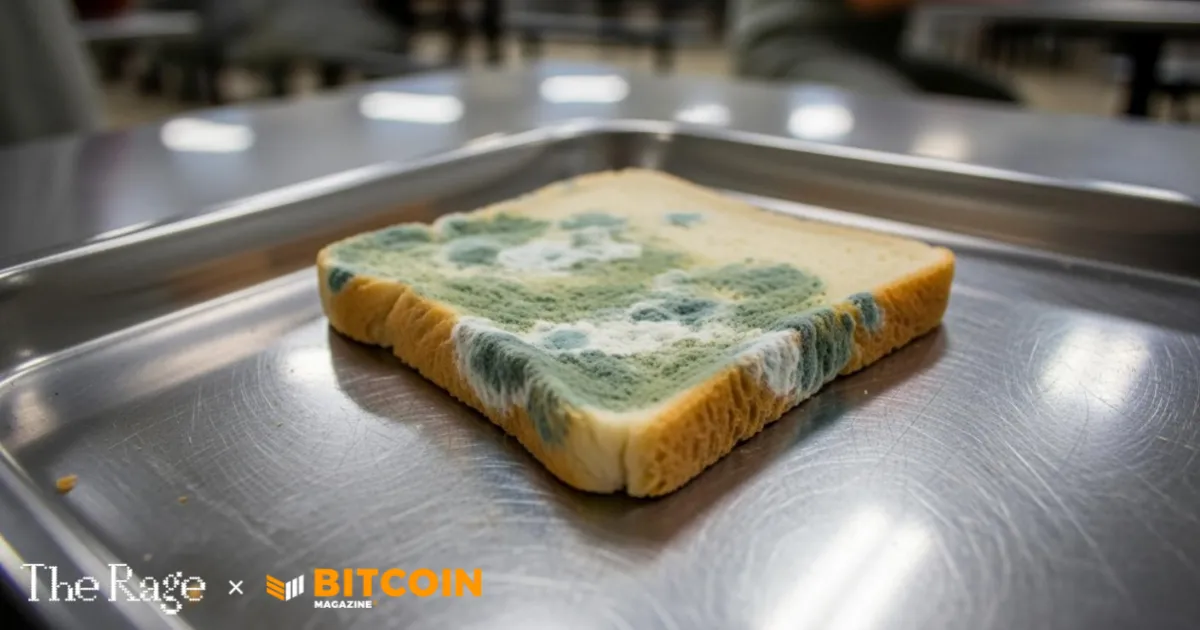
Cover image for Epoch Ventures Predicts Bitcoin Hits $150K in 2026, Declares End of 4-Year Halving Cycle

Kansas Introduce Bill to Establish Strategic Bitcoin Reserve

Bitcoin Magazine Kansas Introduce Bill to Establish Strategic Bitcoin Reserve Kansas has become the latest U.S. state to explore a formal role for Bitcoin and digital assets in public finance, with lawmakers introducing legislation that would create a state-managed Bitcoin and Digital Assets Reserve Fund. The bill, introduced by State Senator Craig Bowser, proposes amending Kansas’ unclaimed property laws to explicitly recognize digital assets, including cryptocurrencies and virtual currencies, and to establish a framework for their custody, management, and potential sale. If passed, the legislation would place oversight of the reserve with the Kansas State Treasurer. Under the proposal, unclaimed digital assets, like Bitcoin, would be transferred to the state after three years of inactivity following undeliverable written or electronic communication to the owner. There is some ambiguity around what an ‘unclaimed digital asset’ is but the bill appears to apply only to custodial digital assets held by a legally defined “holder,” such as exchanges, banks, trust companies, or other licensed custodians, not to self-custodied wallets. Per the bill, the three-year abandonment clock begins only after written or electronic communication to the owner is returned as undeliverable, and it stops immediately if the owner shows any sign of activity, including logging in or accessing another account with the same custodian. Unlike many traditional forms of unclaimed property, the bill allows these assets to be delivered and held in their native digital form, rather than being immediately liquidated. The legislation also permits the state’s designated qualified custodian to stake digital assets and receive airdrops, subject to direction from the treasurer. Any staking rewards or airdropped assets generated after three years would be transferred into the BTC and Digital Assets Reserve Fund, creating a mechanism for the state to accumulate digital assets over time. In a notable provision, the bill prohibits BTC from being deposited into the state’s general fund. Instead, Kansas would retain Bitcoin as part of its reserve, while directing 10% of deposits of non-bitcoin digital assets into the general fund, contingent on legislative appropriations. Supporters argue this structure treats BTC as a long-term reserve asset rather than a short-term revenue source. BREAKING: Kansas Senator Craig Bowser introduces bill to create a Strategic Bitcoin Reserve pic.twitter.com/WeQjtrc3Vi — Bitcoin Magazine (@BitcoinMagazine) January 22, 2026 States are actively pushing for bitcoin reserves The bill also lays out how the state would handle the sale of digital assets. Cryptocurrencies that trade on established exchanges would have to be sold at market prices, while assets without active exchange listings could be sold using other commercially reasonable methods. The goal of all this is to minimize market disruption while adding clearer guardrails around how state-held digital assets are managed. If passed, the legislation would put Kansas alongside a growing number of U.S. states exploring how Bitcoin and other digital assets might fit into long-term financial and custodial strategies. In recent years, state lawmakers across the country have debated whether Bitcoin could serve as a hedge against inflation, a diversification tool, or a way to modernize public finance infrastructure. This post Kansas Introduce Bill to Establish Strategic Bitcoin Reserve first appeared on Bitcoin Magazine and is written by Micah Zimmerman.

Cover image for Kansas Introduce Bill to Establish Strategic Bitcoin Reserve

Coinbase Forms Quantum Computing Advisory Board as Bitcoin Security Concerns Grow

Bitcoin Magazine Coinbase Forms Quantum Computing Advisory Board as Bitcoin Security Concerns Grow Earlier this week, Coinbase announced the creation of an Independent Advisory Board on Quantum Computing and Blockchain, aiming to safeguard the crypto ecosystem against emerging quantum threats. The board will bring together leading experts in quantum computing, cryptography, and blockchain to assess risks and provide guidance to the broader industry. Quantum computers, if scaled successfully, could compromise the cryptography that underpins major blockchains like Bitcoin and Ethereum. Coinbase, in their announcement, stressed that preparing for these future challenges is crucial to maintaining the security of digital assets. The advisory board includes notable figures such as quantum computing pioneer Scott Aaronson, Stanford cryptography expert Dan Boneh, Ethereum researcher Justin Drake, and Coinbase’s own Head of Cryptography, Yehuda Lindell. The group says they will publish position papers, recommend best practices for long-term security, and respond to significant advances in quantum computing. This initiative is part of Coinbase’s larger post-quantum security strategy, which also includes updating Bitcoin address handling, enhancing internal key management, and advancing research on post-quantum signature schemes. The board’s first position paper is expected early next year, laying out a roadmap for quantum resilience in blockchain systems. Coinbase said the move underscores the importance of proactive planning, ensuring the crypto industry remains prepared, not reactive, as quantum technology evolves. Is bitcoin at risk from Quantum Computing? Over the last several months, concerns over quantum computing’s potential impact on Bitcoin have begun to ripple through traditional finance, prompting some investors to radically rethink their exposure to the cryptocurrency. Jefferies strategist Christopher Wood recently removed Bitcoin from his Greed & Fear model portfolio, citing the existential risk that large-scale quantum computers could undermine the cryptographic foundations securing digital assets. While the threat is not imminent, Wood and other institutional voices — including BlackRock and UBS CEO Sergio Ermotti — warn that quantum advances could eventually allow attackers to derive private keys from public ones, putting millions of BTC at risk. As a result, Wood replaced Bitcoin with gold and gold-mining equities, emphasizing that long-term store-of-value claims for digital assets may be less reliable in the face of accelerating technological change. The debate over quantum computing in the Bitcoin ecosystem is intensifying. Coinbase research indicates that roughly 20% to 50% of Bitcoin’s supply, particularly coins in older wallet formats, could be vulnerable to so-called long-range quantum attacks. Crypto developers and researchers are divided over the urgency of implementing quantum-resistant solutions, with some advocating proactive upgrades and others arguing the risk remains distant. Strategy Chairman Michael Saylor believes that quantum computing will actually strengthen Bitcoin rather than threaten it. Network upgrades and coin migrations will boost security, while lost coins remain frozen, Saylor posted. This post Coinbase Forms Quantum Computing Advisory Board as Bitcoin Security Concerns Grow first appeared on Bitcoin Magazine and is written by Micah Zimmerman.

Cover image for Coinbase Forms Quantum Computing Advisory Board as Bitcoin Security Concerns Grow