Bitcoin Magazine (News Bot)

bitcoinmagazine@puresignal.news
Cover image for DCTRL Vancouver: Iconic Bitcoin Hackerspace Closes Downtown Location After 12 Years Due to Zoning Changes

DCTRL Vancouver: Iconic Bitcoin Hackerspace Closes Downtown Location After 12 Years Due to Zoning Changes

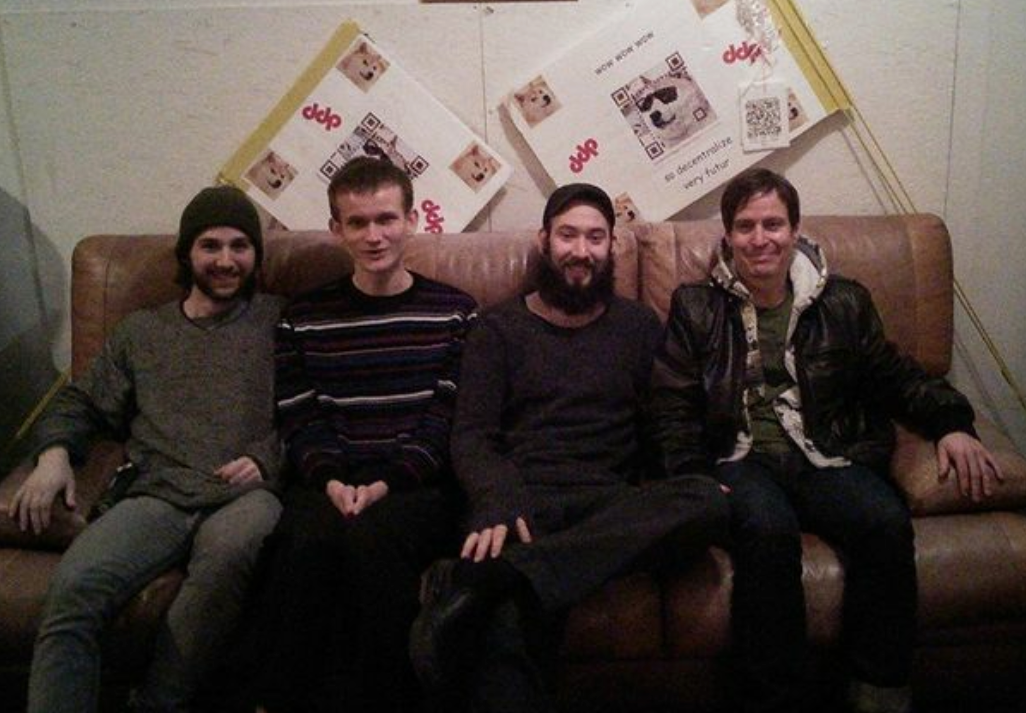
Bitcoin Magazine DCTRL Vancouver: Iconic Bitcoin Hackerspace Closes Downtown Location After 12 Years Due to Zoning Changes DCTRL, a Bitcoin hub and hacker space out of Vancouver, the fair-weather Canadian city, has announced the sunset of its downtown basement location, iconic among early adopters for its tinkerer mindset and hardware hacker culture. The community will be migrating to a new location in the coming weeks, and updates to the vision of the hub. The Vancouver Bitcoin community is renowned for having set up the first Bitcoin ATM in History, with DCTRL specifically having hosted a variety of renowned characters that, over the years, gave this industry much of its cultural and innovative flair. Visited by some of the most influential people in the Bitcoin and broader Crypto industry in its 12 year run, DCTRL is far from done being a hub of the Canadian Bitcoin and Crypto scene. Preparing to move due to a change in zoning laws, plans to relaunch in a new location are in the works, as active members consolidate the historical moments, relationships, and lessons learnt during perhaps the longest-running Bitcoin hackspace experiment in the young industry’s history. It all started at Waves cafe on Howe Street, in Vancouver. The Bitcoiniacs, a group of four OGs that operated a Bitcoin brokerage at the time — still active to this day — decided it was time to get the robots involved. So they rigged up an ATM to sell bitcoin to the public, rallied the local Vancouver tech, finance, and burgeoning crypto scene, and hosted a historical launch party. “The first Bitcoin ATM in the world was a massive event,” said Freddie Heartline, a Bitcoin enthusiast and co-founding member of the DCTRL hacker space. In an exclusive interview with Bitcoin Magazine, Heartline went on to recall the event, saying, “Oh man, the vibes were incredible. It literally felt like a really good rave. But it was smarter. Way smarter. That’s how it all came about, actually.” referring to the founding of DCTRL. The timing for the Bitcoin ATM event was perfect, it was October 2013 and bitcoin had just gone from a few dollars to almost 150, consolidated for a few weeks around 100 and was getting ready to take a shot at 1,000 a coin. The energy across the Bitcoin community as electric, this was the end of the longest bear market in Bitcoin history, in a way this rise in price was proof that Bitcoin was here to stay. The launch of the first Bitcoin ATM, as a result, made national and international news. The idea of a Bitcoin ATM being operational was considered a historical milestone in the adoption of Bitcoin as money. Tens of thousands of Canadian dollars worth of bitcoin were sold that day and over the coming weeks, likely creating a few millionaires over the years, spawning copycat ATM projects and even a handful of Bitcoin ATM manufacturing companies to boot. It also inspired the creation of the DCTRL hacker space, called “Decentral Vancouver” at the time. Cameron Gray, another Bitcoin enthusiast who was volunteering with the Bitcoiniacs event and a friend of Heartline, was the one who had the idea. “Cam was absolutely an essential part of founding Decentral.” Heartline recalled “He literally turned to me one day – as he was operating the bitcoin ATM at Waves – after I complained about the lighting at the coffee shop – and said ‘we should open a space.’ And that was it.” Soon, they had secured a basement location in downtown Vancouver, grimy, humid, but cozy. Over the years, this spot became a hub for Bitcoin engineers, founders, crypto enthusiasts, and eventually legends. The decor got better, the leaks patched, and the walls decorated with Bitcoin art. The empty spaces filled up with hardware of all kinds, modified to operate or somehow interact with the orange coin. Heartline and Gray were starting a lifestyle project of sorts, and while Bitcoin may have been doing well at over $1,000, it would soon correct back to $300, another bear market, which had important consequences for the industry. During that time, the bills for DCTRL’s rent had to be paid somehow, and so Heartline moved in. Not into the basement, but onto the rooftop. In order to keep the lights on during that bear market, he literally set up a tent. Not a bad setup either if you have a look. DCTRL started hosting meetups, the Vancouver Startup Weekend community got wind of it, and a gentleman known as Greg began to visit the hub. Soon enough, the Startup Weekend events were taking place at DCTRL as well, pulling in the local tech startup scene. Before long, even Vitalik Buterin, founder of Ethereum and former writer for Bitcoin Magazine, showed up. Greg had another important contribution to DCTRL; he made a donation that created a symbol for the local community. He donated $500 to the space with one condition: “It has to be used for something creative …” Heartline recalled, “so I found a Pepsi machine on Craigslist. Greg even helped us move the thing in a pickup. Him, me, Cam, and Mike Olaff moved that fucking insanely heavy and awkward thing down the stairs – lol almost killing Cam.” The Pepsi machine would soon get backwards engineered, hacked, and rebranded to the Bepsi, for obvious Bitcoin reasons. In the above video, you can see Greg making an on-chain transaction to the pop machine, milliseconds later dropping a soda for him on Q. The satisfying sound of Bitcoin being used as money for the small pleasures of life became a staple of DCTRL. A digital version of the Bepsi was eventually made, which fans from all over the world used to make donations. Many iterations of the underlying software took place over time, rig-wired into the Cold War era pop machine with a Raspberry Pi and some hacker ingenuity. A decade later, even the Mayor of Vancouver Ken Sim, dropped by to pay homage to this staple of Vancouver hacker culture, this time buying a soda from Bepsi with a lightning payment. Vancouver Mayor @KenSimCity using the Bepsi machine with @lightning at DCTRL pic.twitter.com/bTE2VNiiFK — DCTRL (@dctrlvan) November 7, 2025 Today, the Bepsi supports practically every Bitcoin protocol, a testing ground for the cutting edge of Bitcoin technology, including protocols like Taproot Assets, Spark, and Arcade OS. “We even issued our own Bepsi token. One Bepsi equals one soda from the Bepsi machine… it’s like a stable coin… pegged to the price of the pop can.” said Heartline. The Bepsi, which in a way was inspired by the Bitcoin ATM, also inspired copycats, such as the 21up vending machine hosted in a nearby Blockchain lab known as MintGreen. To this day, funds collected by the Bepsi machine have gone to support the operation of the hacker space and cover costs, serving as a cornerstone of the community. Control over the Bepsi’s underlying wallets and tech stack in a way setting rank among the most active members and hosts. Visited by Legends Throughout the years, big names within the industry visited or engaged with DCTRL in one way or another. Vitalik Buterin personally visited the space and hung out there in the very early days of Ethereum, as demonstrated by this photograph hung on their wall, featuring Gray, Heartline, Vitalik, and another active member referred to as Kyle. The founders of CaVirtex, the first Canadian Bitcoin exchange, were also photographed there. This brand is little known now as they were bought out by Kraken years later, but they had a deep influence on the Canadian Bitcoin scene, selling the coin to Canadians since before the first bull run, which peaked at $30 per coin. Without this exchange, many of the big Canadian Bitcoiners may not have gotten in. Virtually, Bitcoin celebrities also attended DCTRL events throughout the years, answering questions from the local crowd, such as Roger Ver, before the fork wars, Andreas Antonopoulos, and Willy Woo. Erik Vorhees, who came to fame in Bitcoin for creating the first major instant swap, crypto-to-crypto exchange called ShapeShift, is seen in this video doing a fireside chat at DCTRL during a local meetup. Even one famous scammer attended the hub, a man who was a regular in the Canadian Bitcoin scene in the 2014 era, and who to this day remains one of the unsolved mysteries of crypto-related crime, Gerald Cotten of QuadrigaCX. Cotten, whom I personally met multiple times in Toronto at the time, was a charming and smooth-talking entrepreneur in the scene at the time, before his turbulent professional history was revealed and the exchange went down in bankruptcy, leaving millions of dollars of user funds unpaid. Cotten allegedly died suddenly and mysteriously in India just before the exchange went bankrupt, taking the crypto keys with him, but many who were personally affected by this centralized exchange collapse are skeptical of that story. Further evidence of DCTRL as a microcosm of the industry as a whole was seen years later during the fork wars, as Gray, the other primary co-founder of the hub, took the ‘big block’ side of the debate, resulting in intense debates and ultimately a falling out with the local community and broader Bitcoin scene. Gray, nevertheless, is highly respected and appreciated by the active members of DCTRL for his contributions to the DCTRL social scene, which would inevitably suffer from the same forks and tensions that the Bitcoin protocol went through at the time. During those difficult times, DCTRL served as a forum and debate space for these topics, even hosting Peter Rizun of the alternative implementation Bitcoin Unlimited — a big blocker — who debated Taylor, seen on the right in the photo below. Overall, DCTRL enjoyed more than 12 years of continuous operation, boasts hundreds of events hosted, over 1500 registered community members, and 69 recorded talks published on YouTube, which touched many elements of the Bitcoin and crypto industry. Throughout this whole time, the hub was operated entirely by volunteers and sustained through public donations and, of course, the Bepsi. As the location of DCTRL gets rezoned by the city government, and a new building will be going up in its place, the active members and hosts of DCTRL, have begun organizing a transition to a new location, alongside an update to the brand and According to DJ, one of the active members who prefers to stay pseudonymous, the hub has had record attendance in recent months. And while the location will change, its future is brighter than ever. Those who would like to be a part of the future of DCTRL can learn more at www.DCTRL.wtf. This post DCTRL Vancouver: Iconic Bitcoin Hackerspace Closes Downtown Location After 12 Years Due to Zoning Changes first appeared on Bitcoin Magazine and is written by Juan Galt.

Cover image for Sora Ventures-Backed Bitplanet Reaches 300 Bitcoin, Ranks Among Asia’s Top 20 Corporate Holders

Sora Ventures-Backed Bitplanet Reaches 300 Bitcoin, Ranks Among Asia’s Top 20 Corporate Holders

Bitcoin Magazine Sora Ventures-Backed Bitplanet Reaches 300 Bitcoin, Ranks Among Asia’s Top 20 Corporate Holders Bitplanet Inc. has accumulated 300 BTC through a structured purchase program, positioning the South Korea-listed company among the top 20 corporate Bitcoin holders in Asia. The company, backed by Sora Ventures, began building its BTC treasury in the fourth quarter of 2025. Its most recent purchases were carried out in phases between Feb. 23 and Feb. 26 via Upbit, one of South Korea’s largest cryptocurrency exchanges. The BTC will be held with a professional custody provider, the company told Bitcoin Magazine. Chief Executive Paul Lee said Bitplanet is focused on more than balance sheet exposure. “We are not simply accumulating Bitcoin,” Lee said in a statement. He added that the company plans to explore operational strategies that could contribute to revenue generation and cash flow over time, linking BTC treasury management with artificial intelligence computing initiatives. Bitplanet said it views Asia as a key driver of the next phase of digital asset treasury adoption and aims to position itself as a transparent, institutional-grade corporate holder of Bitcoin. The company said it may expand its holdings further, subject to market conditions, regulatory developments, and financing availability. Corporate bitcoin strain The firm counts several digital asset treasury investors among its backers, including Simon Gerovich of Metaplanet, as well as AsiaStrategy, UTXO Management, KCGI, Kingsway Capital, and ParaFi Capital. Metaplanet did post a net loss of 95 billion yen ($619 million) for fiscal 2025, driven by a 102.2 billion yen ($665.8 million) valuation decline on its bitcoin holdings. The disclosure marks the latest example of a corporate bitcoin buyer facing pressure as the cryptocurrency’s price slid from record highs in October. The company closed the year with 35,102 BTC, valued at approximately $2.4 billion, making Metaplanet the fourth-largest public corporate BTC holder globally, behind Strategy. Since it began accumulating BTC 21 months ago, Metaplanet has spent nearly $3.8 billion, averaging $107,000 per coin, according to data from two weeks ago. Last quarter, when Sora Ventures unveiled its plans at Taipei Blockchain Week, the firm said it plans to purchase $1 billion in BTC within six months, backed by a $200 million initial commitment from regional partners. Today, Bitcoin (BTC) is trading near $65,000, drifting lower from mid‑week highs near $70,000 amid persistent selling pressure across crypto markets. This post Sora Ventures-Backed Bitplanet Reaches 300 Bitcoin, Ranks Among Asia’s Top 20 Corporate Holders first appeared on Bitcoin Magazine and is written by Micah Zimmerman.

Cover image for U.S. Government Seizes Over $580 Million in Crypto Linked to Southeast Asian Scams

U.S. Government Seizes Over $580 Million in Crypto Linked to Southeast Asian Scams

Bitcoin Magazine U.S. Government Seizes Over $580 Million in Crypto Linked to Southeast Asian Scams U.S. Attorney Jeanine Ferris Pirro said federal authorities have frozen and seized more than $580 million in cryptocurrency tied to Southeast Asian scam networks, marking a major escalation in the government’s campaign against cross-border crypto fraud. The funds were restrained through the Justice Department’s Scam Center Strike Force, a task force formed in November to target cryptocurrency investment and confidence schemes linked to Chinese transnational criminal organizations. Officials said the groups use social media platforms and text messaging to target U.S. victims and siphon billions of dollars each year. Recent estimates place annual losses to Americans near $10 billion. “In only three months, we have made significant progress, freezing, seizing, and forfeiting cryptocurrency worth more than $578 million from these criminals,” Pirro said in a statement. She said her office will seek forfeiture through the courts and aims to return funds to victims. Authorities describe the schemes as “pig butchering” operations, in which fraudsters build relationships with victims before steering them into fraudulent crypto investments. Victims are persuaded to purchase legitimate digital assets and then transfer them to counterfeit trading platforms controlled by the scam networks. The operations often run out of secured compounds in parts of Southeast Asia, including Burma, Cambodia, and Laos. U.S. officials said some workers inside the compounds are trafficking victims who are forced to carry out scams under threat of violence. In certain areas, revenue generated from scam activity accounts for a large share of local economic output. The Strike Force is focused on identifying senior figures within the criminal networks, including organizers and money launderers who move proceeds through blockchain transactions and shell accounts. Investigators are tracing funds across exchanges and wallets to disrupt cash-out points and freeze assets before they are dispersed. The initiative brings together the U.S. Attorney’s Office for the District of Columbia and several Justice Department divisions, along with the Federal Bureau of Investigation, the U.S. Secret Service, and the Internal Revenue Service’s Criminal Investigation unit. U.S. Attorney’s Offices in Rhode Island and the Western District of Washington are also participating. The Justice Department said the Strike Force will continue targeting infrastructure, financial channels, and leadership structures tied to the fraud networks. Crypto crime hit $154 Billion last year Data from Chainalysis shows illicit crypto addresses received at least $154 billion in 2025, a 162% year-over-year increase, with sanctioned entities driving much of the surge. Nation-states including Russia, Iran, and North Korea played an outsized role, leveraging blockchain infrastructure for sanctions evasion, money laundering, and large-scale thefts. Stablecoins accounted for 84% of illicit transaction volume, the report said. The report also highlights the expansion of Chinese money laundering networks offering “laundering-as-a-service” and other full-stack illicit infrastructure. Although illicit activity still represents less than 1% of total crypto volume, the scale and geopolitical dimension of the activity pose rising risks for regulators, law enforcement, and national security. This post U.S. Government Seizes Over $580 Million in Crypto Linked to Southeast Asian Scams first appeared on Bitcoin Magazine and is written by Micah Zimmerman.

Cover image for MARA Holdings (MARA) Stock Jumps After $1.71B Loss as Firm Pivots to AI Data Centers

MARA Holdings (MARA) Stock Jumps After $1.71B Loss as Firm Pivots to AI Data Centers

Bitcoin Magazine MARA Holdings (MARA) Stock Jumps After $1.71B Loss as Firm Pivots to AI Data Centers Shares of MARA Holdings climbed 13% in premarket trading Friday, even after the Bitcoin miner reported a $1.71 billion net loss for the fourth quarter, as investors focused on the company’s shift toward artificial intelligence and high-performance computing. The company posted a net loss of $1.71 billion for Q4 2025, compared with net income of $528.3 million during the same period a year earlier. Revenue for the quarter fell 6% to $202.3 million, according to a filing with the Securities and Exchange Commission, as lower Bitcoin prices offset gains from higher network hash rate. The largest driver of the quarterly loss was a $1.5 billion negative revaluation of digital assets following a decline in the price of Bitcoin. Under fair-value accounting rules, companies must adjust the carrying value of their digital asset holdings each quarter to reflect market prices, creating swings in reported earnings. For the full year 2025, MARA reported a net loss of $1.31 billion, compared with net income of $541 million in 2024. Annual revenue rose to $907.1 million from $656.4 million the prior year, reflecting expanded operations and increased Bitcoin production earlier in the cycle. During the fourth quarter, MARA mined 2,011 BTC, down 6% from the third quarter and below the 2,492 BTC mined in the year-ago period. Total production for 2025 reached 8,799 BTC, compared with 9,430 BTC in 2024. As of Dec. 31, the company held 53,822 BTC, including 15,315 BTC pledged as collateral. Based on a quarterly price of $87,498 per coin, the value of its Bitcoin reserves stood near $4.7 billion at quarter’s end. Over the past six months, MARA shares have fallen roughly 45%, reflecting pressure across the mining sector tied to Bitcoin price volatility and post-halving economics. MARA is moving to AI Alongside its earnings report, MARA outlined a strategic pivot aimed at transforming the firm from a pure-play Bitcoin miner into an energy and digital infrastructure company. The company announced a joint venture with Starwood Digital Ventures to develop AI-focused and high-performance computing data centers at select sites with access to low-cost power and grid capacity. The first phase of the initiative targets more than one gigawatt of IT infrastructure, with potential expansion to 2.5 gigawatts. Projects will be structured on a site-by-site basis, with MARA retaining stakes of up to 50% while continuing Bitcoin mining operations where economics support it. Earlier this month, MARA acquired a 64% stake in Exaion, a firm that provides AI and high-performance computing solutions for corporate and government clients, signaling its intent to diversify beyond mining. The strategy mirrors a broader industry shift as miners seek ways to make money due to tighter margins and fluctuating Bitcoin prices. Over the last couple of months, major Bitcoin mining firms like Cipher and Bitfarms have been aggressively repurposing their energy-heavy infrastructure into AI and high-performance computing data centers to diversify revenue as traditional mining margins shrink. This post MARA Holdings (MARA) Stock Jumps After $1.71B Loss as Firm Pivots to AI Data Centers first appeared on Bitcoin Magazine and is written by Micah Zimmerman.

Cover image for Paul Atkins Confirmed As A Bitcoin 2026 Speaker

Paul Atkins Confirmed As A Bitcoin 2026 Speaker

Bitcoin Magazine Paul Atkins Confirmed As A Bitcoin 2026 Speaker Paul Atkins, the sitting Chairman of the U.S. Securities and Exchange Commission and one of the most consequential figures in American financial regulation, has been officially confirmed as a speaker at Bitcoin 2026 — marking the first time in history that a sitting SEC Chair has been invited to the world’s largest Bitcoin conference. Appointed by President Trump in 2025, Atkins has wasted no time in reshaping the SEC’s relationship with digital assets. Under his leadership, the SEC launched “Project Crypto,” a sweeping initiative to build a clear, innovation-friendly regulatory framework for the industry — ending what many described as a decade of enforcement-driven ambiguity that stifled American innovation in the space. A longtime market-friendly policymaker with roots as a transactional lawyer and former SEC Commissioner under the Bush administration, Atkins has made his position on Bitcoin clear. At the launch of Project Crypto, he declared: “We are at the threshold of a new era in the history of our markets” — announcing a Commission-wide initiative to move America’s financial markets on-chain, create clear guidelines for how Bitcoin can be stored, traded, and used, and replace outdated one-size-fits-all rules with frameworks built for the digital age. His presence at Bitcoin 2026 signals something far bigger than a speaking slot — it represents a fundamental shift in how Washington views Bitcoin, and a rare opportunity for tens of thousands of attendees to hear directly from the man rewriting the rules of digital asset regulation in America. Just two years ago, the relationship between the SEC and the digital asset industry was defined by tension, with then Chair Gary Gensler overseeing a wave of enforcement actions against the Bitcoin and broader crypto industry, all while having little to no regulation for industry participants to build from, thus creating more uncertainty than clarity. It was on the stage at Bitcoin 2024 in Nashville that U.S. presidential candidate Donald Trump announced to a crowd of thousands that he would fire Gensler and replace him with pro-Bitcoin leadership — a moment that captured just how central digital asset policy had become to the political conversation. When Trump won the election, Gensler stepped down the day he took office, and Paul Atkins was appointed to lead the SEC in his place. Whether one views the previous era as necessary consumer protection or regulatory overreach, the contrast is stark — and the fact that a sitting SEC Chair is now taking the stage at the world’s largest Bitcoin conference reflects just how much has changed. WE'RE EXCITED TO ANNOUNCE SEC CHAIRMAN PAUL ATKINS AS A BITCOIN 2026 SPEAKER ”[We’re] working together to deliver on President Trump's promise to make America the crypto capital of the world.” pic.twitter.com/M4FAkvNAXg — The Bitcoin Conference (@TheBitcoinConf) January 29, 2026 Bitcoin 2026 Returns to Las Vegas Bigger Than Ever Bitcoin 2026 will take place April 27–29 at The Venetian, Las Vegas, and is expected to be the largest Bitcoin conference in history. Focused on the future of money, Bitcoin 2026 will bring together Bitcoin builders, investors, miners, policymakers, technologists, and newcomers from around the world. The event will feature a wide range of pass types, including general admission passes designed specifically for those new to Bitcoin, alongside premium passes for professionals, enterprises, and institutions. With multiple stages, immersive experiences, technical workshops, and headline keynotes, Bitcoin 2026 is designed to serve both first-time attendees and long-time Bitcoiners shaping the next era of global adoption. Past Bitcoin Conferences in the U.S. Bitcoin’s flagship conference has scaled dramatically over the past five years: 2021 – Miami: 11,000 attendees 2022 – Miami: 26,000 attendees 2023 – Miami: 15,000 attendees 2024 – Nashville: 22,000 attendees 2025 – Las Vegas: 35,000 attendees Get Your Bitcoin 2026 Pass Bitcoin Magazine readers can save 10% on Bitcoin 2026 tickets for a limited time. Stay at The official hotel of Bitcoin 2026, The Venetian, and get a guaranteed low rate plus 15% off your pass. Be in the middle of where the fun is all happening, and where the networking never ends. Bring your whole team to Bitcoin 2026 and get 20% off your entire order for a limited time. Location: The Venetian, Las Vegas Dates: April 27–29, 2026 With tens of thousands of attendees expected and major speakers like Paul Atkins already confirmed, now is the time to lock in your ticket. Buy Bitcoin 2026 Tickets — Save 10% Why Attend Bitcoin 2026? Bitcoin 2026 is the definitive gathering for anyone serious about the future of money. With 500+ speakers, multiple world-class stages, and programming spanning Bitcoin fundamentals, open-source development, enterprise adoption, mining, energy, AI, policy, and culture, the conference brings every corner of the Bitcoin ecosystem together under one roof. From headline keynotes on the Nakamoto Stage to deep technical sessions for builders, institutional strategy discussions for enterprises, and beginner-friendly Bitcoin 101 education, Bitcoin 2026 is designed for everyone—from first-time attendees to the leaders shaping Bitcoin’s global adoption. Whether you’re looking to learn, build, invest, network, or influence, Bitcoin 2026 is where Bitcoin’s next chapter is written. Bitcoin 2026 Pass Types: Something for Everyone Bitcoin 2026 offers a range of pass options designed to meet the needs of newcomers, professionals, enterprises, and high-net-worth Bitcoiners alike. Bitcoin 2026 General Admission Pass Ideal for newcomers and those looking to experience the heart of the conference. Limited access on Days 2 & 3 Entry to Main Stage Access to Genesis Stage Full access to the Expo Hall Bitcoin 2026 Pro Pass Designed for professionals, operators, and serious Bitcoin participants. Includes all General Admission features, plus: Full 3-day access, including Pro Day Entry to the Pro Pass Reception Access to Enterprise Hall, Enterprise Stage, and Networking Lounge Conference App networking features Access to the Bitcoin For Corporations Symposium Entry to Compute Village and Energy Stage Complimentary lunch, coffee, tea, and snacks Dedicated registration and check-in Reserved seating at Main Stage Huge savings when you bundle your hotel and Pro Pass Bitcoin 2026 Whale Pass The all-inclusive, premium Bitcoin 2026 experience. Includes all Pro Pass features, plus: Reserved seating at Main Stage All-inclusive gourmet food and beverages Entry to Whale Night and Whale Reception Access to all official after-parties Networking app access to connect with other Whales Premium access to The Deep — an exclusive networking lounge with intimate speaker sessions Complimentary stay at The Venetian when you bundle your whale pass and hotel (use promo code ‘WHALEHOTEL’ here) This is the most immersive way to experience Bitcoin 2026. Bitcoin 2026 After Hours Pass Your ticket to the night. Most deals are done with a drink in your hand. Get exclusive access to 3 official Bitcoin 2026 after-parties across Las Vegas — each with a 2-hour open bar — where the real conversations happen and the best connections are made. Access to 3 official Bitcoin 2026 after-parties 2-hour open bar at each event Evening events across Las Vegas, April 27–29 Network with Bitcoiners, builders, and industry leaders after hours More headline speaker announcements are coming soon. Don’t miss Bitcoin 2026. This post Paul Atkins Confirmed As A Bitcoin 2026 Speaker first appeared on Bitcoin Magazine and is written by Jenna Montgomery.

Cover image for Block (XYZ) Surges 25% After Slashing Workforce by Over 40% and Raising Profit Outlook

Block (XYZ) Surges 25% After Slashing Workforce by Over 40% and Raising Profit Outlook

Bitcoin Magazine Block (XYZ) Surges 25% After Slashing Workforce by Over 40% and Raising Profit Outlook Block, Inc. will cut more than 4,000 employees, reducing its workforce by nearly half as the company restructures around artificial intelligence and a leaner operating model. The layoffs, announced Thursday in a shareholder letter, will shrink headcount from more than 10,000 to just under 6,000. Co-founder and CEO Jack Dorsey said the move reflects a shift in how the company builds products and runs teams as it integrates internal AI tools across the business. “Today we’re making one of the hardest decisions in the history of our company,” Dorsey wrote in a note to employees. “We’re reducing our organization by nearly half.” He said the company considered making gradual cuts but opted for a single reduction to avoid prolonged uncertainty. Block said affected employees will receive 20 weeks of salary plus one week per year of tenure, equity vested through the end of May, six months of health coverage, their corporate devices and $5,000 in transition support. International employees will receive similar packages based on local requirements. Chief Financial Officer Amrita Ahuja said the company is acting from a position of strength and aims to move faster for customers. In its shareholder letter, Block pointed to gross profit growth that more than doubled from the first quarter to the fourth quarter of 2025. Block’s shares are surging Shares of Block trade under the ticker XYZ are up 25% aftermarket on the news. For the full year, Block reported gross profit of $10.36 billion, up 17% year over year. The company said it expects first-quarter operating income of $600 million, above a $574 million consensus estimate, and gross profit of $2.8 billion versus $2.72 billion expected. It also raised its full-year gross profit outlook and reported a beat on Cash App monthly active users. Dorsey said internal “intelligence tools” are reshaping the company’s structure. Block has invested in AI systems, including a proprietary tool known as Goose, to automate workflows and increase productivity across engineering, customer service and operations. “Intelligence tools have changed what it means to build and run a company,” Dorsey wrote in the shareholder letter. “A significantly smaller team, using the tools we’re building, can do more and do it better.” Block, which operates Square, Cash App and lending products for consumers and merchants, has restructured since 2024 as its stock lagged peers in the financial technology sector. The company has conducted rolling job cuts tied to performance reviews over the past two years. Dorsey said the new structure will center on smaller, flatter teams built around AI-driven product development. He acknowledged the scale of the reduction carries risk but said standing still would pose greater challenges as automation reshapes labor productivity across the technology industry. This post Block (XYZ) Surges 25% After Slashing Workforce by Over 40% and Raising Profit Outlook first appeared on Bitcoin Magazine and is written by Micah Zimmerman.

Cover image for The Core Issue: libsecp256k1, Bitcoin’s Cryptographic Heart

The Core Issue: libsecp256k1, Bitcoin’s Cryptographic Heart

Bitcoin Magazine The Core Issue: libsecp256k1, Bitcoin’s Cryptographic Heart Common phrases heard among Bitcoiners include “don’t trust, verify” or “not your keys, not your coins”, sometimes even claiming that it’s “backed by math”. But what do these proverbs ultimately boil down to, and how exactly is this involved math put into practice? Most readers are surely aware that a fundamental ingredient in the design of Bitcoin is public-key cryptography and more specifically digital signatures, which are essential to prove ownership without needing a central entity. Probably less well-known is what piece of software is under the hood to make that elliptic curve math work and what efforts are involved to ensure that this happens in the most secure and performant way, with continuous improvements. Let’s dive into the exciting history and evolution of “libsecp256k1”, a library that started out as a small hobby project and over the years evolved into an essential part of consensus rules protecting a multi-trillion dollar asset. The Genesis For reasons we don’t know for sure, Satoshi picked an elliptic curve named “secp256k1” for creating and verifying digital signatures in Bitcoin. The initial version of the Bitcoin client was shipped using the widespread OpenSSL library for signing and verifying transactions. Relying on a third-party library sounds like a reasonable approach from a software engineering perspective (even more so if it is something as domain-specific and complex as elliptic-curve cryptography), but this choice turned out to be problematic later due to inconsistencies in the signature parsing code. In the worst case, this could even lead to unintended chain splits. One lesson from that time period was that OpenSSL is not a suitable library for a consensus-critical system like Bitcoin. The issue was later fixed by BIP66, which ensured a strict encoding of ECDSA signatures. After that, the OpenSSL dependency was replaced with libsecp256k1 in Bitcoin Core v0.12, released in early 2016.1 But taking a step back, the initial motivation behind starting the libsecp256k1 project was mostly curiosity about a potential speed-up. Sometime in the year 2012, Bitcoin Core developer Pieter Wuille a.k.a. “sipa” stumbled upon a bitcointalk thread by Hal Finney (known for being the recipient of the very first Bitcoin transaction in 2009 from Satoshi). Under the subject “Speeding up signature verification”, the post discussed an optimization that would make use of a so-called “endomorphism” (more specifically using the so-called GLV-method, Gallant-Lambert-Vanstone), something that only certain elliptic curves allow, secp256k1 conveniently being one of them. Hal Finney himself implemented it using OpenSSL primitives, it was later even submitted as a PR to Bitcoin Core.2 Even though it showed a solid ~20% speedup, it was never merged in the end due to concerns about increasing code complexity and missing assurance that the involved cryptography is sound. Pieter Wuille went ahead and decided to start a new library from scratch, with the initial commit of the “secp256k1” repository dating back to March 5th 2013. After only one week the library was able to verify the full blockchain (block height ~225000 at that time), within another week the signing functionality was implemented. It took some more time and testing until the library was ready to be used in Bitcoin Core as a replacement for OpenSSL, first for signing in the wallet (release v0.10, 2015), and finally for ECDSA signature verification in consensus (release v0.12, 2016). The efforts were absolutely worth it: according to the PR description in Core, using libsecp256k1 for signature verification was “anywhere between 2.5 and 5.5 times faster”. Ironically, this didn’t yet include the earlier mentioned endomorphism optimization, since it wasn’t turned on by default due to worries about patent violation. It was only activated in the year 2020, after the patent expired (enabled in release v0.20), leading to another solid speed-up of around 16%. Over time, the project attracted several other contributors. This naturally involved people that were closely working with Pieter from the start at Blockstream, namely then-CTO Gregory Maxwell and researcher Andrew Poelstra. In 2015, Jonas Nick and a few years later Tim Ruffing joined, both employed by Blockstream as researchers and now holding the role of maintainers of libsecp256k1 for several years. As they are responsible for both specifying new cryptographic protocols (including detailed security proofs) and putting them into practice by implementing and reviewing them, it is very appropriate to call them “full-stack cryptographers”, as Tim Ruffing likes to describe himself. Occasionally even cryptographers from outside the Bitcoin space have contributed to libsecp256k1. One notable example of that is Peter Dettman, known for being one of the maintainers of the C#/Java cryptography library BouncyCastle, who up to this day shows up every now and then with various performance improvement suggestions. One of his major contributions was implementing modular inversion using the “safegcd” algorithm in 2021 to safely improve , following a paper by Daniel J. Bernstein and Bo-Yin Yang. Why Reinvent The Wheel? The goal of libsecp256k1 is to provide the highest quality library for cryptographic operations on the secp256k1 curve, with the primary intent of being useful in the broader Bitcoin ecosystem–Bitcoin Core is simply the main client using it. The API of libsecp256k1 is designed to be robust and hard to misuse, in order to prevent users from performing insecure operations (e.g. by rolling their own cryptographic schemes) that could lead to a loss of funds in the worst case. By focussing only on one elliptic curve and by limiting its functionality to operations relevant to Bitcoin (that is, primarily signing and verifying transactions), the code can be both faster and simpler to review, leading to a lower maintenance burden and higher overall quality in comparison to other implementations. libsecp256k1 is written in C and doesn’t have any dependency on other libraries, so it only uses internal code written specifically for the project. As such it is designed to also run on constrained devices like micro-controllers, which are commonly used in hardware wallets. Measure Twice, Cut Once From very early on, libsecp256k1 had a strong focus on quality assurance that was continuously improved and honed over the years. Now it has a testing code coverage of close to 100%, and new modules only have a chance of getting merged if that bar is still met. In addition to that, there is also a special form of assurance called “exhaustive testing”. The basic idea is to exercise the functionality of the library for the whole space of possible values on the curve. As this would be infeasible on the actual secp256k1 curve, consisting of ~2^256 points, a special, much smaller but very similar curve is used which has an order that is merely in the double or triple digit range, so it can easily be executed within a reasonable amount of time. Another important part of testing is assurance of constant-time behaviour, which is particularly relevant for signing, as we will see below. Schnorr: A Whole New World Shifting our focus from QA to new features, one of the major milestones within the last decade in libsecp256k1, and in the Bitcoin protocol in general, was the introduction of Schnorr signatures. Being an essential part of the Schnorr/Taproot soft-fork activated in late 2021, they offer many advantages over ECDSA signatures, including being provably secure under standard assumptions, more compact, and enabling a whole lot of other constructions on top like key and signature aggregation for more efficient multisignature schemes. Both the specification in BIP340 and implementation was created by the current three maintainers of libsecp256k1, Pieter Wuille, Jonas Nick and Tim Ruffing. libsecp256k1 Is Good For Your Node And The Network It goes without saying that verifying digital signatures is one of the (if not the) most important and security-critical code paths of the Bitcoin consensus engine. No matter what complex script-paths and extra spending conditions might be included in some locking script, at the end there is likely at least one signature check involved in the transaction to ensure that it was actually created by the owner of the coins being spent. For such an essential operation, we want the code to be as robust, well-tested and performant as possible. Fast signature verification is also critical for both fast transaction and block propagation, and also to speed-up the Initial Block Download (IBD) for new participants in the network. We have already mentioned earlier the ~5x speedup when libsecp256k1 replaced OpenSSL for the first time about ten years ago. Over time, further performance improvements were implemented, and a recent investigation shows that libsecp256k1 is now about ~8x faster than OpenSSL for ECDSA signature verification using the most current version of each.3 Signing Can Be Dangerous, So Do It Right So far we have focused on the verification functionality of libsecp256k1, being the most crucial for performance of node runners and miners. The other side of the coin (no pun intended!) is signing, i.e. the process of creating a digital signature for a transaction in order to spend funds. What makes this process delicate is the fact that secret key material is involved. If this material is in any way leaked, it could in the worst case lead to a catastrophic loss of funds, so special care has to be taken at the implementation level. libsecp256k1 tries to combat against so-called “side-channel attacks” by avoiding data-dependent branches, i.e. instances where different pieces of code are executed depending on what data is fed into it. This is a non-trivial task and takes some extra effort with regards to modern compilers, which are sometimes “too smart” in the sense that they try to optimize code while compiling it to software with resource saving branches where we explicitly don’t want that to happen. This is not just a theoretical concern, but has happened more than once, requiring patches to be shipped (e.g. releases 0.3.1 and 0.3.2). The important constant-time property is also tested using a tool called “valgrind” that was originally built for debugging memory issues. By using it to find any branching in code operating on secret data, we can detect if a potential side-channel risk exists. Another way secret material could be leaked is by leaving it in memory unintentionally. Overwriting a memory region to make sure it is erased sounds trivial, but this has to be done in a way that prevents the compiler from getting in our way due to code optimization during compiling. Great care is taken to ensure that doesn’t occur. Some Happy Accidents More than once during the development of the library interesting things came up by surprise. In 2014, Pieter Wuille and Gregory Maxwell were already working on an extensive test suite for the library. One of the strategies to achieve a higher degree of assurance was verifying the behaviour of internal functions in the library against other implementations with special random inputs. This revealed a case where OpenSSL gave a wrong result when squaring a number, a serious security relevant bug filed as CVE-2014-3570 (“Bignum squaring may produce incorrect results.”). In another instance a few years later, Pieter Wuille proposed a new method for computing a bound (or limit) on the number of iterations needed for the previously mentioned “safegcd” algorithm for computing modular inverses. This allowed shrinking that bound, leading to a faster computation. But it didn’t stop there. Mostly by accident, Gregory Maxwell discovered a different variant of Bernstein and Yang’s algorithm with even lower bounds, leading to another significant speedup both for signing and verification. It’s noteworthy to mention that correctness (so, safety) of the “safegcd” implementation has been formally verified using a special theorem proving software called “Rocq” (formerly named “Coq”) and the “Verifiable C” program logic.4 This impressive work was done by Russell O’Connor and Andrew Poelstra, who state that the entirety of libsecp256k1 could be verified in the same way. Cryptography Is Still Evolving We have now shown that libsecp256k1 is primarily used for creating and verifying digital signatures in Bitcoin transactions, taking great care to do so in the safest and most efficient way possible, but it doesn’t stop there. Whenever other proposals are put forward that involve cryptographic operations on the secp256k1 curve (ideally formalized in a BIP) and are seen as overall beneficial for the Bitcoin ecosystem, the chances are good that the necessary code is considered in-scope for the library. In such a case, given enough developer time for implementation and review, it has good odds at winding up in a release of libsecp256k1. This has notably happened before with the ElligatorSwift module, a piece that was essential for enabling encryption for nodes’ P2P communication [see BIP324; discussed in-depth on here], and most recently for MuSig2, a key aggregation scheme based on Schnorr signatures that allows creating n-on-n multi-signatures in a space-efficient and privacy-preserving way. There is also an ongoing effort to add a new module for Silent Payments, a proposal for a privacy-preserving static reusable address that doesn’t need interaction before payment between sender and receiver. And there is yet so much more to come: Batch Validation for Schnorr Signatures, DLEQ proofs, FROST, etc. Let’s see what the next 10 years of development in libsecp256k1 will bring! Readers interested in libsecp256k1 are encouraged to take a look at and play around with secp256k1lab, a Python implementation of the secp256k1 curve that is intended for prototyping and experimentation.5 Get your copy of The Core Issue today! Don’t miss your chance to own The Core Issue — featuring articles written by many Core Developers explaining the projects they work on themselves! This piece is the Letter from the Editor featured in the latest Print edition of Bitcoin Magazine, The Core Issue. We’re sharing it here as an early look at the ideas explored throughout the full issue. [1] https://gnusha.org/pi/bitcoindev/55B79146.70309@gmail.com/ [2] (#2061, https://github.com/bitcoin/bitcoin/pull/2061) [3] https://delvingbitcoin.org/t/comparing-the-performance-of-ecdsa-signature-validation-in-openssl-vs-libsecp256k1-over-the-last-decade/2087?u=thestack [4] [https://www.arxiv.org/abs/2507.17956] [5] https://github.com/secp256k1lab/secp256k1lab/ This post The Core Issue: libsecp256k1, Bitcoin’s Cryptographic Heart first appeared on Bitcoin Magazine and is written by Sebastian Falbesoner.

Cover image for Citi to Integrate Bitcoin with Traditional Finance, Launch Custody Services

Citi to Integrate Bitcoin with Traditional Finance, Launch Custody Services

Bitcoin Magazine Citi to Integrate Bitcoin with Traditional Finance, Launch Custody Services Citi is preparing to introduce infrastructure that integrates Bitcoin into traditional financial systems, a bank executive said Thursday. The initiative, introduced by Nisha Surendran, head of digital asset custody development at Citi, aims to provide institutional-grade custody, key management, and wallet services for clients holding the cryptocurrency. Speaking at Strategy World, an industry event hosted by Bitcoin treasury firm Strategy, Surendran said the effort is part of Citi’s broader plan to “make Bitcoin bankable.” She outlined a three-pronged approach focused on custody, integration with existing reporting and tax systems, and simplifying client access to digital assets. “Later this year, Citi will be launching our infrastructure that integrates Bitcoin into traditional finance,” Surendran said. “We’re starting with core custody and safekeeping capabilities, institutional-grade key management, and wallet infrastructure.” The rollout will allow clients to manage Bitcoin positions alongside traditional assets. Citi manages roughly $30 trillion in client assets across securities and money market products. The bank plans to extend the same reporting channels, tax workflows, and compliance frameworks currently used for traditional assets to Bitcoin holdings. NEW: Wall street giant Citi bank announces "later this year, Citi will be launching our infrastructure that integrates Bitcoin into tradition finance." "Making Bitcoin Bankable" pic.twitter.com/BaBVba2g4I — Bitcoin Magazine (@BitcoinMagazine) February 26, 2026 Clients will not need to manage wallets, private keys, or one-time addresses, Surendran said, as Citi will handle those processes through its infrastructure. In December 2025, Citi analysts forecasted that bitcoin could reach $143,000 in 2026, with a bullish scenario above $189,000 and a bearish case near $78,500, citing increased adoption through ETFs and supportive U.S. regulation. At the time, bitcoin traded around $88,000, down 30% from its October peak. Bitcoin is now trading below $67,000. Bitcoin jumped a lot yesterday but has since been giving back some of its gains. Morgan Stanley wants in on the bitcoin fun Yesterday at Strategy World, Morgan Stanley also outlined plans to expand its digital asset offerings, including launching a native crypto custody and exchange platform. The bank will initially allow E-Trade clients to buy and sell spot cryptocurrencies through a partnership, while a fully integrated platform is expected over the next year. The planned custody solution would give clients legal control of their assets under Morgan Stanley’s oversight, though some may continue self-custody, especially for Bitcoin. The firm also said they are exploring crypto yield and lending products, leveraging its $8 trillion asset base to bring off-platform holdings onto its platform. This post Citi to Integrate Bitcoin with Traditional Finance, Launch Custody Services first appeared on Bitcoin Magazine and is written by Micah Zimmerman.

Cover image for Indiana Approves Bitcoin Investments in Public Retirement Plans

Indiana Approves Bitcoin Investments in Public Retirement Plans

Bitcoin Magazine Indiana Approves Bitcoin Investments in Public Retirement Plans Indiana lawmakers have passed legislation allowing public retirement and savings plans to invest in bitcoin, crypto and crypto-linked exchange-traded funds (ETFs), with Governor Mike Braun expected to sign the bill, HB 1042, into law within the next 10 days. The move positions Indiana among a growing number of states considering digital assets in public investment portfolios. Under the new law, Indiana’s public retirement boards, deferred compensation committees, and annuity savings programs are required, by July 1, 2027, to offer self-directed brokerage accounts that include at least one cryptocurrency investment option. These accounts will give plan participants the ability to select cryptocurrency investments in accordance with the boards’ established investment guidelines, track account valuations, and pay administrative fees associated with digital asset holdings. The legislation defines cryptocurrency as a virtual currency that is not issued by a central authority, functions as a medium of exchange, and relies on encryption technology to regulate issuance, verify transfers, and prevent counterfeiting. JUST IN: Indiana lawmakers approve bill that will allow public retirement and savings plans to invest in bitcoin and bitcoin ETFs. The bill now goes to the governors desk, expected to be signed into law. pic.twitter.com/59OUdUZlo3 — Bitcoin Magazine (@BitcoinMagazine) February 26, 2026 Indiana joins other states that have authorized public funds to gain exposure to digital assets. This trend has accelerated following President Donald Trump’s directive to create a U.S. Bitcoin Strategic Reserve, encouraging states and public entities to consider bitcoin and digital assets as part of their long-term investment strategies. Lawmakers say the new law will give public employees and retirees more ways to invest, including in cryptocurrencies, while keeping control over their choices. Self-directed accounts let participants manage crypto alongside stocks, bonds, and ETFs, with boards setting limits and guidelines to reduce risk. The legislation also clarifies that retirement boards and deferred compensation committees are responsible for overseeing crypto options, setting fees, and ensuring account values reflect market prices. It standardizes crypto offerings across state pensions, deferred compensation programs, and annuity accounts, giving Indiana participants consistent access to digital assets. Bitcoin and crypto ATM ban amid fraud concerns In a separate measure, the Indiana legislature voted to ban the operation of virtual currency kiosks, commonly known as bitcoin or crypto ATMs, across the state. The ban responds to law enforcement reports of rising fraud tied to crypto ATMs. In Evansville, residents lost approximately $400,000 in scams connected to these machines in 2025. Violations of the ban would fall under the enforcement authority of the state attorney general under deceptive consumer sales laws. The prohibition aligns with broader concerns about crypto ATM fraud nationwide. The FBI reported nearly 11,000 complaints related to crypto ATM scams in 2024, marking a 99% increase from the previous year, with losses totaling an estimated $240 million in the first half of 2025. This post Indiana Approves Bitcoin Investments in Public Retirement Plans first appeared on Bitcoin Magazine and is written by Micah Zimmerman.

Cover image for Bitcoin ETFs Post Half a Billion in Inflows as BTC Rebounds Above $69,000

Bitcoin ETFs Post Half a Billion in Inflows as BTC Rebounds Above $69,000

Bitcoin Magazine Bitcoin ETFs Post Half a Billion in Inflows as BTC Rebounds Above $69,000 U.S. spot bitcoin exchange-traded funds recorded $506.5 million in net inflows on Feb. 25, the largest single-day total in three weeks, reversing a stretch of heavy redemptions that had fueled doubts about institutional demand. The surge followed $257.7 million in inflows on Feb. 24, bringing the two-day total to more than $750 million. The rebound came after five consecutive weeks of outflows totaling about $3.8 billion. Year to date, net flows are now just under $2 billion in outflows. BlackRock’s iShares Bitcoin Trust (IBIT) led Tuesday’s gains with $297.4 million in inflows, accounting for nearly 60% of the daily total. Grayscale’s Bitcoin Trust (GBTC) posted $102.5 million in inflows, marking a rare positive session for the fund, which has seen about $25.9 billion in cumulative net outflows since converting to an ETF structure. Bitwise Asset Management’s BITB added $39.4 million, while Fidelity Investments’s FBTC brought in $30.1 million. Invesco’s BTCO and VanEck’s HODL also recorded net buying. None of the 11 active spot bitcoin ETFs posted outflows on the day. Bitcoin rose near $70,000 during the session, climbing more than 7% from its weekly low below $64,000. The move coincided with renewed ETF demand and strength in broader risk assets. At the time of writing, Bitcoin is trading near $67,000. Bitcoin’s foundation looks strong The inflows mark the highest daily total in three weeks and suggest institutional buyers have returned after stepping back through much of late January and February. If inflows persist through the end of the week, spot bitcoin ETFs could post their first weekly net gain in more than a month. Despite persistent pessimism, BTC’s institutional infrastructure remains intact, unlike in 2022, when FTX, Celsius, and others collapsed. ETF outflows have largely stabilized, long-term holders’ buying capacity has grown, and major US banks continue building crypto products. With a shrinking tradable supply and solid market plumbing, analysts see current weakness as a temporary confidence crisis, with some projecting BTC could reach $150,000 this year. BTC pulled back this morning, dropping to around $67,000 after approaching $70,000 yesterday. The decline comes after a strong session for crypto-related stocks, which saw solid gains. The iShares Bitcoin Trust ETF (NASDAQ: IBIT) fell $1.19, or 3.02%, to $38.04 today. IBIT is a financial product that tracks BTC’s price, giving investors exposure to BTC without directly owning it. This post Bitcoin ETFs Post Half a Billion in Inflows as BTC Rebounds Above $69,000 first appeared on Bitcoin Magazine and is written by Micah Zimmerman.

Cover image for Trump-Linked American Bitcoin (ABTC) Posts $59M Q4 Loss as Bitcoin Slump Hits Treasury Holdings

Trump-Linked American Bitcoin (ABTC) Posts $59M Q4 Loss as Bitcoin Slump Hits Treasury Holdings

Bitcoin Magazine Trump-Linked American Bitcoin (ABTC) Posts $59M Q4 Loss as Bitcoin Slump Hits Treasury Holdings American Bitcoin Corp., the Trump family-linked mining company, reported a fourth-quarter net loss of $59 million as bitcoin prices fell, cutting the value of its digital asset holdings. The Miami-based firm, which trades on the Nasdaq under the ticker ABTC, said revenue for the three months ended Dec. 31 totaled $78.3 million, up from $64.2 million a year earlier but slightly below analyst estimates of $79.6 million. For the full year, the company generated $185.2 million in revenue. Bitcoin declined about 23% in the fourth quarter, pressuring companies that hold large reserves of the cryptocurrency on their balance sheets. Under updated rules from the Financial Accounting Standards Board, firms must mark digital asset holdings to market each reporting period. As a result, American Bitcoin recorded a $227 million non-cash loss tied to the revaluation of its bitcoin treasury. The company ended the year with 5,401 bitcoin and has since increased that figure to more than 6,000 BTC, according to a statement from co-founder Eric Trump. American Bitcoin said roughly one-third of its holdings were acquired through mining operations, with the remaining two-thirds accumulated through open-market purchases and strategic transactions. American Bitcoin is backed by the family of President Donald Trump and is 20% owned by Eric Trump and Donald Trump Jr. The firm went public in September, weeks before bitcoin reached a record high above $126,000. Shares have since fallen nearly 90% from a peak near $9 last year. The stock was up 2% in early trading Thursday at $1.06 but remains down about 22% over the past 12 months. The company raised $150.5 million during the quarter through an at-the-market stock offering, capital it used to increase its bitcoin holdings. Management said the equity issuance boosted per-share bitcoin exposure by nearly 50%. American Bitcoin posts 53% mining margin American Bitcoin operates industrial-scale mining facilities and relies on infrastructure support from majority owner Hut 8. During the fourth quarter, the company said it mined bitcoin at a 53% gross margin, indicating production costs remained below prevailing spot prices despite the market downturn. Chief Executive Mike Ho said 2025 marked the firm’s first year as a standalone public company and cited expansion of its mining platform and bitcoin reserves as key milestones. President Matthew Prusak described the company’s strategy as securing bitcoin through mining and accumulating additional reserves through treasury purchases. The fourth-quarter loss of $59.45 million compares with a profit of $3.48 million in the same period a year earlier. The company also reported a profit in the previous quarter. Industry peers have taken varied approaches to the downturn. Some large miners, including MARA Holdings and Riot Platforms, have explored converting portions of their operations to artificial intelligence infrastructure. Others have sold parts of their bitcoin reserves to strengthen liquidity. Hut 8, which holds a majority stake in American Bitcoin, reported its own fourth-quarter results Wednesday. The company said it ended the year with an 8,500-megawatt development pipeline and secured a new $200 million revolving credit facility with Two Prime. It also expanded an existing credit facility with Coinbase to $200 million, bringing total available credit capacity to $400 million. This post Trump-Linked American Bitcoin (ABTC) Posts $59M Q4 Loss as Bitcoin Slump Hits Treasury Holdings first appeared on Bitcoin Magazine and is written by Micah Zimmerman.

Cover image for Growing Creative Literacy in the Age of Bitcoin: A Conversation with Bruce Barone Jr. of BrainSprout

Growing Creative Literacy in the Age of Bitcoin: A Conversation with Bruce Barone Jr. of BrainSprout

Bitcoin Magazine Growing Creative Literacy in the Age of Bitcoin: A Conversation with Bruce Barone Jr. of BrainSprout At Bitcoin Conference 2026, BrainSprout enters the art gallery as a cultural participant. Founded by Bruce Barone and his son, BrainSprout focuses on cultivating creative literacy and narrative intelligence in younger generations — a mission that intersects in unexpected ways with Bitcoin’s emphasis on sovereignty, responsibility, and long-term thinking. In an era when algorithmic feeds shape what young people see, believe, and value, BrainSprout’s work poses a question that resonates deeply within Bitcoin culture: How do you teach someone to think for themselves? This conversation explores creativity, symbolic language, youth education, and why the Bitcoin Conference art gallery — a space already dedicated to the intersection of value, narrative, and visual culture — provides fertile ground for BrainSprout’s vision of intellectual development. Creative literacy has become something of a buzzword in education circles, but BrainSprout seems to be operating with a more specific definition. What is BrainSprout at its core, and what does it mean to cultivate “creative confidence” in a generation that has more access to information than any before it—and arguably less capacity to interpret it? Bruce: BrainSprout is about cultivating creative confidence and critical thinking in young people. We focus on helping students engage with big ideas—narrative, symbolism, ethics, technology—through art and storytelling. It’s less about prescribing belief systems and more about helping people develop intellectual resilience and imagination. The Bitcoin Conference art gallery has hosted artists exploring how memes and digital culture accumulate symbolic meaning at internet speed, writers and historians situating Bitcoin within broader cultural and intellectual traditions, and everything in between. It’s a space where ideas about value, time, and meaning collide in public. What made this particular venue interesting for BrainSprout to show up? Bruce: Bitcoin is more than a financial protocol—it’s a cultural moment. It represents self-custody, responsibility, long-term thinking in the face of an immediate, fast-food information culture. Those are ideas we care deeply about in education. The art gallery in particular felt like a space where symbolic thinking and value intersect publicly. You’re not pitching people on a product. You’re inviting them into a conversation about what matters. In the digital age, icons, symbols, and cultural references accumulate meaning almost instantly — a kind of visual literacy happening organically online, but without anyone teaching the underlying mechanics. Education hasn’t caught up to this faster-paced media consumption. Artists like Nardo, who has exhibited at multiple Bitcoin Conference galleries, make work that engages adult audiences already fluent in that symbolic language. How does BrainSprout think about decoding imagery as a learned ability, and how does that approach differ for younger audiences who don’t yet have that context? Bruce: We’re living in an era where symbols move at internet speed. Memes, icons, cultural references—they accumulate meaning almost instantly. But education hasn’t caught up. Most curricula still treat visual literacy as optional, an elective rather than a core skill. We try to slow that process down and teach people how to decode imagery, how to understand the structures beneath the surface. For young people especially, the challenge is different than it is for adults. Adults consuming Nardo’s work can appreciate the irony of a hand-painted meme. A twelve-year-old needs to first understand why something is funny, or persuasive, or manipulative—before they can begin to create on those terms themselves. Bitcoin culture often talks about sovereignty—self-custody of your keys, verification over trust, personal responsibility for your financial future. But sovereignty isn’t just a financial concept. Alternative education models are gaining traction, from Austin’s Alpha School to the broader homeschooling movement, all rooted in a similar instinct: the idea that individuals and families should have more control over how knowledge is transmitted. Do you see a parallel between financial sovereignty and creative sovereignty? Bruce: Absolutely. Creative literacy is a form of sovereignty. When you can interpret narratives, construct your own frameworks, and think independently, you’re less vulnerable to manipulation. That applies financially and culturally. There’s a reason library checkout data used to be monitored—what people read, what they choose to learn, is a form of power. We’re trying to give young people the tools to be literate not just in text, but in image, narrative, and financial systems. Those literacies reinforce each other. The questions BrainSprout seems to be pointing to in its content — meaning, purpose, truth, how to live well — are the same questions that religious traditions, philosophy, and literature have grappled with for millennia. How do you navigate that territory, and how do you think about BrainSprout’s relationship to those traditions without being confined by any single one? Bruce: We’re interested in the universal human questions—meaning, purpose, responsibility, truth. Those questions have been explored through religious traditions, philosophy, literature, and art for thousands of years. We draw from that broad heritage, but our focus is on cultivating thoughtful, grounded individuals who can navigate complexity—and also dream big. We’re not prescribing answers. We’re trying to build the kind of person who can sit with hard questions and not collapse into the first easy narrative that comes along. Art historian and Bitcoin Magazine contributor Steven Reiss has argued that Bitcoin is the cultural consequence of ideas rehearsed for over a century — from Dada’s attack on institutional authority to the cypherpunks’ insistence on building systems beyond centralized control. There’s a through-line about resisting what you might call corporate flattening — algorithmic systems optimizing everything for speed and engagement at the expense of depth. Young people today are fully immersed in those systems. What role does creativity play in that environment? Bruce: Creativity is a stabilizing force. When everything around you is optimized for speed and engagement, deep thinking becomes rare—and valuable. We’re trying to give students tools to step back, analyze the systems they’re embedded in, and build their own structures of meaning rather than passively consuming someone else’s. That’s not anti-technology. It’s about having the intellectual foundation to use technology intentionally rather than being used by it. Much of BrainSprout’s visual content is produced by Bruce’s son Brucie Jr., who uses AI-assisted tools to build the imagery that accompanies the project’s educational mission — a detail that quietly underscores the whole premise. The next generation isn’t waiting to be taught how to create. They’re already building. Explore more of BrainSprout’s work at brainsproutkids.com and on their YouTube channel. This post Growing Creative Literacy in the Age of Bitcoin: A Conversation with Bruce Barone Jr. of BrainSprout first appeared on Bitcoin Magazine and is written by Dennis Koch.

Cover image for Discord Wants Your Face, Here’s Why You Should Say No

Discord Wants Your Face, Here’s Why You Should Say No

Bitcoin Magazine Discord Wants Your Face, Here’s Why You Should Say No “Concentrated power is not rendered harmless by the good intentions of those who create it.” – Milton Friedman Discord’s move to require age verification through facial recognition and ID scans arrives wrapped in the language of protection. But it’s actually a blueprint for something more troubling: normalizing surveillance in the name of safety. There’s no real way to know how many Bitcoin-focused Discord groups there are, but there’s no doubt that Discord is an often-reached-for tool in our ecosystem’s toolbox. The rationales presented by Discord are, by now, familiar. But while KYC (Know Your Customer) requirements, as stated, serve noble purposes, they are little more than ratcheting screws in practice. Each requirement normalizes the next. Each new baseline becomes tomorrow’s minimum. The Overton window moves. Our movement is skeptical of concentrated power no matter its source—particularly the power to know, track, and categorize citizens. This is true whether that power comes from governments, corporations and, more narrowly, online community platforms. Discord presents its move as inevitable. It’s not. I know that Discord isn’t trying to harm anyone. The company genuinely believes it’s protecting users. But good intentions don’t prevent the drift. They accelerate it. There’s also the risk that the collected data becomes exposed. Luckily, there are alternatives. As with Linux and even Bitcoin itself, the open-source approach presents the solution. Alternatives that invert the power dynamic—where users control their keys and platforms can’t—are quietly gaining traction. Open Source Beats a Tightened Fist Open-source platforms built on federation models—services like Fedi—don’t require identity verification to participate. They’re privacy-by-design, not privacy-theater. They may be slower to scale and lack Discord’s network effects, but they’re also immune to the pressure that turns “safety features” into surveillance infrastructure. Additionally, Nostr—a censorship-resistant protocol built on cryptographic keys instead of usernames and passwords—represents another alternative. With Nostr, you don’t create an account with a company but, rather, a keypair. That key is yours. No verification. No ID. No biometrics. No company between you and your data. The protocol is still young. The user experience needs work. But the architecture is sound: you own your identity, not a platform. This matters more than it sounds. On Discord, your account is Discord’s property. On Nostr, your account is mathematically yours. You can move between relay servers—the infrastructure layer—without losing your identity or your social graph. You can’t be deplatformed because there’s no platform to deplatform you from. And it’s not just Discord. It’s TikTok facing potential regulation. It’s Instagram adding identity verification for creators. It’s the entire social internet moving inch by inch toward a future where participation requires documentation. The Moves We’re Making We’re at an inflection point. Over the next few years, communities like Bitcoin Park‘s 1,000+-person Discord will migrate to alternatives. We’re slowly moving ours across multiple platforms—Fedi for federated communication, Nostr for censorship-resistant social layers. This is not because our members are doing anything wrong and most certainly not because we have something to hide. We believe people deserve infrastructure that respects privacy and sovereignty as principles. These tools are unglamorous and slower to adopt, but they’re getting better. And they’re the only infrastructure that genuinely inverts the power dynamic—putting users in control rather than platforms. So we’re choosing tools that can’t be turned off. Not because we’re paranoid but because, on behalf of the communities we serve, we’re paying attention. Consider subscribing: bitcoinpark.com/email This is a guest post by Rod. Opinions expressed are entirely their own and do not necessarily reflect those of BTC Inc or Bitcoin Magazine. This post Discord Wants Your Face, Here’s Why You Should Say No first appeared on Bitcoin Magazine and is written by Rod.

Cover image for Morgan Stanley Has Future Plans for Bitcoin Trading, Lending, and Custody

Morgan Stanley Has Future Plans for Bitcoin Trading, Lending, and Custody

Bitcoin Magazine Morgan Stanley Has Future Plans for Bitcoin Trading, Lending, and Custody Morgan Stanley wants to expand its digital asset offerings, including a native custody and exchange solution for crypto, the firm said during a conversation at Strategy World. Phong Le, President and CEO of Strategy, spoke with Amy Oldenburg, Head of Digital Asset Strategy at Morgan Stanley, about the firm’s upcoming products. Morgan Stanley will first allow clients on its E-Trade platform to buy and sell spot cryptocurrencies through a partnership. Last year, the bank said it was pursuing a spot Bitcoin ETF and planning to enable direct trading for clients via E*Trade. Over the next year, the bank intends to develop a fully integrated custody and exchange platform. “This is a natural progression,” the executive said. “We can’t just primarily rent the technology to do this. People expect Morgan Stanley – they trust our brand – to be no fail. JUST IN: Morgan Stanley's Amy Oldenburg confirms the bank has plans to offer Bitcoin trading, lending, yield, and custody in the future pic.twitter.com/WUZVbtH3wZ — Bitcoin Magazine (@BitcoinMagazine) February 25, 2026 Morgan Stanley’s custody option for clients The planned solution would give clients legal custody of their digital assets under Morgan Stanley’s oversight. The firm acknowledged that some clients will continue to prefer self-custody, particularly in Bitcoin. Oldenburg outlined their experience in emerging markets as a driver for the firm’s approach to digital assets. Over 26 years at Morgan Stanley, including 13 years running the firm’s emerging market investing business, Oldenburg has observed early adoption of Bitcoin and other cryptocurrencies in 17 of the top 20 markets globally. “As this space continues to institutionalize, we aim to provide comprehensive services to our clients,” Oldenburg said. The bank is also exploring additional services, including yield and lending products against crypto holdings. “It’s a natural part of the roadmap to continue to explore,” the executive said. She said they are in the early stages but are tracking momentum in decentralized finance lending and other crypto products. Oldenburg noted that the bank manages $8 trillion in assets on its platform, and a significant portion of clients currently hold crypto off-platform. Bringing those assets onto the platform would allow the firm to offer custody, trading, and potential yield or lending services. No specific timeline was announced for the launch of yield or lending products, though the firm indicated these would follow the rollout of the custody and exchange platform. At the time of writing, Bitcoin is up 8% on the day and trading near $69,000. Other related equities and crypto are up as well. This post Morgan Stanley Has Future Plans for Bitcoin Trading, Lending, and Custody first appeared on Bitcoin Magazine and is written by Micah Zimmerman.

Cover image for GD Culture (GDC) Shares Surge as Board Approves Bitcoin Sale to Fund $100M Buyback

GD Culture (GDC) Shares Surge as Board Approves Bitcoin Sale to Fund $100M Buyback

Bitcoin Magazine GD Culture (GDC) Shares Surge as Board Approves Bitcoin Sale to Fund $100M Buyback Shares of GD Culture Group (Nasdaq: GDC) surged nearly 15% Wednesday after the company’s board approved the sale of its 7,500 bitcoin holdings, currently valued at roughly $510 million, more than double the firm’s $210 million market capitalization. Shares have since fallen a bit and are trading up 10% on the day. The board said proceeds from the sale would fund a previously announced $100 million share repurchase program disclosed on Feb. 18. The program is expected to be executed over the next six months, with management retaining flexibility to sell bitcoin in one or more transactions as market conditions dictate. The company emphasized it is under no obligation to sell a specific amount and can alter or suspend the plan at any time. The decision highlights a striking valuation gap: GD Culture’s bitcoin alone exceeds its total equity value. Its market cap-to-net asset value ratio (mNAV) sits around 0.5, among the lowest for corporate bitcoin holders. The company’s stock has lost about two-thirds of its value since last year, largely tracking bitcoin’s decline from record highs above $126,000. Nevada-based GD Culture operates through subsidiaries AI Catalysis and Shanghai Xianzhui Technology Co., focusing on AI-driven digital human technology and live-streaming e-commerce. With 7,500 BTC on its balance sheet, the company ranks among the 15 largest corporate bitcoin treasuries. GD Culture acquired its bitcoin stash following the 2025 purchase of Pallas Capital Holding, which was partly financed through the issuance of 39.18 million shares. Earlier in 2025, the company sold up to $300 million in stock to fund a broader crypto treasury strategy, which included purchases of bitcoin and the TRUMP memecoin. The company reported net income of $9.6 million for the nine months ended Sept. 30, 2025, a turnaround from a $14.1 million loss in 2024. Despite the positive earnings, GD Culture’s shares remain under pressure amid bitcoin’s broader sell-off. Corporations are selling bitcoin Other corporate bitcoin holders have also adjusted their treasuries recently. Bitdeer sold its entire BTC reserve to fund AI data center expansion, while Riot Platforms reduced its holdings late last year. GDC shares were trading up about 10% to $3.70 at publication time, reflecting a modest rebound in the price of bitcoin to near $69,000. Other crypto‑exposed stocks are rallying today as well in tandem with Bitcoin’s rebound. Coinbase (COIN) surged over 13%, Strategy (MSTR) over 8%, and Robinhood (HOOD) over 6%. This post GD Culture (GDC) Shares Surge as Board Approves Bitcoin Sale to Fund $100M Buyback first appeared on Bitcoin Magazine and is written by Micah Zimmerman.

Cover image for Bitcoin Price Roars Over 7% to $69,000 as Market Tests Post-Capitulation Range

Bitcoin Price Roars Over 7% to $69,000 as Market Tests Post-Capitulation Range

Bitcoin Magazine Bitcoin Price Roars Over 7% to $69,000 as Market Tests Post-Capitulation Range Bitcoin price climbed more than 7% today, pushing above $69,000 and marking one of its strongest daily moves during months of sell-offs. The rally follows weeks of compressed trading and comes as several price-based and miner-linked signals point to exhaustion in the recent drawdown. The bitcoin price fell close to 50% from its early-October high near $125,000 to a February low around $60,000. That decline placed bitcoin below its estimated average production cost for the first time since late 2022, a zone that has often aligned with late-stage selling and price stabilization. Current estimates put average production near $66,000, meaning the market has spent weeks pricing bitcoin below what many miners need to remain cash-flow neutral. The rebound through $69,000 shifts focus back to price structure. Bitcoin bounced from the 0.786 Fibonacci retracement near $62,000, a level that aligned with prior daily support, according to Bitcoin Magazine Pro data. Buyers defended that zone across multiple sessions before the bitcoin price turned higher. The rally off that base unfolded with expanding volume, suggesting fresh participation rather than short covering alone. JUST IN: Bitcoin hits $69,000! pic.twitter.com/hSHAeYiqwK — Bitcoin Magazine (@BitcoinMagazine) February 25, 2026 Where’s the bitcoin price headed? Bitcoin price now trades back inside the range that defined most of January. The next area in focus sits near the point of control around the mid-$70,000s, where trading activity concentrated before the breakdown. A reclaim of that zone would place bitcoin back above its volume-weighted center and reset the near-term structure. Failure to do so would keep price range-bound despite the rebound. Mining data adds context but price remains the driver. The Hash Ribbon, which tracks short- and medium-term hash rate trends, sits close to a recovery signal after nearly three months of miner stress. That period ranks among the longest capitulations on record. During such phases, miners often sell reserves to cover operating costs, adding steady supply to the market. As the hash rate begins to recover, that forced selling tends to ease. Since 2011, similar mining stress events have aligned with local or major bitcoin bottoms roughly 20 times, including early 2015, late 2018, and late 2022. In each case, price stabilized before trend direction resolved. Still, those signals work best as context rather than timing tools. Despite the rally, bitcoin faces overhead pressure. On-chain data shows a large share of supply remains held at a loss. Today, crypto‑exposed stocks broadly rallied in tandem with Bitcoin’s rebound. Coinbase (COIN) surged over 13%, Strategy (MSTR) over 8%, and Robinhood (HOOD) over 6%. This post Bitcoin Price Roars Over 7% to $69,000 as Market Tests Post-Capitulation Range first appeared on Bitcoin Magazine and is written by Micah Zimmerman.

Cover image for Strategy (MSTR) Becomes Most-Shorted $25B+ Stock, Shares Surge 8%

Strategy (MSTR) Becomes Most-Shorted $25B+ Stock, Shares Surge 8%

Bitcoin Magazine Strategy (MSTR) Becomes Most-Shorted $25B+ Stock, Shares Surge 8% Thanks to a surge in bitcoin’s price, Strategy (MSTR) is having a great day on Wall Street despite some alarming balance sheet data. Among global equities valued above $25 billion, Strategy Inc. (MSTR) now carries the largest short position relative to its size. Roughly 14% of its $41.6 billion market capitalization has been sold short, placing it at the top of rankings compiled by firms including Goldman Sachs and FactSet. This is not a typical short story. Strategy trades as a corporate balance sheet wrapped around Bitcoin. Its equity functions as a leveraged instrument on BTC, shaped by debt issuance and continued accumulation under Executive Chairman Michael Saylor. The company holds more than 700,000 BTC acquired through a mix of convertible notes, equity offerings, and cash flow from its legacy software business. When Bitcoin rises, Strategy’s equity often expands at a faster rate due to embedded leverage. When Bitcoin falls, the compression works in reverse. At the time of writing, Bitcoin is surging 6.5% on the day near $68,000. Strategy shares are up nearly 8%. Strategy’s mark-to-market losses mount Strategy currently sits on roughly $7 billion in unrealized losses tied to its Bitcoin holdings. The losses reflect mark-to-market accounting, not liquidation. The coins remain on the balance sheet. Markets, however, price forward risk. Declines in BTC reduce asset coverage relative to outstanding debt. That dynamic sharpens volatility in MSTR. A 14% short interest ratio at this scale signals conviction. Hedge funds hold about 3% of the equity float, and more than 50 funds report positions. Yet not all short positioning represents outright bearish bets. Market participants point to basis trades. In this structure, firms purchase spot Bitcoin exposure — often through vehicles such as iShares Bitcoin Trust (IBIT) from BlackRock — while shorting MSTR. The objective is to capture the premium or discount between Strategy’s equity value and the underlying Bitcoin it holds, rather than predict a collapse in BTC. Trading firms including Jane Street have disclosed large positions in both IBIT and MSTR, suggesting paired strategies that aim to remain market neutral. Still, structural tension remains. If Bitcoin stages a sharp rally, short sellers face pressure to cover. Strategy’s thin float relative to demand can amplify upward moves. Conversely, further BTC drawdowns would intensify scrutiny on leverage and refinancing risk. Earlier this week, Strategy said they completed their 100th bitcoin purchase since 2020, acquiring 592 BTC for roughly $39.8 million at an average price of $67,286 per coin, funded through the sale of 297,940 Class A shares via its at-the-market offering program. With this latest buy, the company now holds 717,722 BTC acquired for $54.56 billion at an average of $76,020 per bitcoin, maintaining the largest corporate bitcoin treasury globally. This post Strategy (MSTR) Becomes Most-Shorted $25B+ Stock, Shares Surge 8% first appeared on Bitcoin Magazine and is written by Micah Zimmerman.

Cover image for U.S. Treasury Sanctions Russian Exploit Broker Over Crypto-Funded Cyber Theft

U.S. Treasury Sanctions Russian Exploit Broker Over Crypto-Funded Cyber Theft

Bitcoin Magazine U.S. Treasury Sanctions Russian Exploit Broker Over Crypto-Funded Cyber Theft The U.S. Department of the Treasury has sanctioned a Russian exploit brokerage network accused of purchasing stolen U.S. government cyber tools with crypto and reselling them to unauthorized buyers, marking the first use of new authorities under the Protecting American Intellectual Property Act. In an announcement Tuesday, the Treasury’s Office of Foreign Assets Control designated Russian national, Sergey Sergeyevich Zelenyuk, and his company, Operation Zero, along with several associates and affiliated firms. The action blocks any property or interests in property of the designated parties that fall under U.S. jurisdiction and bars U.S. persons from transacting with them. Treasury alleges that Zelenyuk, operating from St. Petersburg, built a business acquiring and selling “exploits” — tools that take advantage of software vulnerabilities to gain unauthorized access to systems or extract data. Among the exploits obtained by Operation Zero were at least eight proprietary cyber tools developed by a U.S. defense contractor for the exclusive use of the U.S. government and select allies. Those tools were stolen by Peter Williams, an Australian national and former employee of the contractor. According to the Department of Justice, Williams stole the trade secrets between 2022 and 2025 and sold them to Operation Zero in exchange for millions of dollars in cryptocurrency. He pleaded guilty in October 2025 to two counts of theft of trade secrets following an investigation by the Justice Department and the Federal Bureau of Investigation. Scott Bessent: We will hold you accountable for stealing trade secrets Treasury Secretary Scott Bessent said the designations reflect a broader effort to protect sensitive American intellectual property and safeguard national security. “If you steal U.S. trade secrets, we will hold you accountable,” Bessent said. The sanctions were issued pursuant to Executive Order 13694, as amended, which targets malicious cyber-enabled activities that threaten U.S. national security, foreign policy, or economic stability. In parallel, the State Department imposed sanctions under the Protecting American Intellectual Property Act, a law that provides for penalties against foreign actors who engage in or benefit from significant theft of U.S. trade secrets when the conduct poses a national security or economic threat. Zelenyuk and Operation Zero are the first individuals sanctioned under that statute. Treasury also designated several associates tied to the network, including Marina Evgenyevna Vasanovich, described as Zelenyuk’s assistant, and Special Technology Services LLC FZ, a United Arab Emirates-based technology firm controlled by Zelenyuk. Two additional individuals, Azizjon Makhmudovich Mamashoyev and Oleg Vyacheslavovich Kucherov, were sanctioned for providing material support. Treasury identified Kucherov as a suspected member of the Trickbot cybercrime group, a malware operation linked to ransomware attacks against U.S. government agencies and healthcare providers. Operation Zero advertised bounties worth millions of dollars in crypto for exploits targeting widely used U.S.-built operating systems and encrypted messaging platforms. Treasury said the firm did not disclose discovered vulnerabilities to affected software companies and instead sought to sell them to customers in non-NATO countries, including foreign intelligence services. While Treasury stated that crypto facilitated the transactions for the stolen tools, it did not publish specific crypto wallet addresses or impose blockchain-specific designations. This post U.S. Treasury Sanctions Russian Exploit Broker Over Crypto-Funded Cyber Theft first appeared on Bitcoin Magazine and is written by Micah Zimmerman.

Cover image for Solo Miner Turns $75 into $200,000 Bitcoin Block Reward Using Rented Hashrate

Solo Miner Turns $75 into $200,000 Bitcoin Block Reward Using Rented Hashrate

Bitcoin Magazine Solo Miner Turns $75 into $200,000 Bitcoin Block Reward Using Rented Hashrate A rare and remarkable event in the Bitcoin mining world occurred recently when an independent miner validated an entire Bitcoin block — earning the full block subsidy of 3.125 BTC — after spending only about $75 on rented computing power. The feat was confirmed by mining firm Braiins on social media and reflected on‑chain data. According to Braiins, the miner successfully mined Bitcoin block 938092 — earning the full 3.125 BTC subsidy, worth roughly $200,000 at current prices — after renting about 1 petahash per second (PH/s) of hashpower via an on‑demand service. The total rental cost was reported as roughly 119,000 satoshis (about $75). The operation was coordinated using CKPool, a platform that lets solo miners broadcast and submit block solutions while retaining full block rewards when successful. This result came not from owning large mining hardware, but from temporary, rented hashrate — a model that lets hobbyists and smaller operators participate in Bitcoin mining without massive upfront investment. On‑demand hashrate essentially acts like a cloud‑based mining service, allowing users to rent SHA‑256 compute for a set period and point it at a mining pool or network target. Why this is so rare Solo block rewards in Bitcoin mining have become increasingly uncommon as the network’s total computing power and difficulty have climbed. Large mining pools dominate block production because they combine massive hashpower from many miners, dramatically improving odds of finding blocks. By contrast, individual miners — especially those using modest or rented hashpower — face very low probabilities of solving a block on their own. Data aggregator Bennet shows only 21 solo miners have found blocks over the past year, a total of about 66 BTC worth approximately $4.1 million at current prices — representing roughly one solo block every 17.2 days on average. That rate is a fraction of the thousands of blocks produced daily across the Bitcoin network. Even so, these solo wins — whether achieved with home rigs, small miners, or rented compute — stand out as statistical outliers, akin to lottery wins in traditional finance, rather than indicative of a broader shift in mining strategy. The event also occurred against the backdrop of recent volatility in mining difficulty. After significant downward pressure from winter storms that temporarily knocked hashrate offline in key mining regions, Bitcoin’s difficulty rebounded sharply — climbing about 15% to 144.4 trillion in the latest adjustment. That rebound followed an earlier 11% drop tied to weather‑related outages, described as the sharpest decline in network hashpower since China’s 2021 mining crackdown. Difficulty adjustments, which occur roughly every 2,016 blocks (~two weeks), are critical in balancing the network’s average block time to ~10 minutes and in calibrating the computational effort required to find new blocks. Big swings in network hashpower — whether from weather disruptions, miner shutdowns, or equipment turnover — can temporarily create conditions where lower‑cost, rented hashpower bets have better odds than usual. This post Solo Miner Turns $75 into $200,000 Bitcoin Block Reward Using Rented Hashrate first appeared on Bitcoin Magazine and is written by Micah Zimmerman.

Cover image for Numo Launches Bitcoin Tap-to-Pay App for Merchants, Powered by Cashu

Numo Launches Bitcoin Tap-to-Pay App for Merchants, Powered by Cashu

Bitcoin Magazine Numo Launches Bitcoin Tap-to-Pay App for Merchants, Powered by Cashu Bitcoin payments are getting a contactless upgrade. Numo has launched a new tap-to-pay point-of-sale app that enables merchants to accept bitcoin with an experience similar to Apple Pay and Google Pay — all without requiring additional hardware. The free, open-source Android app is now available as a direct APK download, with a release on the Google Play Store expected soon. Built on Cashu, an open-source ecash protocol for Bitcoin, Numo uses NFC functionality already present in most Android devices. During checkout, a customer’s Cashu wallet reads an NFC tag emulated by the merchant’s phone and writes back a payment token. The entire interaction takes just a few seconds, delivering a smooth, familiar tap-to-pay experience. In addition to Cashu payments, Numo supports Lightning invoices over the Lightning Network, making it compatible with any Lightning-enabled Bitcoin wallet. This dual functionality broadens its usability for both ecash and standard Lightning users. Bitcoin payments as easy as tapping your phone Designed with merchants in mind, Numo settles payments in Cashu ecash held on a mint. Merchants can configure an automatic withdrawal threshold so that once their balance reaches a predefined amount, funds are automatically swept to their own Lightning address without manual intervention. This feature aims to streamline treasury management while preserving self-custody principles. The app also includes built-in inventory management, payment history tracking, offline payment support and tipping functionality. Integration with BTCPay Server is currently in development, which could further expand its appeal among merchants already using self-hosted Bitcoin payment infrastructure. Numo charges zero platform fees, allowing merchants to retain the full value of each transaction. The project is fully open source under the MIT license and is being developed with support from OpenCash. “Bitcoin payments should be as easy as tapping your phone,” the team said in a statement. “Numo makes that a reality today, on any NFC-enabled Android device.” As competition grows among Bitcoin-native payment solutions, Numo’s hardware-free, open-source approach may appeal to merchants seeking a low-cost, self-sovereign alternative to traditional payment rails. Cashu is an open-source ecash protocol built on Bitcoin that uses blind signatures to enable privacy-preserving custodial payments without requiring any changes to the base layer. By connecting independent mints over the Lightning Network and incorporating programmable token scripts, Cashu aims to offer users a more private, flexible alternative to traditional custodial wallets. This post Numo Launches Bitcoin Tap-to-Pay App for Merchants, Powered by Cashu first appeared on Bitcoin Magazine and is written by Micah Zimmerman.