Article Not Found

The article could not be found.

Try searching or paste a Nostr address (naddr)

If you have the article's Nostr address (naddr), paste it in the search box below. We'll attempt to fetch it from the relays and add it to our index.

Looking for people? Search users

Cover image for BlackRock CEO Larry Fink Says He Was Wrong About Bitcoin, Reveals a ‘Big Shift’ in His View

BlackRock CEO Larry Fink Says He Was Wrong About Bitcoin, Reveals a ‘Big Shift’ in His View

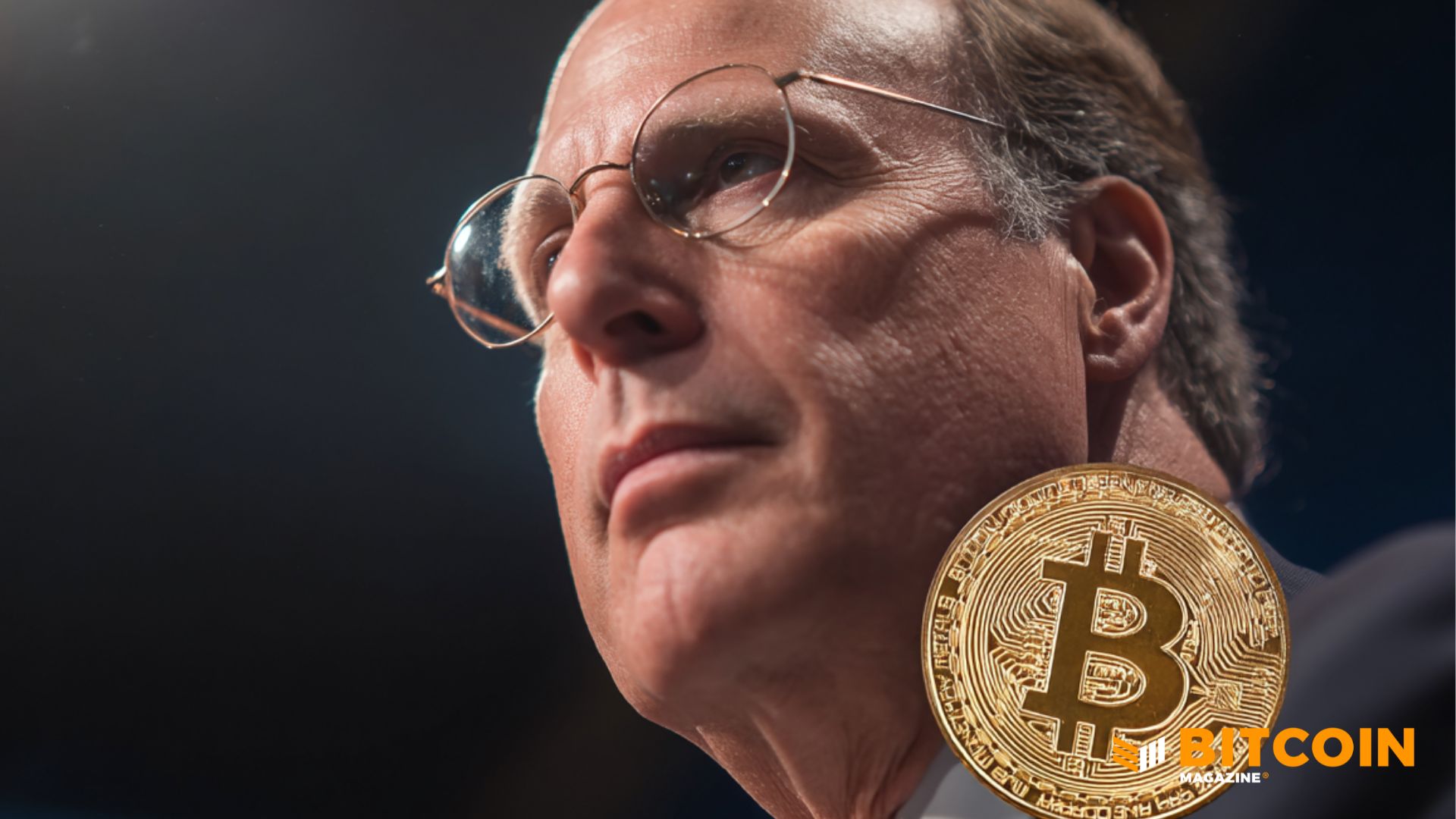
Bitcoin Magazine BlackRock CEO Larry Fink Says He Was Wrong About Bitcoin, Reveals a ‘Big Shift’ in His View BlackRock CEO Larry Fink has shifted his perspective on Bitcoin — and he openly acknowledged the change. Speaking at the NYT DealBook Summit on Wednesday, Fink stated that he now sees potential in Bitcoin. Fink was once a vocal critic who famously labeled Bitcoin “an index for money laundering,” Today, Fink described Bitcoin as “an asset of fear,” elaborating that investors frequently purchase it in response to concerns about financial security, geopolitical instability, or the ongoing debasement of traditional assets caused by growing deficits. “If you bought it for a trade, it’s a very volatile asset, you’re going to have to be really good at market timing, which most people aren’t,” Fink said. “If you’re buying it as a hedge against all your hope, then it has a meaningful impact on a portfolio… the other big problem of Bitcoin is it is still heavily influenced by leveraged players.” Fink, speaking alongside Coinbase CEO Brian Armstrong, noted that market movements — like a recent 20–25% drawdown in Bitcoin — often reflect broader events, such as trade agreements with China or potential settlements in Ukraine. Despite all this, Fink still suggested it can serve as meaningful portfolio insurance for those holding it as a hedge rather than for short-term trading. Fink emphasized that his perspective has evolved through years of client interactions and discussions with policymakers, calling his change of heart a “very glaring public example” of the need to reassess strong opinions. Meanwhile, BlackRock, the $13.5 trillion asset manager Fink helped build, now offers several crypto products, including a major Bitcoin ETF, marking a stark contrast to his earlier skepticism. “There is no chance” that Bitcoin goes to zero, said Mr. Armstrong, who sat beside Fink. Fink also shared an optimistic view for the asset: “I see a big, large use case for Bitcoin,” he said. JUST IN: BlackRock CEO Larry Fink says he was wrong to be a Bitcoin critic and changed his views "My thought process always evolves. This is a big shift in my opinion." pic.twitter.com/4PhDuoy5Le — Bitcoin Magazine (@BitcoinMagazine) December 3, 2025 BlackRock’s bold embrace of bitcoin and crypto Back in October, BlackRock said they were developing technology to tokenize a wide range of assets, including real estate, equities, and bonds. Fink said at the time that global digital wallets held over $4.5 trillion across crypto, stablecoins, and tokenized assets. He noted much of this capital was outside the U.S., presenting opportunities to reach new investors. Fink said tokenization could allow crypto entrants to access traditional long-term products, like retirement funds. He described Bitcoin and crypto as serving a similar purpose to gold. This post BlackRock CEO Larry Fink Says He Was Wrong About Bitcoin, Reveals a ‘Big Shift’ in His View first appeared on Bitcoin Magazine and is written by Micah Zimmerman.

Cover image for Bitcoin Price Dances with $94,000 as Institutional Demand Fuels a Bullish Setup

Bitcoin Price Dances with $94,000 as Institutional Demand Fuels a Bullish Setup

Bitcoin Magazine Bitcoin Price Dances with $94,000 as Institutional Demand Fuels a Bullish Setup The bitcoin price is trading near $93,000, with roughly $81 billion changing hands in the past 24 hours. The price is up 3% on the day, holding just 1% below today’s high of $93,929 and about 3% above the weekly low near $90,837. Nearly 19.96 million BTC are in circulation, inching toward the fixed 21 million cap. The move pushed Bitcoin’s global market value to $1.86 trillion, also up 3% over the same period. According to analysts, the Bitcoin price briefly dipped under its Metcalfe-based fair value for the first time since 2023, signaling what analysts say is a classic late-cycle reset. The move came during a sharp 36% drawdown that dragged the Bitcoin price towards $80,000 last week, erased excess leverage and flushed out speculative positions. According to network economist Timothy Peterson, periods when bitcoin trades below its fundamental network value have historically produced strong forward returns. Twelve-month gains have averaged 132%, with positive performance occurring 96% of the time, according to CoinDesk reporting. The network’s internal dynamics have also shifted. Long-term holders accumulated roughly 50,000 BTC over the past ten days, reversing months of steady distribution. Coins are maturing from short-term traders into long-term storage, reducing sell pressure at a moment when bitcoin is attempting to reclaim higher levels. Bitcoin recovered back above $90,000 this week and traded at highs of $93,978 on Wednesday. Bitcoin price and macro conditions Macro conditions are now converging with on-chain signals. The Federal Reserve just ended Quantitative Tightening, with markets pricing a December rate cut as nearly certain. Historically, each QT reversal has coincided with major bitcoin rallies. The pattern dates back to 2010 and includes the explosive 2013 cycle and the post-2019 surge that eventually carried the bitcoin price to $67,000. Business-cycle indicators may also be turning. The copper-to-gold ratio, a leading gauge for U.S. manufacturing sentiment and future PMI strength, appears to be bottoming. Bitcoin’s recent stagnation despite expanding global liquidity suggests investors have been reacting more to weakening economic confidence than to crypto-specific factors. A recovery in risk appetite would likely benefit bitcoin after months of consolidation. The short-term picture remains fragile. A bearish November close confirmed a monthly MACD cross, a signal that often precedes multi-month periods of slower momentum. Key levels near $85,000 and $84,000 continue to act as support, while analysts warn that a breakdown could open the door to a deeper test of $75,000. Bitcoin price remains down sharply from its $126,000 record set in October, though volatility has eased as liquidations subside. Institutional participation continues to grow despite turbulence. BlackRock increased internal exposure to its IBIT ETF, JPMorgan introduced a structured note tied to the product, and Strategy Inc. expanded its bitcoin holdings while setting aside a $1.4 billion reserve to reassure investors it will not be forced to sell. Earlier today, Charles Schwab said it also wants to offer Bitcoin trading in early 2026. Also earlier today, BlackRock CEO Larry Fink said he was “wrong” about Bitcoin, marking a sharp reversal from his past skepticism. Speaking at the NYT DealBook Summit, Fink called Bitcoin “an asset of fear,” bought during times of geopolitical stress, financial insecurity, or currency debasement. He warned it remains volatile and by leverage but said it can act as meaningful portfolio insurance. ““If you’re buying it as a hedge against all your hope, then it has a meaningful impact on a portfolio… the other big problem of Bitcoin is it is still heavily influenced by leveraged players,” Fink said. JUST IN: BlackRock CEO Larry Fink says he was wrong to be a Bitcoin critic and changed his views "My thought process always evolves. This is a big shift in my opinion." pic.twitter.com/4PhDuoy5Le — Bitcoin Magazine (@BitcoinMagazine) December 3, 2025 BlackRock now offers major crypto products and is building tokenization tech, with Fink seeing a “large use case” for Bitcoin and digital assets. Also during the summit, Brian Armstrong, the CEO of Coinbase, said that there is “no chance” of the bitcoin price going to zero. At the time of publication, the bitcoin price is $92,923. This post Bitcoin Price Dances with $94,000 as Institutional Demand Fuels a Bullish Setup first appeared on Bitcoin Magazine and is written by Micah Zimmerman.

Cover image for Fed Rate Cut Boosts Bitcoin Price Ahead of Q4 Melt-Up

Fed Rate Cut Boosts Bitcoin Price Ahead of Q4 Melt-Up

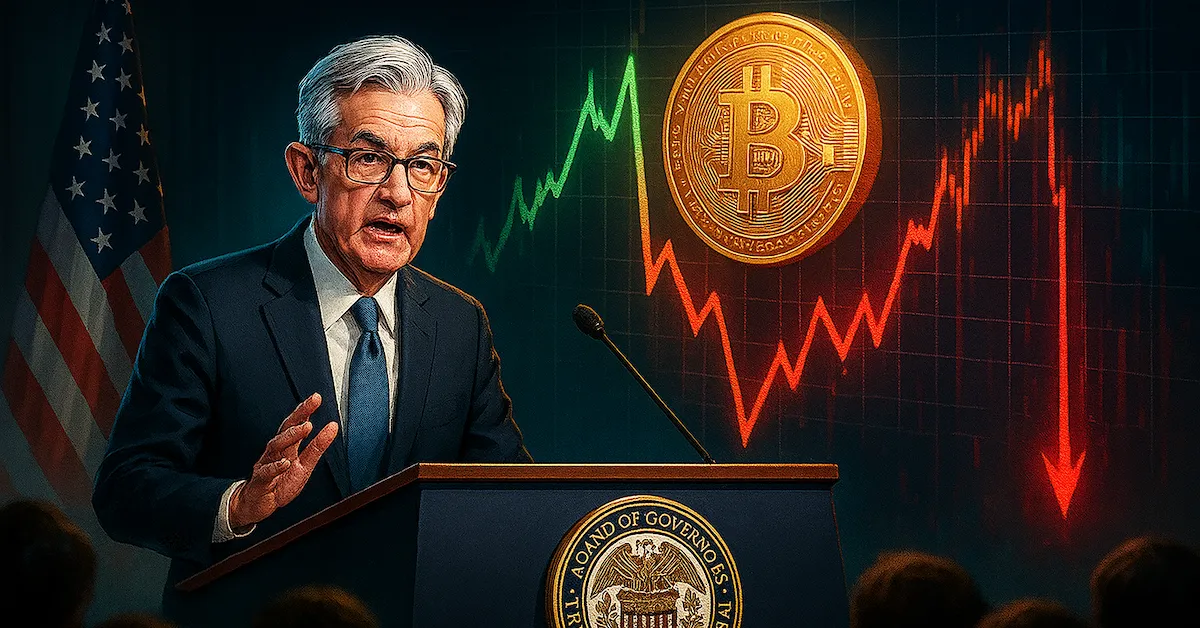
Bitcoin Magazine Fed Rate Cut Boosts Bitcoin Price Ahead of Q4 Melt-Up Historically, bitcoin’s price peaks approximately 20 months after a Bitcoin halving. The last Bitcoin halving occurred in April 2024, which means we could see a cycle top by December of this year. The odds of this are increasingly likely as Fed Chair Powell cut rates by 25 bps today, giving the approximately $7.4 trillion sitting in money market funds a reason to come off the sidelines and move into a hard asset like bitcoin, especially now that it’s easier to obtain exposure to bitcoin via spot bitcoin ETFs and proxies like bitcoin treasury companies. Powell also signaled today that two more rate cuts could be on the way before the year is out, which would only further reduce returns in money market funds, potentially pushing investors into hard assets like bitcoin and gold as well as riskier assets like tech and AI-related stocks. This could catalyze the final leg of a “melt-up” comparable to what we saw with tech stocks at the end of 1999 before the dot com bubble burst. In 1998, the Fed slashed rates by 75 basis points, igniting the dot-com bubble. Now the Fed is preparing to cut rates by at least 75 basis points over the next few months and may be making the same mistake with the AI bubble. Learn more:https://t.co/F9WZFQcABp$SPY $QQQ pic.twitter.com/r5yMoeycMX — Jesse Colombo (@TheBubbleBubble) September 16, 2025 Also, much like the likes of Henrik Zeberg and David Hunter, I believe the stage is being set for the final parabolic leg of a bull run that began in late 2022. As I said in 2022…. (when everybody was Bearish). The BlowOffTop would begin….. THIS IS IT! IT IS DEVELOPING RIGHT NOW! pic.twitter.com/bRERaWjf8T — Henrik Zeberg (@HenrikZeberg) September 17, 2025 Using a traditional financial index as a reference point, Zeberg sees the S&P 500 exceeding 7,000 before the year is out, while Hunter sees it rising to 8,000 (or higher) within the same time frame. @DaveHcontrarian forecast the S&P to 6000 at the end of 2022, when many other investors were predicting 2000. Now he has raised his target further to 8000, seeing more upside before the economy faulters later in the year. pic.twitter.com/oclBwqrh0L — Anthony (@AnthonyFatseas) July 2, 2025 What is more, we may be witnessing the breakdown of a 14-year support level for the US dollar, according to Macro Strategist Octavio (Tavi) Costa, which means we could see a markedly weaker dollar in the coming months, something else that would support the bull case for hard and risk assets. This move has profound implications in my view. The DXY index appears to be breaking down from a 14-year support level. If confirmed, it could signal the start of a sustained downward trend in the US dollar, in my view. Don’t underestimate the importance of major technical… pic.twitter.com/aFScjjXS8b — Otavio (Tavi) Costa (@TaviCosta) September 16, 2025 What Happens Come 2026? Both Zeberg and Hunter believe that, as of early next year, we’ll see the largest bust across all markets that we’ve seen since October 1929, when financial markets in the US collapsed, spurring the onset of the Great Depression. Zeberg’s rationale for this includes the real economy grinding to a halt, in part evidenced by the amount of homes on the market. Remember – there are analysts telling us that this is Early Cycle…..? We are heading right into the worst Recession SINCE 1930s. BlowOffTop still developing – but we can see an end to it! https://t.co/uZkTnYk9WT — Henrik Zeberg (@HenrikZeberg) September 17, 2025 Hunter believes that we’re at the end of a half century long secular debt-fueled cycle that will end with a leverage unwind unlike anything we’ve seen in modern history, as per what he shared on Coin Stories. Other signals like loan payment delinquencies also point to the idea that the real economy is screeching to a halt, which will inevitably have an effect on the financial economy. Student loans 90+ days delinquent have exploded higher to heights never seen before. https://t.co/sk8T9W07fb pic.twitter.com/BjFe6xPH9Q — Financelot (@FinanceLancelot) September 5, 2025 The Bitcoin Downturn Isn’t Guaranteed, but It’s Likely Even if we aren’t headed toward a global macro bust, bitcoin’s price will take a hit in 2026 if history repeats itself. That is, bitcoin’s price dropped from almost $69,000 at the end of 2021 to approximately $15,500 by the end of 2022 and from almost $20,000 at the end of 2017 to just over $3,000 at the end of 2018. In both cases, bitcoin’s price either tapped or dipped below its 200-week standard moving average (SMA), the light blue line on the charts below. Currently, bitcoin’s 200-week SMA is sitting at about $52,000. If we see a parabolic rise in bitcoin’s price in the coming months, it could rise as high as $65,000, before bitcoin’s price drops to such a price point or lower some time in 2026. If we do see the type of bust that Zeberg and Hunter are forecasting, bitcoin’s price could also drop well below that threshold. With all of that said, no one knows what the future holds, and please don’t interpret anything in this article as financial advice. At the same time, you may want to keep in mind that while history doesn’t necessarily repeat itself, it often rhymes. This post Fed Rate Cut Boosts Bitcoin Price Ahead of Q4 Melt-Up first appeared on Bitcoin Magazine and is written by Frank Corva.

Return to Homepage