‘Cut Off One Head, Another Grows’: How Iran’s Rulers Built a System That Keeps Them in Power
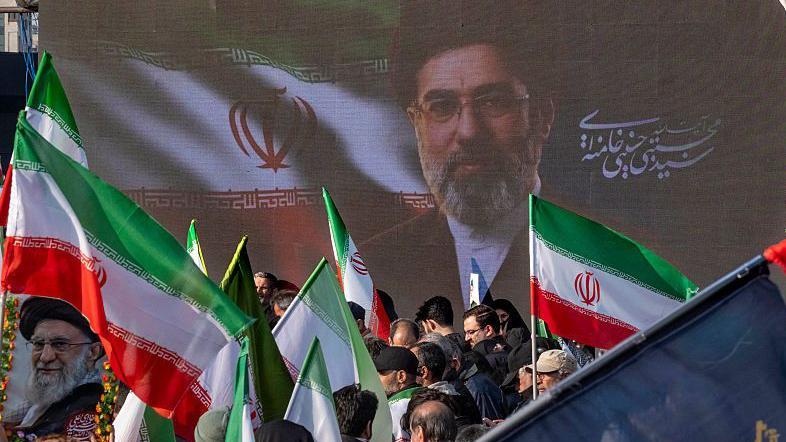
More than four decades after the 1979 Islamic Revolution brought Iran’s rulers to power, they are now facing their toughest moment.
‘Cut Off One Head, Another Grows’: How Iran’s Rulers Built a System That Keeps Them in Power Iran’s regime has constructed a durable power system, distinct from other regional dictatorships, that is resistant to internal and external pressures. This resilience is attributed to a ‘poly-dictatorship’ structure combining political Islam and nationalism, multiple power centers, and the influential Islamic Revolutionary Guard Corps (IRGC). Despite facing severe challenges and protests, the regime’s intricate network of patronage, ideological indoctrination, and a fragmented opposition have historically ensured its survival.
- Iran’s regime has developed a resilient power structure designed to survive crises, unlike leaders in countries like Tunisia, Egypt, and Syria.
- The system is described as a ‘poly-dictatorship,’ a blend of political Islam followers and Iranian nationalists, with power distributed among religious bodies, armed forces, and economic sectors.
- The Islamic Revolutionary Guard Corps (IRGC) is a key pillar, wielding significant military, political, and economic power, with a strong emphasis on ideology and martyrdom.
- Elite cohesion is maintained through patronage networks, where state organizations and the IRGC’s business empire distribute jobs and contracts to loyalists.
- The regime’s survival is also aided by a divided opposition, ideological indoctrination through religious and educational institutions, and a sophisticated surveillance system.
- While mass mobilization has occurred, the lack of elite division and security force defections has historically prevented regime collapse.
- The death of Supreme Leader Ayatollah Ali Khamenei is seen as a significant blow, with his successor expected to have less authority, though the regime’s end is not considered imminent.
Write a comment