Community, Part 1: What's the Big Deal?
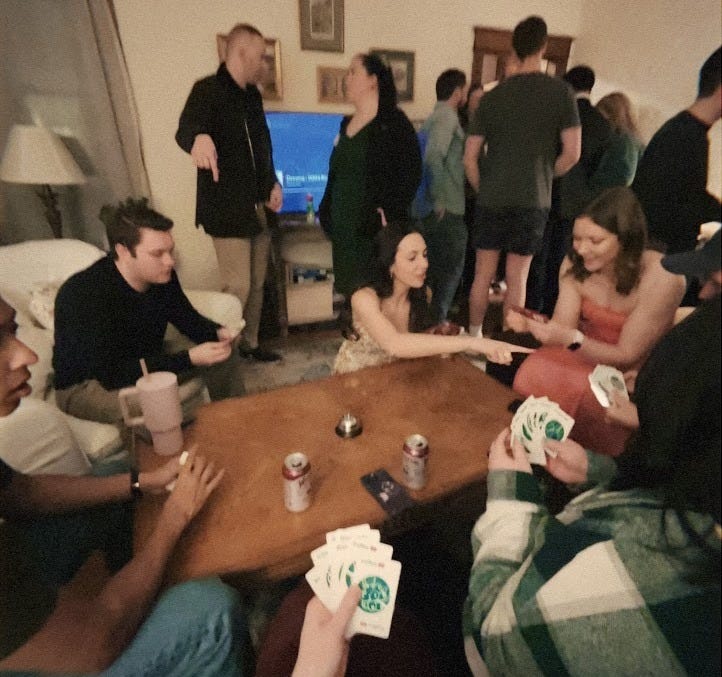
• • What do you think of when you hear the word community? Is it about the geographical place you live and the people around you? Is it the people you like to spend time with? Is it a small group, a club, or an organization you identify with? Maybe it’s the people you work with. It’s a commonly-used word, and one with some broad implications, so I figured it would be good for us to start this exploration of community from the very beginning: with the definition. What is community, exactly?The dictionary definition includes two, but related, meanings:
• a group of people living in the same place or having a particular characteristic in common.
• a feeling of fellowship with others, as a result of sharing common attitudes, interests, and goals.
To me, it seems we can drill these two definitions down to the simple idea of “the people we do life with.” Whether you’re interacting with those people because of geographical proximity or vocational duty, or you’re choosing to interact because you simply enjoy spending time with people, or perhaps both, our lives are shaped in large part—one might argue almost entirely—by the people we spend our time with. When we start to look at community this way, it becomes apparent how this isn’t just about some abstract concept or even just about what organization you want to put on your resume or who you chat with in the hallway at work; community becomes the real substance of our lives, and how we approach community could be the difference between a life well lived and a life we regret. Why do we need community?“Hold up, now,” you might be thinking to yourself. This got really deep, really fast. Yes, yes it did; that’s the point. I think we, as a society, are vastly underestimating the impact of the people we spend time with (in a real, tangible sense, not just the people who show up in our social feeds) and the value of the very act of spending time with other people at all. Did you know the strength of your social life can literally change the length of your life?1 (#footnote-1) What about that the quality of your relationships is the single most powerful predictor of your happiness, more significant than money, fame, or career success?2 (#footnote-2) Maybe you haven’t been explicitly aware of the findings of these studies, but you’ve personally felt the difference between seasons of your life when you were well-connected and when you were more isolated. Think about the times in your life when you’ve felt most fulfilled. Odds are, you were either with people or, if you’re an introvert like me, maybe you were reflecting on a time when you were with people. We have many different motivations, experiences, and things that bring us joy, but I think we’d be hard pressed to name a time we felt profound joy and fulfillment in total isolation from another human being. A little rabbit trail for the introverts in the room: sometimes we joke about how our favorite time of the day is the time we have to ourselves, or how we don’t want to hang out with anyone but ourselves alone in our room with a good book. Have we begun to use our introversion as an excuse to simply be lazy? I’m afraid we have. Yes, sometimes we have to hype ourselves up to go spend time with a group of people, especially a large group where we may not know a lot of people, but that doesn’t mean we shouldn’t do it. I’ve also found the more I invest in relationships that I know will last, the less draining it is to my social battery to spend time with those people. You know what I mean: it’s a lot easier to spend time with your best friend, who you’re comfortable sitting in silence with now and then, who knows just about every detail of your life inside and out, than it is to go to a networking hour where you’re constantly having to keep the conversation going and it feels like you’re playing a game of 20 questions with every new person you meet. That’s not to say we should never put ourselves in those “meeting new people” situations—in fact, that’s part of what this whole series is about—but instead, that if we put ourselves out there in order to meet the people who will become our closest friends, it will get easier over time, and we’ll develop the type of profound relationships we so desperately need. Why does it matter who’s in our community?I’ve given my work and my colleagues probably more than their fair share of airtime on this Substack, but it’s been for good reason, and one that relates to our conversation here: who you spend your time with matters. It’s not just about making sure you spend time with other people in the same room, even spending time with people who you talk to regularly about important things in your life; it’s about spending time with people who help bring you towards your upward aim, not spiraling down towards the last person you want to become. The primary driver of my motivation (or, some days, lack of such) in my work is how my teammates are feeling, and particularly those teammates who have a high level of influence or visibility to the rest of the team. If our phone calls are focused on what we’re working on and how we can bring more value to our customers and even what we did over the weekend or how our families are doing, it’s easier to stay motivated even on a tough day. If our phone calls are focused on the things we’re frustrated about or what’s not going well, it’s easier to feel defeated and like anything I do won’t make a difference anyway. Fortunately, as a team, we all know this and work to pull each other out of the negativity traps we all fall into now and then. If you’re on a team that doesn’t seek to do that, you’ll be hard pressed to get out on your own. The impact is even more serious when we take it outside of work: another study found a person’s happiness is impacted by up to three degrees of separation, as has also been found to be the case with the spread of smoking and obesity.3 (#footnote-3) The trajectory of our lives—and our friends’ lives—are impacted by each other, and each other’s friends, and each other’s friends’ friends. With that in mind, when you think about the people you spend the most time with, would it be a compliment if someone said you look and act like them? If you’re trying to reorient your life around more real-life interactions and meaningful conversations and the pursuit of something greater than yourself, are you surrounding yourself with people who are doing the same? Or are you spending more time with people who, if they do get together to do something, end up scrolling on their phones the whole time anyway? If you’re trying to cultivate an attitude of humility and joy and selflessness, are you surrounding yourself with people who model those attributes, or are you stuck in an old friend group who spends most of their time gossiping and complaining? This isn’t about picking “perfect” friends; the good Lord knows none of us are anywhere close to perfect. It’s not about being “too good” for certain friends; it’s about recognizing when your life is diverging from someone else’s. Spending time with people matters, and cultivating deep relationships with people who are moving in the same direction as we are matters at least as much. Community matters; we’re created to be social creatures. Some technological advances have tricked us into thinking we can satisfy this deep need by interacting online, en masse. We cannot. The pandemic accelerated what was already a negative trend of people—young people, especially—spending more time alone, at home, isolated from the networks which can literally save our lives. Yet, if you ask any Gen-Z’er off the street, they’re likely to tell you they wish they weren’t online so much and they feel alone even with scores of “friends” who like and comment on their posts. It’s clear we’re struggling, and not just Gen Z, with the decline of meaningful social lives. In the next installment of the Community series, we’ll dive into what’s gone wrong with community in our time, why it’s had an outsized impact on Gen Z, and how that’s changed our social landscapes. Know someone working on building stronger community? Share this post to give them some encouragement! Share One Thing Differently:What’s one impact you feel from your social circle that you’d like to change? Why do you want that change, and how will you make it happen? Leave a comment 1 (#footnote-anchor-1)Social Relationships and Mortality Risk: A Meta-analytic Review | PLOS Medicine
2 (#footnote-anchor-2)Robert Waldinger: What makes a good life? Lessons from the longest study on happiness | TED Talk 3 (#footnote-anchor-3)Dynamic spread of happiness in a large social network: longitudinal analysis over 20 years in the Framingham Heart Study | The BMJ
Write a comment