Maybe You Don’t Need A New Goal
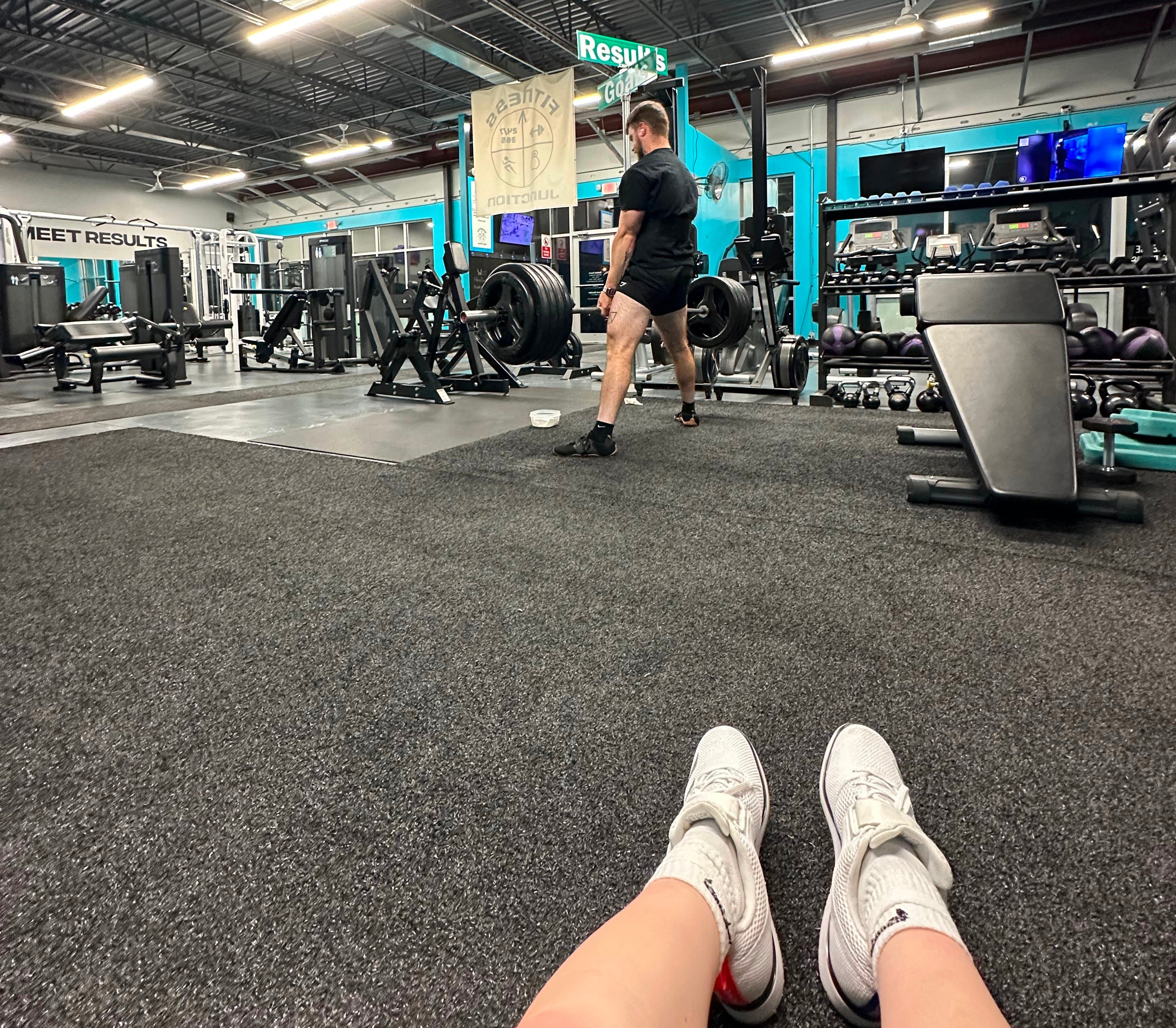
• • New goals are overrated. Actually, I think goals in general are overrated—I’m big on process over outcome—but new goals, especially. They look shiny and exciting, but more often than not, they become overwhelming, unhelpful, and ultimately fail to bring about the change we actually wanted to see in our lives. As with many areas of life, it’s the smaller, mundane, incremental changes which would actually create the shift we want to see. Yet, because they don’t feel as dramatic, we tend to overlook them. This week, I’d like to propose a challenge for all of us: what if, every time we think about the changes we want to see in our lives, we evaluate the things we’re already doing before we create a list of all the new things we want to do? Now, this isn’t to say we should never add something new. Just as there is value at times in adding a new exercise or swapping out one exercise for another, there absolutely can be value in creating new habits and adding steps to our routines; yet, my challenge for us today is to look at our current rhythms first, and then decide if we need to add something new. In typical Miriam fashion, I’ve got a simple framework, taken from the world of strength training, to help us do this. Progressive overload is a term we use often in the strength training world. If you’ve ever gone to the gym with a friend and they’ve challenged you to pick up a heavier weight than usual, or do more reps than usual, or slow down your technique, that’s exactly what they’re doing. Progressive overload, in its simplest terms, means challenging your body to do just a little bit more each week: usually by adding reps to a set, adding weight, or slowing down each rep. Without making one of these changes to each exercise over time, we will end up stagnating, perhaps staying vaguely “in shape” but not getting stronger or gaining muscle mass. As I’ve evaluated my own habits at the beginning of each year, I started to shift from adding a bunch of new things to evaluating my current rhythms and how they could serve my purposes more effectively, helping me become the person I’m aiming to be. Subscribe now What might progressive overload look for your own goals, habits, or routines? Here’s how I think about each of these changes and a few examples which may benefit you:
- Add reps: do a thing you’re already doing, but more often.While this one is self-explanatory, I believe it’s important to think about why you want to “add reps.” Don’t just do something more often arbitrarily to say you do it; focus on something which, if you did more often, you would be better for it. Maybe you’ve been journaling once or twice a week, but you feel you’re missing some of the valuable reflection which would come from doing it three or four times. If you’re aiming to be a more connected person and you’ve been calling a friend once a month, try two or three times. The other important point here is to not add too many reps at once; if you’ve been shoulder pressing the 35s for 10 reps, don’t try to do 15 or 20 next week. As with any goal- or habit-forming framework, making it doable is critically important.
- Add weight: do a thing you’re already doing, but make it more challenging.A helpful way to think about this one: are you doing the thing just to check the box and say you did it? Or, are you truly getting out of it the full value of the habit? With a journaling example, it could be taking a few scribbled sentences about what you did that day to actually adding a few sentences about how you felt about what happened to you that day, or even following a prescribed prompt each day to make it more thought-provoking. Maybe you’ve been reading the Bible every day, but after you read it and close it, you forget what you read. Try challenging yourself to write a few reflections down, or share with a friend what stood out to you that day. As with the first point, don’t make it harder arbitrarily; make it more challenging in a way which serves the underlying purpose of the habit itself.
- Slow it down: do a thing you’re already doing, but more deliberately. This one can be applied in many different ways. It could be literal, as it is in strength training, by taking the habit you want to improve and actually spending more time on it. Slowing it down can serve two purposes: first, it gives you more time to reflect on what you’re doing and perhaps why you’re doing it, and secondly, it should improve the quality of your work. If you block out 20 minutes to journal instead of 10, your reflections will likely be more thoughtful. If you want to read 8 books this year, don’t read as fast as you can just to get it done. After all, if you set a goal like that, don’t you want to learn something by reading those books? Slowing it down will help you better achieve that purpose. This practice can also be applied in another sense: before you complete the task or habit, simply pause to remind yourself why you’re doing it. When you’re in the gym doing a lat pulldown, you’ll likely get more out of the exercise when you mentally concentrate on feeling the exercise in your lats, strengthening your mind-muscle connection. This is the same idea applied to any of our habits or routines: If the purpose of adding pickleball to your routine is to make friends and stay active, you’ll accomplish those things more effectively when you remind yourself of them before you step onto the court. As with any goal-setting or habit-creating practice, none of these things matter if we don’t know why we’re setting the goal or habit to begin with. While Simon Sinek’s concept of “Start with Why” has been perhaps overused in leadership circles, there’s still a fundamental truth there: if we don’t know why we’re doing something, it’s not going to get us nearly as far as when we know where we want to go and we start making small changes along the path in order to get there. It’s my hope for these small changes—whether it’s adding reps, adding weight, or slowing it down—will help get you one step closer to who you want to be. Know someone who’s working on improving their habits this year? Send this post their way! Share One Thing Differently:What is one habit or routine you can improve with one of these three adjustments? What adjustment will you make, and how will that help you achieve the purpose of the habit? Leave a comment
Write a comment