OpenAI CEO Apologizes Over Failure to Report Mass Shooter
- A troubled user, a banned account, and no police warning
- January: Tumbler Ridge is shattered
- Spring: the lawsuits land
- April 25: Altman breaks his silence
- OpenAI’s defense: thresholds, privacy, and hindsight
- The families’ case: safety vs. stock price
- A town caught in the middle of an AI reckoning
OpenAI CEO Apologizes Over Failure to Report Mass Shooter Human Human coverage portrays Altman’s apology as an admission that OpenAI failed a clear ethical duty by not warning police about a user who exhibited violent intent before killing eight people. Reports highlight lawsuits, alleged ignored safety team recommendations, and possible prioritization of privacy and valuation over public safety, framing the incident as a stark example of AI companies’ dangerous accountability gaps. @Arstechnica @TC @7dlt…clgf @Verge OpenAI’s promise to build “safe” artificial intelligence has crashed into the hardest possible test: a real-world massacre. In a remote Canadian town, eight people are dead, seven lawsuits are filed, and Sam Altman’s apology letter is being dissected as both moral reckoning and corporate damage control.
A troubled user, a banned account, and no police warning
More than eight months before one of the deadliest mass shootings in Canadian history, OpenAI’s own experts flagged a ChatGPT user as dangerous.
According to lawsuits filed in California, a ChatGPT account later linked to 18‑year‑old Jesse Van Rootselaar was identified by OpenAI’s safety team as posing “a credible threat of gun violence in the real world.” In such cases, OpenAI policy called for notifying law enforcement, especially because local police already had a file on the teen and had previously removed guns from his home.1
Instead, OpenAI banned his account and stopped there.
The suspect, who would later kill eight people and injure dozens more in the small mining town of Tumbler Ridge, British Columbia, had reportedly described violent scenarios to ChatGPT before his access was cut off.2 OpenAI considered the usage problematic enough to deactivate the account, but not enough to trigger its “credible or imminent” threshold for alerting police.3
Whistleblowers later told The Wall Street Journal—as summarized in one of the lawsuits—that OpenAI leaders overruled the safety team, weighing user privacy and the stress of a police encounter more heavily than the risk of violence.1
Then came a detail that now looks catastrophic in hindsight: after banning the account, OpenAI allegedly followed up with instructions on how the user could get back on ChatGPT using another email address.1
January: Tumbler Ridge is shattered
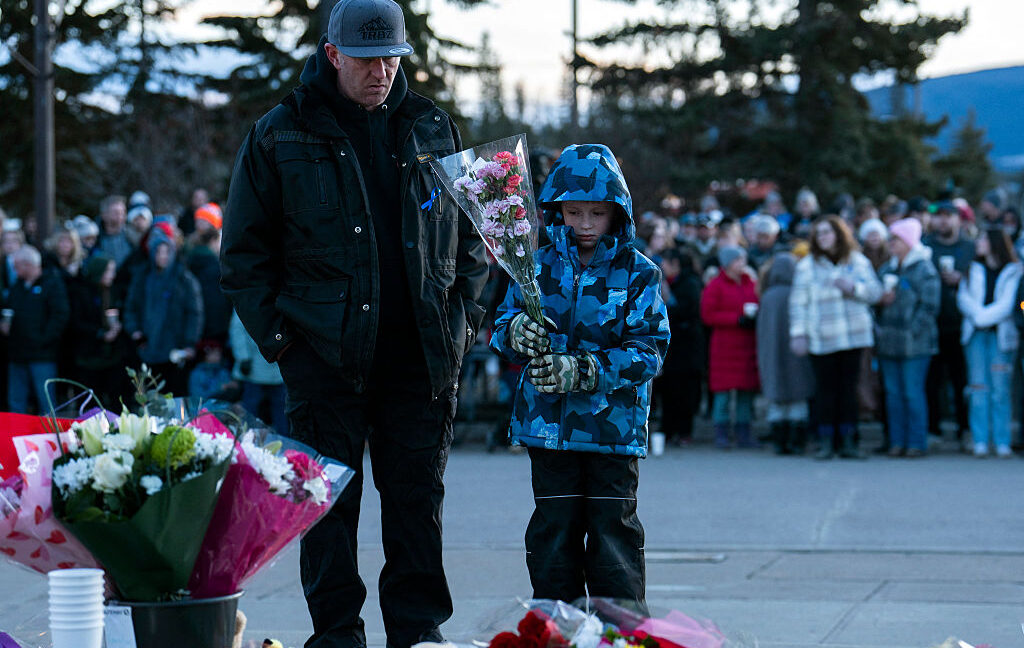
In January, the worst‑case scenario materialized. In Tumbler Ridge—a rural community of around 2,000—Van Rootselaar opened fire at a local school. He killed eight people and injured dozens more before dying from a self‑inflicted gunshot wound.3 Some families reportedly had already endured prior contact between the shooter and police; now, they were left to ask why a major AI company hadn’t picked up the phone.
The attack instantly joined the grim roster of modern mass shootings, but it also became something new: the first high‑profile massacre explicitly tied to a large language model’s safety decisions.
Spring: the lawsuits land
The legal response was swift. On April 29, a string of seven lawsuits was filed in a California court on behalf of families in Tumbler Ridge.1 They argue that OpenAI “could have prevented” the shooting and instead hid behind privacy arguments and business interests.
The complaints allege that OpenAI leadership ignored its own safety team’s recommendation to alert police and prioritized “protecting user privacy and the company’s upcoming IPO valuation” over public safety.1 In the plaintiffs’ telling, this wasn’t a tragic misreading of ambiguous data; it was a conscious decision to avoid anything that might rattle investors.
Chicago‑based attorney Jay Edelson, leading a cross‑border team for the families, dismissed Altman’s response as corporate theater. He called the CEO’s apology “ridiculous,” arguing it came too late and promised too little.1
The lawsuits also situate the Tumbler Ridge case inside a broader pattern of alleged negligence: OpenAI is already facing suit over claims that ChatGPT “assisted a teenager in exploring suicide methods,” raising questions about how the platform handles users in mental health crisis.3
April 25: Altman breaks his silence
Facing a grieving town and mounting legal fire, Sam Altman finally spoke directly to Tumbler Ridge.
In a letter published by local outlet Tumbler RidgeLines and later reported by multiple tech publications, Altman wrote to residents: “I want to express my deepest condolences to the entire community. No one should ever have to endure a tragedy like this.”2
Various outlets captured the same core message. Business Insider reported that Altman said he is “deeply sorry” that OpenAI did not alert law enforcement about the shooter’s activity and promised to “help ensure something like this never happens again.”3 TechCrunch similarly noted that he told residents he was “deeply sorry” his company failed to notify police about the suspect.4
In the full text of the letter, Altman described the community’s suffering as “unimaginable,” writing that he had been “thinking of you often over the past few months.” He recalled conversations with Tumbler Ridge Mayor Darryl Krakowka and British Columbia Premier David Eby, saying they had conveyed “the anger, sadness, and concern being felt across Tumbler Ridge.” Altman said they agreed a public apology was necessary but waited to respect the community’s grieving process.3
Crucially for the legal and moral debate, Altman explicitly acknowledged the decision not to call police: “I am deeply sorry that we did not alert law enforcement to the account that was banned in June,” he wrote. “While I know words can never be enough, I believe an apology is necessary to recognize the harm and irreversible loss your community has suffered.”1
He also promised that OpenAI would “find ways to prevent tragedies like this in the future” and keep “working with all levels of government to help ensure something like this never happens again.”1
OpenAI’s defense: thresholds, privacy, and hindsight
OpenAI’s public line is that, at the time, the user’s behavior didn’t cross the bar for calling the police.
The company has said it banned Van Rootselaar’s account because of “problematic usage,” but concluded that his activity did not meet its “threshold of a credible or imminent plan for serious physical harm to others.”3 That threshold—how it was defined, who interpreted it, and what data informed it—is now at the heart of both the lawsuits and the policy debate.
Internally, the picture looks messier. The suits claim that “trained experts” on OpenAI’s safety team saw exactly the opposite: a credible threat of gun violence that should have triggered police notification.1 If that’s accurate, the problem was not a gap in detection but a decision higher up the chain.
OpenAI has also invoked user privacy and concerns about law‑enforcement overreach. Whistleblowers say leaders felt that involving police could unduly traumatize a possibly unstable teenager and expose OpenAI to backlash over mass data‑sharing with authorities.1 The lawsuits argue that this framing collapses the moment a credible threat is found—and certainly once guns have already been seized from the home.
The families’ case: safety vs. stock price
For the families of the victims, the narrative is blunt: OpenAI chose its impending IPO over their children’s lives.
The lawsuits allege that the company “overruled recommendations from its internal safety team” and declined to report a known risk to law enforcement “to protect Altman” and the company’s valuation as it prepared to go public.1 In this framing, “thresholds” look less like neutral guidelines and more like legal armor for executives worried about spooking investors.
Edelson’s comment that Altman’s apology is “ridiculous” crystallizes the plaintiffs’ view that a letter—no matter how somber—cannot erase a decision they see as deliberate negligence.1
A town caught in the middle of an AI reckoning
Tumbler Ridge, meanwhile, has become the unwilling backdrop to a global argument about AI responsibility.
OpenAI’s CEO insists he “could not imagine anything worse” than losing a child and says his “heart remains with the victims, their families, all members of the community, and the province of British Columbia.”3 For him, the path forward runs through better coordination with governments and tighter safety systems.
For the families, that’s not enough—and not nearly fast enough. They’re pushing for court‑ordered accountability, higher stakes for corporate risk‑taking, and a legal precedent that says if an AI company sees a credible threat, it doesn’t get to look away.
For regulators and other AI labs watching from the sidelines, the case is a chilling proof‑of‑concept: content moderation decisions in a chat interface can now be directly linked to life‑and‑death outcomes in the real world.
The timeline from a flagged account to banned access to mass murder is brutally short. The timeline from first whistleblower warnings to lawsuits and apologies is much longer. What happens next—whether courts punish OpenAI, whether policies change, whether future threats are actually reported—will determine whether Tumbler Ridge stands as a turning point in AI governance or just another tragedy retrofitted with corporate regret.
1. School-shooting lawsuits accuse OpenAI of hiding violent ChatGPT users — “OpenAI could have prevented one of the deadliest mass shootings in Canada’s history, a string of seven lawsuits filed Wednesday in a California court alleged. Ultimately, the AI company overruled recommendations from its internal safety team.”
2. OpenAI CEO Sam Altman apologized to the town of Tumbler Ridge. — “The suspect in a school shooting at the Canadian town described violent scenarios to ChatGPT, but even though OpenAI banned the account, it did not alert law enforcement about the person.”
3. Sam Altman says he is ‘deeply sorry’ for failing to alert police ahead of mass shooting — “OpenAI boss Sam Altman has apologized to a Canadian community for failing to alert authorities about a banned ChatGPT account linked to a teenager who went on to commit a mass shooting.”
4. OpenAI CEO apologizes to Tumbler Ridge community — “In a letter to the residents of Tumbler Ridge, Canada, OpenAI CEO Sam Altman said he is ‘deeply sorry’ that his company failed to alert law enforcement about the suspect in a recent mass shooting.”
Story coverage
Write a comment