Elon Musk Testifies in OpenAI Lawsuit
- 2015–2018: From “saving humanity” to the first cracks
- 2016–2020: The deal nobody fully wrote down
- 2018–2023: Control, capitalism, and the charity that “got stolen”
- 2023–2024: Open source, pauses, and Musk’s parallel AI empire
- This week in court: Safety savior vs. inconsistent witness
- Kneecapping or clean break?
- The stakes: One man’s crusade, or everyone’s business model?
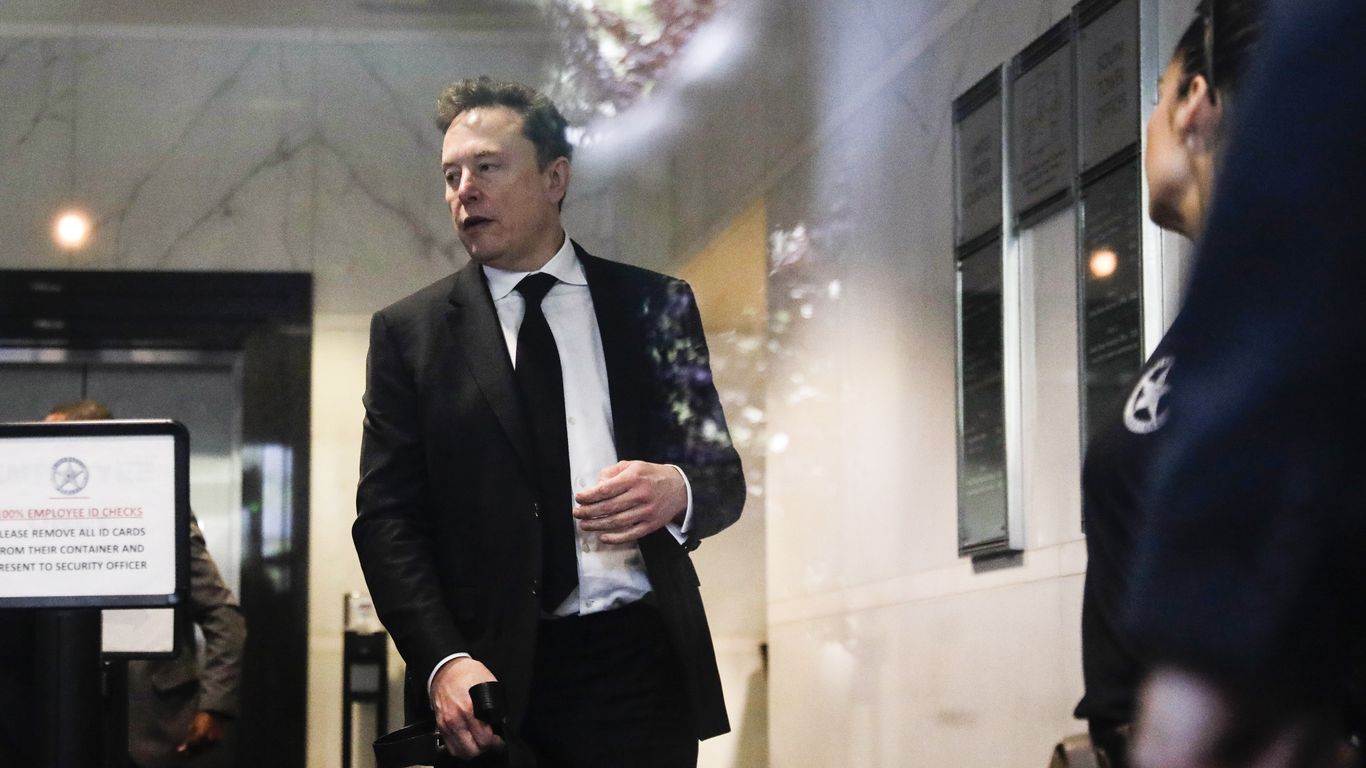
Elon Musk Testifies in OpenAI Lawsuit Human Human coverage portrays Musk’s testimony as combative and often self-defeating, highlighting contradictions with his past statements, his failure to read key documents, and his testy reactions under cross-examination. These reports frame the lawsuit less as a clear-cut defense of a betrayed nonprofit mission and more as a dispute colored by Musk’s lost influence over OpenAI and his own profit-driven ventures. @4qd8…qnwa @Verge @TC Elon Musk walked into a California courtroom hoping to prove OpenAI betrayed its founding mission. He ended up spending two days defending his memory, his tweets, and his own billionaire origin story.
2015–2018: From “saving humanity” to the first cracks
In Musk’s telling, the story begins almost a decade ago, when he says he feared that leaving artificial general intelligence (AGI) to Big Tech alone might be suicidal for the species. He has long argued that the only safe path is to keep AGI out of the hands of profit‑hungry corporations, casting himself as a “leading advocate for AI safety” against what he now paints as a “profit‑consumed OpenAI.”1
On the stand, Musk described himself as the guy warning anyone who would listen — from Google co‑founder Larry Page, who allegedly called him a “speciesist,” to President Obama, whom Musk says he met in 2015 to “really just… warn him about AI.”1
OpenAI, founded in 2015 as a nonprofit, was supposed to be the answer: a lab dedicated to building powerful AI “for humanity,” with a charter that, as Musk now emphasizes, said it “will not be to the financial benefit of any person.”2 Musk poured in hundreds of millions, eventually promising up to $1 billion.3
But even in his own recounting, the seeds of the current fight were planted early. By 2016 and 2017, Musk was already discussing converting OpenAI into a for‑profit structure and even explored a plan where a for‑profit arm would exist with Musk holding “the majority of the equity and control the company.” When those plans collapsed, he “stopped making regular donations,” though he continued paying for OpenAI’s office space until 2020.3
2016–2020: The deal nobody fully wrote down
The courtroom drama now turns on something stunningly mundane for a multibillion‑dollar dispute: paperwork that was never really nailed down.
Under cross‑examination by OpenAI’s lead counsel William Savitt, Musk admitted he hadn’t actually set formal legal terms on his donations. Asked whether he had a lawyer define conditions, he replied, “No, but it was obviously started as a nonprofit, and in the founding charter it says it will not be to the financial benefit of any person?”2 The “obvious” understanding, not contractual language, is what Musk is now asking a jury to enforce.
He also conceded that when OpenAI proposed a capped‑profit structure so it could raise serious capital — including from Microsoft — he “didn’t review it very closely” and wasn’t clear on the specific cap for Microsoft’s investments.2 Later, his own lawyer walked him through an email from Sam Altman stressing that investors were “clear they should never expect a profit.” Musk says he simply trusted that: “I assumed he meant what he said.”4
By Musk’s own account, he stopped funding OpenAI in 2020 — not at the instant of some technical breach, but after a long souring of the relationship. On re‑cross, when Savitt drilled into when and why he cut off the money, Musk grew visibly irritated. He insisted that 2020 was “when they broke the deal,” but couldn’t point to specific contractual language, snapping at one point, “I understand leading questions. That’s a leading answer,” prompting Judge Yvonne Gonzalez Rogers to remind him that “he can lead all he wants” and that Musk is “not a lawyer,” despite his joking protest that he “did take law 101 technically.”5
2018–2023: Control, capitalism, and the charity that “got stolen”
If Musk frames his departure as a principled stand, OpenAI’s lawyers are painting a more self‑interested arc.
Savitt used hours of cross‑examination to suggest Musk’s safety panic conveniently tracked his loss of control. Savitt “made the case that Musk was at least as concerned — if not more concerned — with profiting from AGI than the team at OpenAI,” implying his worries “seemed to sharpen whenever someone else had the wheel.”1
A separate, blistering narrative — reported from inside the courtroom — had the jury watching Musk repeatedly refuse to give straight yes‑or‑no answers, contradict earlier testimony, and spar with Savitt until the judge had to repeatedly intervene. “He was at times difficult,” Judge Gonzalez Rogers said after the jury left, adding that “part of management from my perspective is just to get through testimony.”6 The cross‑examination, one observer concluded, “left the distinct impression that Musk quit his quarterly payments to OpenAI because he wasn’t going to get full control of the company, then tried to kneecap it and fold it into Tesla.”6
Musk, for his part, insists the villains are elsewhere. In court he complained that he “thought [he] had started a nonprofit with OpenAI, but they stole the charity,” a line that both encapsulates his grievance and underpins his lawsuit claim that Altman and others “looted the nonprofit.”7,3
Outside the courtroom, his X feed is an ongoing closing argument. He amplified one supporter who argued that OpenAI “bait‑and‑switched Elon, pretending to a non‑profit mission to save humanity until it pocketed his donations. Elon should win.”8 Another fan he retweeted scolded those treating the case as “a billionaire feud,” praising Musk for not spending on “a yacht [or] a paradise island” and claiming “even the money from this lawsuit, if he wins” would not go to extravagance.9
At the same time, Musk’s own relationship with capitalism has become a trial exhibit. Pressed on whether his new AI outfit xAI and his other ventures are for‑profit, he eventually admitted that every one of his companies is — including xAI. Asked if they are both socially beneficial and for‑profit, he agreed. The segment was literally headlined “Elon Musk v. Capitalism,” but on the stand he tried to square that circle: he still believes “the future is going to be amazing with AI and robots enabling sustainable abundance for all,” but stresses “there are many possible futures… some are good, and some are not good,” and he prefers to “err on the side of optimism.”7
2023–2024: Open source, pauses, and Musk’s parallel AI empire
The lawsuit lands in a world where Musk is no longer simply OpenAI’s estranged co‑founder; he’s a direct competitor.
In 2023, Musk signed a high‑profile letter calling for a pause in the development of giant AI models “out of safety concerns.” He did so just before he incorporated xAI. When Savitt pressed him on why he hadn’t disclosed that conflict to fellow signatories, Musk shrugged it off as “just an open, non‑binding letter” signed by hundreds of others.10
Savitt also dug into Musk’s own shifting stance on openness. Emails showed Musk responding “yup” to a suggestion that OpenAI should become “less open as AI advanced.” On the stand, he admitted that xAI’s most advanced Grok models are not open source yet — “No, but it will,” he said — underscoring that he is making the same trade‑offs he now castigates OpenAI for.10
That tension sits against a broader industry split over open‑source AI. Outside the courtroom, Meta’s chief AI scientist Yann LeCun has been blasting efforts to clamp down on open models, retweeting warnings that “these folks are trying to ban open source. They’re looking to take away your freedom to choose… They must be stopped.”11 In another retweet, the same critic argued “all the Doomers and hawks… want to see open source banned” and “take away businesses’ rights to fine tune and make your products cheaper.”12 Musk has not lined up explicitly with either side of that war; in practice, he’s edging toward the same semi‑open, semi‑proprietary compromise that now defines OpenAI and most of the field.
This week in court: Safety savior vs. inconsistent witness
By the time Musk took the stand for two days in late April, the contradictions in his story were exactly what OpenAI and Microsoft wanted the jury to see.
Musk opened by reiterating his most attention‑grabbing warnings. He described AI as something that “could make us more prosperous, but it could also kill us all,” and said we “want to be in a Gene Roddenberry movie, like Star Trek, not so much a James Cameron movie, like Terminator.”1,13 When Judge Gonzalez Rogers jokingly asked him to summarize Terminator in one sentence, he obliged: “Worst case situation is AI kills us all I suppose.”14
He also had to clean up his own more theatrical rhetoric. Asked about a prior reference to an “AI enabled robot army,” he insisted this was about safety, not weapons. “No, we do not make any weapons,” Musk testified, saying he uses the phrase to emphasize that “if we made a lot of robots we need to make sure they’re safe and don’t turn into a Terminator situation.”14
But the courtroom was not kind to Musk’s self‑portrait. One detailed account described “an absolutely miserable cross‑examination” in which, for hours, he refused to answer simple questions directly, “forgot” things he’d said earlier that day, and scolded Savitt — all while jurors exchanged glances and one woman rubbed her head in apparent frustration.6 Musk had just finished claiming, “I don’t lose my temper” and “I don’t yell at people,” only to be immediately “baited… into being petty, irritating, and generally hard to deal with,” making him, in the reporter’s words, “his own worst enemy” in court.6
By the second day, Musk appeared to adjust. Another report noted that he seemed “notably more subdued,” with “minimal (though still some) bickering,” and far more plain “yeses and nos as full answers.” The impression was that he had “clearly rethought his strategy” after the first day’s debacle.15
Still, his past tweets kept boomeranging back. In one session, Musk had to concede under oath that Tesla is not currently pursuing AGI — directly contradicting a recent tweet suggesting the opposite.3 On another line of questioning, he reiterated that Tesla “isn’t currently working on AGI,” despite social‑media boasts to the contrary.4 For a CEO who likes to say AI “must be maximally truth‑seeking”16 and whose admirers praise his supposed “truthmaxxing” mindset,17 that gap is more than a gotcha; it’s ammunition for OpenAI’s claim that Musk’s narrative shifts with his interests.
Kneecapping or clean break?
On redirect by his own lawyer Steven Molo, Musk tried to rebuild the image of the spurned benefactor, not the would‑be monopolist.
He “insists he wasn’t kneecapping OpenAI” when he cut off donations, claiming that “as far as he knows, OpenAI wasn’t unable to cover any critical expenses” because of his withdrawal.4 He denied pressuring star researcher Andrej Karpathy to leave, saying he only hired him at Tesla “after he said he was leaving OpenAI,” and maintained that Neuralink “didn’t poach anyone” from the lab either, at least “as far as he knows.” When asked if he had “seriously recruit[ed] anyone from OpenAI for Tesla besides Karpathy,” he answered, “I don’t think so.”4
OpenAI, meanwhile, is quietly arguing that whatever the sentimental founding story, Musk helped design the for‑profit pivot he now decries, tried to dominate it, walked away when he couldn’t, and only later turned that history into a tale of a “stolen” charity. Musk insists the real betrayal came later, when Microsoft’s early profit caps were “rolled back over the years,” turning what he thought was a capped‑profit safety vehicle into something closer to a traditional startup — the “change” he says ultimately “led him to bring this lawsuit.”3
The stakes: One man’s crusade, or everyone’s business model?
Strip away the courtroom theatrics and you’re left with a fight over who gets to own the upside of AGI — and how much any founding “mission” really constrains companies once the money and the compute bills get big enough.
Musk wants jurors to see him as the jilted guardian of a nonprofit built to transcend capitalism, turned into a quasi‑Microsoft satellite behind his back. OpenAI wants them to see a billionaire who tried to build a controllable AGI empire under his own umbrella, failed, and is now trying to claw back both moral high ground and market share under the banner of AI safety.
Either way, the trial has already made one thing painfully clear: in the race to control the future of intelligence, there was never much of a paper trail — just trust, vibes, and a lot of very expensive assumptions.
1. Musk casts himself as AI’s good guy in testimony vs. OpenAI — Musk portrayed himself as a leading advocate for AI safety and warned that AI could “kill us all.”
2. We’re Still Talking About Whether Musk Read the Term Sheet. — Musk admitted he didn’t closely review OpenAI’s capped-profit structure and relied on the nonprofit charter language.
3. On the stand, Elon Musk can’t escape his own tweets — Musk accused Altman and cofounders of having “stole a charity” and traced his lawsuit to OpenAI’s shift away from nonprofit roots.
4. Musk insists he wasn’t kneecapping OpenAI. — Musk said he didn’t read the “fine print” on OpenAI’s for‑profit term sheet and claimed he didn’t harm the lab by cutting donations.
5. We are on re-cross. Musk is getting testy again. — During re-cross, Musk sparred with OpenAI’s lawyer and had to be reminded by the judge that he’s not a lawyer.
6. Elon Musk’s Worst Enemy in Court Is Elon Musk — A detailed account of Musk’s combative cross-examination and the impression he left on the jury and judge.
7. Elon Musk v. Capitalism — Musk admitted all his companies, including xAI, are for-profit and said OpenAI “stole the charity.”
8. Musk casts himself as AI’s good guy in testimony vs. OpenAI — OpenAI’s counsel argued Musk embraced a for‑profit OpenAI when he thought he could control it.
9. On the stand, Elon Musk can’t escape his own tweets — Musk testified about exploring a for‑profit OpenAI with majority control before cutting off donations.
10. An “ongoing conversation” around open source. — Musk acknowledged emails about being less open over time and admitted advanced Grok models aren’t yet open source.
11. Elon Musk’s robot army definitely will not kill you. — Musk clarified that his “AI enabled robot army” remark referred to safety, not weapons, and joked that worst-case AI “kills us all.”
12. Musk seems notably more subdued today. — A second-day report noting Musk’s more restrained, yes‑or‑no approach on cross-examination.
13. @niccruzpatane on X — Quoted Musk saying AI “could also kill us all” and that we want Star Trek, not Terminator.
14. @XFreeze on X — “You can make an AI go insane if you force it to believe things that aren’t true - AI must be maximally truth-seeking” — attributed to Musk.
15. @ResisttheMS on X — A Musk admirer saying his mindset can be distilled into one word: “truthmaxxing.”
16. @profstonge on X — Claimed OpenAI “bait-and-switched Elon” and concluded: “Elon should win.”
17. @dvorahfr on X — Defended Musk as a non-extravagant billionaire and argued people should “do your own research” on the feud.
18. @Dan_Jeffries1 on X — Warned that unnamed “folks are trying to ban open source” and “must be stopped.”
19. @Dan_Jeffries1 on X — Argued that “Doomers and hawks” want open source banned to take away user and business rights.
Story coverage
Write a comment