Nvidia Announces 'RTX Spark' Chips for Windows PCs
- Rumors and teases ahead of Computex
- RTX Spark revealed
- Hardware rollouts and Microsoft’s second chance
- Competing visions and open questions
Nvidia Announces ‘RTX Spark’ Chips for Windows PCs Nvidia’s push into full PC processors is converging with Microsoft’s attempt to reboot the “AI PC,” setting up a high-stakes challenge to Apple, Intel, AMD, and Qualcomm this fall.
Rumors and teases ahead of Computex
In late May, Nvidia, Microsoft, and Arm jointly hinted that an Arm-based Nvidia laptop chip would be unveiled at Computex, with posts pointing to Taipei and promising “a new era of PC.” Axios simultaneously reported that the first Windows PCs using Nvidia chips as their main processor would debut the following week, from Microsoft’s Surface line and partners like Dell.
RTX Spark revealed
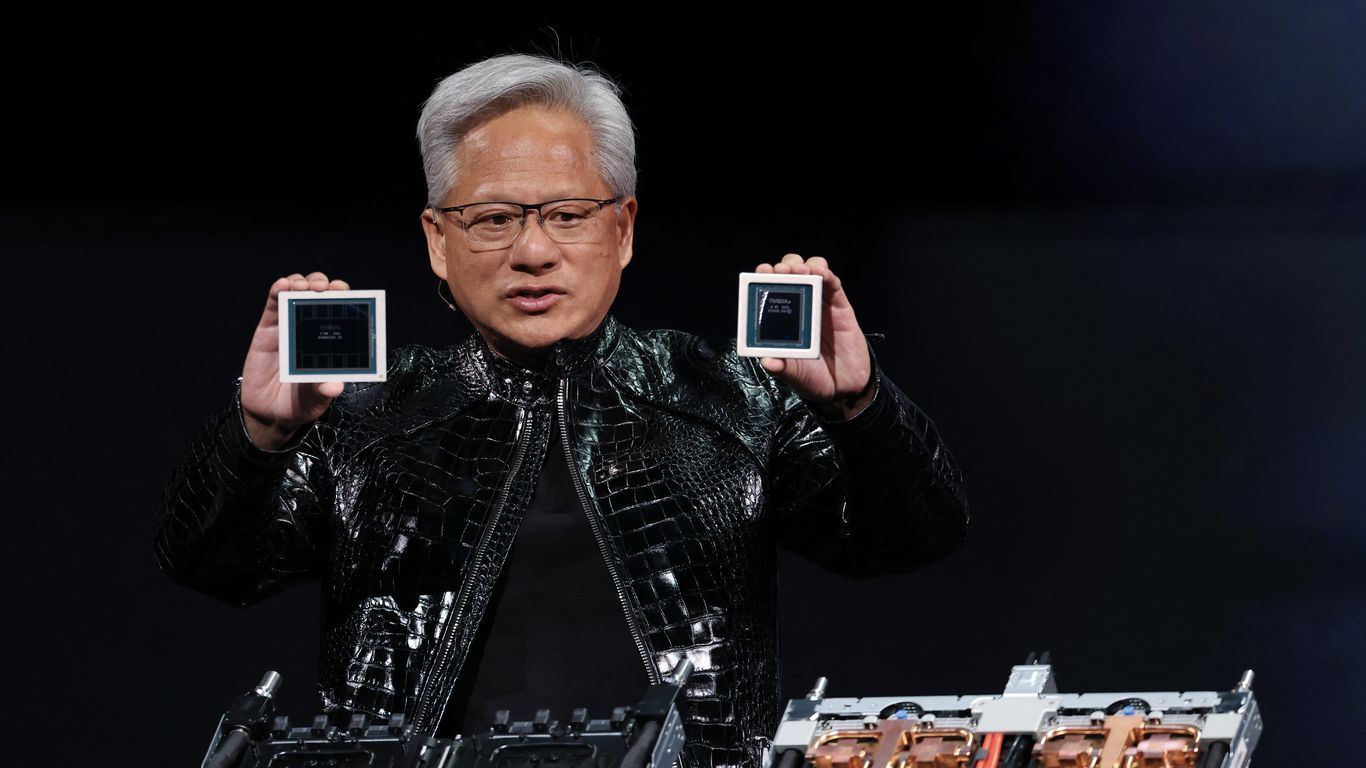
At Computex, Nvidia formally announced RTX Spark, describing it as “the most efficient PC chip ever built,” even while declining to share hard benchmarks. The flagship Arm-based “superchip” integrates CPU, GPU, and AI, matching the GB10 used in Nvidia’s DGX Spark mini “personal AI supercomputer,” with up to 20 CPU cores, 6,144 GPU cores, and 128GB of LPDDR5X unified memory. The Financial Times framed the launch as Nvidia unveiling a PC “superchip” that directly challenges Apple and Intel by enabling Windows machines to run powerful AI apps locally.
Microsoft CEO Satya Nadella cast RTX Spark as central to Windows’ AI ambitions, saying the goal is to bring “unmetered intelligence to every home and every desk with Windows” and calling Spark “a real breakthrough toward that vision.”
Hardware rollouts and Microsoft’s second chance
Microsoft used the announcement window to unveil its new flagship Surface Laptop Ultra, built around RTX Spark and billed internally as “the most powerful thing we’ve ever made.” The 15‑inch mini‑LED machine targets RTX 5070‑class graphics, all‑day battery life, and up to 128GB of unified memory, while Microsoft readies Windows 11 and its Prism emulator to better support Arm-based chips.
A broader wave of RTX Spark laptops from Asus, Dell, HP, MSI, Lenovo, and others is slated for this fall, all sharing the Arm-based Nvidia “superchip,” with lower‑memory variants to reach different price points.
Competing visions and open questions
Commentators see the move as potentially “Windows’ M1 moment,” arguing Nvidia could finally unlock the performance and battery life Apple has long demonstrated on Arm Macs, particularly for creators and AI workloads. But they also flag risks: Nvidia has offered few concrete performance metrics, Windows on Arm still relies on emulation for legacy apps, and premium pricing could blunt impact compared to Apple’s more affordable first M1 systems.
Still, with RTX Spark joining Intel, AMD, and Qualcomm in Windows laptops, analysts say Qualcomm’s former exclusivity is over and competition is likely to intensify across gaming, creator, and AI-focused PCs.
Continue reading https://foxvector.com/stories/019e8576-a51a-2872-733b-2d949599b5aa
Write a comment