Blue Origin's New Glenn Rocket Explodes During Test in Florida
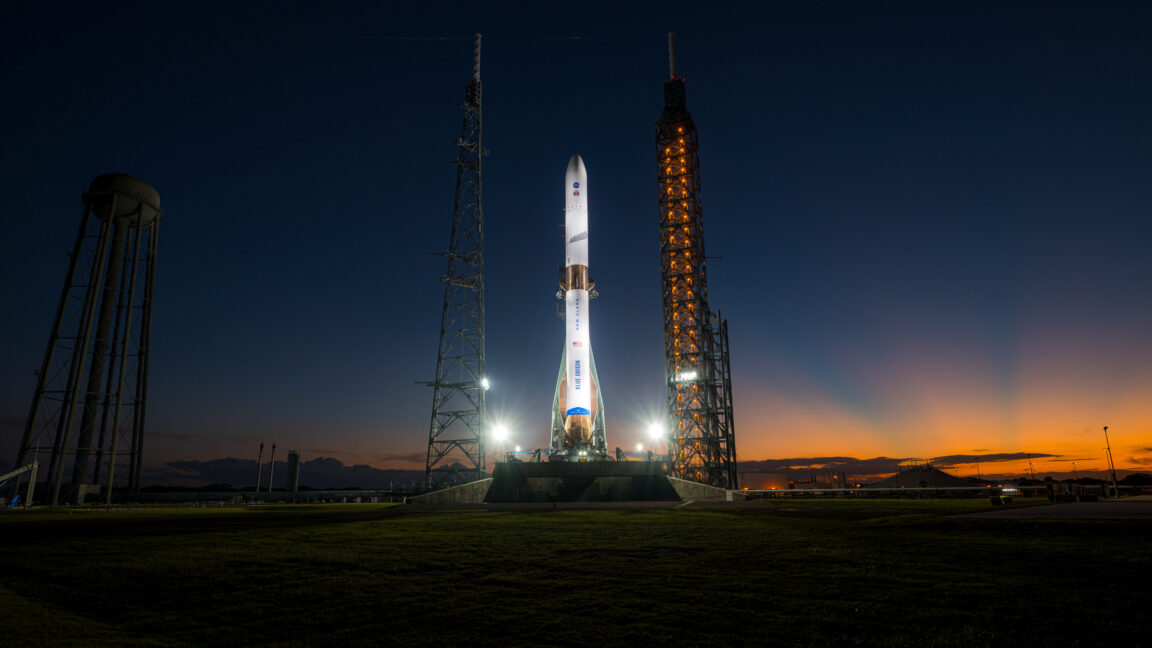
Blue Origin’s New Glenn Rocket Explodes During Test in Florida A dramatic test failure of Blue Origin’s New Glenn rocket in Florida has abruptly shifted the balance of the U.S. launch industry and raised fresh questions about NASA’s dependence on the still‑new mega‑booster for future Moon missions.
On Thursday evening, Blue Origin was conducting a static fire of New Glenn at Launch Complex 36A, Cape Canaveral, ahead of the rocket’s fourth mission when engine ignition went catastrophically wrong. The first stage, powered by seven BE‑4 engines and fully fueled for the test, exploded in what one report called “the most spectacular rocket explosion since N1,” referring to the Soviet Moon rocket that failed in 1969. Live streams from NASASpaceflight.com and Spaceflight Now captured a massive fireball over the pad, with debris scattered across nearby land and sea.
Blue Origin soon confirmed an “anomaly” and said all personnel were accounted for and safe. Founder Jeff Bezos posted that “it’s too early to know the root cause but we’re already working to find it,” calling it a “very rough day” and vowing to “rebuild whatever needs rebuilding and get back to flying.” The company had already suffered an upper‑stage failure on New Glenn’s third flight in April, which destroyed its payload.
By Friday morning, industry sources were warning that Blue Origin’s Florida pad had suffered “significant damage,” with one analysis suggesting it could take at least a year—and possibly 15 months in a best‑case scenario—to rebuild or finish alternative pads. One assessment described the incident as “catastrophic” for Blue Origin, NASA and “broad segments of the US space industry,” noting the company has no second operational New Glenn site.
The timing compounds the impact. The failed test came just days before a planned New Glenn launch carrying Amazon’s Kuiper internet satellites, and after Blue Origin had mapped out as many as 12 New Glenn missions this year in a bid to compete with SpaceX. With other US heavy‑lift vehicles offline, analysts note the accident effectively leaves SpaceX’s Falcon 9 and Falcon Heavy as the country’s only medium‑ and heavy‑lift workhorses for now.
NASA, which relies on New Glenn to help deliver elements of the Blue Moon lander for Artemis lunar missions, said it would “work with our partners to support a thorough investigation of this anomaly, assess near‑term mission impacts, and get back to launching rockets.” The Federal Aviation Administration reported “no impact to air traffic” from the blast.
Within the wider launch community, the failure has also been framed as part of rocketry’s brutal learning curve. A resurfaced comment from SpaceX’s Elon Musk—“I knew the probability of SpaceX failing was high… Rockets are hard”—circulated again after the incident, underscoring that even well‑funded programs can face spectacular setbacks on the path to routine flight.
Continue reading https://foxvector.com/stories/019e8576-a5c1-3ace-7329-045162ea8d06
Write a comment