Nvidia Unveils RTX Spark 'Superchip' for AI-Powered PCs
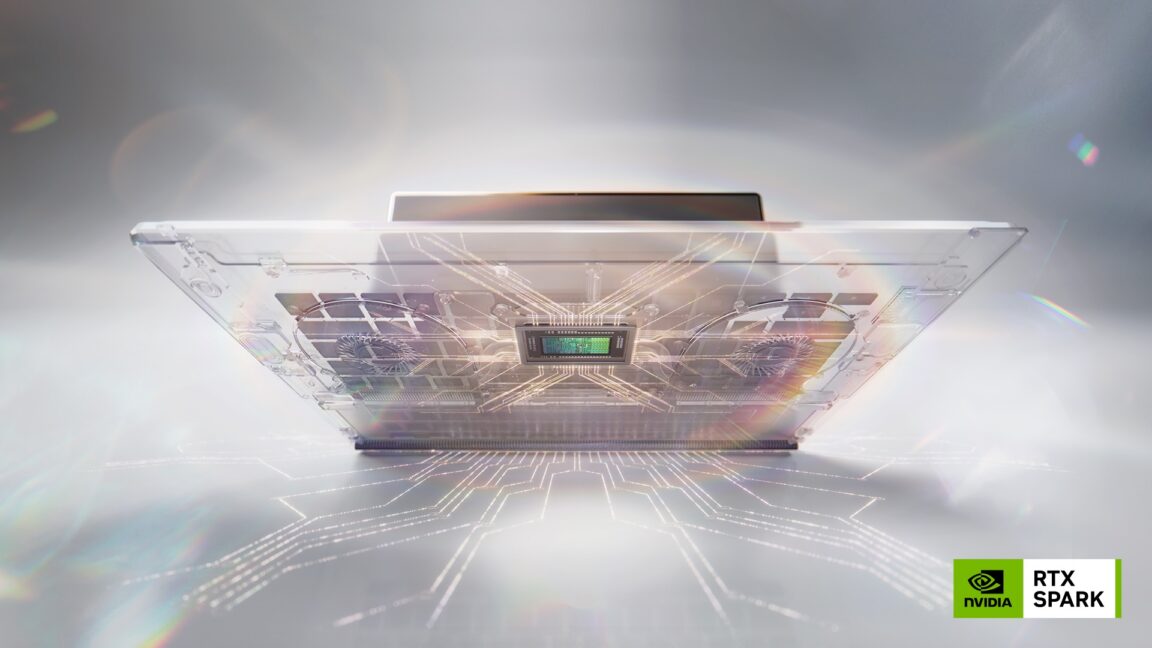
Nvidia Unveils RTX Spark ‘Superchip’ for AI-Powered PCs Nvidia’s long-rumored move into full PC processors has crystallized into RTX Spark, an Arm-based “superchip” that aims to shift Windows PCs from app-centric machines to AI agent hubs — and to challenge incumbents from Intel and AMD to Apple and Qualcomm.
From teasers to launch
Hints surfaced in late May, when Nvidia, Microsoft, and Arm jointly teased “a new era of PC,” ahead of a Computex keynote widely expected to unveil Arm-powered N1 / N1X laptop chips. Axios soon reported that the first Windows PCs using Nvidia chips as their main processors would debut at Computex and Microsoft’s Build conference, marking “a second chance” for Microsoft’s AI PC ambitions after Copilot+ stumbles.
At Computex in Taipei, Nvidia formally announced RTX Spark as “the most efficient PC chip ever built,” integrating CPU, GPU, and AI acceleration into a single Arm-based package for laptops and mini-PCs. The flagship configuration pairs a 20‑core Grace CPU with up to 6,144 Blackwell GPU cores and 128GB of unified LPDDR5X memory, promising thin-and-light systems that can render massive 3D scenes, edit ultra‑high‑resolution video, and run large AI models locally.
Microsoft’s AI PC reboot
Microsoft is leaning on Spark to reframe Windows for the agent era. The company’s upcoming software stack will let AI agents perform tasks locally on PCs, rather than relying solely on costly cloud compute. CEO Satya Nadella pitched the goal of “unmetered intelligence to every home and every desk with Windows,” calling Nvidia RTX Spark “a real breakthrough toward that vision.”
Hardware-wise, Microsoft unveiled the 15‑inch Surface Laptop Ultra, built around RTX Spark and billed internally as “the most powerful thing we’ve ever made,” with all‑day battery life and graphics roughly at RTX 5070 laptop levels.
Industry reaction and open questions
Major OEMs including Asus, Dell, HP, Lenovo, MSI, Acer, and Gigabyte plan Spark systems this fall, as Nvidia chases what it sees as a new $200 billion CPU market for AI PCs and “CPUs for agents.” Commentators argue this “could be Windows’ moment” to match Apple’s M‑series blend of performance and efficiency, but they also note Nvidia has yet to share hard benchmarks or pricing — leaving questions about real-world performance, app compatibility, and whether these AI‑heavy machines will be priced out of the mainstream.
Continue reading https://foxvector.com/stories/019e86c7-8af0-363d-72fc-1f9968d856fd
Write a comment