Leaders Discuss Global AI Rules with Tech CEOs at G7 Summit
Leaders Discuss Global AI Rules with Tech CEOs at G7 Summit World leaders left the G7 summit in Évian grappling with a paradox: they want U.S.-led coordination on powerful AI models even as Washington’s own export-style restrictions have shaken allies’ trust.
On the eve of Wednesday’s closing lunch, European officials were still reacting to the U.S. decision to suspend EU access to Anthropic’s latest frontier systems, Fable 5 and Mythos 5. The row was widely expected to be the “elephant in the room” when Anthropic CEO Dario Amodei sat down with President Donald Trump and other leaders, even though the formal agenda emphasized economic growth and youth resilience rather than AI security threats.
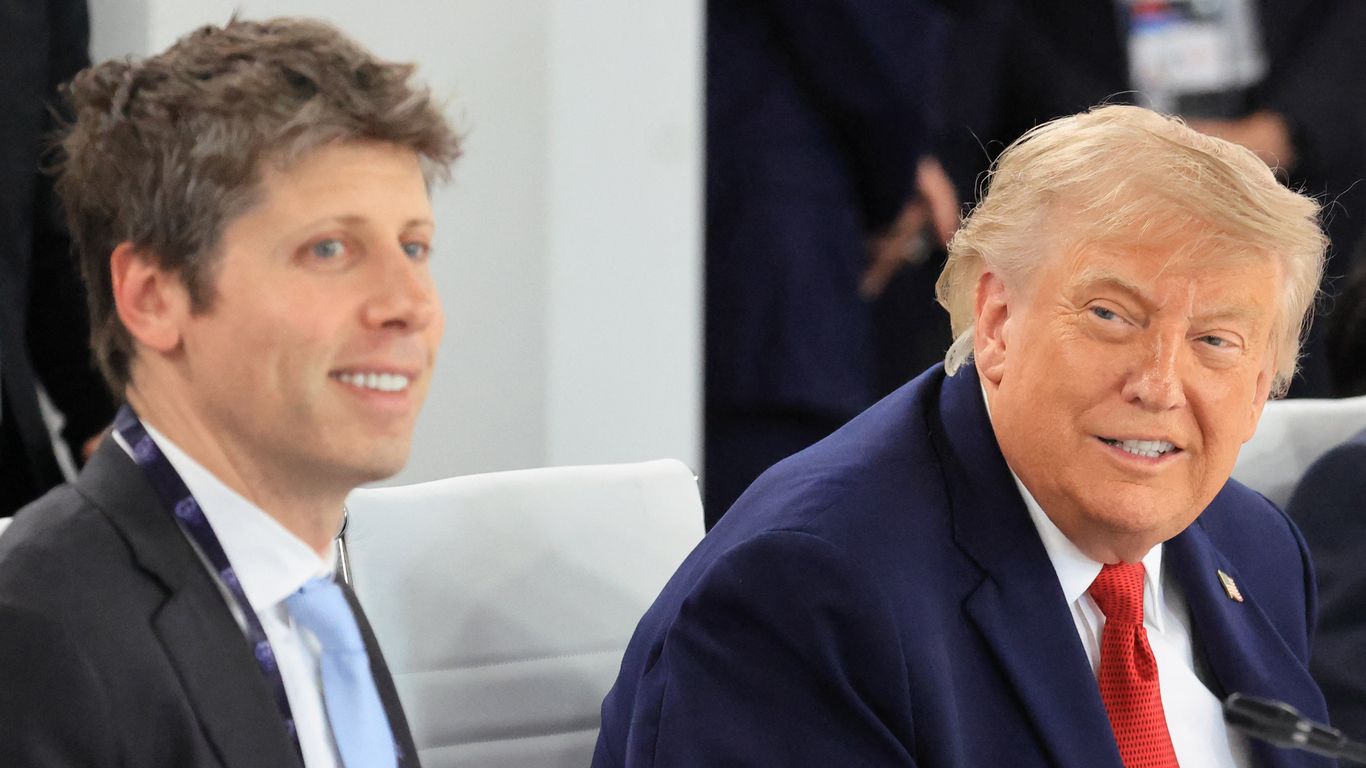
By midday, G7 heads of state and about a dozen tech chiefs — including Amodei, OpenAI’s Sam Altman, Google DeepMind’s Demis Hassabis and Mistral’s Arthur Mensch — convened for a two‑and‑a‑half‑hour working lunch on “AI and the digital age.” European Commission spokesperson Thomas Regnier had signaled before the session that Brussels sought cooperation, saying the bloc was “ready to engage and tackle these security risks together with our like-minded partners,” and that on frontier models “we should be able to create unity before the end of the G7,” framed as a bid to “recreate a circle of trust.”
Inside the room, Amodei and Hassabis pushed a concrete plan: a U.S.-led coalition to shape international AI rules and standards, including “structured access to frontier AI models” and coordination on chips and critical components that would explicitly exclude China from trade, according to people briefed on the talks. Canada’s Prime Minister Mark Carney backed the idea that the U.S. could lead such a coalition.
Altman, for his part, argued for “an international forum for discussion that establishes globally accepted standards for testing, provides expert and impartial analysis of capabilities and risks, and serves as a venue for cooperation among nations,” according to an OpenAI briefing shared after the meeting. OpenAI’s global affairs chief Chris Lehane said there was “a coalescing” among democratic governments and labs around a shared standards forum and that non‑U.S. leaders acknowledged Washington “certainly could play the lead role in working to establish” AI rules that help “ensure ongoing and continued access to the frontier models.”
Trump emerged from the session calling it an “excellent” meeting on what he described as “the biggest thing ever,” warning that AI is “both great and could be bad” but insisting the U.S. is “leading China” and “leading the world” in the technology. That stance fits the administration’s broader emphasis on a light regulatory touch to avoid slowing U.S. innovation, even as its export-style controls over access to advanced models now shape who around the globe can use them.
Beyond the closed-door diplomacy, industry voices used the G7 moment to stress openness and diversity in AI development. A tweet widely circulated during the summit warned against “a world where every company across every sector is ceding value to a few models that eat everything they see,” arguing that if “all the value is accrued by only a few models, the political economy will simply not tolerate it” and that there is “no societal permission” for such concentration. Another participant celebrated discussing “trusted AI platforms” as the basis for infrastructure and growth at the summit.
Meanwhile, open‑source advocates framed their own interventions as a push to preserve “open and responsible development” of AI in the face of growing pressure for tighter control. Yet despite the flurry of proposals, the Évian gathering ended without binding commitments or new regulations; multiple accounts described it as a conversation rather than a negotiation, underscoring how far the world still has to go from aspirational principles to enforceable global AI governance.
Continue reading https://foxvector.com/stories/019ee41c-9124-2e18-70c1-38ad15442d61
Write a comment