Jensen Huang Says AI Fearmongering Could Hurt America More Than AI Itself
Jensen Huang Says AI Fearmongering Could Hurt America More Than AI Itself
Jensen Huang is trying to reframe one of the biggest arguments in tech: whether artificial intelligence should be treated primarily as a threat or as an economic tool the U.S. cannot afford to slow down. The Nvidia chief is staking out a clear position — that alarmist rhetoric is now doing as much damage as the risks it claims to warn against.
In recent interviews, Huang pushed back on what he sees as AI “doomerism,” arguing that policymakers should be wary of regulating around hypothetical worst-case scenarios. He said claims that AI will mean “the end of humanity” are “complete nonsense,” and so are predictions that it will “destroy half of the American jobs.” His broader point is that public anxiety is being amplified faster than the evidence. As Huang put it, “We’re scaring people,” even though the mass layoffs many feared have not materialized.
That argument puts Huang at odds, implicitly at least, with AI leaders who have urged Washington to focus heavily on frontier-model safety. Huang does not reject safety concerns outright; instead, he argues that debate has become distorted by what he called “science fiction” thinking and by narratives that are “made up,” including talk of singularity or simulated reality. He also suggested some companies may have an incentive to invoke safety in ways that could shape regulation to their advantage.
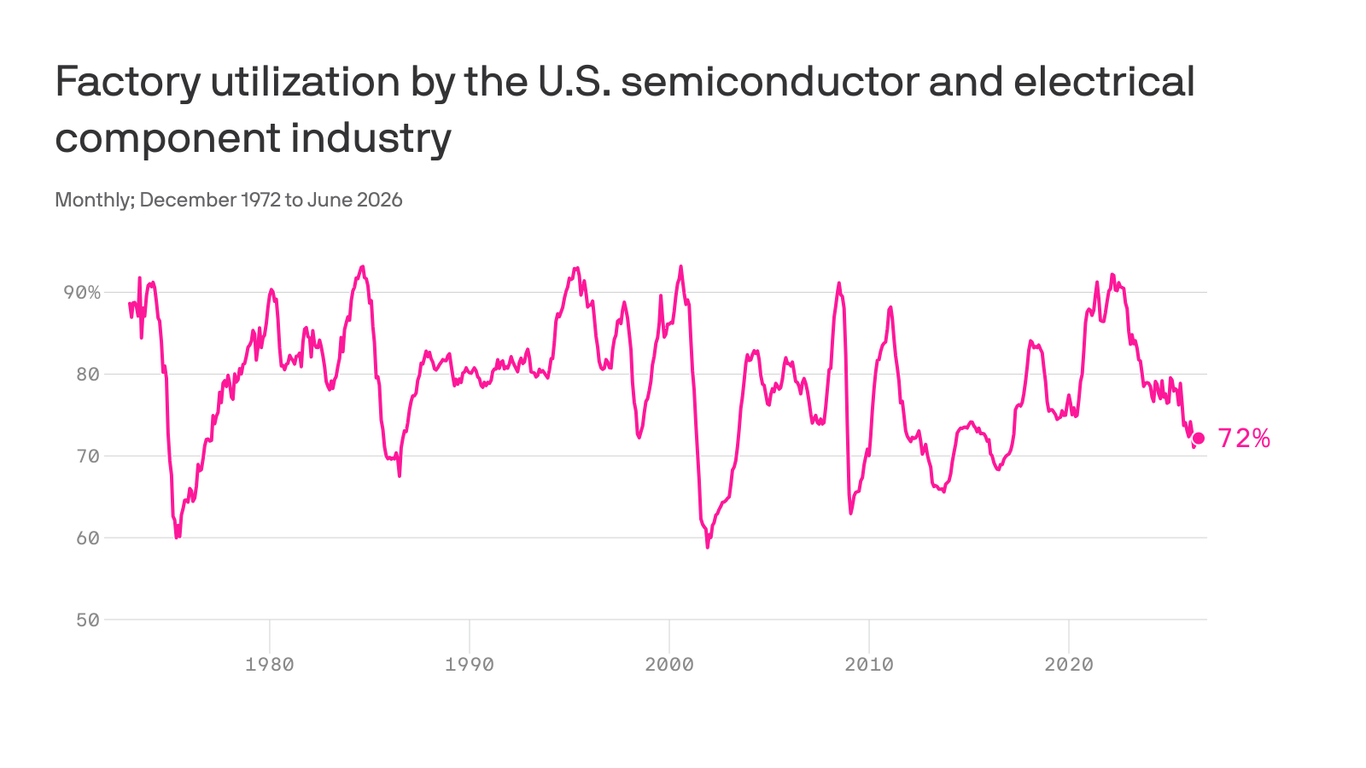
Huang’s optimism is not limited to rhetoric about AI’s social effects. He is making a similarly bullish case about the economics behind the boom, saying the semiconductor cycle is “different” this time because demand is tied to building a new global “intelligence layer” of infrastructure. On that view, the industry is still undersized, and a chip bust is unlikely “for a while.”
On X, that message has been reinforced by supporters highlighting Huang’s resistance to restricting Chinese AI models and his view that “open-source models that are excellent should be used.” Others echoed a broader industry framing that AI leadership will require both “frontier closed models and frontier open models.”
Continue reading https://foxvector.com/stories/019f9581-fb0a-3581-7282-1d372aecde09
Write a comment