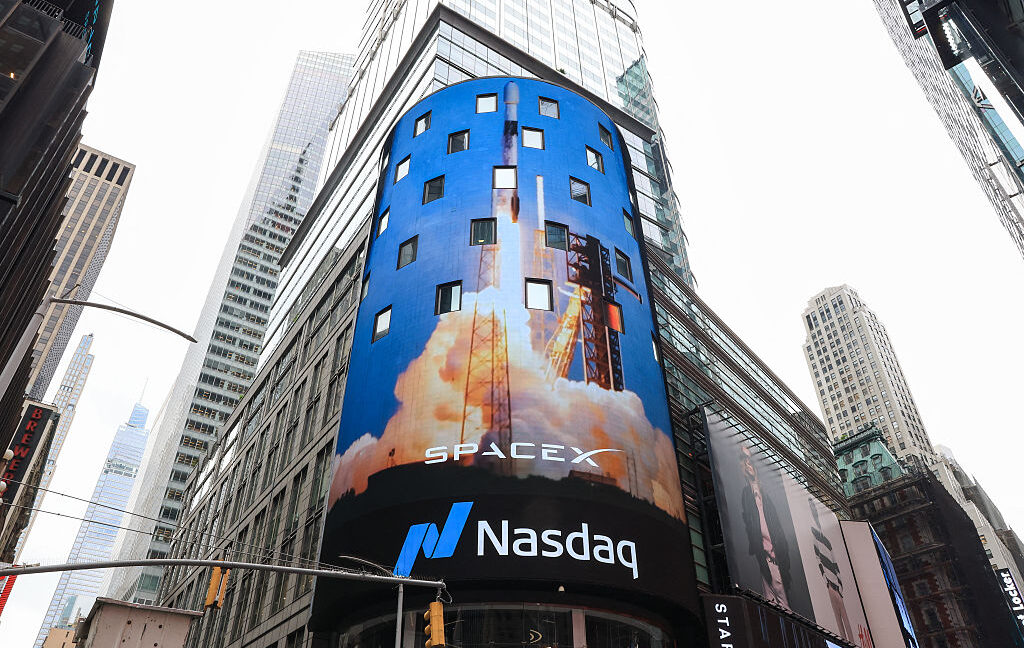
SpaceX’s AI Boom Sent Investors Running From the Bill

SpaceX’s debut earnings showed fast-growing Starlink and AI revenue, but the market fixated on the cost of Musk’s compute ambitions and a new exclusive Nvidia bet. The company’s space-age pitch is now being tested against near-term returns.
SpaceX’s AI Boom Sent Investors Running From the Bill

SpaceX’s AI Boom Sent Investors Running From the Bill
SpaceX’s first earnings report as a public company delivered the kind of growth most firms would celebrate. Instead, investors saw the price tag behind Elon Musk’s AI-and-orbit ambitions — and sold.

The company opened with a strong June-quarter scorecard: revenue rose 92% year on year to $7.81 billion, led by Starlink connectivity revenue of $4.29 billion and AI revenue of $2.56 billion. Its net loss narrowed to $541 million from $1 billion a year earlier, but shares still fell more than 8% in after-hours trading after an initial rally.

That split reaction captures the central tension. SpaceX is no longer presenting itself chiefly as a rocket maker. Another account of the results put space revenue at $962 million, compared with $4.2 billion from Starlink and $2.6 billion from AI compute deals with companies including Anthropic and Google. But building that new business consumed $18.37 billion in capital expenditures.

Musk’s answer is scale. He told investors SpaceX was building AI capacity faster than anyone else and forecast a $100 billion annualized revenue run rate by year-end. He has also pushed the horizon further out, arguing Starlink could eventually deliver “the majority of the world’s internet” where it is allowed to operate.

The company then sharpened its hardware commitment. Musk said SpaceX would use Nvidia GPUs exclusively “because they are the best,” a decision that could secure access to a prized supplier while tying its expansion to a single chipmaker. The strategy runs against the supplier diversification typically used by major tech groups to limit bottlenecks and dependency risk.

Supporters see an integrated AI, satellite and launch machine. Critics see a telecom business and a compute lessor financing increasingly speculative projects: AI spending alone was reported at $15.8 billion in the quarter, while the space segment remained below $1 billion in revenue.

Musk’s vision remains unabashedly orbital. In a repost, Nvidia said SpaceX’s Starmind AI1 payload would bring AI-factory compute “closer to the stars.” For investors, though, the immediate question is more earthly: when will all that infrastructure turn into durable profit?

Continue reading https://foxvector.com/stories/019fd42b-b5ca-29cd-7129-08de68b97320

Write a comment