Unitree’s IPO Frenzy Meets a CEO Warning That Robots Aren’t Ready
Unitree’s IPO Frenzy Meets a CEO Warning That Robots Aren’t Ready
Unitree’s explosive Shanghai debut has made humanoid robots one of China’s hottest market stories. Its own founder, however, is warning that the machines still have a long way to go before they can truly work like people.
On Wednesday, the Hangzhou-based company raised about $900 million in mainland China’s first major humanoid-robot IPO. Its shares briefly soared as much as 629% before closing 460% higher, a burst of buying that put its post-listing valuation near $50 billion by one estimate. Other coverage put the valuation at roughly $66 billion after the first-day surge, ahead of U.S. rival Figure AI and even major Chinese technology groups.
The rally reflects faith in a sector Beijing has elevated as strategically important. Chinese firms accounted for about 97% of global humanoid-robot shipments in the first half of 2026, according to Smart Analytics Global, while Unitree held an estimated 31% share. The company has become a national showcase through its dancing, kung fu-performing and backflipping robots at China’s Spring Festival Gala.
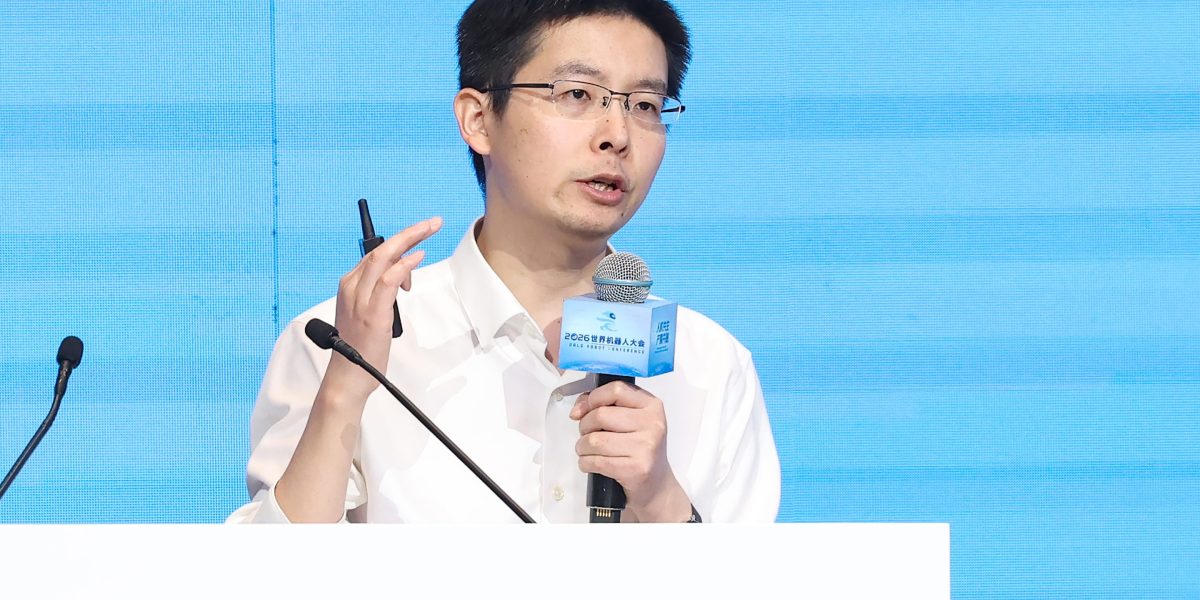
But the celebratory debut was followed by a reality check from Wang Xingxing at the World Robot Conference in Beijing. He said robotics will reach its “ChatGPT moment” only when a machine can enter an unfamiliar home and complete about 80% of tasks through voice or language commands without task-specific training. His timetable: “2 to 3 years at the fastest, and 5 or even 10 years at the slowest.”
That caution clashes with the most bullish view of the trade. Nvidia chief Jensen Huang has argued that robots’ ChatGPT moment “happened a couple of years ago already,” while investor Vinod Khosla expects household humanoids to become commonplace in the 2030s.
Skeptics say Unitree must still prove that striking demonstrations can become repeatable commercial demand. HSBC analysts warned that, without major advances in robot AI models, the shipment upswing may not last beyond one to two years. A U.S. ban on new foreign-made humanoid robots also threatens an important export channel, though it may raise costs for American developers dependent on Chinese components.
Unitree’s shares fell about 19% the next day and another 2% on Friday, underscoring the gap between a blockbuster market debut and the harder work of building robots that can adapt beyond the stage.
Continue reading https://foxvector.com/stories/01a02603-860d-17f3-71bc-1d2a82edc8ef
Write a comment