Apple’s New Mac Mini Bets That Local AI Is Worth the Premium
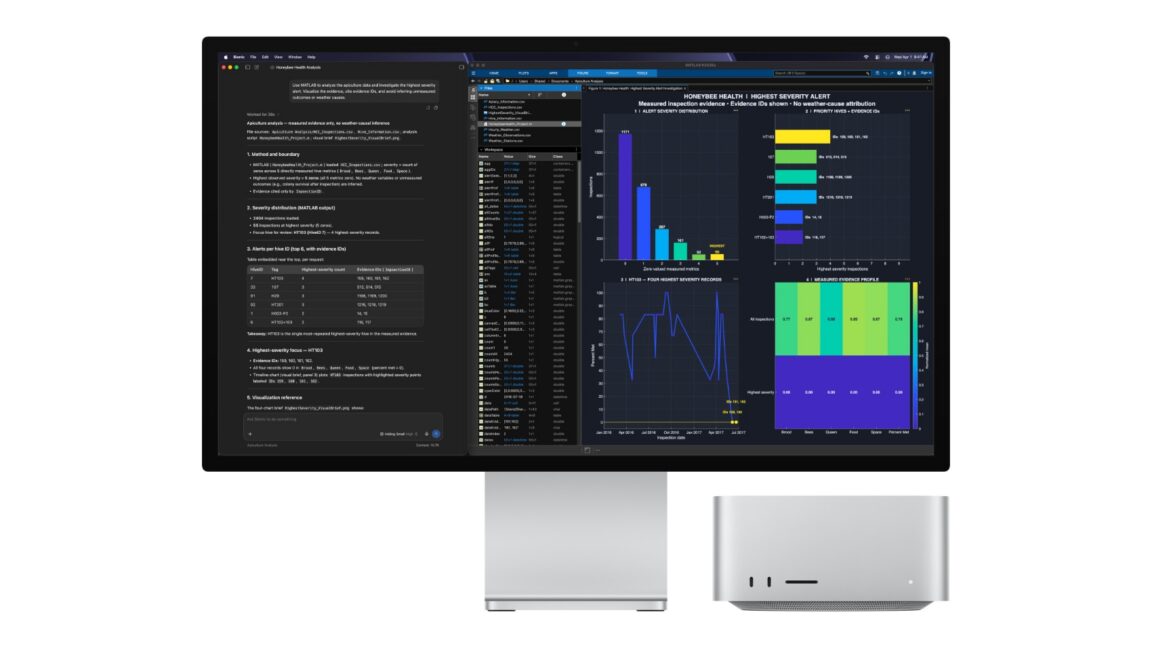
Apple’s New Mac Mini Bets That Local AI Is Worth the Premium
Apple’s Mac mini refresh is a familiar hardware upgrade with an unfamiliar sales pitch: the tiny desktop is being positioned less as a quiet office computer and more as a building block for running AI close to home.
Apple on Tuesday introduced the new lineup, keeping the same compact enclosure while replacing the prior generation’s chips with an M6 entry model and an M5 Pro variant. Prices begin at $899 and $1,699 respectively—each $100 above the previous starting point—with preorders opening immediately and shipping set for September 22.
The immediate changes are practical rather than dramatic. The base M6 model retains 16GB of unified memory and 256GB of storage; the M5 Pro starts with 24GB and 512GB. Apple says storage is twice as fast, while both machines now include 2.5Gb Ethernet as standard, with 10Gb available as an upgrade. Wi-Fi 7 and Bluetooth 6 arrive through Apple’s N1 chip.
But the larger shift began before this launch. After macOS 26.2 enabled low-latency Thunderbolt 5 links for distributed MLX inference, developers and researchers began chaining Mac minis and Mac Studios together to run larger local language models. The attraction is unified memory and an escape route from expensive cloud-model token bills—though a single mainstream machine still cannot comfortably handle every heavyweight model.
Apple is leaning into that demand. The company says the M6’s redesigned 12-core CPU delivers “up to 40 percent” faster multithreaded performance than the M4, while the M5 Pro is aimed at heavier AI compute, graphics and larger diffusion models. For buyers uninterested in AI, it remains a conventional speed bump. For developers, however, the Mac mini is increasingly a modular local-compute bet.
Continue reading https://foxvector.com/stories/01a03a9d-533a-359b-7236-38efd44b8902
Write a comment