Anthropic Wants AI Agents to Run the Lab Without Locking Scientists In
Anthropic Wants AI Agents to Run the Lab Without Locking Scientists In
Anthropic is pushing its AI beyond the screen and into the lab, betting that a shared language for machines can turn today’s disconnected instruments into coordinated, always-on systems.
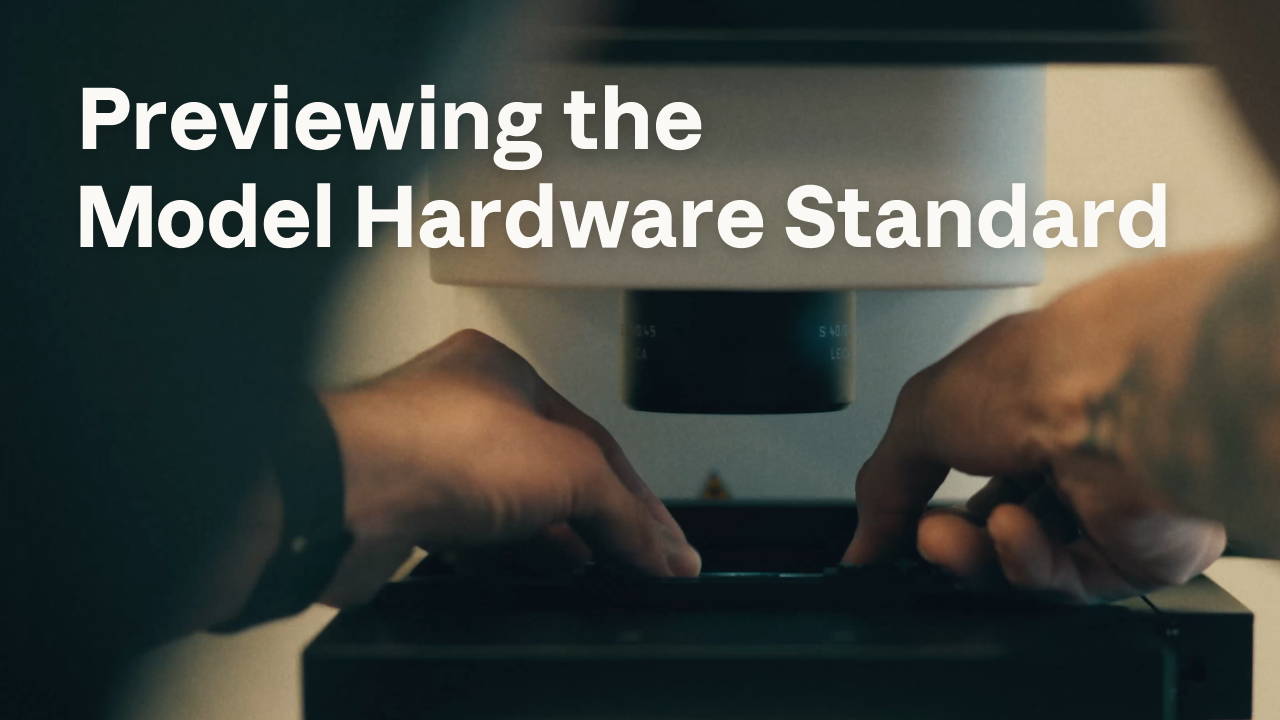
The company on Thursday opened a research preview of the Model Hardware Standard, or MHS, with an initial group of scientific labs and advanced manufacturers. The specification is designed to let AI agents safely operate equipment including microscopes, liquid handlers and robotic arms—and to coordinate several instruments at once.
The immediate target is a stubbornly practical problem. Labs and factory floors often rely on devices with incompatible interfaces, forcing specialists to construct bespoke integrations that can take weeks or months. Anthropic says MHS cuts that work to “hours or minutes,” using a standard driver and basic commands such as “read” and “write.”
That common layer is meant to do more than connect machines. Anthropic says agents can use it to sequence experiments, adjust parameters as conditions change and, in some cases, recover from hardware errors. Its early tests included Claude tuning a laser by observing its movement through a camera, then turning what it learned into a repeatable script.
The company is positioning the project as an open alternative to the proprietary systems that have long defined scientific hardware. MHS is model-agnostic, so it can work with models beyond Claude, and is built to support devices with programmable interfaces. “We want to avoid vendor lock-in for scientists,” Jonah Cool, Anthropic’s head of partnerships and deployment of science, said.
Early partners—including Genentech, Carnegie Mellon, QuEra, AWS and robotics manufacturers—have tested the standard across biotech, quantum computing and automation. Carnegie Mellon researchers reportedly ran serial-dilution experiments roughly three times faster, while QuEra said an agent restored a critical laser lock 99.3% of the time without human intervention.
For now, MHS remains a preview rather than a finished industrial operating system. Anthropic says it is using the partner phase to develop safety evaluations and best practices before an open-source release—a crucial caveat when an AI’s next action may move a robot arm, not merely generate text.
Continue reading https://foxvector.com/stories/01a04564-9563-090e-71a2-00501738b4e1
Write a comment